

This is Chapter 11 in the series. You can find previous chapters here:
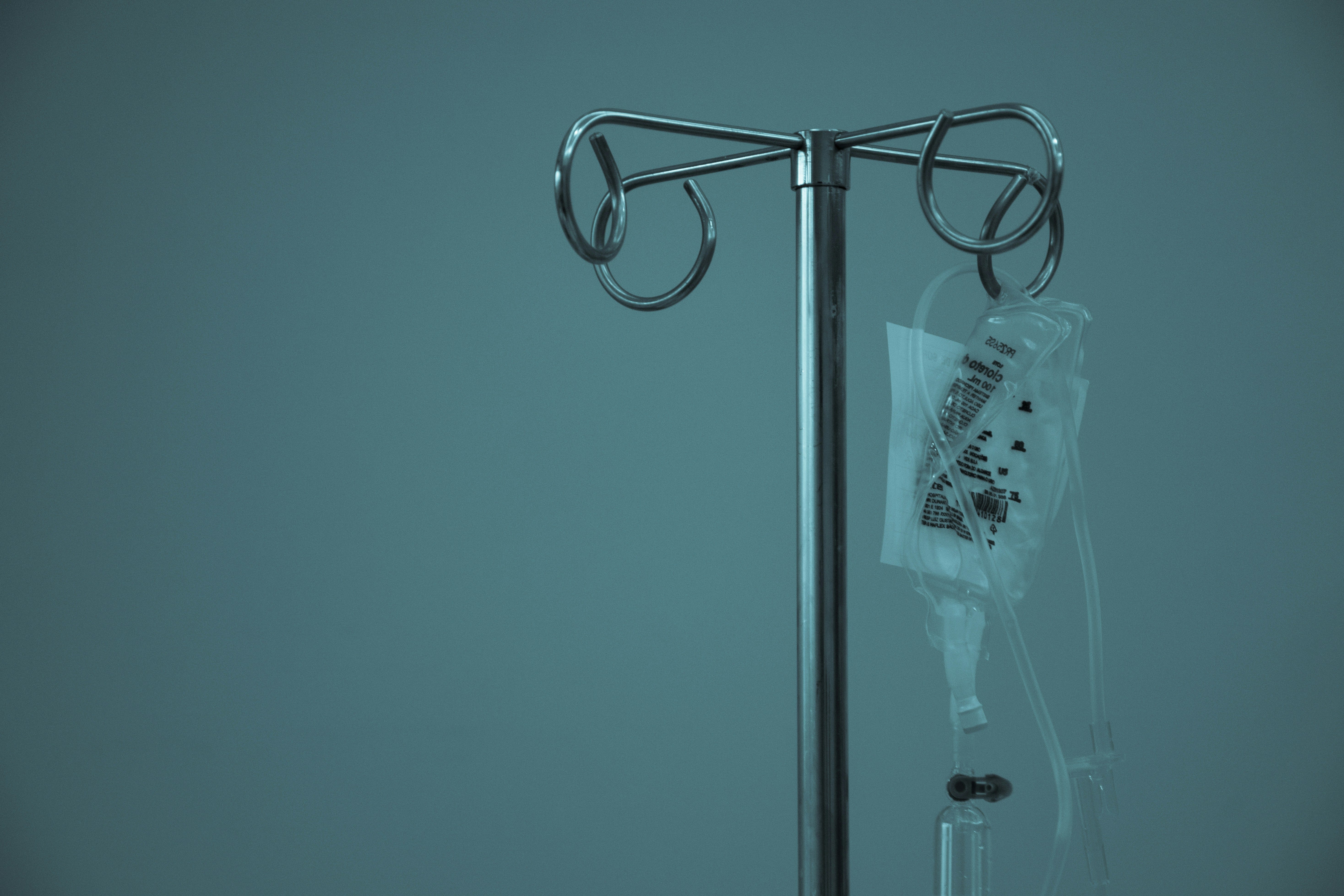
Before I cover Mom’s final hours, I want to talk briefly about Hospice. Though we didn’t use Hospice, because the end came so quickly, I do think it’s important you know about it and what options are out there.
Hospice
Hospice is a form of end-of-life care focused on comfort rather than extending life. It is generally intended for someone with a terminal condition who is believed to be approaching the final months, or even hours, of life. It’s for when the goal shifts from trying to prolong life at all costs to managing pain and other symptoms, preserving dignity, and making the person as comfortable as possible. Hospice can be provided in a person’s home, assisted living facility, nursing facility, hospice center, or sometimes a hospital. It also provides emotional and spiritual support for both the patient and the family.
In many cases, hospice is a team that comes to wherever the person is living. That team may include nurses, doctors, social workers, chaplains, aides, and other professionals who help manage symptoms and guide the family through what to expect. Hospice also does not mean that everyone expects the person to die that day or even that week. Under Medicare, hospice eligibility generally begins when physicians certify that a person is expected to have about six months or less to live if the illness follows its normal course. A person can remain on hospice longer if they continue to meet the eligibility requirements.
Traditional medical treatment often seeks to extend life, no the matter the quality (as you’ll read in my experience below), while Hospice instead seeks to make the time that remains as comfortable and meaningful as possible. There may come a point when comfort, dignity, and time with family may become a higher priority than additional treatments. This is what Hospice is for.
Like I said, things with my mom progressed too quickly for us to even consider Hospice. So, let me tell you about her final hours.
The Fall
Mom had mobility issues and was prone to falls. If she fell in assisted living, they would usually have to call the paramedics to help lift her up because she was overweight and was generally unable to do much to help others lift her. So, when assisted living called me to say that she had fallen again and was taken to the emergence room, I thought this would be like the other times, except this time they added that she had vomited and that there was blood in her vomit.
I went to the ER, where she was in bed and talkative, and reported to me that nothing was broken. She said that she was scheduled to have an endoscopy so they could figure out where the blood in her vomit was coming from. I had an event that I had committed to attend, and Mom said she’d be fine without me, so I said that I’d return once the event was over. Then, at the event, I saw I missed a phone call from the hospital; they left a voicemail saying the endoscopy was finished and that Mom was in the ICU.
That’s strange, I thought. ICU? Why would she need to be in the ICU after an endoscopy? Details were sketchy, but the gist was that they found an ulcer and that Mom was losing blood internally somewhere. Her white blood cell count and blood pressure were both low.
I went to the hospital to be with her, and over the next nine hours she ended up having three “episodes,” where the pain she was feeling would cause her to become nauseous, which, combined with her low blood pressure and white blood cell count would lead to her losing consciousness.
First Episode
During the first episode, as I stood next to her hospital bed, I held her hand as she struggled from the pain, then she turned her head to me, stopped moving, and immediately turned pale. I’ve never seen someone go so pale so fast.
Nurses immediately rushed in, put an oxygen mask on her and went into triage mode. I stepped back to let them do their thing and looked around the room. Five people were in there.
At one point, a person in scrubs, who I assumed was a nurse, stood next to me to watch as well.
Then, out of the blue, he leans over and says to me, “Does she have a DNR?”
I immediately turned to him and asked, “I’m sorry, what?”
The nurse repeated, “Does she have a DNR? A do not resuscitate?”
I said, “What? Wait, what are you saying? Yes, she has a DNR. Why are you asking me?”
The nurse replied, “I’m sorry, give me a second, I need to help them.”
I stood there contemplating what he just asked me, why he would’ve asked me, and what I should do with that information.
The nurse returned and said, “Sorry about that.”
I continued our conversation, “Listen, I need to understand what’s going on right now. Why did you ask me about a DNR?”
The nurse said, “I just want to make sure we’re prepared.”
Quite tersely I said, “Prepared for what? I didn’t realize this was that serious. We’ve been in the hospital many times over the last couple of years. What’s going on now that’s different?”
The nurse replied, “She is downtrending.”
Again, tersely I said, “Downtrending? What exactly does that mean? I need you to be very clear with me right now, so I understand what’s going on.”
The nurse said, “The primary nurse has more experience with this kind of thing. He’s been doing this for 30 years. Maybe you should speak to him.” Then he walked out of the room. I never saw him again that night.
I’m not one for cussing. But that was definitely a “What the *#@!” moment.
Around that time, the other nurses brought Mom back into consciousness. I went over to her and held her hand.
She looked up at me and said, “I don’t know how much more of this I can take.” I then went and talked with the main nurse and got a better understanding of how much blood she had lost, what the issues were, and how concerned they were.
Second Episode
The second episode was similar to the first and was due, primarily, to the internal bleeding and pain Mom was having. Unfortunately, due to her low blood pressure and low white blood cell count, the staff didn’t feel it was safe to give her pain medication.
The staff was also struggling to get a needle well-established in her vein. She desperately needed more blood, but the staff simply couldn’t get a needle in. Mom was notoriously difficult to stick with a needle due to her thinner skin and fragile veins.
The nursing staff had requested a peripherally inserted central catheter (PICC) be put in, but the doctor who could administer it was not at the hospital and was doing rounds among other hospitals—she would be there later.
They tried one last-ditch effort to get a needle into Mom’s arm, and this time they were successful. Had they not been, the only other option they presented to me was for them to drill directly into her leg bone and administer blood through there. This required some googling on my part to understand what exactly that involved—needless to say, I was very glad we didn’t have to go that route.
I should note, as an aside here, that throughout the night, though there were multiple nurses were around, most of my interactions with actual doctors was over the telephone or through a small video teleconference screen in the ICU. The same was true for the interactions between the nurses and the doctors. I don’t know if it was because of low staffing on a Thanksgiving weekend, or if this is a new standard. Though I don’t think this affected the quality of care my mom received, it was not what I was expecting. During Mom’s final episode, a couple of doctors were in the room.
Final Episode
After finally getting three bags of blood through her IV, Mom was able to start getting some sleep. I pulled up a chair and sat next to her hospital bed, drifting in and out of sleep myself as the machines beeped and whirred.
Then, abruptly, she had a third, more violent episode and vomited blood. I yelled for the nurses. As people poured in, I backed up and out of the way again.
At one point, I counted 15 people in the room, plus two police officers outside. I don’t know why the police were there, maybe they thought I might get upset or something.
I continually prayed for wisdom that night. I prayed that God would help me to ask the right questions and make the right decisions. I asked that He would make it abundantly clear to me when I would need to make a decision and what that decision would be.
Then, a nurse jumped up on Mom’s bed and began doing chest compressions on her. Reality slowed down. I remembered Mom’s words from earlier in the week of how tired she was of being in pain and how she couldn’t wait to be in Heaven. I remembered how earlier that night she said she wasn’t sure how much more of all this she could take. And, I knew she had a DNR, and that if they were doing chest compressions, it meant her heart had stopped.
I turned to the nurse next to me and said, “Stop.”
He asked, almost incredulously, “You want us to stop?”
“Yes,” I said, emphatically, “Stop doing chest compressions.”
In a commanding voice, he said to all in room, “The family would like you to stop doing chest compressions.”
Fifteen pairs of eyeballs turned toward me. There was utter silence in the room. A nurse sat astride Mom, paused mid-pump, staring at me.
To this day, that image is burned into my mind.
“Yes, stop doing chest compressions.” I repeated.
Then, from somewhere near one of the machines, a voice said, “Oh, her heart started again.” I was incredulous.
Amidst the chaos and crowd of people in the room, a breathing tube had been inserted, and that was the only thing keeping her alive. She was not conscious and was not on pain relievers—this latter piece of information I had to get confirmed, because I was first told that she was on pain relievers, which didn’t make sense.
The staff offered to keep Mom alive long enough that my brother could fly into town to say goodbye. As much as I respect our medical system, I have also found that it is built to keep a body alive as long as there is a way to do so. We have machines that can replicate just about every bodily function and perform the function for you. But there comes a point for some people when more intervention isn’t helpful, it’s just prolongs things—but to what end and for who’s good? I called my brother, who was out of state, multiple times throughout the night to let him know what was going on and to talk through things with him. Thankfully, we were on the same page with how to proceed.
So, once again, I told the staff to cease life support.
The End
A civilian chaplain came in to be there with me and my wife while final arrangements were being made to give Mom morphine, take her off the breathing tube, and let her pass.
The chaplain was nice, but then it got a little awkward as the chaplain encouraged me to talk with Mom and let her know how I felt about her. She said that Mom could still hear me and would want to hear my voice. While I appreciate all of this, it was weird having her in there suggesting I do this.
In hindsight, I wish I would’ve told the chaplain that I appreciated her being there, but that she was free to go. And, I also wish I would’ve talked with Mom more than I did. It was just weird having a stranger in there during the final moments. I don’t blame the chaplain; I should’ve just said something.
While Mom lay there, her heart rate slowing and eventually stopping, I continually ran my hands through her hair—something I thought she would’ve liked.
The scene was not pretty. She was not pretty. Her open eyes were glazed over and she was unresponsive, there was still blood on her face from where she had vomited it up, her arms had numerous needle tracks and bruises, and her hospital gown was open, revealing one of her breasts. I guessed that it had become exposed when they started doing compressions. I covered it up.
This was not the first time I had seen parts of my mother naked. After a shoulder replacement a few years ago, she was unable to fully clean herself in the shower, and she asked for help. Later, as her mobility further decreased, I would help her get on and off the toilet. Can you imagine the humility required from her to have her son help her like that?
This, my friends, is what we will all face when we get older. It’s also why we need people in our life.
She was not a perfect mom, wife, or friend, but she tried. She could frustrate the heck out of me. She could be very self-centered at times. She could dominate conversations. But, none of us are perfect. I have my own faults. Many of them, in fact. And who knows how I’m going to act when I get older.
When she was passionate about a cause or issue, it was because she was deeply concerned about people. As I stroked her hair, all I could think about was how much I loved this woman who had lived in this world and cared so much for people.
Even as I rewind the tape of the last couple of decades, there is so much more that I wish I could’ve done, so much more I wish I would’ve done. There’s absolutely no doubt I could’ve done more for her. But I could’ve also done less.
To a degree, the end came abruptly. No one was expecting it. I was mentally prepared for many more years of declining health, more support, and more time together. Yet this was the end of it. What at times were inconvenient tasks or errands for her now became moments I would never have again to help and to be with her.
Whenever leaving after visiting her in assisted living, I would always bend over, give her a big hug and kiss her on the cheek. She would embrace me tightly as if I were still a young child. Then, as I’d go to walk out the door, I’d turn back, look at her, and tell her again that I loved her. She would always say, “I love you too!” with a giant smile and a cute goodbye wave.
One of the most difficult times afterward was packing up her furniture and personal items from her assisted living apartment. After we were done, I stood at the door and looked back into the empty room, thinking of all the times I had looked back at her to see her smile and wave. Only this time, there was no one to respond when I said, “I love you, Mom.”
In an ironic twist, as my wife and I were just about to walk out the door of her assisted living apartment for the last time, my wife said, “Wait, what’s that?” and then reached into the darkness of a small horizontal gap above the mini-fridge. She pulled out a paper plate with some of Mom’s jewelry. Mom had apparently put it there to hide it from staff (not that they ever took anything). In what was previously a solemn and sad moment, we had to laugh. To the end, Mom had found ways to hide and hold on to things. She loved her jewelry and her dresses, and so it was fitting that this is what we found. When I finally walked out the door, all I could do was shake my head and laugh as I pictured my mom childishly smirking at our find.
But that was not the end of decision making. Many more decisions would need to be made.
Advice
Get a DNR if that reflects your wishes, and make sure your loved ones know exactly what it means for you and where to find a copy of it.
Ask doctors and nurses to explain things plainly. Also, don’t be afraid to ask for a second opinion or for someone else to confirm information (in our case, one nurse told me that mom was on pain relievers, while another told me she was not—I’m glad I got confirmation of which one was true).
Keep asking questions until you understand the issues and your options to address them.
If you want privacy in final moments, it is okay to ask people to step out.
Links to each chapter:
Chapter 11 - Her Final Hours
Chapter 12 - Afterwards
Final Reflections