

This is Chapter 3 in the series.
The Introduction was a brief background on the passing of my mom and why I’m writing this series.
In Chapter 1, we covered my mom’s growing hoarding problem and our attempts to help her out of that hole.
Chapter 2 told the story of when Mom’s urinary tract infection made her delirious and how I called the police to check in on her.
Now we dive into some things I learned while helping her through medical issues.
Chapter 3 - Aging and Medical Care
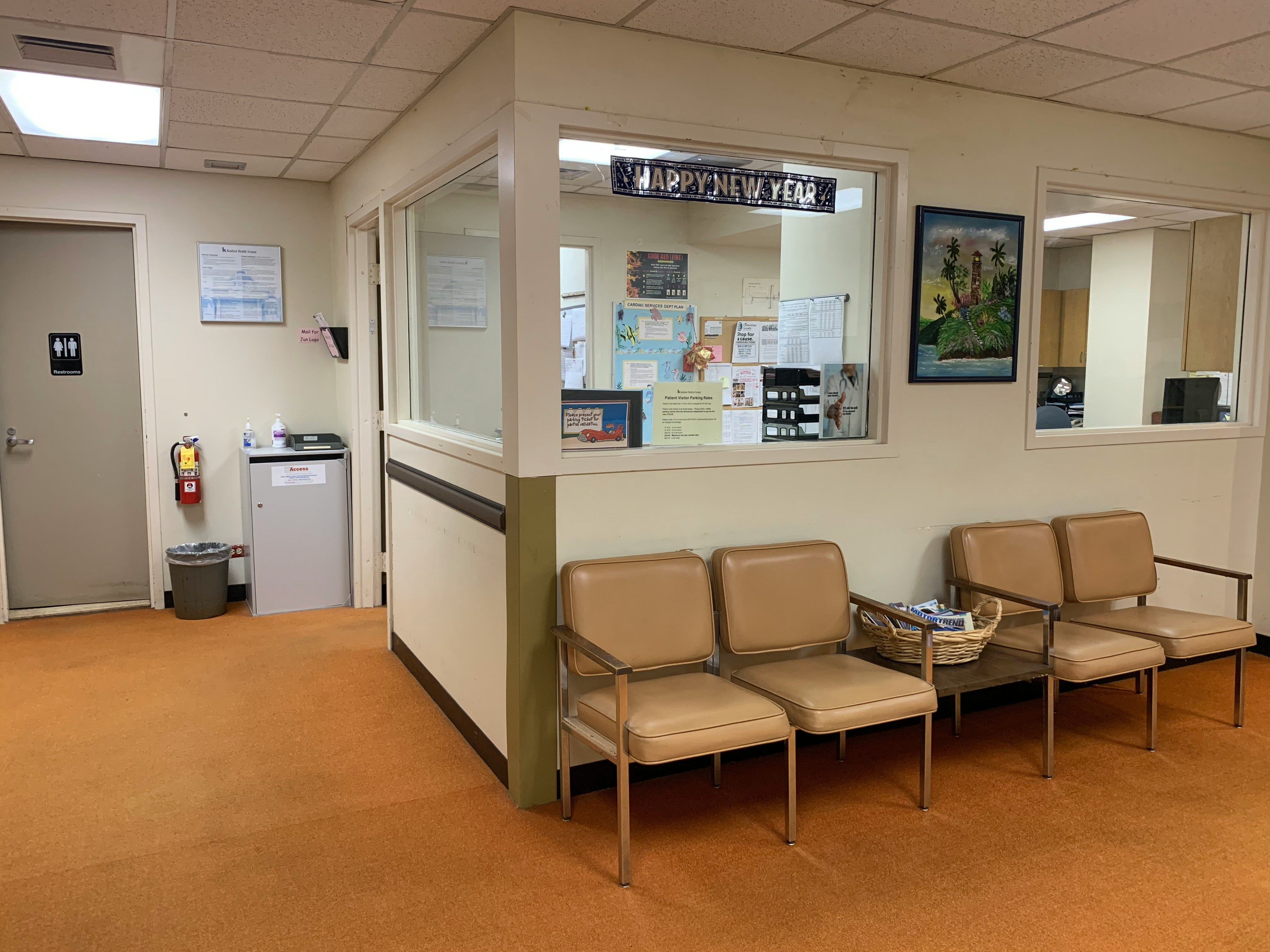
A few years ago, I had a nagging hip problem. Despite seeing multiple specialists, the issue would not go away. When I finally came full circle back to my primary care doctor, he said, “It just looks like you’re getting older. These kinds of things happen when we age.” It was depressing to think that I might simply live the rest of my life with pain and limitation. In that respect, I could understand some of what my mom was facing. It is depressing when there is no clear hope of getting better.
Whenever I would get frustrated with my mom, I tried to remind myself of that experience. I do not know what it was like to live in her body and feel the pain she felt. I only know that I have had injuries that felt insurmountable, and I know how depressing it can be. I recovered and my mental state improved, so I’m not sure how I would act if the ailments didn’t go away but instead grew and compounded.
For Mom, the hoarding wasn’t just about wanting stuff, her physical inability to keep up with life also contributed to the problem. Because of her medical issues, from autoimmune problems to limited mobility, every day was physically and mentally taxing. That compounded the hoarding in two ways: she could not keep up with cleaning, sorting, and throwing things away, and she also bought more things to try to make life easier.
She was resourceful and crafty in her ways to get by or around limitations. She had more grabber reacher tools than I could count, scissors in every room, and pens in every room. She had neighbors pick up her mail when she could no longer do it herself. She learned that if she called 911 to send a policeman over to pick her up after a fall she might get a bill, but if she called the fire department she would not be billed. And, as she liked to tell me, “Those firemen are stronger and more handsome than the policemen.” I would roll my eyes and tell her I did not approve.
For the last year and a half of her life I went to most of her medical appointments with her. That helped me understand what the doctors were saying and advocate for her when necessary.
The week before she passed, we were seeing a new specialist for a new diagnosis. As is typical with a new doctor, there was a mountain of intake paperwork to provide medical history, insurance information, medications, surgeries, hospitalizations, and allergies. It was time-consuming and frustrating for both of us. I could also see signs of Mom’s memory slipping because she couldn’t remember certain information for the forms. Her handwriting was deteriorating and her hearing was also getting worse. I cannot imagine her handling all of that paperwork alone.
One thing I wish I had done much earlier was create one master document with all of her medical conditions, medications, and personal information. That idea only dawned on me after that appointment. That day, after the appointment, I went home and created it, determined never again to rebuild her medical history from scratch in a waiting room. My plan was simple, the next time we saw a new doctor, I would write “see attached” and hand them the packet. Unfortunately, I only got to use it once, a week later at the hospital where she died.
Below is a blank version of that document in case you’d like to use it. I’m sure there are others available online, so don’t consider this all-inclusive. My intent was not to create the perfect packet of information, but to spare myself from having to reconstruct her entire medical life in the middle of each crisis or waiting room.

Key topics include:
Full name, date of birth, Social Security number, and insurance information
Emergency contacts
Primary care doctor and all specialists, including phone numbers
Diagnoses and major medical history
Surgeries and approximate dates
Current medications, dosages, and prescribing doctors
Allergies and reactions
Preferred pharmacy
Copies of medical power of attorney, advance directive, and DNR, if applicable
Interestingly, at that same appointment, after answering the many questions about her surgeries and diagnoses, Mom sighed and said, “I can’t wait to be in Heaven, so I don’t have to deal with all of this anymore.” She was serious. Those words came back to me in the ICU a few days later when I had to make very difficult decisions.
Multiple times Mom had to go into rehab, usually following major surgery, because it was not safe for her to return home until she had regained mobility. Getting into rehab meant insurance had to approve it based on what the hospital and therapists documented. That usually meant working with a discharge planner, filling out paperwork, and scrambling to understand which facilities had openings and what would actually be approved by insurance.
As a hospital decides it is time to discharge a patient (a decision often driven by medical stability and insurance) they usually want to know where that person is going next. That is not a small question. You are not just deciding where someone will sleep, you are deciding what level of care they need and who will provide it, what insurance will cover, what location is realistic, and whether they can function safely there.
Rehab is generally short-term with the goal being improvement. You go there because there is hope that therapy and support will restore some function and allow the person either to return home or move to a lower level of care.
Skilled nursing is different. It is less about short-term recovery and more about ongoing support for people who cannot safely care for themselves. Rehab has a finish line in mind. Skilled nursing often does not.
One complicating factor is that the same facility may offer both. Unless you are paying close attention, it can be easy to misunderstand whether your loved one is in a temporary recovery environment or sliding toward a longer-term level of support. This is an important distinction because it affects not only cost and logistics, but also expectations. One of the questions every family has to ask is, “Is this a temporary setback, or is this the new baseline?”
In our case, every rehab stay felt like warning. Hospitalization, rehab, discharge, repeat. Over time, I begin to realize that medical events in old age do not always come and go. Sometimes they ratchet life downward one click at a time.
I will warn you now, skilled nursing facilities can be a shock. Depending on what your insurance covers, you may be in a shared room with space for only two single beds, two nightstands, and a thin curtain to separate you from your roommate. You likely both have TVs mounted on the opposite wall that loudly battle with one another for your attention. Nurses and orderlies come in at various times, sometimes unscheduled in the middle of the night, sometimes long after you’ve pushed your button requesting them. Generally speaking, they are not happy places. I speak from experience.
After Mom had her shoulder replaced, she had to go into a skilled nursing facility. This was really the only option my mom had—I could not provide the attention, care and rehab at home that she could receive there.
The month that my mother was in a skilled nursing facility was torture for her. I had to meet with staff to advocate for her when they wouldn’t listen, would mess up her medications, or would treat her roughly. She had to request room changes due to a roommate who coughed incessantly. I’d visit her nearly every day after work, not just to check up on her, but to show the staff that there was someone watching them and keeping them accountable. One time, I walked into the room and immediately smelled the overwhelming odor of urine. I asked Mom about it, and she said her roommate had pushed the attendant call button more than 30 minutes ago for help to get out of bed to go to the bathroom, but no one had come. I went out, tracked someone down, and was able to get the problem resolved. To some degree, it wasn’t the staff’s fault; they were undermanned and overworked.
Just know this—you can and should do your homework when selecting a rehab or skilled nursing facility. There are websites that provide reviews that you should read through. Then, most importantly, make sure the staff know that you care about your loved one and are actively aware of and engaged with how they are doing.
------------
One thing that turned into a blessing, though it initially felt like a burden, was taking Mom to appointments. It disrupted my work schedule and required patience with the fact that she was never ready on time. I wish I could say I always relished those opportunities to serve her—brushing her hair, helping her with shoes, rubbing medicine on her shoulder—but that would not be true. There were times I saw it as service. There were many other times it was simply frustrating. Alas, welcome to the true me.
I took encouragement from my mother-in-law, who has cared for more people than I can count. She has cared for aging aunts, disabled cousins, and still cares for her own ninety-eight-year-old mother. People like her remind me that it is possible to show up day after day for people who are frail, messy, dependent, and not always easy to care for.
For me, it was a year and a half with my mom. There are people who do this for much, much longer. God bless them.
Advice
Planning for aging and end of life all starts with a conversation, which can be hard to do. Some families do not want to talk about health decline or death. That is unfortunate, because both will happen whether we talk about them or not.
Ideally, you should talk openly with loved ones about:
Current and past health issues.
Wishes regarding resuscitation.
Wishes regarding your body after death—organ donation, cremation, burial.
Funeral or memorial preferences.
Additional advice:
Go to appointments with your loved one when you can.
Build extra time into medical days. Everything takes longer than you think.
Bring a notebook or use an app to take notes at every appointment.
Keep one master medical document and update it regularly.
Ask doctors to explain things in plain English so you understand what they’re saying.
Do not assume “rehab” means full recovery. Ask directly whether rehab is expected to restore prior functioning.
Ask who is making discharge decisions—the doctor, the therapist, the facility, or insurance—and what the discharge decision will be based on.
Ask what specific abilities your loved one will need in order to return home safely.
If you are told, “They’re not safe to go home,” take that seriously.
Links to each chapter:
Chapter 10 - Life in Assisted Living
Chapter 11 - Her Final Hours
Chapter 12 - Afterwards
Final Reflections