

This is Chapter 8 in the series. You can find previous chapters here:
Chapter 7 - Managing Tasks and People
Reflections: on Caring for an Aging Parent:
Chapter 8 - The Purge (Managing the Mess)
Reflections on Caring for an Aging Parent:
Chapter 8 - The Purge (Managing the Mess)
With an assisted living location picked out for Mom, we took measurements of furniture pieces from her home we thought would fit, took pictures of the furniture, and even did a little mock-up of Mom’s room on grid paper so she could get a feel for what her new place would look like with the furniture in it. Not surprisingly, given her hoarding, she wanted more of her furniture in there than we could fit, so we had to say “no” to some items going in there.
While Mom was still in rehab in Austin, we had to do a Zoom call so the nurse at the assisted living facility in San Antonio could assess her mobility and ability to care for herself, versus what support the staff would need to provide for her. This assessment helps the assisted living facility staff establish her Activities of Daily Living (ADLs) and Instrumental Activities of Daily Living (IADLs), as discussed in Chapter 5.
After that, friends from our church helped us get the furniture moved into her assisted living facility. As an aside, I want to say how grateful I’ve been for our church community—they are wonderful people who have been servants, givers of wisdom, and providers of spiritual and emotional support when we needed it most.
My wife spruced up Mom’s assisted living space, which we now referred to as her “apartment.” We hung pictures, and got everything ready to make it as welcoming and home-like as possible. The big day came, and we moved Mom in. She took it all well—not overly pessimistic, but not overly optimistic either. The staff were all welcoming to her and numerous residents stopped by to say “hi” as well. I was grateful for the warm welcome they provided to her.
With Mom settled in assisted living, we then went about cleaning her house.
Over the course of a few days, my wife’s brother, my brother, my brother’s wife, my sons, and my wife and I went through the house sorting, organizing, and trashing items. Even without Mom there to bless every decision, it took us adults three full days to go through everything.
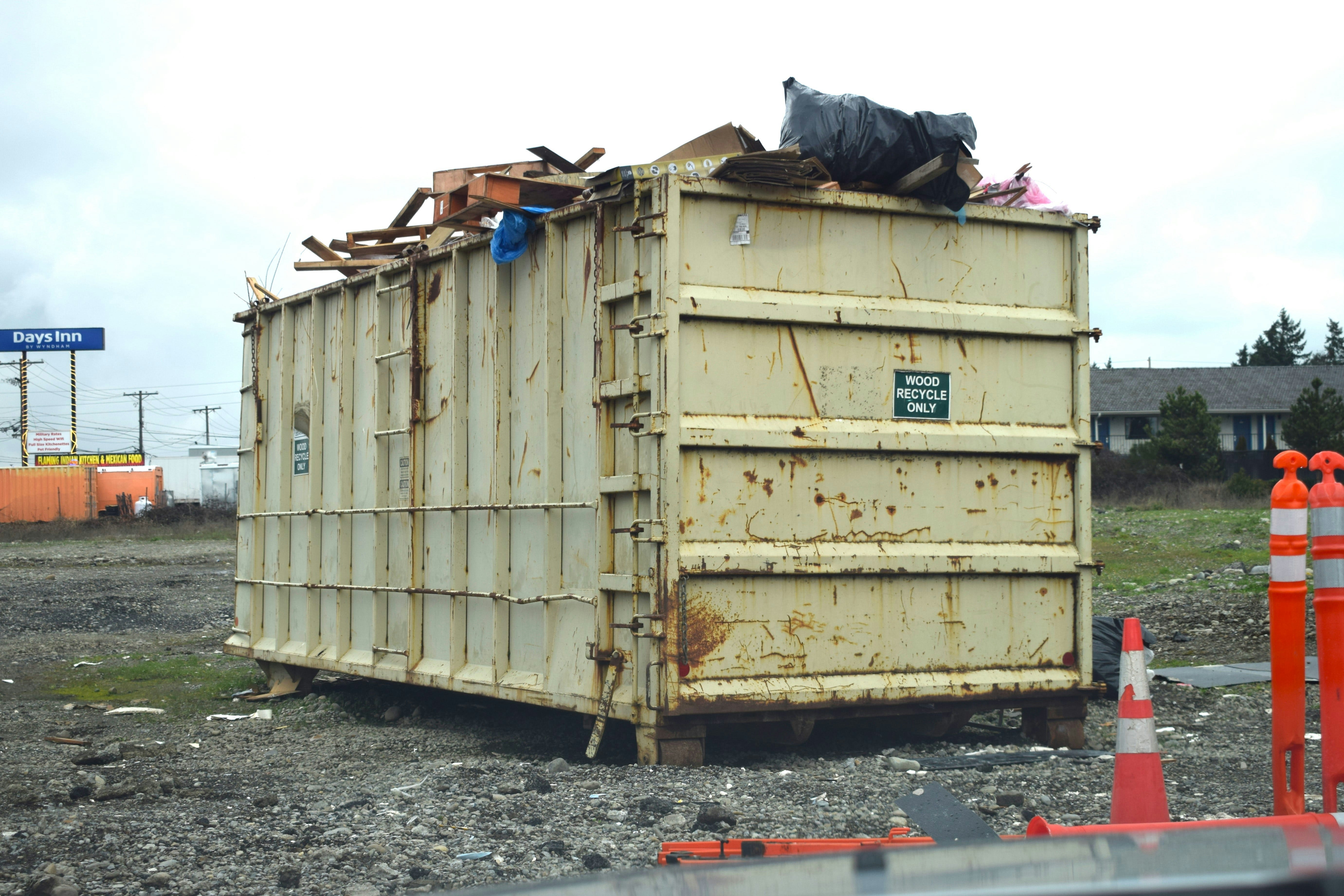
We rented a 6-foot-tall, 22-foot-long roll-off dumpster and had it delivered and parked in the driveway. Obvious “trash” items went in the dumpster, “keep” items were sorted into piles of like items, and items people were unsure about came to me for a decision. By the end of the process, we had everything sorted, stacked, and neatly visible. And we had filled the 22-foot dumpster to the top.
Our early hope was that we could hire an estate sale company to come in and sell everything for us, the proceeds of which we would use to help pay for assisted living.
We had two companies come out to the house to survey everything. Within a few minutes of each coming out, I could tell they weren’t interested. Representatives from both companies were very kind and honest with us. They said there really wasn’t anything of significant value among her many items. Both companies instead recommended that we donate everything and take the tax write-off to reduce her tax bill from selling the house. Mom had a hard time accepting this; to her there were many valuable items in her home that someone would want to buy. They say, “one man’s trash is another man’s treasure,” apparently, one man’s treasure is also another man’s trash.
If you’re not familiar with it, there’s something called the Endowment Effect, where individuals place a higher value on items they own than on similar items they do not own. You generally experience this when you go to sell something and the price you want is higher than someone is willing to pay. Your emotional attachment to the item causes you to overvalue it.
When I showed the estate sale reps a box of vinyl records (something I thought would be valuable), they looked through them and shrugged their shoulders—nothing really of value here. The same was true for multiple bookcases of books. My quick search on eBay confirmed this.
The estate sale reps were also kind about telling us which items we might want to try and sell on our own—the items were not the things I expected. It was the odd little things, like a Santa mug and one or two other seemingly innocuous items, that the estate sale folks pointed out as potentially valuable. But even those, when I looked them up on eBay, weren’t worth a whole lot—only tens of dollars. There definitely weren’t any awesome collectibles worth thousands of dollars.
There were items that I thought someone in the family, or a friend, might want, so I gathered those and had them available during the celebration of life event we had for Mom later. Friends and family were free to take whatever they wanted—either to use, remember Mom by, or both.
But most people don’t really want other people’s stuff, which I understand. When an extended family member passed away a few years ago, the executor of her estate invited us to go through her home to see if there was anything we would like. The family member had great taste. I loved her furniture and decorating style. But in the end, we simply didn’t want, need, or have room for more stuff in our own home. And this, I think, tends to be the case for most people’s stuff. Again, reference the Endowment Effect: just because you value your stuff doesn’t mean other people will, or at least not to the degree that you do.
Even when I did find things that I thought people might like, I ended up having issues. I found a set of plates from the 1970s that I thought a friend might like. The friend did like the plates and gladly accepted them. Then, a month later, the friend told me that they had done research online and found that the plates had harmful amounts of lead in them. The plates had to be thrown away.
Once we had everything sorted and stacked, I walked into the living room and was struck by the fact that I hadn’t seen the house this organized in well over a decade, if not longer. I had flashbacks to the years that I had lived there during high school. It was both nostalgic and sad.
With the house organized, and the estate sale representatives telling us there weren’t enough items of value to have an estate sale, even on our own, we had to figure out what to do with everything.
We coordinated with the Society of Saint Vincent de Paul in Austin to pick up the big furniture items. The rest of the items we loaded into a large U-Haul and dropped it all off at Goodwill. Needless to say, the staff at Goodwill were quite surprised by the large donation. Before we dropped it all off, I took pictures of everything so I could log it all for the donation deduction on taxes.
But, not everything was donated or with Mom in her new place.
Mom loved to sew, and she was good at it. She even had her own sewing business for many years. This hobby, turned business, also turned into another hoarding problem. And because she had emotional attachment to all of her fabrics and sewing supplies, she did not want us donating them or giving them away. So, we rented a 10x10 storage unit to keep it all in. We had bins of sewing fabric, thread, sewing machines, and other accoutrements stacked in large plastic bins five feet high. For a year and a half we paid for the storage unit just to store the sewing supplies. After Mom passed, we donated it all to Community First, an organization that provides support to homeless in Austin and helps them get back up on their feet by proving housing and workforce training. Given Mom’s giving nature, we think she would’ve appreciated it all going to an organization that helped others.
After getting the house cleaned out, we then moved forward with renovations. I won’t go into much detail on the renovation piece, other than to say that this too was a major lift. We met with several contractors, chose one, then set about meeting with them to discuss and choose which items were worth renovating, which were not, and to what degree we should improve something for the greatest payoff at minimal cost. It was the standard updates and improvements you normally see—bathrooms, kitchen, paint, flooring, landscaping, and new fencing.
Our weekly trips up to Austin continued so we could meet with the contractor to check on progress and coordinate details, and do work that they would not be doing.
Three months later, we finally finished with renovations. Then, we took Mom to see the renovated house.
I wasn’t sure how she’d react to the changes. I fully expected lots of crying since it no longer looked like “her house.” But she didn’t cry. She went around the house, looked in each room, inspected different items, commented on the renovation work, and that was about it. She visited with her neighbors, then we got back in the car and drove back to San Antonio. I think the house had changed so much that it no longer really looked like “her house” to her. Or, maybe she just knew it was time to move on.
A few months later, as we sold the house, I did one last walk-through. And that’s when the tears hit. I thought of all the memories of living at the home during high school, of holiday meals with extended family, of returning with my family to visit Mom, and of Mom’s declining health and struggle to stay on top of things over the last few years. I realized I would never see the inside of this home again. It was difficult to leave.
But, as I took all of this in, I also couldn’t help but see the home in its newly renovated condition and think about how new memories would be made by a new family. In many ways, this was a reset for many people.
Advice
Take photos before, during, and after the purge. It helps you see progress and helps if you need to create a log for donations.
Create categories: keep, donate, trash, storage, and decide later.
Expect the process to take longer than you think.
Do not overestimate the resale value of ordinary household items. And, don’t assume an estate sale company will want the contents of the house. Most stuff is worth less than people think.
Sentimental value does not equal market value.
If there are truly sentimental items that others may want, identify them intentionally and put them aside.
Accept that some of your things will need to be discarded.
Rent a dumpster if needed.
Bring help.
Do not turn one person’s hoarding problem into your own garage or guest room problem.
Purge your own stuff regularly so others don’t have to deal with it.
Links to each chapter:
Chapter 10 - Life in Assisted Living
Chapter 11 - Her Final Hours
Chapter 12 - Afterwards
Final Reflections