

NOTE: I’m changing up the format a bit for this edition—let me know if you like it or hate it.
Drop in federal workforce
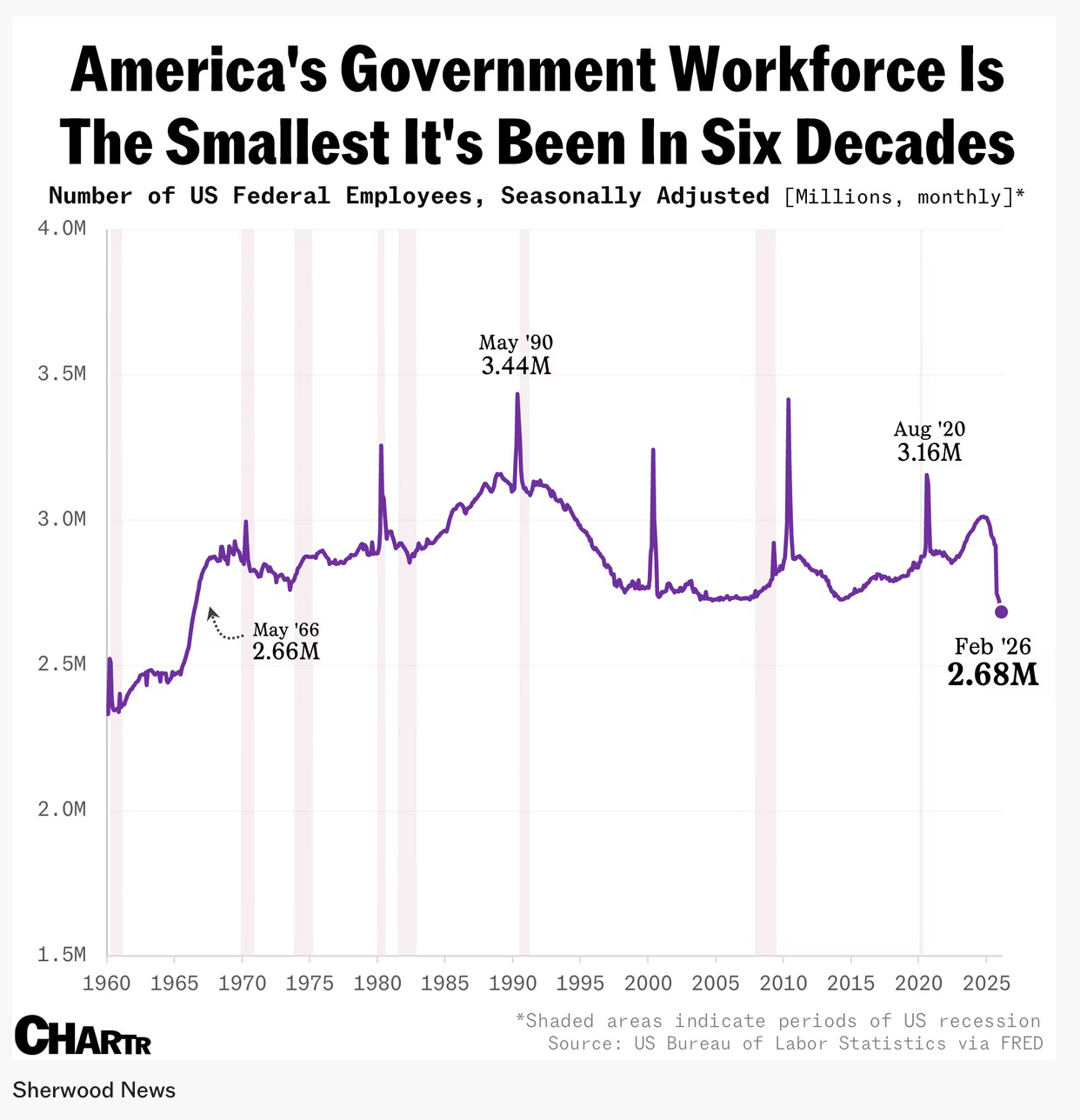
The federal workforce shrank sharply in 2025 after the DOGE-era push for government efficiency, falling 10.3% and dropping to about 2.68 million workers by February 2026, the lowest level in nearly 60 years. Roughly 348,000 employees left through resignations, retirements, layoffs, or other departures, while federal hiring fell more than 55% from the year before. Some of the largest staffing reductions occurred at Veterans Affairs and the Treasury, and agencies like USAID were especially hard hit. Now, the administration appears to be shifting from cuts to selective rehiring, aiming to fill gaps created by last year’s downsizing. In some cases, agencies that were heavily reduced are hiring again, though not necessarily to rebuild prior functions.
Drop in crime
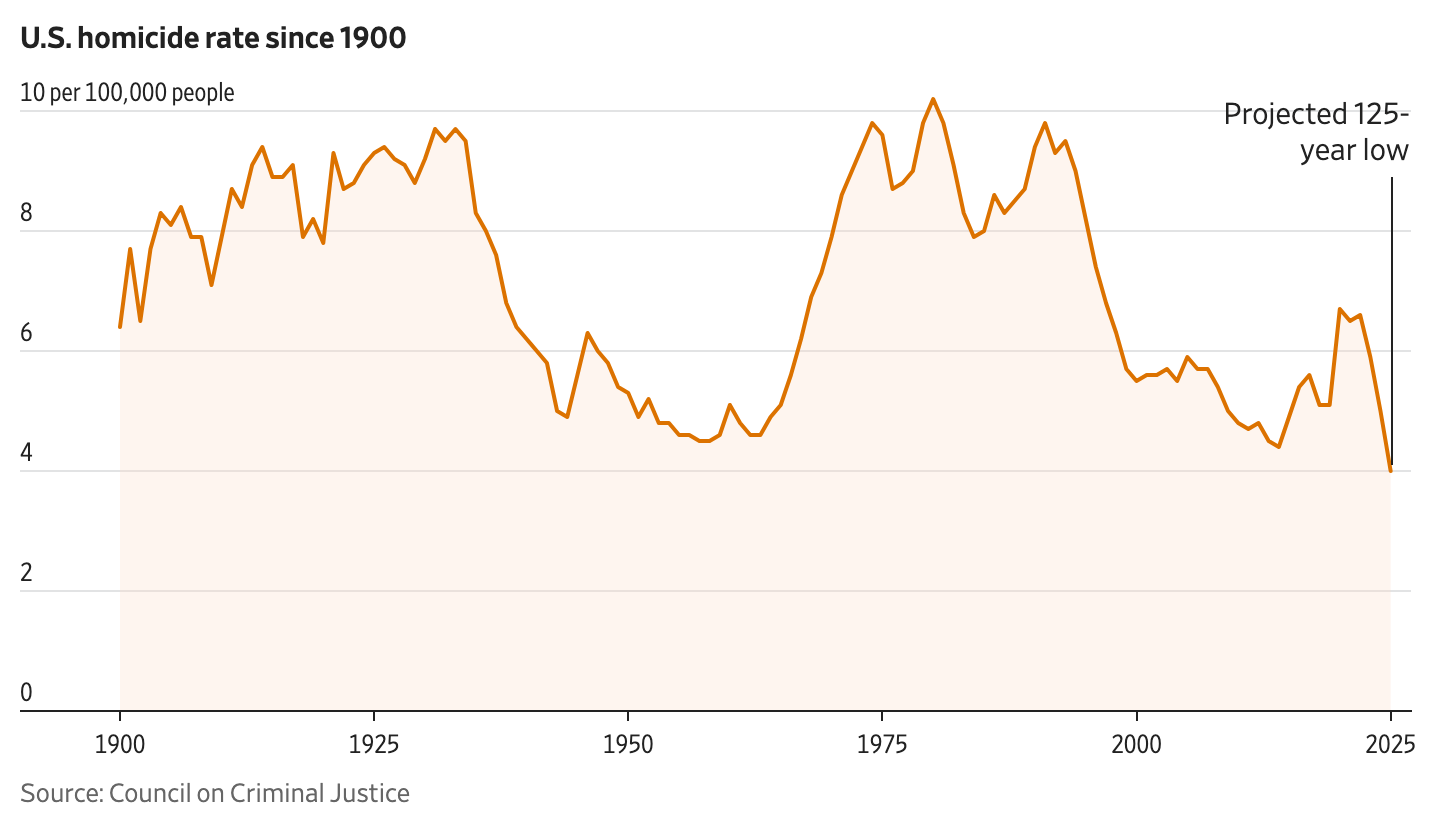
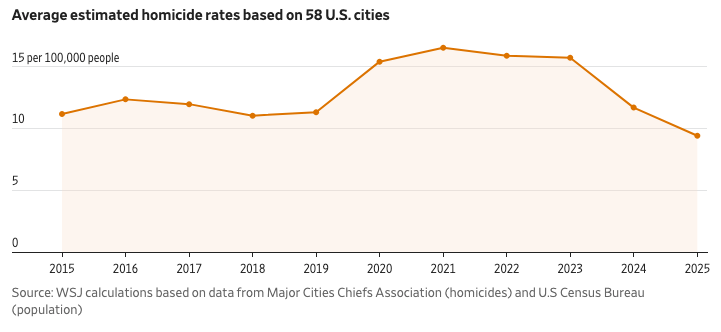
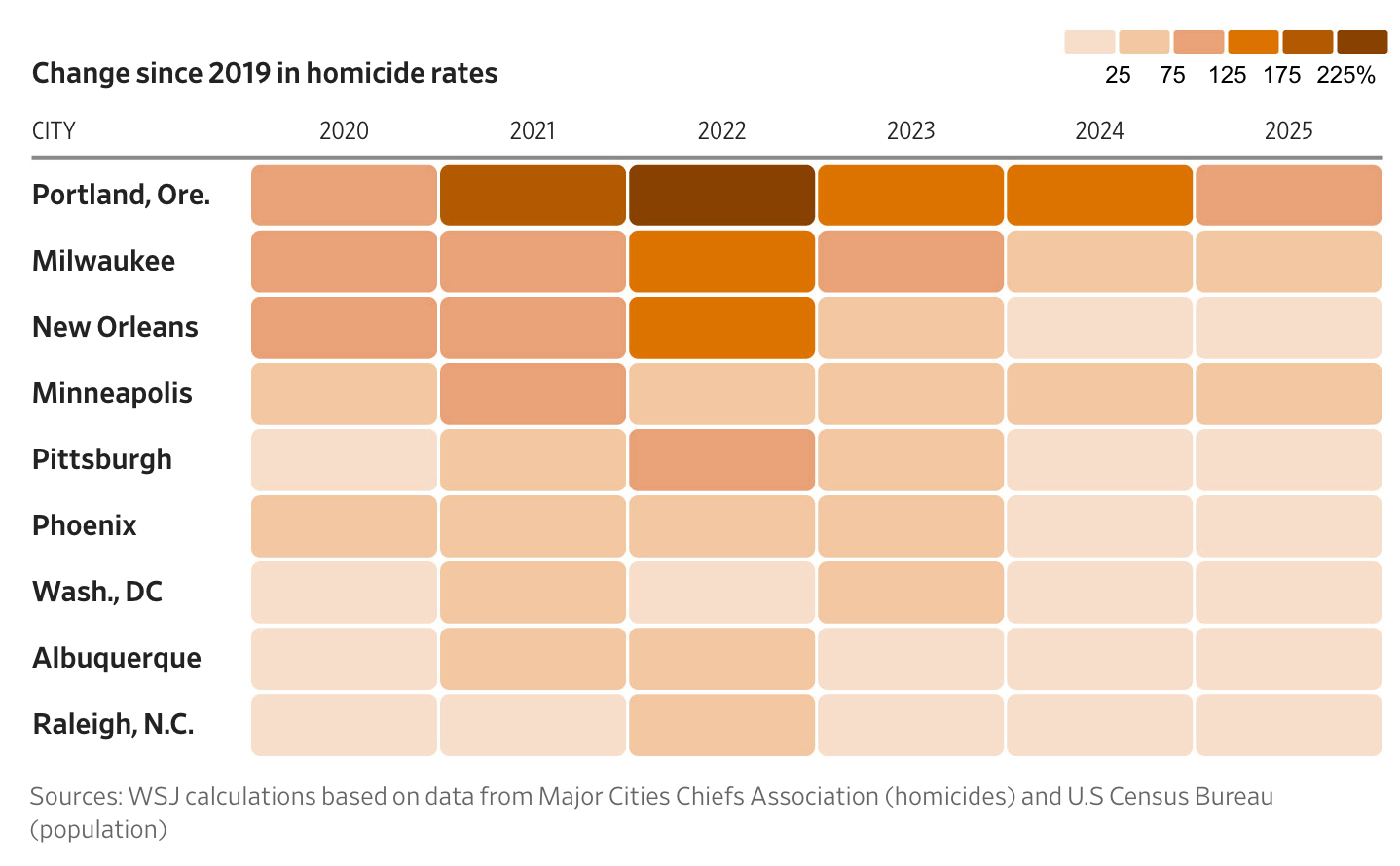
At the same time, and unrelated, the country has one of its clearest good-news stories in years— violent crime and homicide are dropping sharply. Researchers disagree on the precise mix of causes, but better policing, restored post-pandemic routines, and broader social changes all appear to be helping.

Rise of technology, efficiency, solitude and prices
Though the chart below actually comes from the WSJ article discussed above, I thought it was a good bridge to this piece by Derek Thompson that blends the topics of technology, efficiency, solitude and prices. His core argument is that businesses built around shared, in-person experiences—restaurants, theaters, childcare, bookstores, and other social spaces—are labor-intensive and therefore become more expensive over time, while businesses that keep people alone—streaming platforms, delivery apps, social media, and smartphone entertainment—scale efficiently and become more profitable. As a result, our current economy increasingly rewards anti-social business models, making solitude cheaper and more convenient than connection.
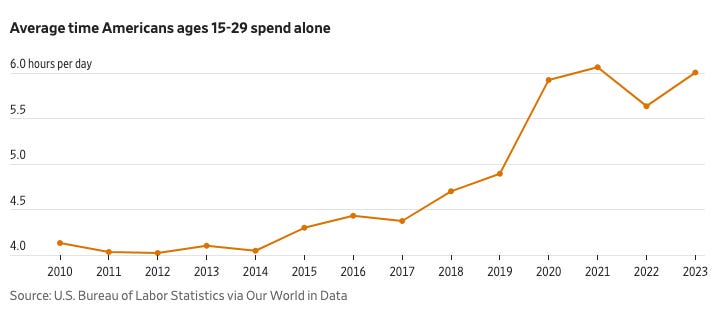
This dynamic is known as the Baumol Effect, or Baumol’s cost disease, in which some sectors can boost productivity through automation and technology, but others still require roughly the same human labor they always have. A farmer or tech company can serve far more people with fewer workers, but a teacher, server, actor, or musician cannot compress human interaction in the same way. As wages rise across the economy, these social, labor-heavy services become harder to afford, which helps explain why institutions that bring people together are under pressure. His conclusion is that if social connection matters, society may need to subsidize or otherwise support the spaces and services that make hanging out, gathering, and building community easier. Not sure how I feel about further subsidization by the government, as I continue to have grave concerns about our nation’s debt and social security’s solvency (see article farther below), but I do think that we need to engage in more activities that bring people together for healthy activities.
Speaking of not leaving your home…
Amazon is expanding faster delivery options across the U.S., introducing one-hour delivery service in hundreds of locations and three-hour service in more than 2,000. The offerings focus on everyday items such as household essentials, health and beauty products, and over-the-counter medications. One-hour delivery is $9.99 for Amazon Prime members and $19.99 for non-Prime members. Three-hour delivery is $4.99 and $14.99, respectively.
Wait, social media is bad for your health?
Speaking of people’s health, the legal pressure on Meta and Google’s social-media platforms is intensifying. A California jury found Meta and Google liable for $3 million in damages to a 20-year-old woman, identified as K.G.M., who argued that addictive features on their platforms contributed to her app addiction. Meta, through Facebook and Instagram, was assigned 70% of the damages, while YouTube was assigned 30%. TikTok and Snap were also named in the lawsuit but settled separately out of court. Both Meta and Google said they disagree with the verdict and plan to appeal.
The case is part of a much broader wave of litigation against major social media companies over claims that their platforms harm users’ mental health. That pressure is growing: in a separate New Mexico case, Meta was also ordered to pay $375 million after a jury found it violated state unfair trade practices tens of thousands of times. The broader concern is reinforced by usage trends among young people. A 2025 Pew study found that about 36% of teenagers said they were online using a social media or video app almost constantly, with YouTube and TikTok among the most widely used. In testimony, the plaintiff said she began using YouTube at age six and Instagram at age nine and described being unable to stop.
Oh, and if that wasn’t bad enough, reports that Meta contractors reviewed intimate footage from AI glasses have surfaced. Meta’s Ray-Ban AI glasses were initially a breakout success in sales, but that growth comes with major privacy and labor concerns. The glasses let users capture first-person video and use AI to interpret what they see, yet some of that footage is reportedly sent to offshore contractors for data labeling. Workers in Kenya said they were required to review deeply private material, including people undressing, using the bathroom, watching pornography, exposing bank cards, and even filming sexual activity.
Artificial Intelligence
This wouldn’t be a news update if I didn’t include something about AI.
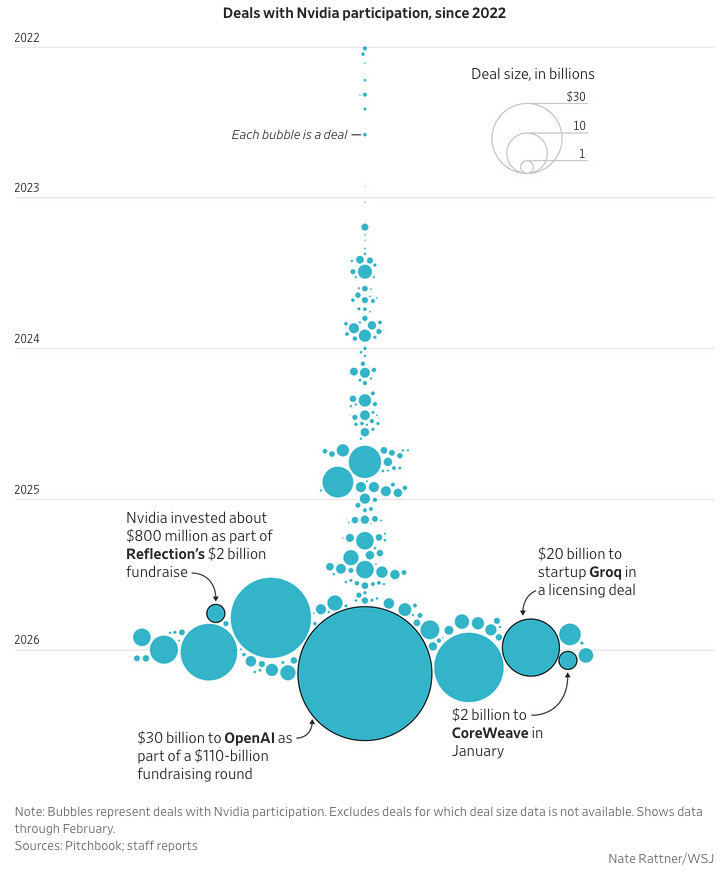
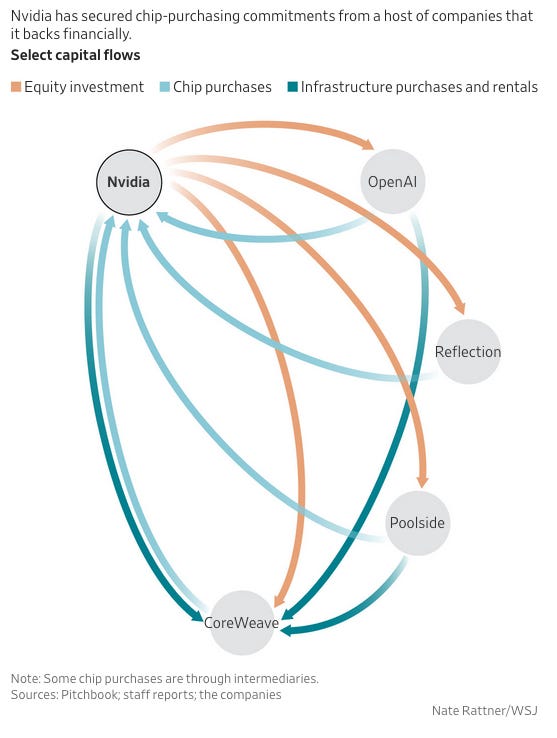
At the infrastructure level, AI is concentrating enormous power in a small number of firms. Nvidia’s growing role as investor and ecosystem architect can be seen in the charts below. And, Amazon’s huge AI spending bet points in the same direction: the firms with the deepest balance sheets are trying to turn capital into strategic advantage.
In other AI news, Anthropic is facing new scrutiny after accidentally releasing more than 500,000 lines of code connected to Claude Code, an incident that has alarmed lawmakers because of Claude’s growing role in U.S. national security work. Representative Josh Gottheimer warned that repeated leaks could undermine America’s competitive edge if rivals are able to replicate the system, while also criticizing the Trump administration for blocking Claude from government contracts, arguing that doing so could hurt the U.S. in its AI competition with China.
The episode has sharpened concerns not just about internal security at AI firms, but also about how vulnerable advanced models may be to foreign exploitation. Gottheimer pressed Anthropic on whether it has weakened safety protections and warned that Chinese-linked actors, including DeepSeek, could use model distillation or cyberattacks to benefit from Claude’s capabilities. Anthropic has tried to minimize the incident, saying no customer data or credentials were exposed and that the release stemmed from human error rather than a breach, but the leak is likely to intensify debate in Washington over how AI systems tied to defense and intelligence should be secured and regulated. Alas, human error…the weakest link in cyber security.
Yep, I’m still concerned about our economy
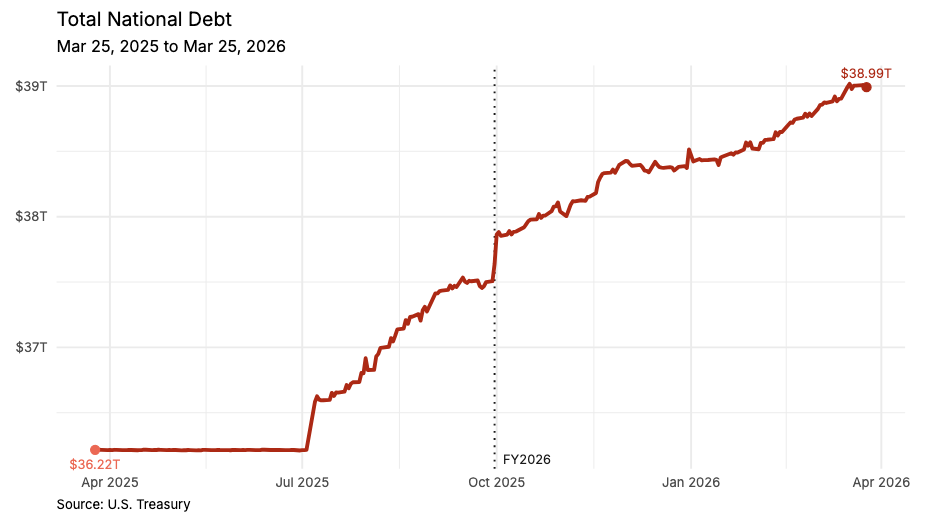
A year ago, I posted an article, It’ll get worse before it gets better, about the economy. Well, it’s not getting any better. I have serious concerns about our nation’s debt, which continues to go up:
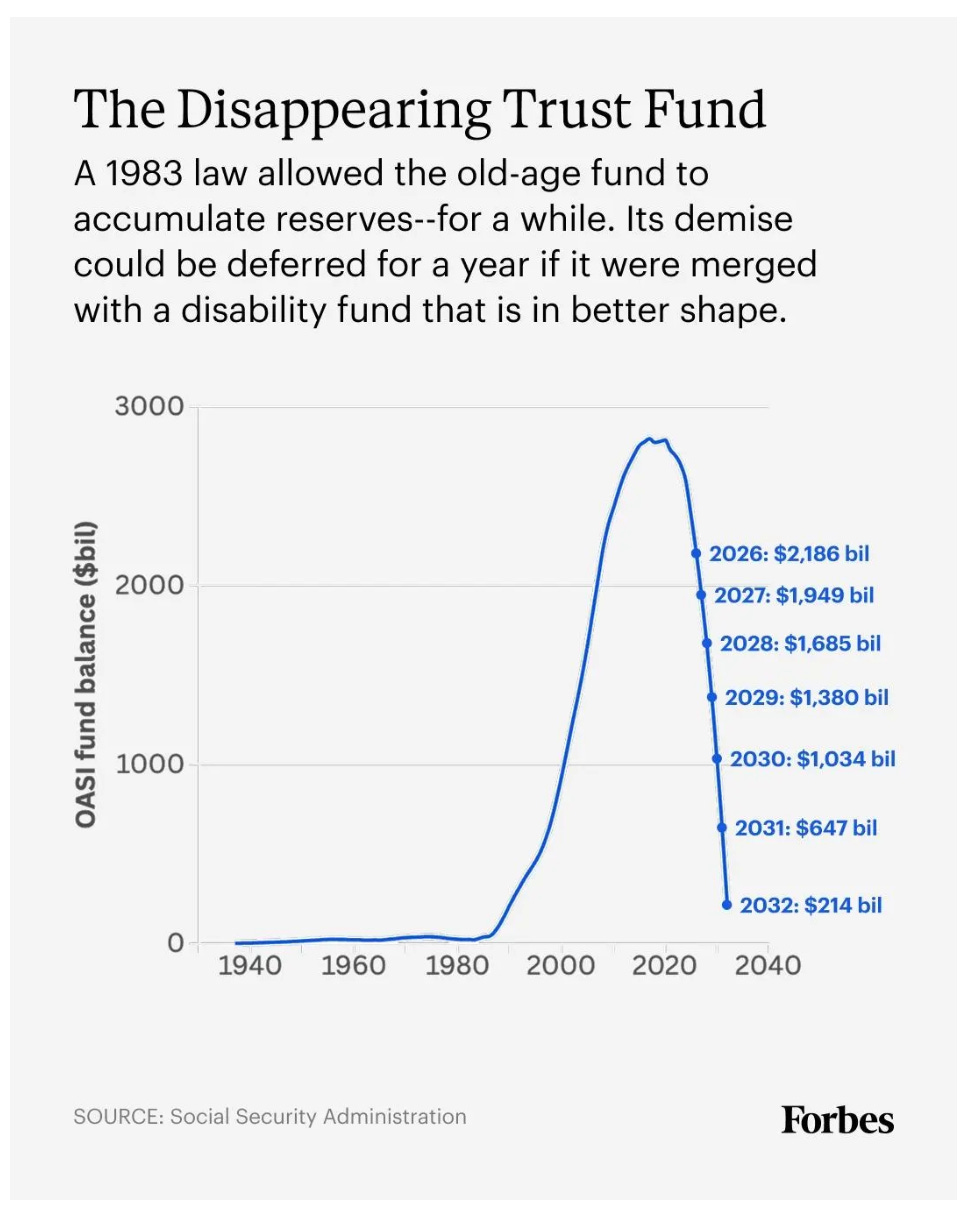
And relatedly, I also have serious concerns about Social Security, which is heading toward a funding crisis because payroll taxes from current workers are no longer enough to cover benefits for retirees. The system is drawing down its Treasury credit balance, but that reserve is projected to run out around 2033, or possibly sooner, at which point benefits would automatically be cut by about 23% unless Congress acts. The central problem is that people are living longer, while lower birthrates and fewer immigrants mean there are not enough younger workers paying into the system.
Several broad fixes are on the table, all of them politically painful. Options include raising the retirement age, increasing taxes on high earners or on everyone, reducing initial benefits for future retirees, slowing cost-of-living increases for current beneficiaries, or even replacing the current earned-benefit structure with a flat anti-poverty payment. Lawmakers will almost certainly end up using some mix of higher taxes and lower benefits, with the burden likely falling more on higher earners and future retirees…though Congress has so far shown little urgency in confronting the issue. So, bottom-line: We’ve got seven years.
Private-credit problems
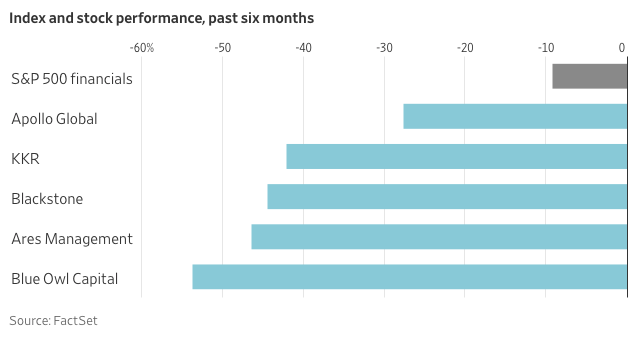
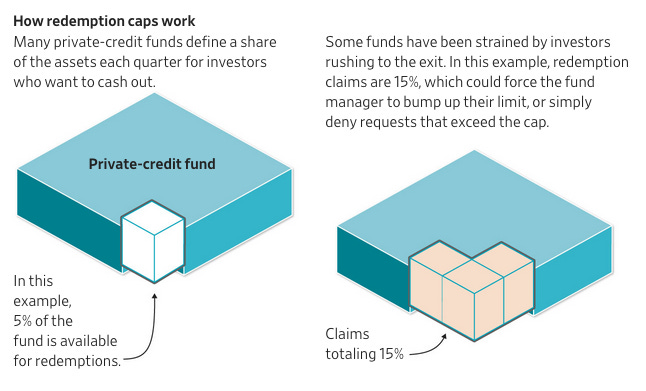
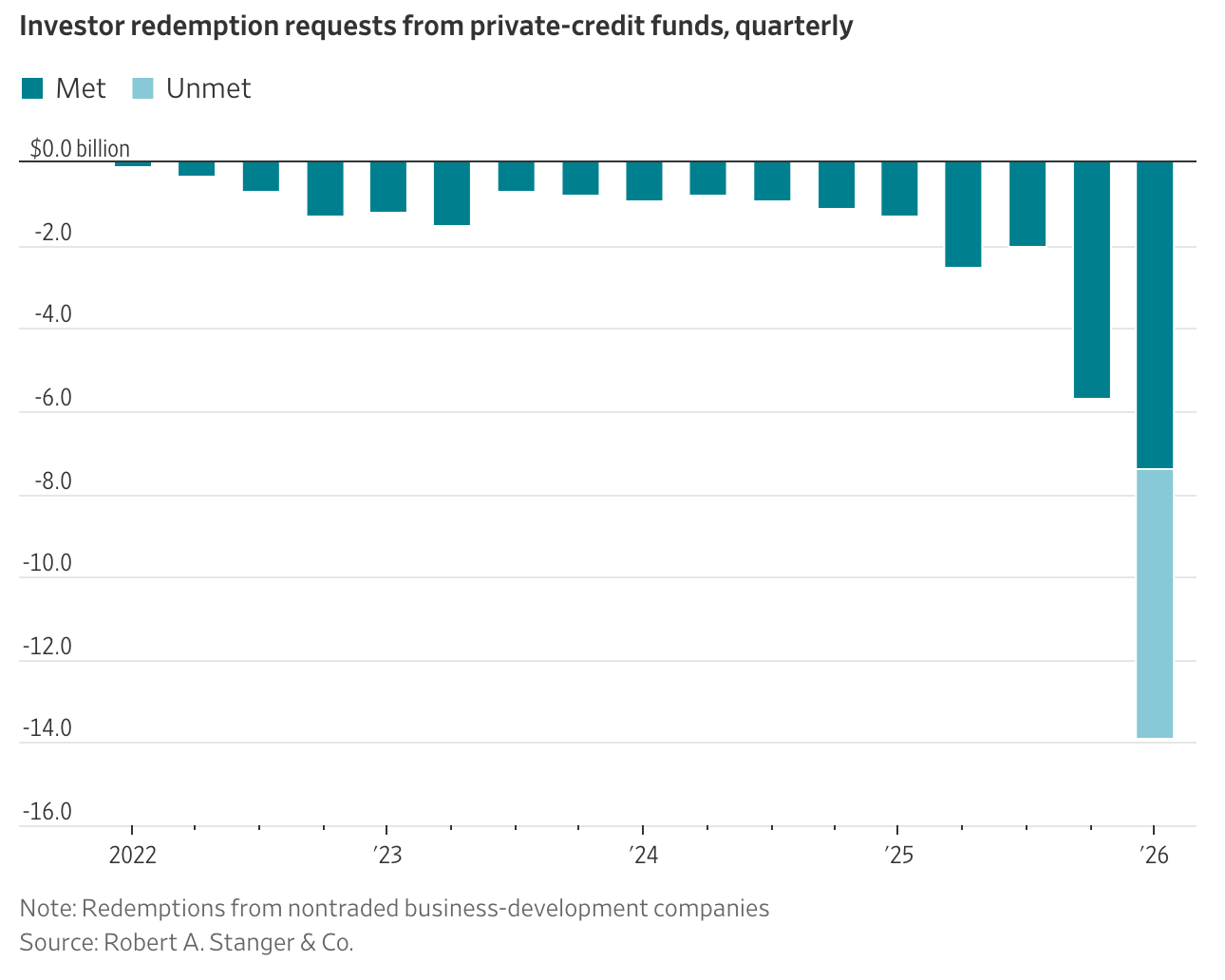
In other disappointing economic news, the private-credit boom that fueled major growth on Wall Street is now showing signs of strain as investors rush to pull money out of funds. Large redemption requests—such as investors trying to withdraw 14% from a major fund—are forcing firms to limit payouts, delaying access to capital and exposing liquidity constraints.
For us laypeople, what does that mean?
Private-credit funds made a lot of loans during a period when money was easy, interest rates were lower, and investors were eager to chase higher returns. Many of those loans went to riskier companies, including firms with weaker finances. Now that borrowing costs are higher and the economy is less forgiving, some of those companies are struggling more, which makes investors wonder whether the loans inside these funds are really as safe or valuable as advertised.
Once that doubt starts, it feeds on itself. Investors think, “If these loans weaken further, I may want out now rather than later.” But because private-credit funds cannot easily sell those loans quickly for cash, people worry they could get stuck waiting to withdraw. That fear causes more people to ask for their money back, which creates even more concern. So the root cause is a mix of weaker underlying loans, higher interest-rate pressure, and a growing loss of confidence.
There is also a structural reason. Private credit grew very quickly, and more of the money came from wealthy individuals and other noninstitutional investors who can be quicker to react when sentiment turns. When times were good, that rapid growth looked like strength. Now it means the industry is more exposed to mood swings. So, at bottom, this is happening because the market expanded fast, took on risk, and is now being tested in a tougher environment.
Other news about other markets
More and more (and more and more) articles are coming out about the dangers of prediction-markets. In case you’re not aware, a prediction-market is a website where people put money behind their predictions about future events, and the shifting prices show what the crowd thinks will happen. They are all the rage right now. Here’s a screenshot from Polymarket on just a few (of hundreds) of bets you could make:
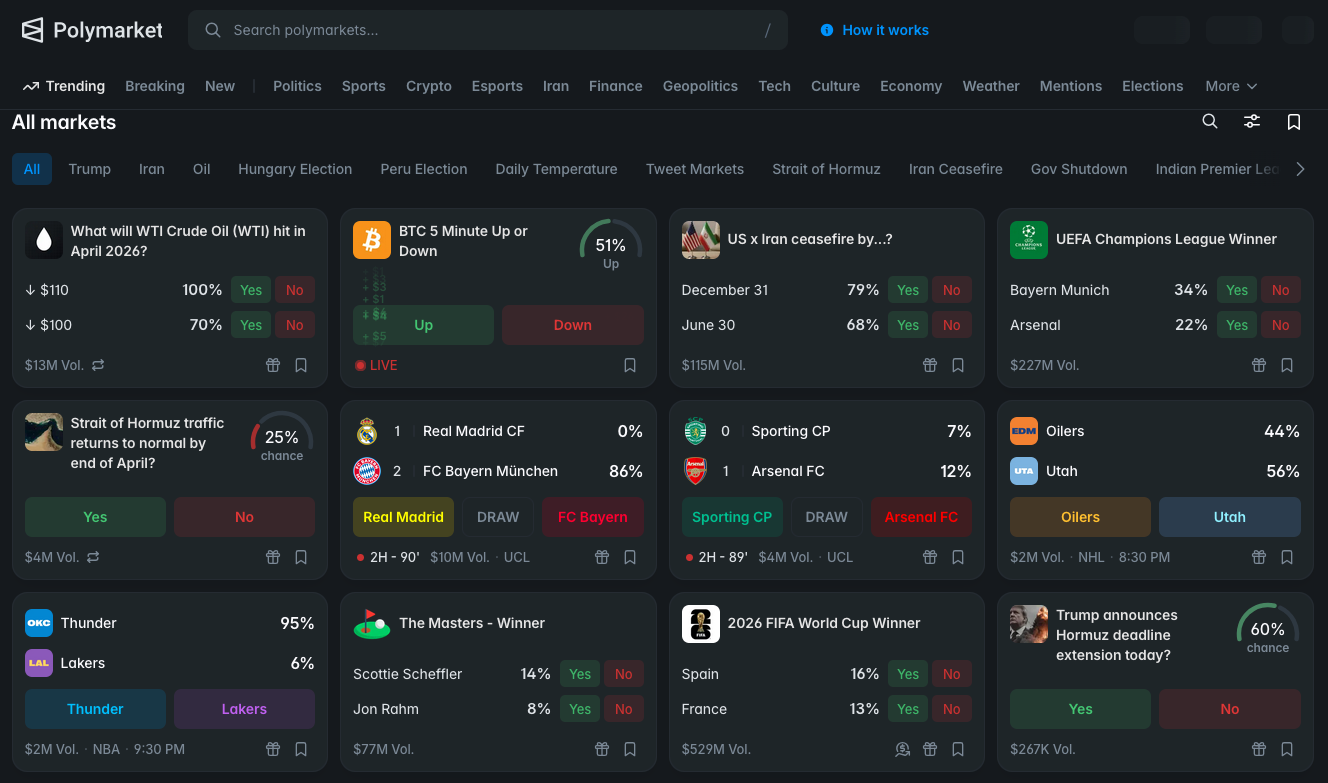
Prediction-markets bring numerous problems. College students are describing sports betting as a growing social and financial problem. Campus prediction-market frenzies are being fueled by rumors and side information leading to speculative behavior becoming normalized among young people before strong guardrails are in place.
And it’s not just happening on campuses.
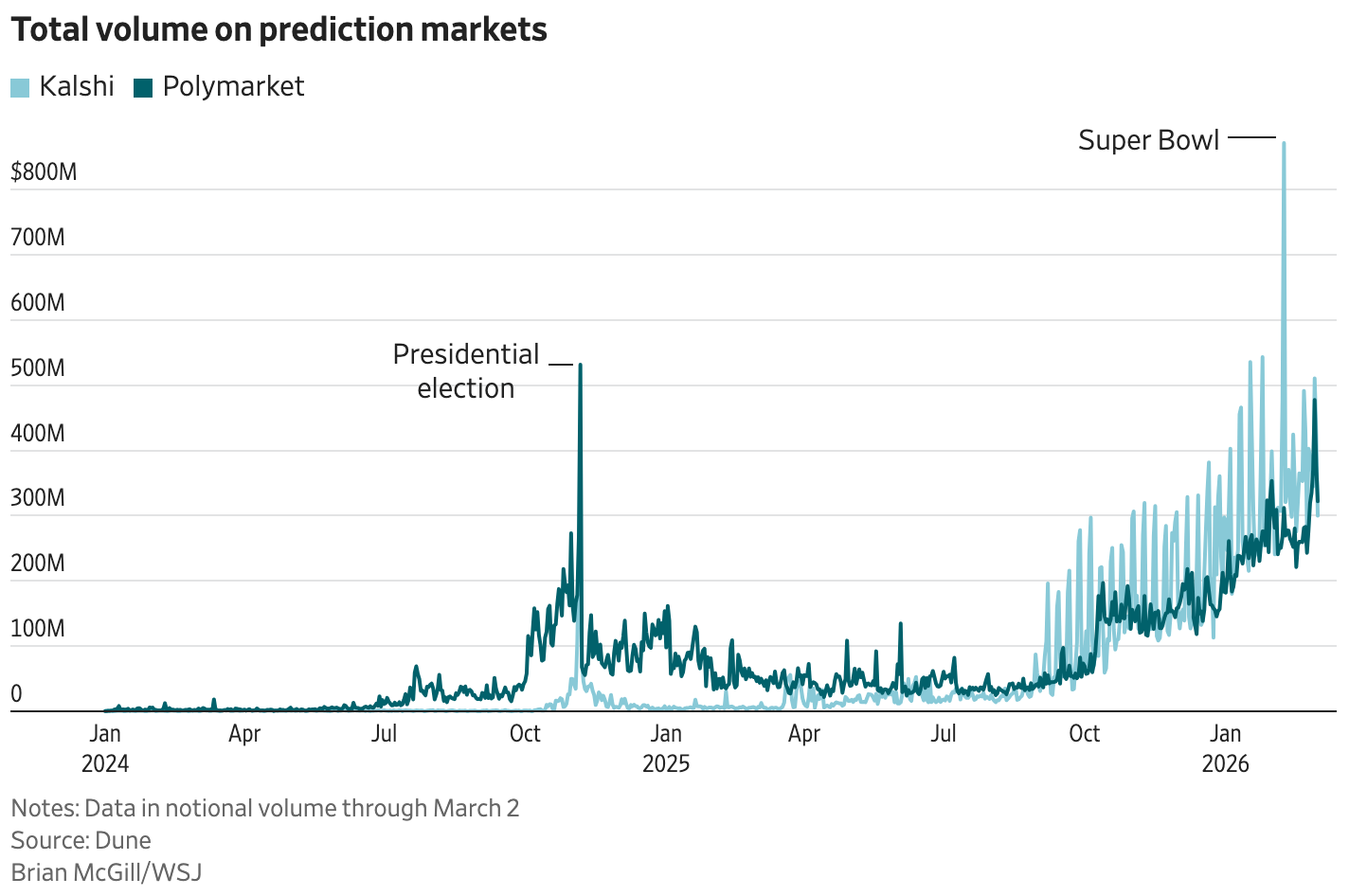
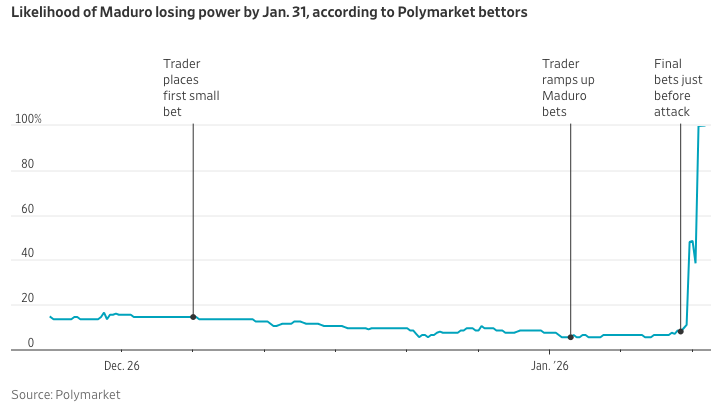
After U.S. and Israeli strikes on Iran, attention turned to prediction-market platform Polymarket, where traders had wagered heavily on when the attacks would occur. Roughly $529 million was traded on strike-related contracts, and six newly created accounts reportedly earned about $1 million in profits by betting the U.S. would strike Iran by Feb. 28. Some of the bets were placed hours before the attacks, raising suspicions among blockchain analysts that the trades could reflect insider knowledge rather than simple speculation.
All of this points to the same problem: once money can be made from an event, people gain incentives not only to predict outcomes, but to manipulate information, pressure participants, or blur the boundary between analysis and exploitation.
Expanding on Iran
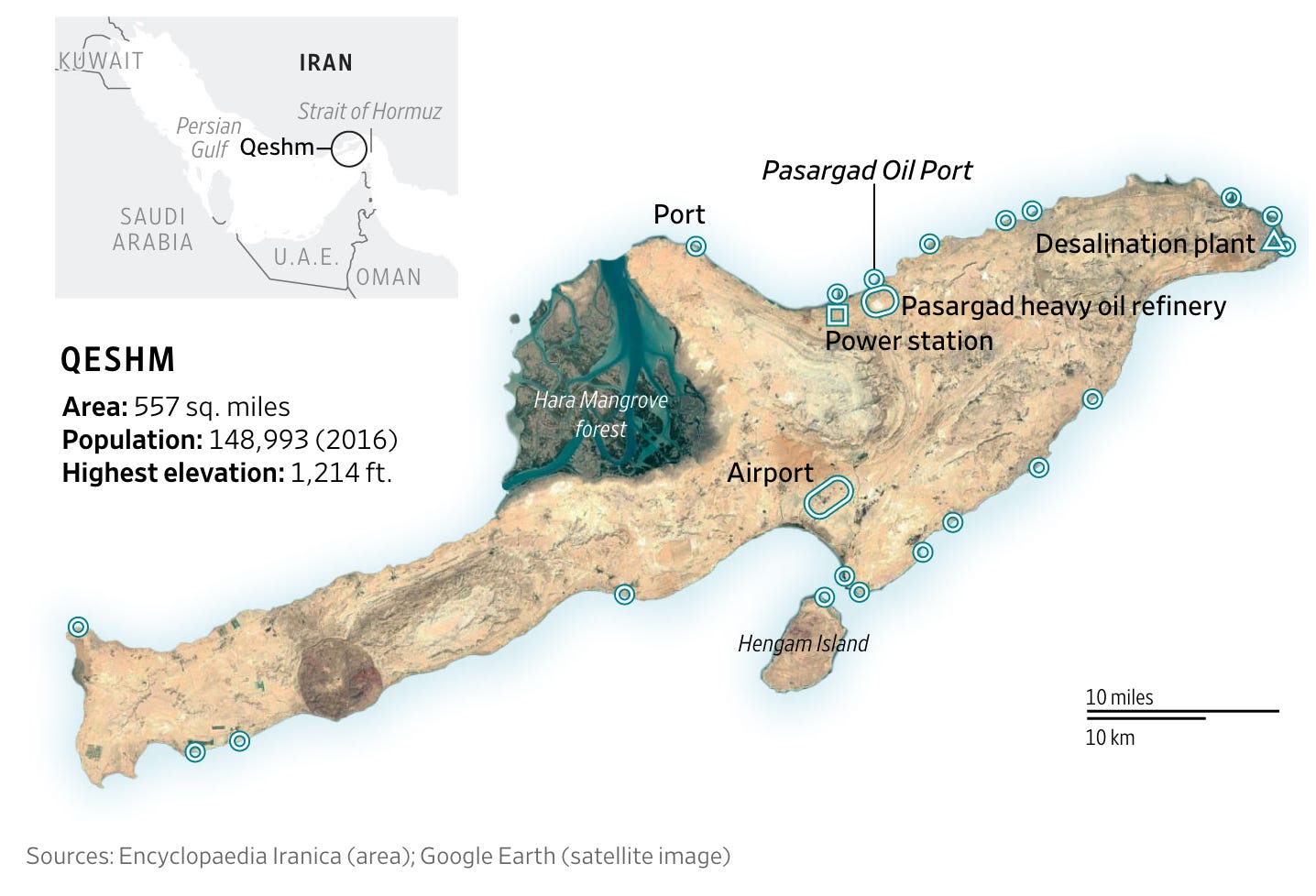
Speaking of Iran, last week, I posted about the dangers of chokepoints and how they can turn into chokeholds. Interestingly, later that day, WSJ published a piece titled, The Islands That Give Iran a Stranglehold on the Strait of Hormuz. Chokeholds, Strangleholds…great minds think alike, I suppose. However, in my analysis, I focused on mainland Iran, I didn’t really talk about the islands. The WSJ article is worth the read as it goes into more detail about Iran’s islands.


Mixing it up in Mexico
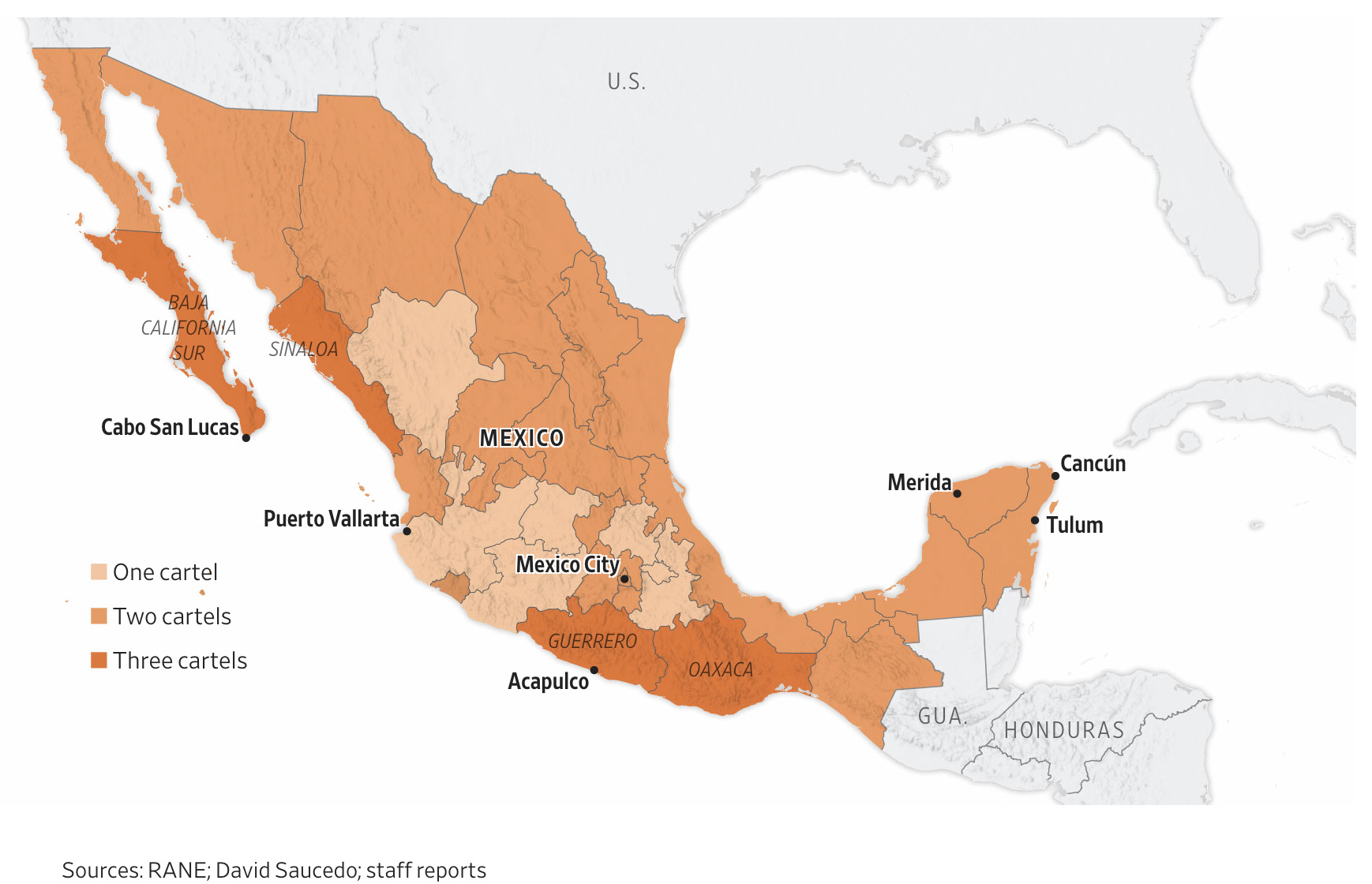
Meanwhile, in Mexico, cartel control across much of the country continues to blur the line between criminal power and territorial governance. Mexico’s major drug cartels expanded their territorial control beginning in the 1980s to manage cocaine trafficking from Colombia into the United States and protect their operations from government interference. Their influence has grown further in the past decade with the rise of fentanyl. Today cartel groups operate across nearly all of Mexico’s 32 states, prompting increased pressure from the United States, where several major cartels have been designated foreign terrorist organizations, to curb their power.
No more wining
China’s anti-drinking crackdown is reshaping the global wine trade. Policies banning alcohol at government and Communist Party events, combined with anti-corruption campaigns, have eliminated a major source of demand that once fueled luxury wine imports. As a result, foreign wine imports have fallen dramatically, now sitting at roughly half their 2018 peak, and major producers are left with massive unsold inventory.
Machines inside humans and humans inside machines
As Elon Musk’s Neuralink brain chip continues to push the boundary of human-machine integration by allowing a patient to navigate video game control purely through thought control, Cortical Labs, an Australian company, is developing computers powered by human neurons. Rather than using traditional GPU servers, these “biological data centers” would run on the company’s CL1 units, each of which contains about 200,000 human brain neurons grown on a multi-electrode array chip. The neurons receive electrical signals, respond to them, and effectively produce computing output. The company recently drew attention by demonstrating that this system could play a version of the video game DOOM.
The company is pitching the technology as a possible low-energy alternative to conventional AI infrastructure, which has become increasingly expensive and power-hungry as major tech firms expand their data-center footprints. Cortical Labs says each CL1 unit uses less power than a handheld calculator. Its Melbourne facility is expected to house 120 units, while its Singapore project, built with data-center company DayOne at the National University of Singapore, will begin with 20 units as a prototype. If testing goes well, the partnership could eventually scale to as many as 1,000 units in a commercial DayOne facility.
And speaking of data centers…
The startup, Deep Fission, is developing a system that places small nuclear reactors in narrow boreholes drilled about a mile into the earth, using water pressure and surrounding rock to replace much of the expensive above-ground infrastructure that makes conventional nuclear plants costly and slow to build. Each borehole reactor is designed to generate 15 megawatts, and a field of them could power major electricity users such as AI data centers. The company says this design could produce electricity at about six cents per kilowatt hour, and the Department of Energy selected it for its Reactor Pilot Program as officials look for faster, cheaper nuclear options to meet rising power demand. Supporters see the concept as a possible breakthrough for nuclear deployment, especially for data centers and military bases, while critics in Kansas worry local communities will bear the risk. The inventor argues the surrounding geology makes the design exceptionally safe, and the company’s disposal plan is simply to seal spent fuel in place at the end of a reactor’s life.
The non-trophy generation
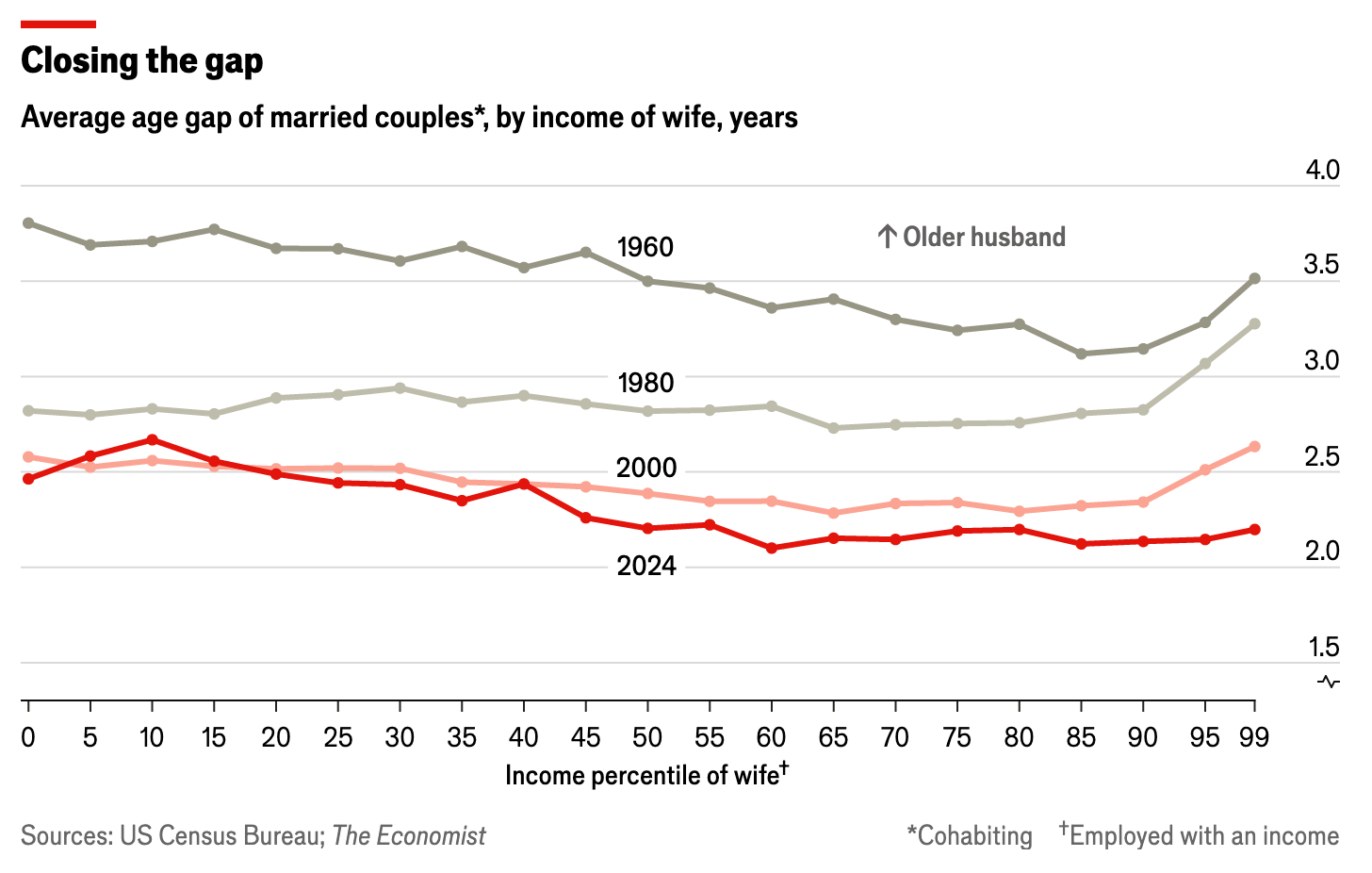
Large age gaps in marriage used to be more common among very wealthy men, which helped fuel the “trophy wife” stereotype. Earlier research found that America’s richest men were often married to significantly younger women, especially if they remarried. But newer census-based analysis suggests that pattern has faded. By 2024, men in the top 1% of earners were no more likely than average to have wives at least ten years younger.
The same shift appears on the women’s side. High-earning women are not especially likely to choose much younger husbands, and in the past they were actually somewhat more likely to marry slightly older men. Today, the biggest age gaps are more common among lower earners than among the rich or middle class.
The main explanation is that education and social environment matter more than wealth. People who spend more time in school tend to meet and date peers close to their own age, and those people also often go on to earn higher incomes. Age-gap marriages therefore appear to be less about status and money than about education, social networks, and changing cultural norms.
The non-coffee generation
Dutch Bros, the third-largest coffee chain in the U.S. behind Starbucks and Dunkin’, actually sells very little hot coffee. While Starbucks still dominates nearly half the U.S. coffee-chain market, Dutch Bros is gaining traction—especially with Gen Z consumers drawn to its highly customizable cold beverages and colorful energy drinks like the “Shark Attack Rebel.” About 90% of Dutch Bros drinks are served cold, and customizable energy drinks now account for roughly 25% of its $1.6 billion business.
The company’s strategy centers on extensive drink customization and youth-focused branding. Customers can mix more than 40 flavors across coffee, energy drinks, teas, lemonades, and sodas, often adding toppings like cold foam or boba. Dutch Bros also studies trends in grocery stores, coffee bars, and even cocktail culture to create new flavors. Its strong loyalty program—responsible for about 73% of transactions—helps drive repeat visits and engagement with younger customers through social media and merchandise promotions.
Let me cut to the chase—this headline is a filler. I didn’t have the bandwidth to create a good one.
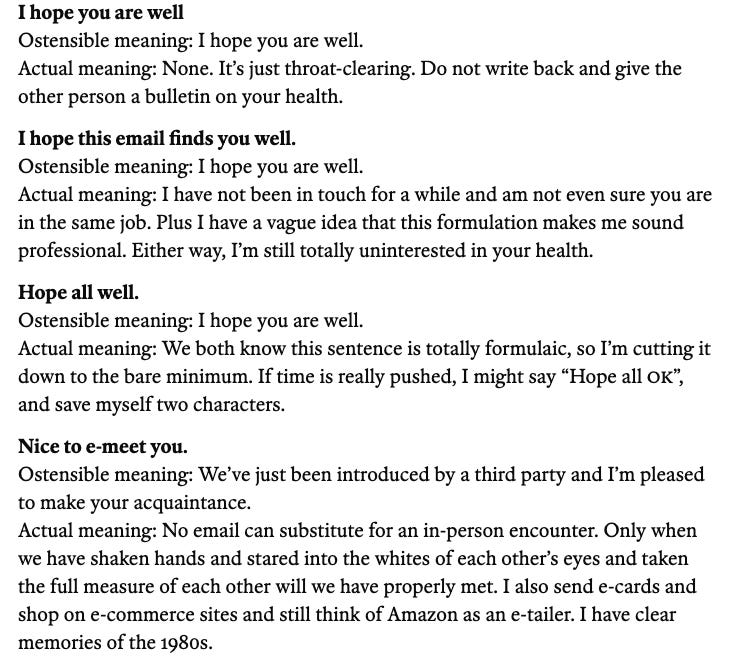
Work-email openings are mostly social filler rather than sincere expressions of concern. Phrases like “I hope you are well” or “I hope this email finds you well” usually mean nothing beyond polite throat-clearing, while slight variations can signal things like distance, laziness, dated professionalism, or simply what day of the week it is. This Economist piece humorously decodes these common opening lines by contrasting their literal meaning with what they supposedly “really” communicate.
For example, “Nice to e-meet you” is old-fashioned, “Hope all well” is compressed and perfunctory, and weekday-specific greetings like “I hope your week is going well” is another thinly disguised substitute. Other lines, such as apologizing for an “out-of-the-blue” email or claiming to “cut to the chase,” are equally empty or self-defeating. Here are a few to whet your appetite:
Meanwhile, this WSJ piece bemoans the corporate jargon that most annoy readers. Many complained that phrases such as “bandwidth,” “circle back,” “deep dive,” “leverage,” and “pivot” replace simple language with vague or pretentious wording meant to sound strategic or professional. In practice, these terms often obscure meaning, inflate routine tasks, or create confusion rather than clarity.
Several readers argued that such language can distort workplace communication. Expressions like “growth mindset,” “hard stop,” or “hit the ground running” may create unnecessary pressure, while phrases such as “take this offline,” “reach out,” or “socialize the idea” can serve as evasive ways to avoid direct discussion. Others mocked jargon that unnecessarily complicates plain concepts, such as “decisioning,” “negative growth,” or “utilize” instead of simply saying “decide,” “decline,” or “use.”
Maybe a movie star?
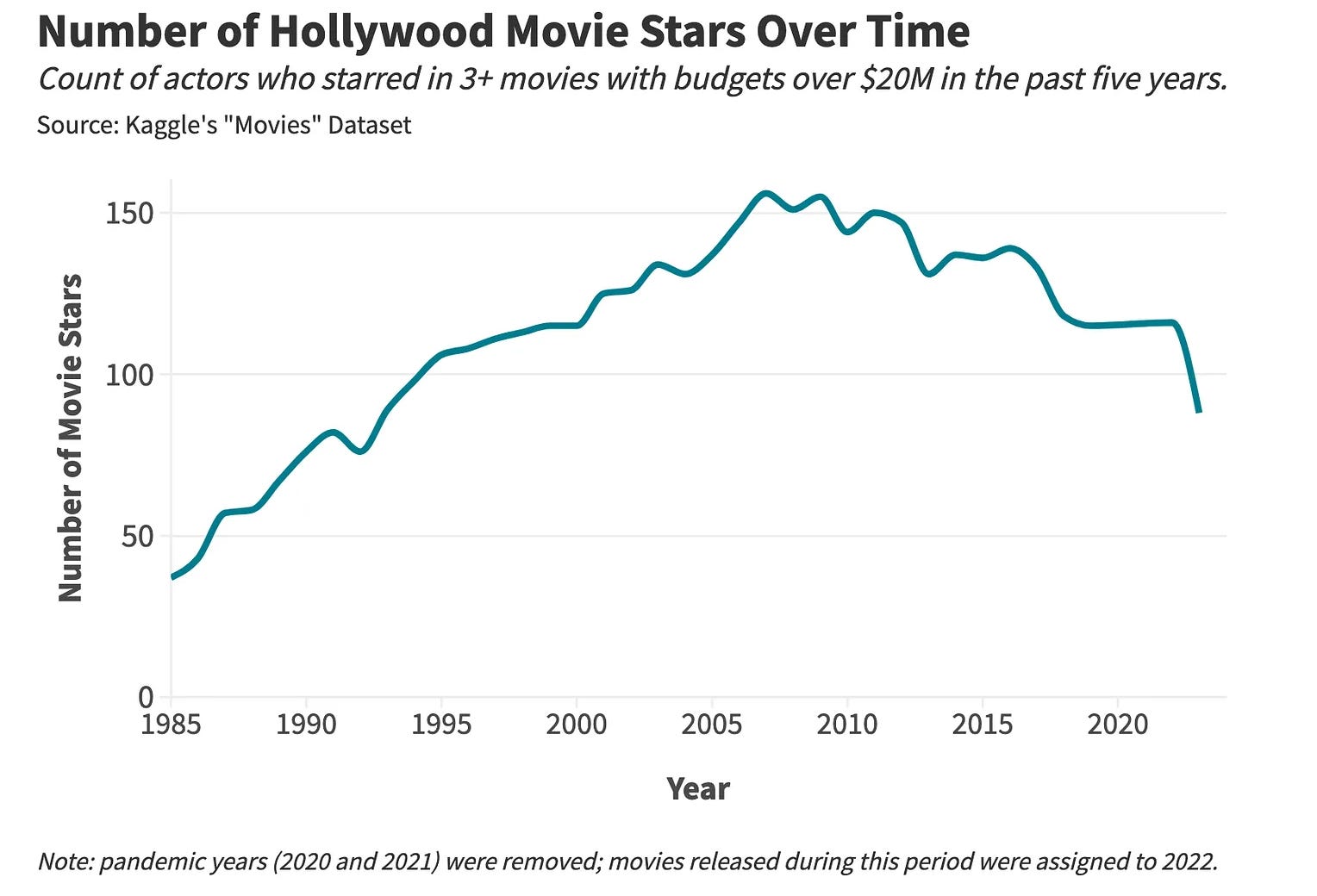
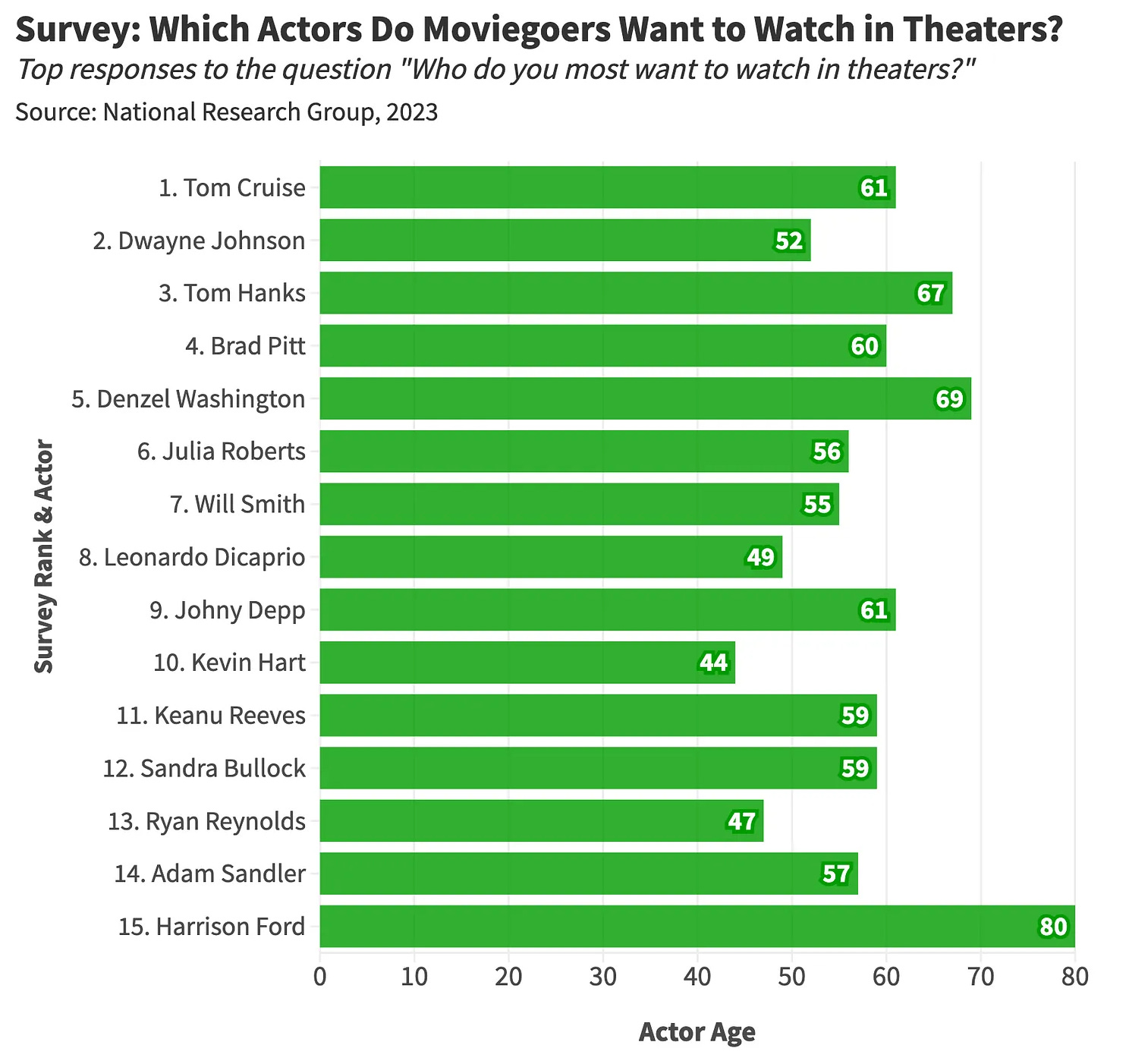
Movie stardom is far rarer and more fragile than most people assume. Only a small share of actors who even get credited film roles ever headline a movie, and most who do never repeat that success. When the pool expands to include the broader working-actor population, the odds get even worse. Even for those who break through, sustaining quality is difficult: many lead actors never appear in a well-regarded film, and even elite stars usually have only a moderate percentage of acclaimed projects. The Stat Significant piece also argues that the traditional Hollywood star system is weakening. Big-budget movie stardom appears to have peaked in the mid-2000s, and the actors audiences most want to see are still mostly older, established stars.
As usual, great analysis and charts from Stat Significant. Here are just a couple of charts:
On the bookshelf
It’s been a while since I’ve included this section on the newsletter, though it’s not for lack of reading. In fact, last year was my most prolific reading year yet—I finished 56 books, a little more than one a week. As I was not much of reader for the first 30 years of my life, I feel like I have a lot of ground to make up. The more I read, the better I get at it, the more I enjoy it, and the more I realize how many great books I missed out on early in my life. So many great stories and so much incredible information is out there just waiting to be absorbed.
This past year, I challenged (OK, “assigned”) each of my students to pick a book off the “Top 100 books you should read before you die” list to read. They were to read it, highlight passages that stood out to them, passages showing great wordplay, key points in the story, things they liked or didn’t like, or something that confused them. I too would read the book they chose, would highlight portions as well, then one-on-one we would discuss it.
Some books chosen were shorter and easier, others were longer and harder. Likewise, the discussions varied in depth. I especially appreciated the students who had read their entire book (some had not) and made significant highlights—we usually had great discussions on writing and life.
In an age of screen overload, do yourself a favor and read a book. It may be difficult at first, especially if you haven’t done it in a while, but it will get easier if you keep after it.
And if you’re ever looking for a book recommendation, reach out and we can talk through your interests and what books may be a good fit for you. My reading interests vary, so I’m sure we could find something that you might like.
As a quick plug, I recently read three of Cormac McCarthy’s books: The Road, No Country for Old Men, and Blood Meridian. Two books—The Road and No Country for Old Men—have both been made into movies. His greatest work, though, is considered Blood Meridian. All three of these are incredible reads. They are not feel-good reads, but they are unique, as McCarthy’s writing style. Afterward reading them, I did some research on McCarthy which led me down a rabbit trail that touched on: Polysyndeton, Santa Fe Institute, The Kekulé Problem, and the many real-life people that some of the characters in Blood Meridian are based on.
I’m currently reading Washington: A Life by Ron Chernow. It’s a biography of George Washington that does an excellent job of portraying Washington in a clearer light. Before that, I read The Man Who Ran Washington: The Life and Times of James A. Baker III; it’s a fascinating look into American politics in the 70’s, 80’s, and 90’s. These last two books are rather long, but they open your eyes to the politics in D.C.—both during the forming of our country and 200 years later. If you want some recommendations for lighter reading, just let me know.