

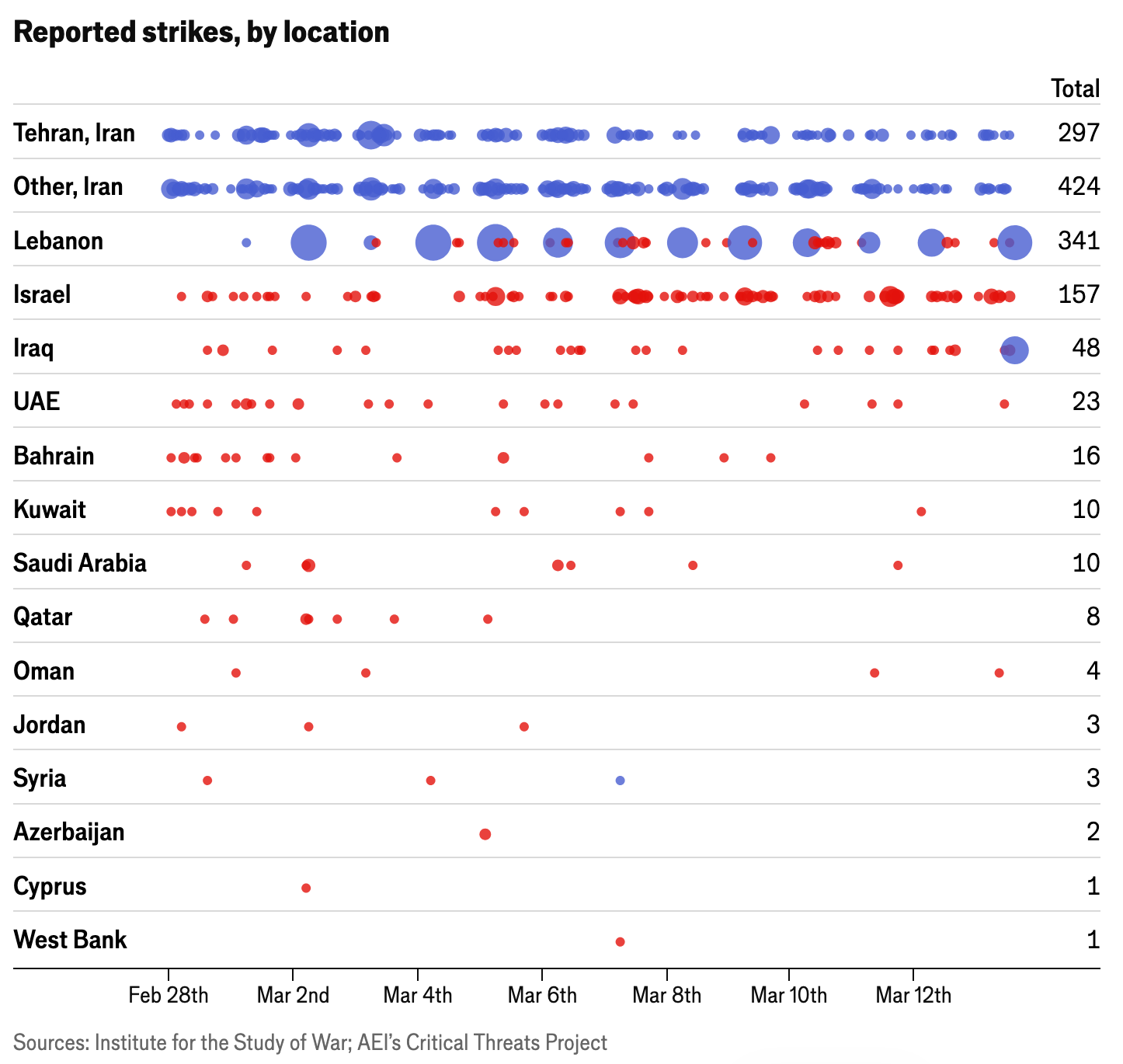
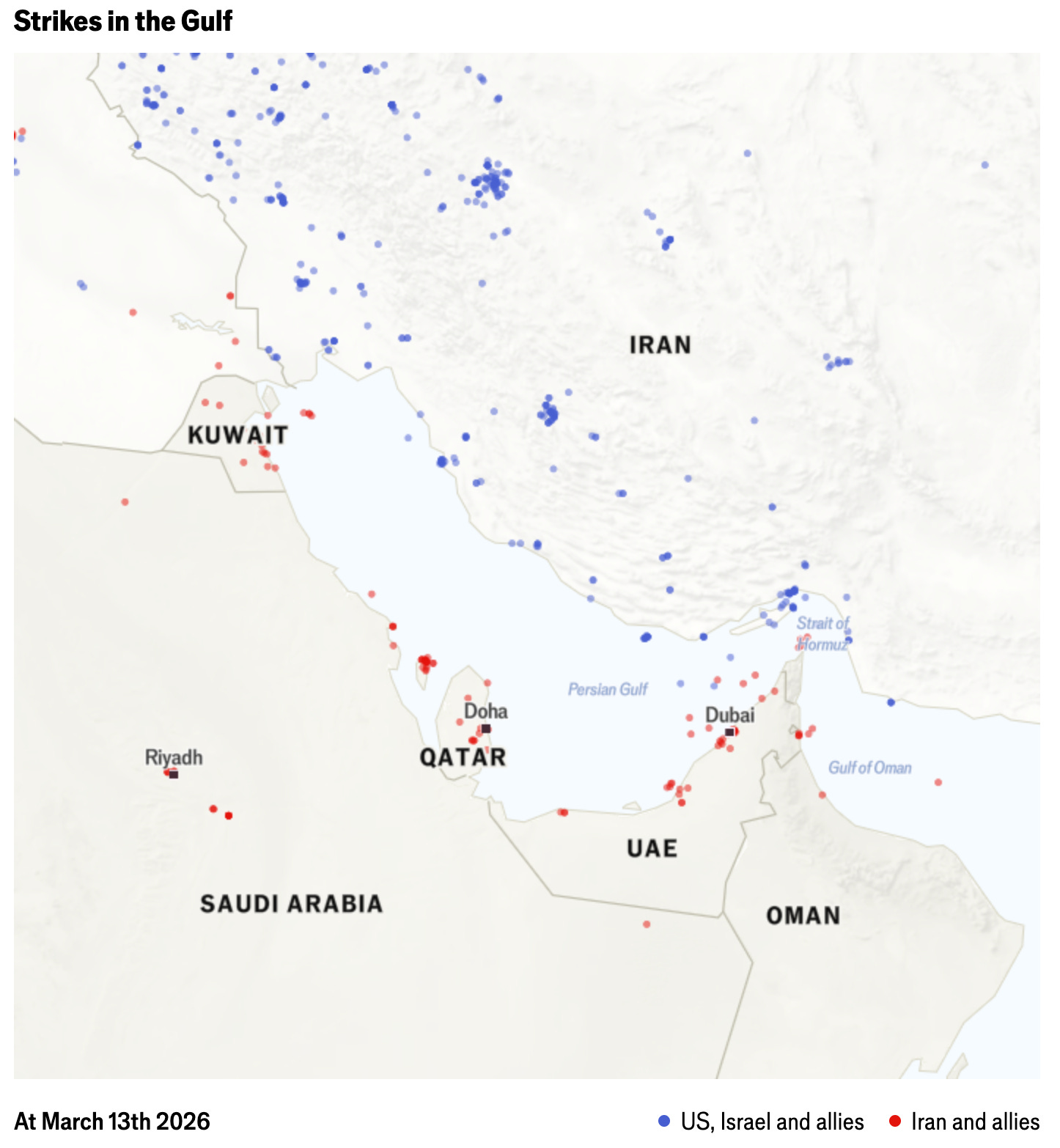
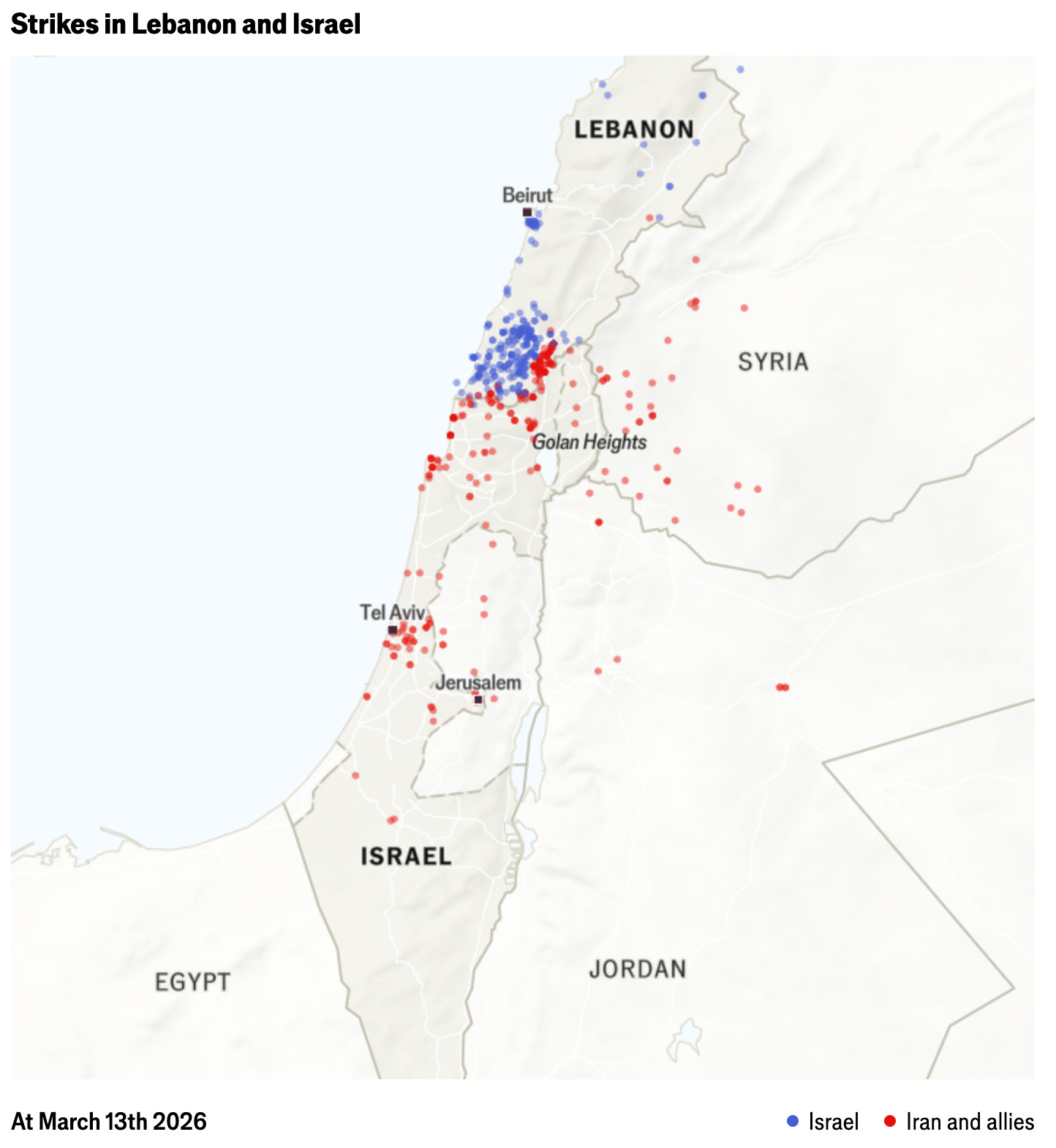
The conflict that began on February 28 has grown from a U.S.–Israeli strike on Iran into a broader regional war with military, economic, and energy consequences far beyond Iran itself. American and Israeli attacks have struck Iranian leadership targets, military infrastructure, nuclear facilities, and state media, with major concentration around Tehran and Isfahan. Iran has retaliated across multiple fronts, hitting Israel, U.S. bases, Gulf states, ships, and energy infrastructure, while also drawing Lebanon more deeply into the fighting through Hezbollah and Israel’s counterstrikes there.
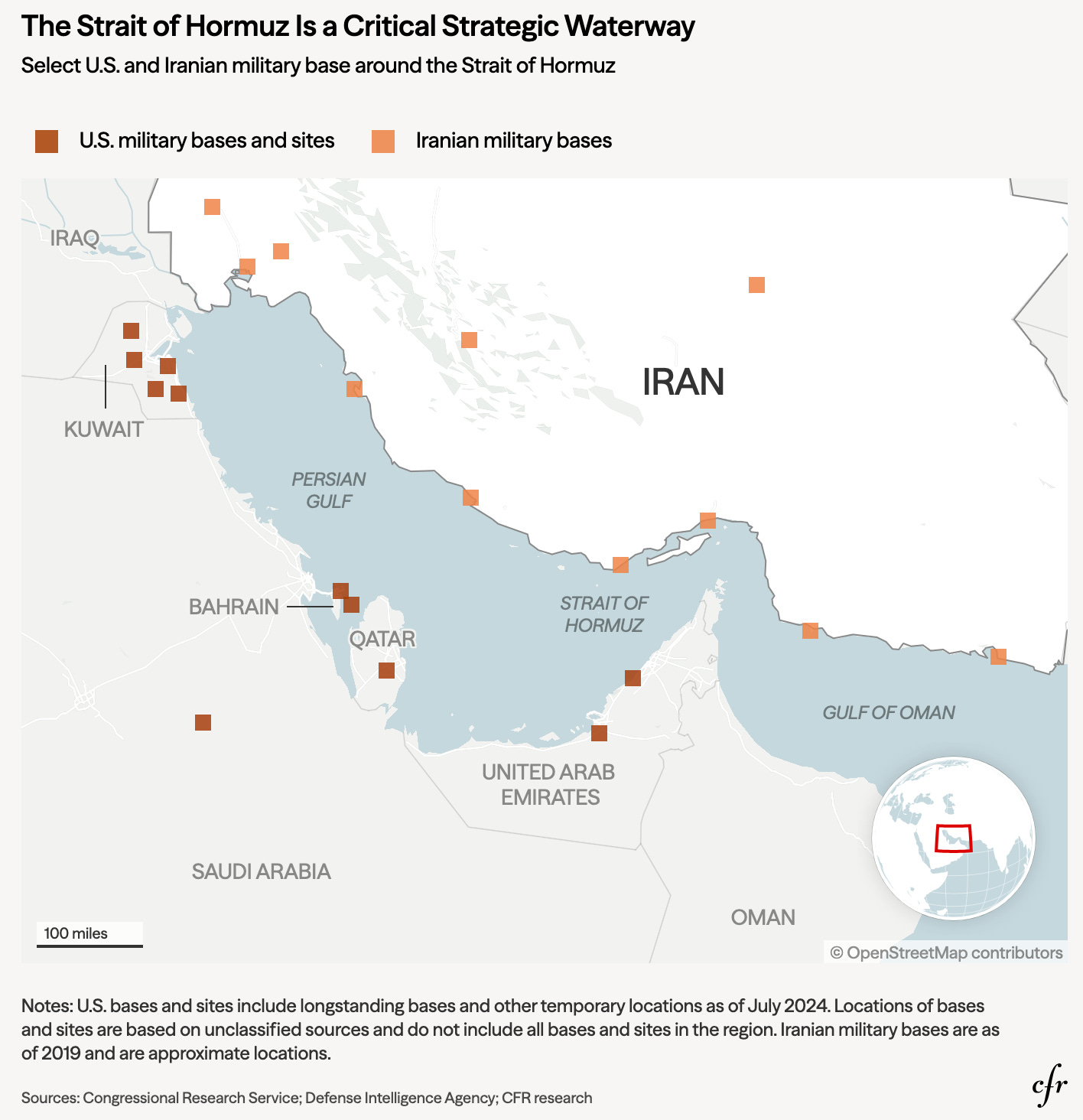
This is no longer just an Iran-Israel exchange. It has become a multi-theater conflict spanning Iran, Israel, Lebanon, the Gulf, and the sea lanes that connect the Middle East to global energy markets. The most important strategic consequence so far is Iran’s ability to disrupt shipping through the Strait of Hormuz without fully and formally closing it.
The Strait of Hormuz as the center of gravity
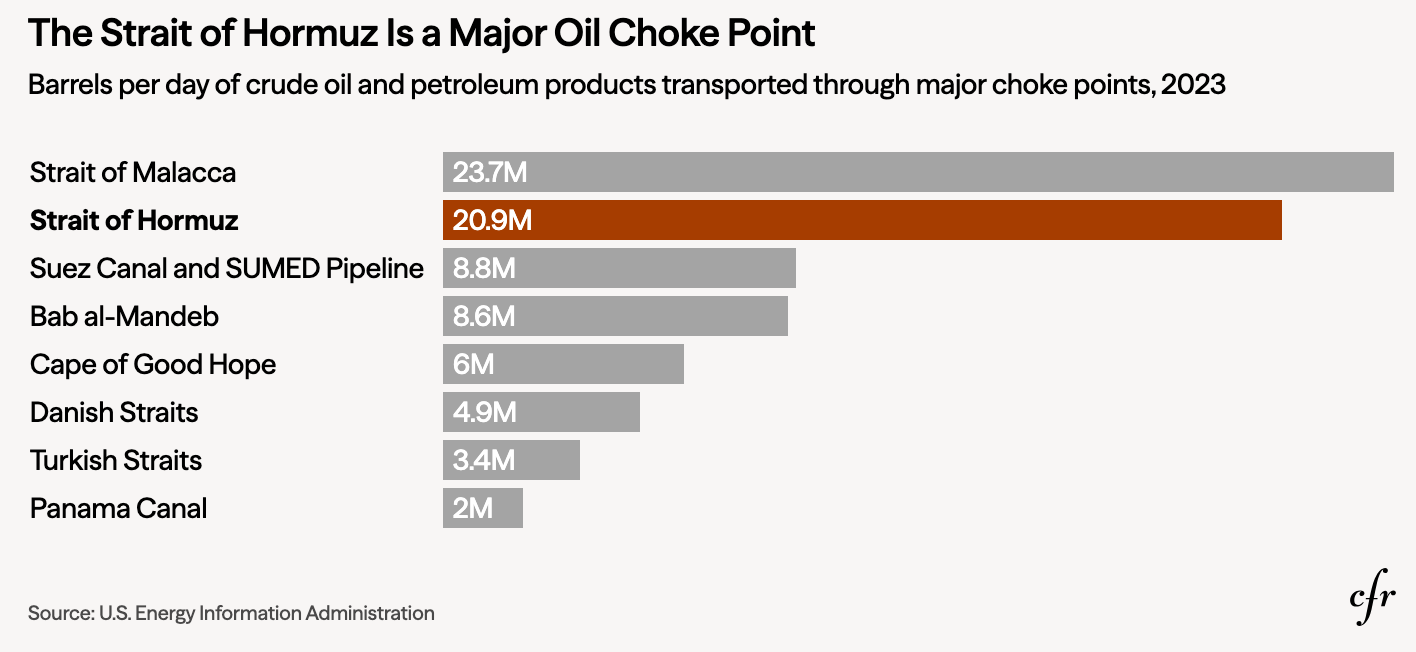
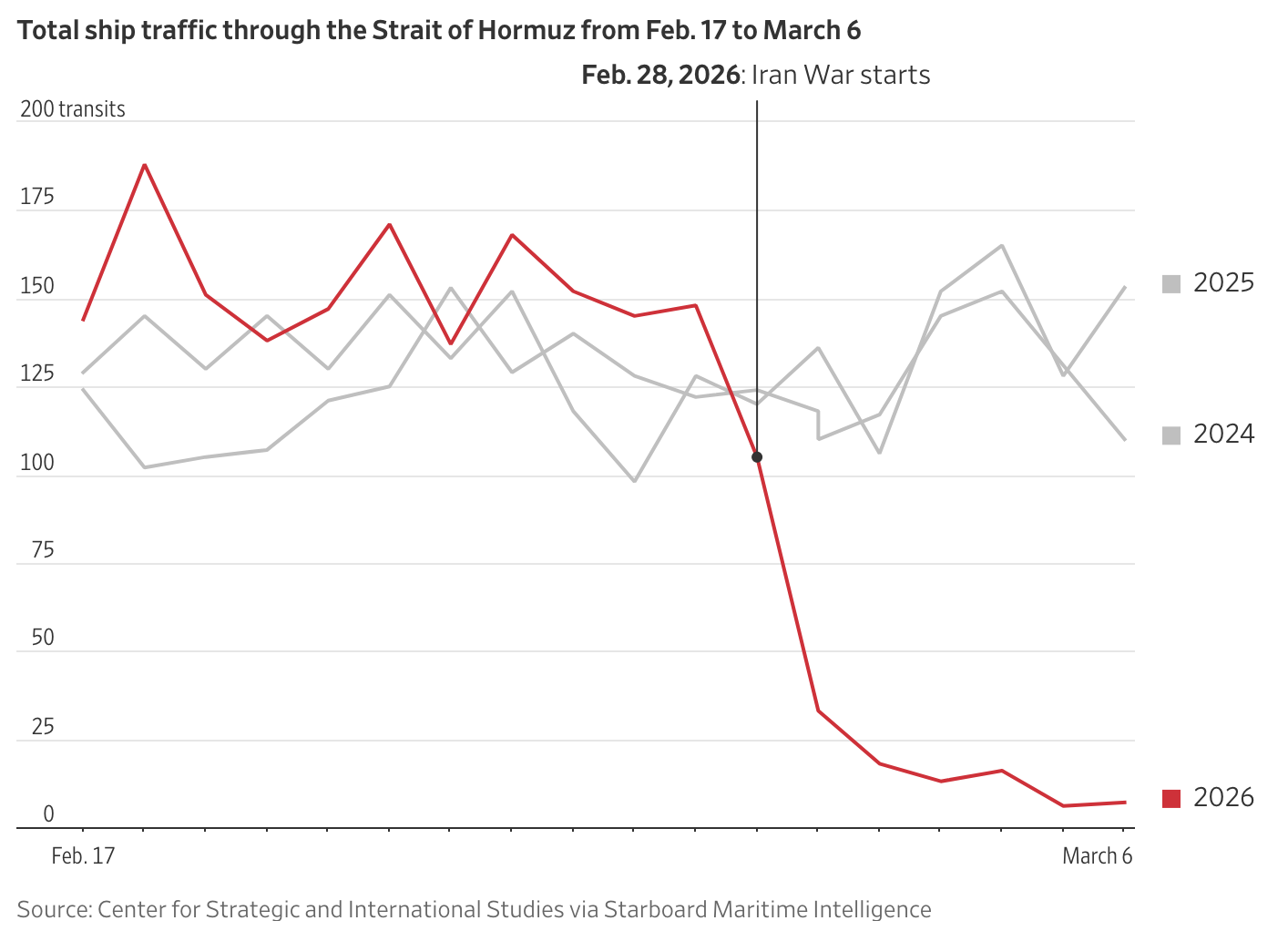
The Strait of Hormuz has become the key pressure point in the war. It normally carries about 20 percent of the world’s oil and gas, and in some estimates about a third of global seaborne oil and a fifth of liquefied natural gas. Since the conflict escalated, ship traffic through the strait has collapsed, with daily transits falling from well over 150 to single digits. Vessels are clustering on either side of the strait, avoiding passage unless absolutely necessary.
Iran has not needed a formal blockade to create this effect. Attacks on commercial shipping, missile and drone threats, and suspected electronic spoofing of navigation systems have been enough to make the route dangerous. More than 1,200 ships in the region have reportedly been affected by signal interference. Some vessels are shutting off their own trackers to move more stealthily, which only adds to the confusion and risk.
The result is that Iran is using the strait less as a sealed choke point and more as a weaponized zone of uncertainty. That still delivers major strategic leverage because even partial disruption is enough to shake markets, strand ships, and drive up costs.
Energy shock and market disruption
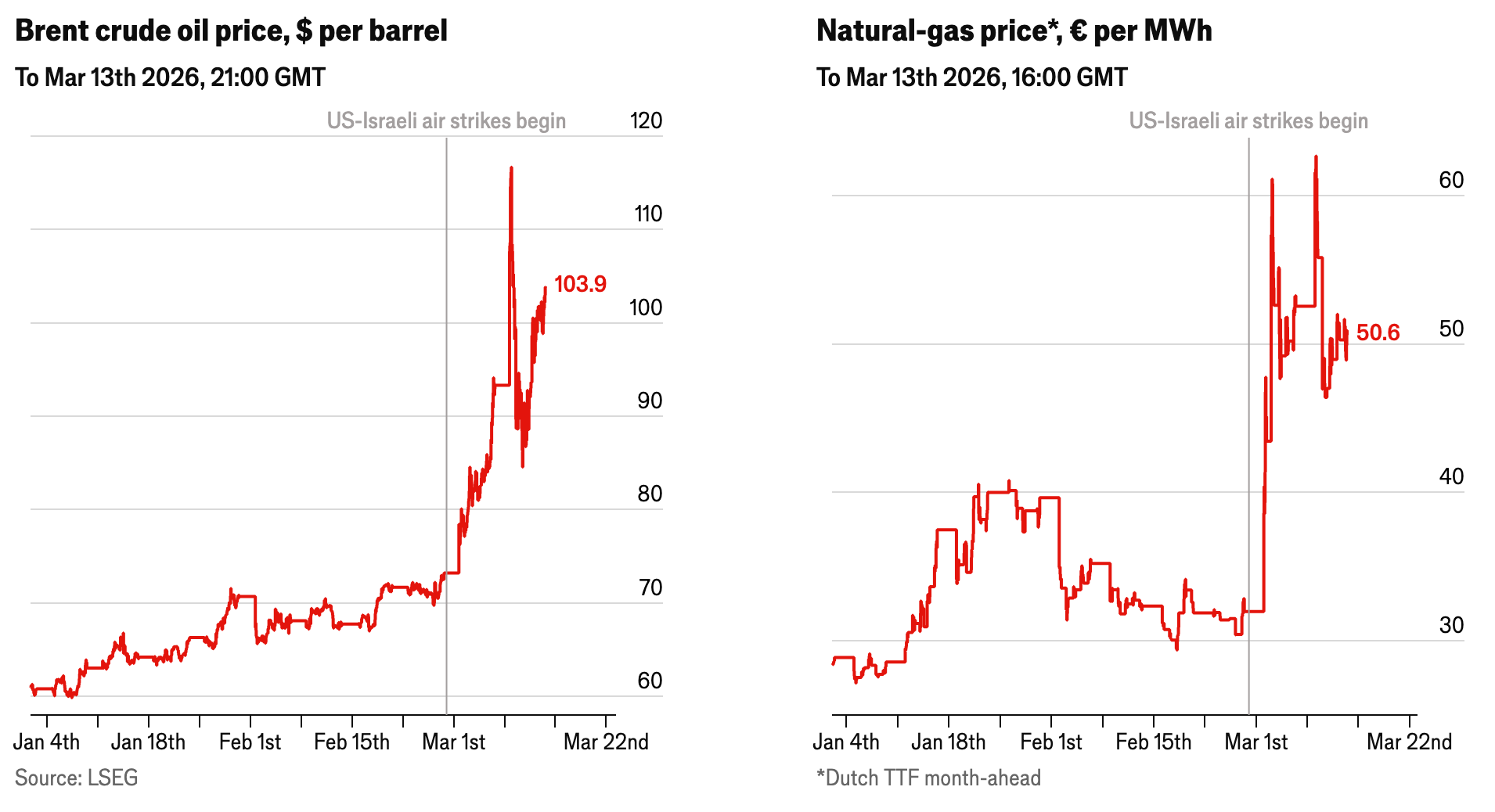
The energy consequences are global. Oil and natural-gas prices have jumped sharply because traders understand how central the Gulf is to world supply. Even limited disruption in Hormuz matters because alternative routes cannot fully compensate. If the strait were more fully shut, as much as 20 million barrels per day could be affected, which would amount to about 20 percent of global petroleum liquids consumption. That would be far larger than the disruption caused by the 1970s Arab oil embargo.
The problem is not just the total amount of oil at risk, but the limited ability to reroute it. Saudi Arabia and the UAE have some alternative pipelines, but those can only handle part of normal volumes and still face operational and security constraints. Floating storage, reserve releases, and alternate transport can help cushion the blow, but not replace the missing flow. Even after accounting for those tools, the likely shortfall in a severe scenario could still exceed 10 million barrels per day.
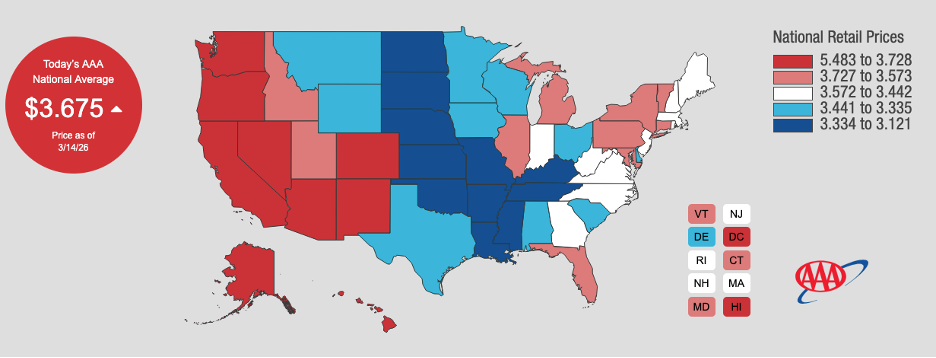
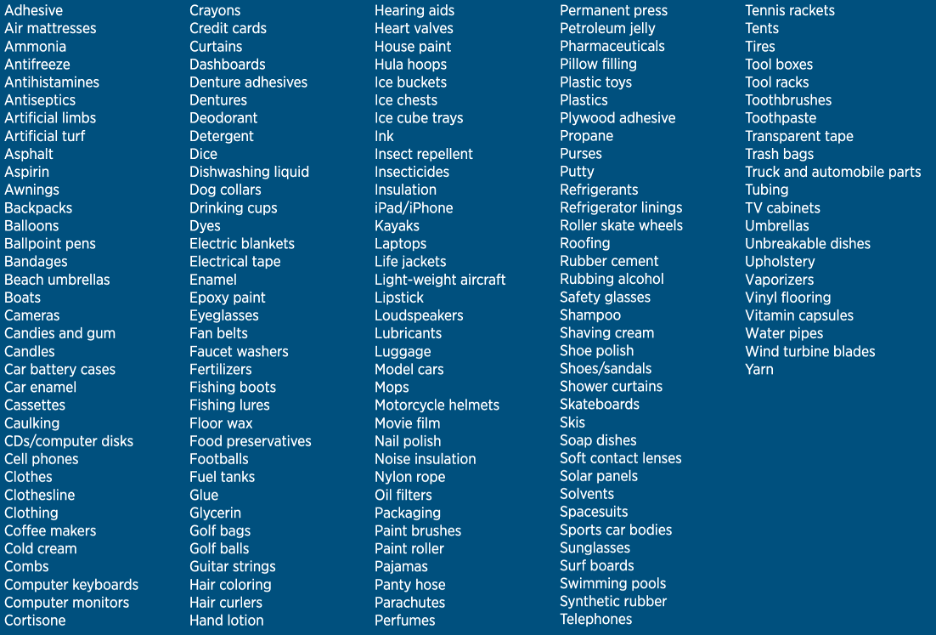
This matters not just for fuel. Oil and natural gas are inputs into thousands of products, including chemicals, fertilizers, plastics, synthetic fibers, medical materials, electronics components, and countless household goods. Reduced shipments therefore threaten broader price increases across supply chains, not just at the gas pump.
Iran’s uneven but effective strategy
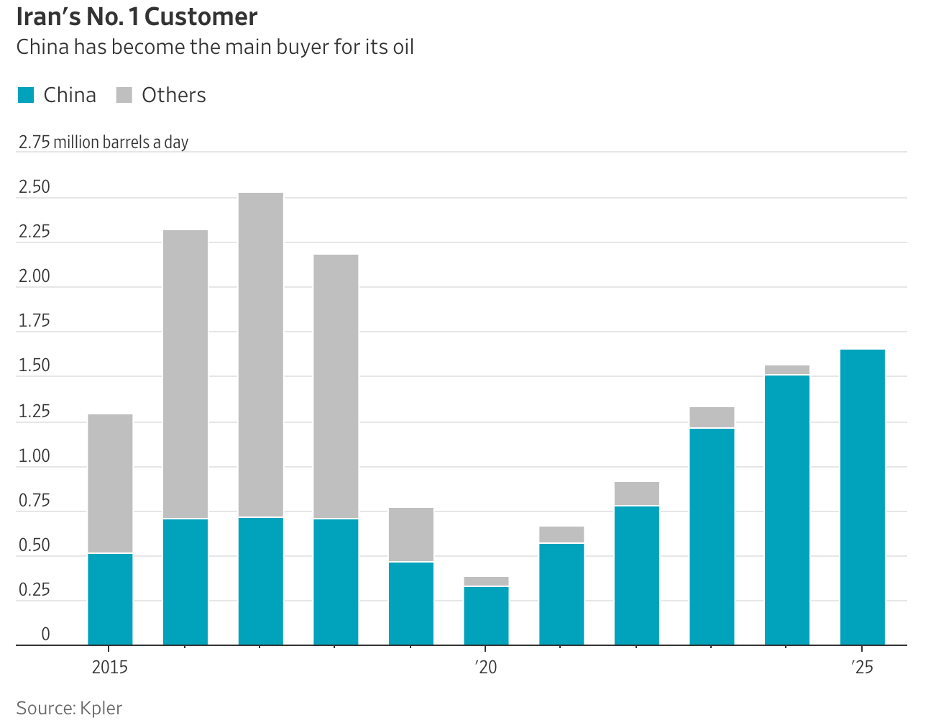
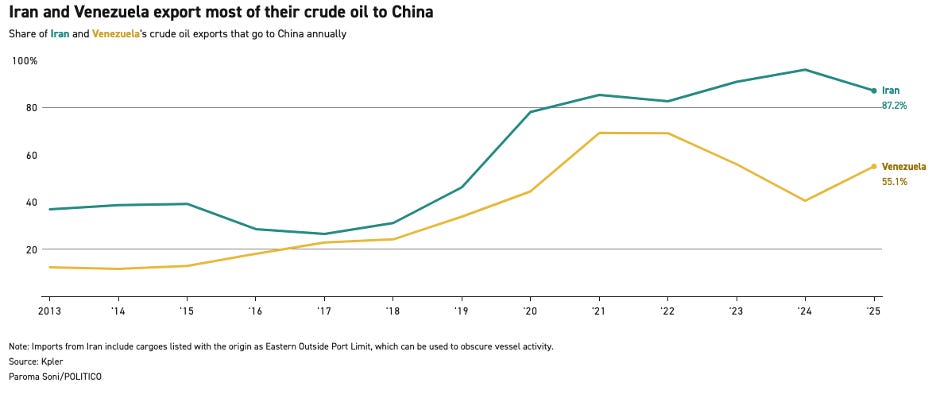
Iran has managed something strategically important: it is harming other countries’ energy trade more than its own. Even while commercial shipping in the region is severely disrupted, Iran is still exporting oil through the Strait of Hormuz and is reportedly moving slightly more than it did before the war. Tankers linked to Iran or China, especially sanctioned or shadow-fleet vessels, continue carrying Iranian crude, much of it toward China and India.
That means Iran is using its control of the strait as both a coercive tool and a financial lifeline. It is choking broader traffic while preserving enough of its own exports to keep oil revenue flowing. This makes the crisis more complicated than a simple “all shipping stops” scenario. Iran does not need total closure to impose pain. It only needs to create enough fear and selectivity to distort trade in its favor.
This also explains why many of the ships still moving through Hormuz are tied to Iran and China. Friendly identification, shadow-fleet tactics, and sanctions evasion have become part of the wartime shipping system.
China’s oil problem
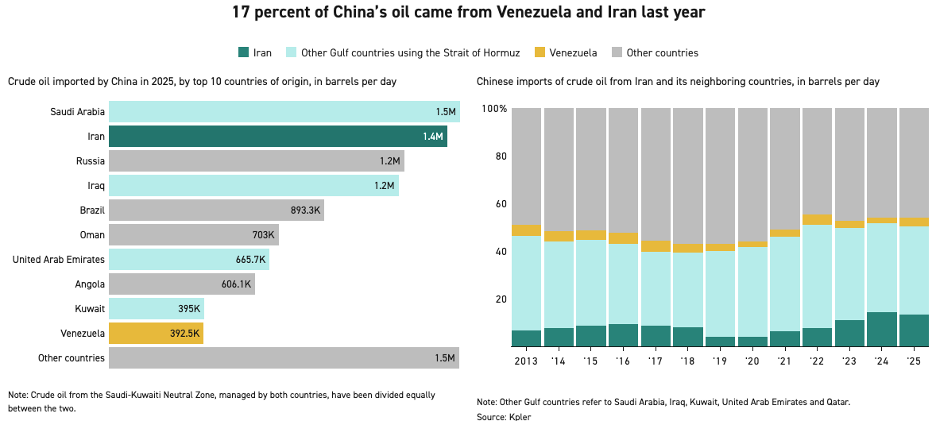
China is one of the countries most exposed to this crisis. It relies heavily on oil from Iran, Venezuela, and Gulf producers, and more than half of its crude imports come from countries facing disruption tied to the conflict. Iran alone exported 520 million barrels of crude to China in 2025, making it one of Beijing’s most important suppliers.
That puts China in a difficult position. It is vulnerable to reduced flows from Hormuz, higher shipping costs, and rising competition for available barrels. At the same time, China may be somewhat more resilient than expected because it has already been expanding strategic reserves, electrifying more of its economy, and increasing reliance on domestic energy sources and Russian crude.
The likely short-term response is greater Chinese reliance on Russian oil. That would deepen another major side effect of the war: Russia benefits from higher prices and from being a substitute supplier when Middle Eastern flows are disrupted.
Kharg Island and Iran’s oil vulnerability
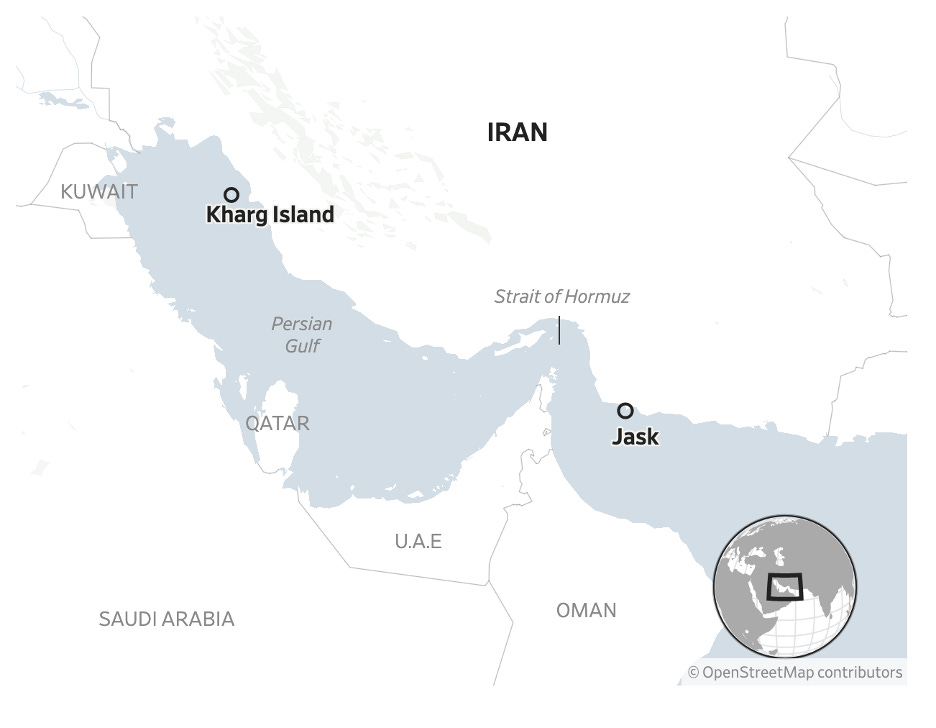
Even though Iran is still exporting, its oil system remains vulnerable because it is heavily concentrated at Kharg Island. Kharg handles about 90 percent of Iran’s crude exports and is the central hub for oil coming from major producing regions. It also stores about 18 million barrels, making it a crucial export buffer.
The U.S. struck military targets on Kharg Island but did not damage the oil terminals and storage infrastructure, according to Iranian officials. Trump said he had deliberately avoided oil facilities for now, while also warning that this restraint could end if Iran keeps threatening Hormuz. That matters because a serious hit on Kharg’s export infrastructure could force Iran to cut production at major oil fields and take roughly another 1 million barrels per day off the global market.
Iran does have an alternative export route through Jask, outside the Strait of Hormuz, but that terminal is far smaller and cannot replace Kharg’s capacity. So while Iran has shown resilience, its oil system still has a major point of failure.
Gulf states, Lebanon, and regional spillover
The conflict is also pressuring America’s regional partners. Gulf states such as Bahrain, Iraq, Kuwait, Qatar, Saudi Arabia, and the UAE have been struck because they host U.S. forces and major energy infrastructure. Iran appears to be trying to raise the cost of regional cooperation with Washington and push those states to pressure the United States toward de-escalation.
Lebanon has become another important front. Hezbollah has fired into northern Israel, and Israel has expanded operations in Lebanon, including Beirut and the south. This broadens the war geographically and politically, increasing the chance that the conflict becomes harder to contain even if activity in Hormuz eventually stabilizes.
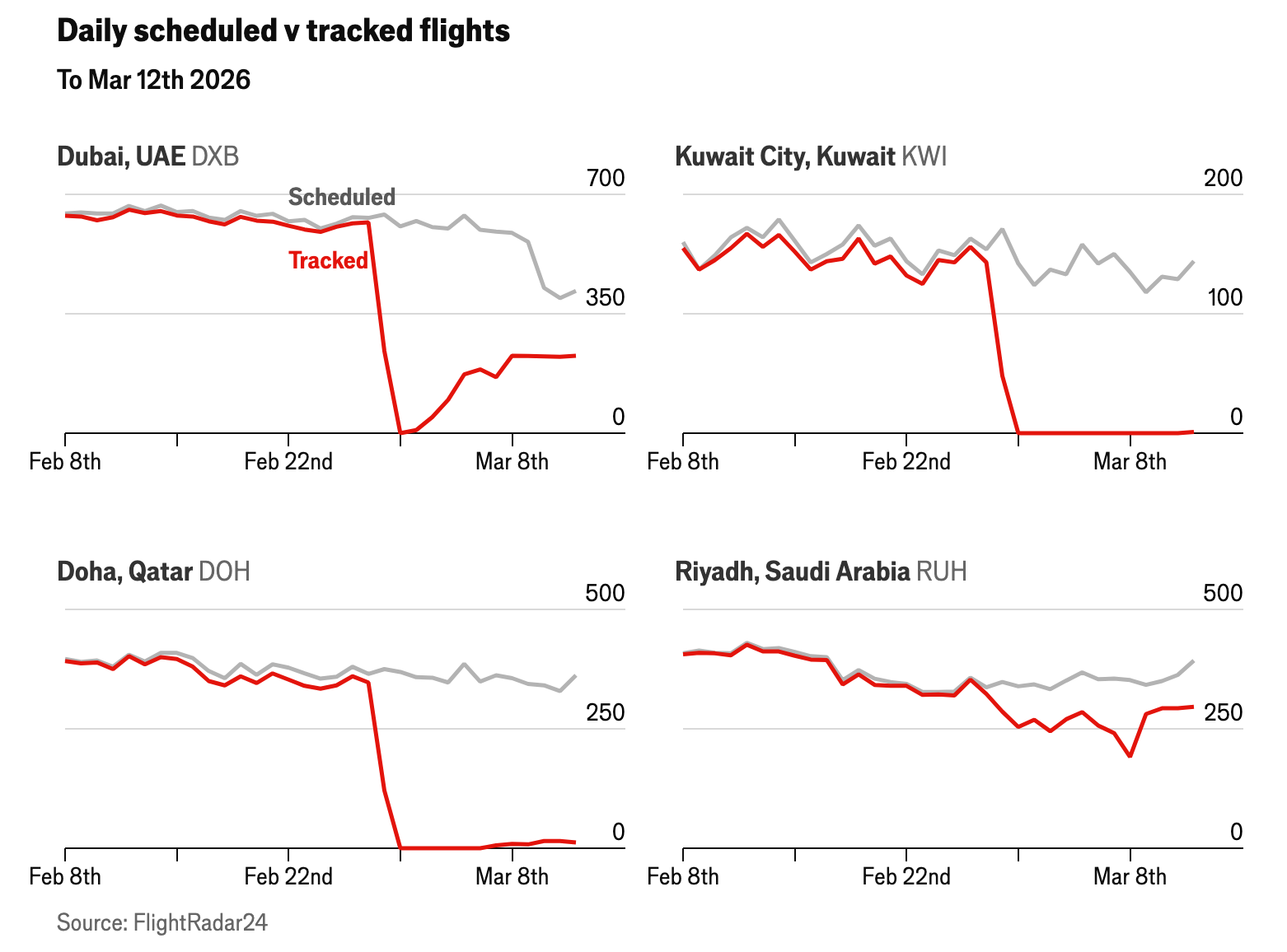
Air travel has also been affected, with flights disrupted and major hubs such as Dubai International facing strain. So the conflict is not just disrupting military and energy systems; it is also undermining normal regional commerce and mobility.
The Strategic Petroleum Reserve and its limits
The United States and its allies are trying to offset the shock through emergency reserves. The International Energy Agency has agreed to release 400 million barrels, including 172 million from the U.S. Strategic Petroleum Reserve. The SPR was created after the 1970s oil shock to protect the U.S. economy during major supply disruptions and remains the world’s largest emergency stockpile of crude oil.
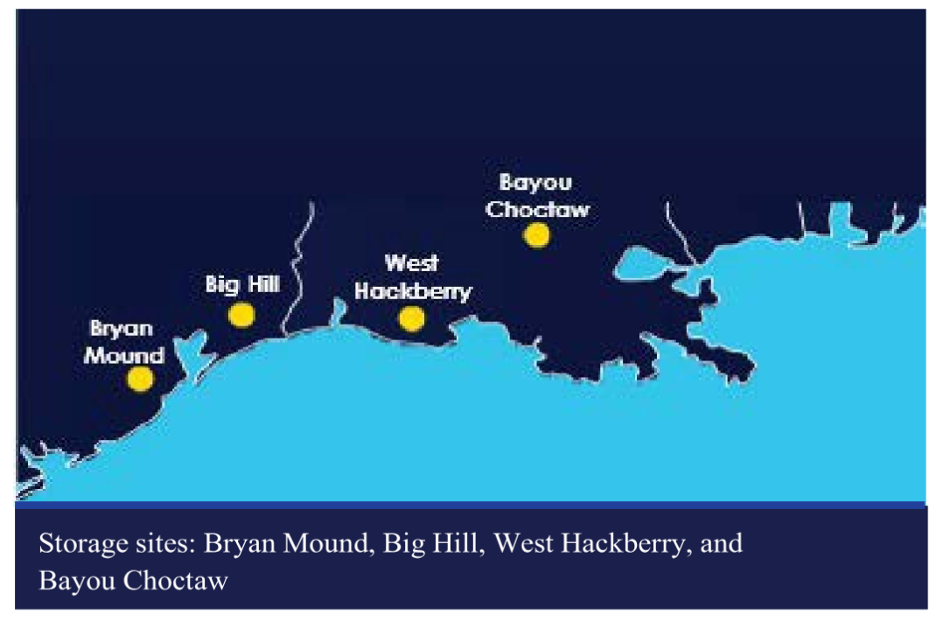
The reserve is stored in underground salt caverns on the Texas and Louisiana Gulf Coast and can hold more than 700 million barrels, though it held about 402 million as of August 2025. In theory, it is a powerful tool. In practice, it has real limitations. Actual drawdown and delivery capacity are much lower than many people assume, and the reserve cannot replace a prolonged Hormuz-scale disruption. It can buy time and calm markets, but not solve the underlying transit problem.
That is one of the central lessons of this crisis: stockpiles matter, but logistics matter more. Oil in storage is only useful if it can be released, shipped, refined, and distributed quickly enough to stabilize markets.
Locations of the US SPR:
Why prices may rise beyond gasoline
A key point running through all of this is that oil and gas disruptions do not only affect gasoline. Hydrocarbons are feedstocks for thousands of products used in modern life, from fertilizers and chemicals to plastics, textiles, electronics, packaging, and medical supplies. If Gulf energy flows remain constrained, the effects can spread into manufacturing, transportation, agriculture, and consumer goods.
That means households and businesses may feel the impact in a wide range of prices, not simply at the pump. A sustained energy shock can ripple through nearly every sector because oil and natural gas underpin so much industrial production.
Products made from oil and natural gas:
What the conflict reveals
Several broader lessons emerge. First, energy security remains a major strategic vulnerability, even in an era of technological change. Second, chokepoints matter enormously: one narrow waterway can still destabilize global markets. Third, reserve systems like the SPR are valuable, but they are not substitutes for secure transit routes. Fourth, wars in the Gulf quickly become global economic events because of their effect on oil, gas, shipping, and petrochemical supply chains.
Finally, this crisis shows that the world remains deeply dependent on oil. Even with advances in electrification, renewables, and alternative energy, a disruption in Hormuz still sends shockwaves through everything from global finance to retail prices. That is why the conflict is likely to renew interest in stockpiling, supply diversification, nuclear power, alternative transport routes, and long-term efforts to reduce exposure to hydrocarbon chokepoints.
Bottom line
The war has evolved into both a regional military conflict and a global energy crisis. Iran has turned the Strait of Hormuz into a tool of leverage, disrupting traffic enough to rattle markets while still moving much of its own oil. The United States and its partners can soften the shock with reserve releases and partial rerouting, but they cannot fully replace what Hormuz normally carries. Kharg Island, Chinese import dependence, Gulf vulnerability, and the limits of the SPR all show how tightly military escalation and energy security are now intertwined.
The greatest risk is a prolonged period in which insecurity in one maritime bottleneck reshapes oil flows, raises prices, pressures allies, benefits rivals like Russia, and reminds the world how much of modern life still depends on vulnerable energy systems.
For more information:
The Iran war in maps and charts, The Economist
Iran: Analysis, Research, & Events, Center for Strategic & International Studies
The Strait of Hormuz: A U.S.-Iran Maritime Flash Point, Council on Foreign Relations
A Visual Guide to How Iran Is Holding the Strait of Hormuz Hostage, Wall Street Journal
5 charts show China’s oil dilemma after US strikes, Politico
Iran’s Control of Hormuz Means It’s Exporting More Oil Today Than Before the War, Wall Street Journal
5 charts show China’s oil dilemma after US strikes, Politico
Iran, the Strait of Hormuz, and an Unprecedented Energy Crunch, Council on Foreign Relations
Why Did Trump Order an Attack on Iran’s Kharg Island?, Wall Street Journal
Products Made from Oil and Natural Gas, U.S. Department of Energy
The Strategic Petroleum Reserve, U.S. Department of Energy