

This Saturday, July 4, 2026, marks 250 years of independence from our British overlords.
Or does it?
The day we’re commemorating is July 4, 1776, when delegates at the Second Continental Congress voted for independence from Britain. Declaring independence in this way is the equivalent of telling your bank that you no longer want to pay your mortgage (albeit a mortgage that keeps increasing) while still living in the house. You don’t actually own the house just because you told your bank you’re no longer making payments. When you stop making payments, the bank will demand compliance or send someone to evict you. And for seven years, this is what the British tried to do.
The last major battle of the American Revolutionary War was the Battle of Yorktown, which ended in October 1781, when American and French forces defeated the British. However, other smaller battles, both on land and at sea, continued into 1783. It was only when the Treaty of Paris was signed on September 3, 1783, that the war for American independence officially ended.
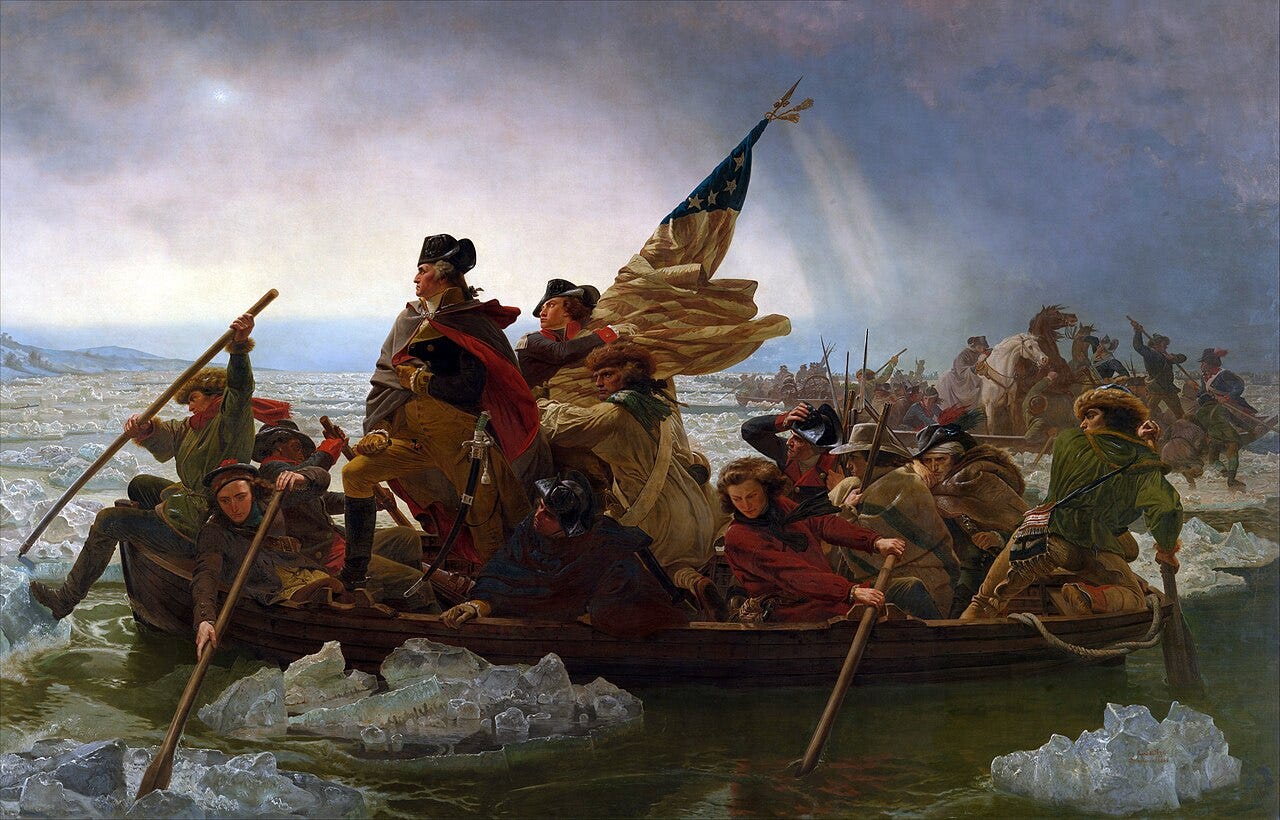
I’m quite certain that those American Patriots didn’t exactly feel the yearned-for “Safety and Happiness” of independence while attempting to row across the icy Delaware River on Christmas night in 1776, or while enduring years of battle with meager pay, scarce food, tattered clothing, and little ammunition. As you celebrate this Fourth, consider that the day marks 250 years since our declaration of independence; it’s been 243 years since we officially earned independence with the Treaty of Paris. We can celebrate 250 years of actual independence in 2033.
So, I say, Happy 243rd Birthday, America!
Whether you celebrate 250 years or 243 years, it’s important to understand the history of our independence and how long it took to earn it. And more than time, what it took in terms of lives, money, effort, determination, and alliances. Declaring that you’re independent and being independent are two different things, and maintaining your independence is something else altogether. We didn’t just have to earn independence; we’ve had to keep it.
As you’re singing along to “The Star-Spangled Banner” and watching fireworks—the rockets’ red glare, the bombs bursting in air—keep in mind that our national anthem was written during the War of 1812, another war we fought against Great Britain on our home turf in North America. It lasted nearly three years. And 46 years after the War of 1812, our nation divided in a Civil War. More than 600,000 people died, all Americans. At Gettysburg alone, there were more than 50,000 casualties. After four years, the brutal Civil War came to a close in 1865, and President Lincoln was assassinated. In the next 160 years, three more U.S. presidents were assassinated and others survived assassination attempts, the country endured the Great Depression and multiple recessions, two World Wars and many other wars and battles, and countless other challenges to our unity and independence.
There are many reasons why our country has maintained its independence for so long. We are blessed with tangible qualities like abundant natural resources, borders with only two countries, and the buffer of two oceans. But just as important are our intangible qualities, like representative democracy, real and intellectual property rights, personal rights, and an entrepreneurial spirit. Americans are generally optimistic, inventive, risk-taking, and hardworking.
But I sense that we’re slipping.
Though we haven’t come under oppression by a foreign power, we are coming under oppression by a different type of ruler, one to whom we are voluntarily surrendering our independence. It’s eroding us from within, not from without. We invited it into our lives and our homes, and now we are paying it an ever-increasing mortgage, one that will never result in ownership.
We created the internet, smartphones, social media, and streaming to make the world more open, connected, and smarter. And though we’re more digitally connected, it has come at the cost of human connection and cognition. We’ve become more divided and disconnected and dumber.
We assumed endless news, entertainment, and content would provide fulfillment and enlightenment. Yet people are more confused, anxious, stressed, depressed, and suicidal. We wanted to be omniscient, yet we are overwhelmed by all we see in the world. We wanted to be omnipotent, but we’re overwhelmed by all there is to do when we’re told to do it all.
It’s made people want to hunker down, isolate, curl up, and scroll for answers and solace in the same place that created so much confusion in the first place. We’re constantly busy, constantly plugged in, constantly seeking satisfaction and distraction to avoid having to think about it all.
It’s time to stage a rebellion against our rulers! It’s time to reclaim independence from our digital devices and addiction.
How, you ask?
Imagine, if you will, a world in which computers, cell phones, and ceaseless streaming didn’t exist. How would you spend your free time? What would you do with your evenings and weekends?
My guess is you’d do what people did 50 years ago. You’d spend more time with your family, friends, and neighbors. You’d join clubs. You’d go to church. You’d go to the bar. You’d go on walks around the neighborhood and hikes in nature. You’d tell your kids to play outside after school and all day on Saturday. You’d listen to live music. You’d listen to music at home as a family, without headphones. You’d learn to play music. You’d have more in-person conversations, more phone conversations by voice instead of text, and write more letters. You’d enjoy peace from distraction, enough peace to do nothing but think about things and create things, and then do it again because there was that much time to do so. You’d get bored, and it would be okay.
You’d take up arms! Or rather, take up into your arms a book and arm your brain with knowledge and resolve. You’d slog through it, spending time in the trenches—in the tough prose, the tedious paragraphs, and the twisting story line. You’d do it for America! You’d do it for yourself. You’d do it with friends and family members.
If it took seven days, seven weeks, seven months, or even seven years to form or reform the habit and earn our independence, it’d be worth it. You would be better for it. Our nation would be better if we all did it. Changing habits in life is hard, especially when you’re fighting against the digital dopamine dispensers surrounding us, so expect your brain to push back.
Our digital devices encourage immediacy, ease, passivity, and isolation, yet the best things in life usually require time, effort, determination, and alliances—just remember what it took for those early American Patriots to earn their independence.
Footnote
If you’re looking for more information, resources, or tools, I recommend the following books. I’ve included the published date of each work to show how long others have been sounding an alarm on this topic. They’re all great reads.
Amusing Ourselves to Death: Public Discourse in the Age of Show Business by Neil Postman (1985).
Bowling Alone: The Collapse and Revival of American Community by Robert Putnam (2000).
The Shallows: What the Internet is Doing to our Brains by Nicholas Carr (2010).
Irresistible: The Rise of Addictive Technology and the Business Keeping Us Hooked by Adam Alter (2017).
How to Break Up with Your Phone: The 30-Day Plan to Take Back Your Life by Catherine Price (2018).
Digital Minimalism: Choosing a Focused Life in a Noisy World by Cal Newport (2019).
The Anxious Generation: How the Great Rewiring of Childhood is Causing an Epidemic of Mental Illness by Jonathan Haidt (2024).