

Happy New Year!
I think I’ve finally caught up after a busy December. I appreciate the many notes of condolence I received on the passing of my mother—very kind of you all.
Below are the things that stood out from the past month (some you may have already seen elsewhere); topics include: Venezuela, government & defense, economy & housing, health, life, and entertainment.
Venezuela
1. A President Captured: How the Elite Delta Force Raid in Caracas Unfolded
The United States carried out an unprecedented operation to capture a sitting foreign leader, seizing Venezuelan President Nicolás Maduro and his wife, Cilia Flores, in a pre-dawn raid in Caracas and flying them to face criminal charges in New York. Ordered by Donald Trump, the mission culminated months of covert CIA intelligence work and escalating U.S. military pressure aimed at weakening Venezuela’s defenses and signaling readiness to act on its territory.
The raid, executed by U.S. Army Delta Force, lasted under 30 minutes but involved extensive preparation, including rehearsals on a replica of Maduro’s compound and a massive, multi-domain operation with more than 150 aircraft, cyber and space support, and temporary power disruptions in Caracas. U.S. helicopters came under fire during insertion, one aircraft was hit but remained operational, and some U.S. personnel were injured; no American fatalities were reported. Maduro and Flores—both indicted on narco-terrorism conspiracy charges—surrendered and were extracted safely, later transferred via the USS Iwo Jima en route to the United States.
NOTE: The article below is from early December. It’s a great read. I imagine Machado’s return to Venezuela will be far less perilous.
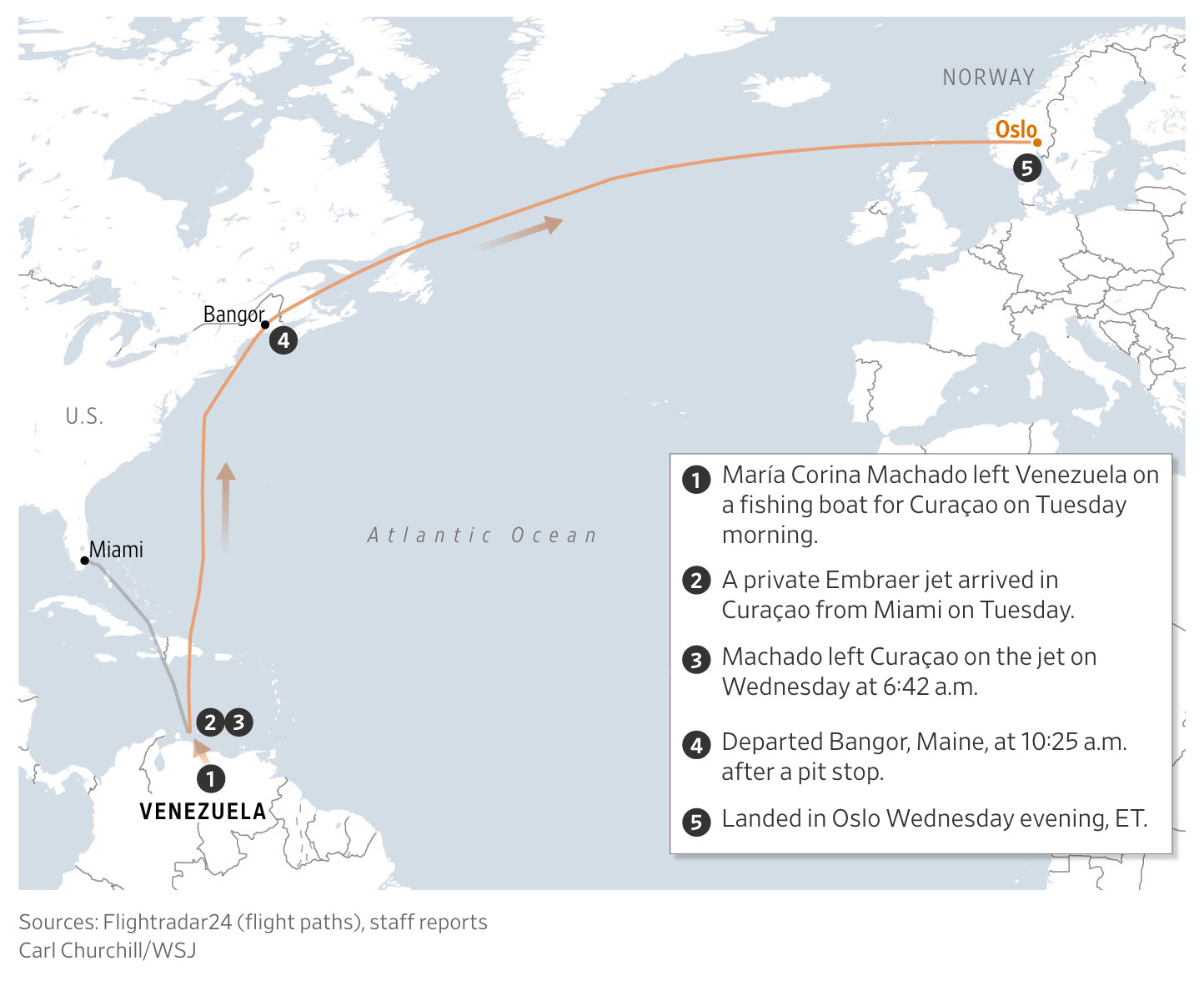
2. Rescued at Sea: How Venezuela’s Machado Survived the Riskiest Leg of Her Escape
Venezuelan opposition leader María Corina Machado escaped Venezuela in a perilous, privately funded extraction operation to reach Norway and receive the Nobel Peace Prize. After traveling in disguise from a Caracas suburb to a remote Caribbean fishing village, Machado set out on a small skiff toward Curaçao. The journey nearly failed when mechanical problems caused long delays, rough seas knocked out GPS devices, and the boat drifted off course for hours in 10-foot waves, briefly losing all contact with the extraction team.
The mission—dubbed Operation Golden Dynamite—was led by Bryan Stern, a U.S. combat veteran and head of a private evacuation group staffed by former special operations and intelligence personnel. Although funded by private donors, Stern remained in real-time contact with senior U.S. military and government officials, who monitored the operation as it unfolded. After a tense overnight search at sea, Stern’s team located Machado’s disabled skiff and transferred her safely to a larger boat, then carried her to Curaçao.
From Curaçao, Machado boarded a private jet to Oslo, arriving after nearly three days on the move and just missing the Nobel ceremony, which her daughter attended on her behalf. The operation unfolded amid escalating U.S. pressure on Venezuela’s authoritarian government under Nicolás Maduro, whom Machado has openly challenged since a disputed 2024 election. Machado later described her rescue as a “miracle.”
3. The World Is Awash With Oil and Prices Are Poised to Keep Falling
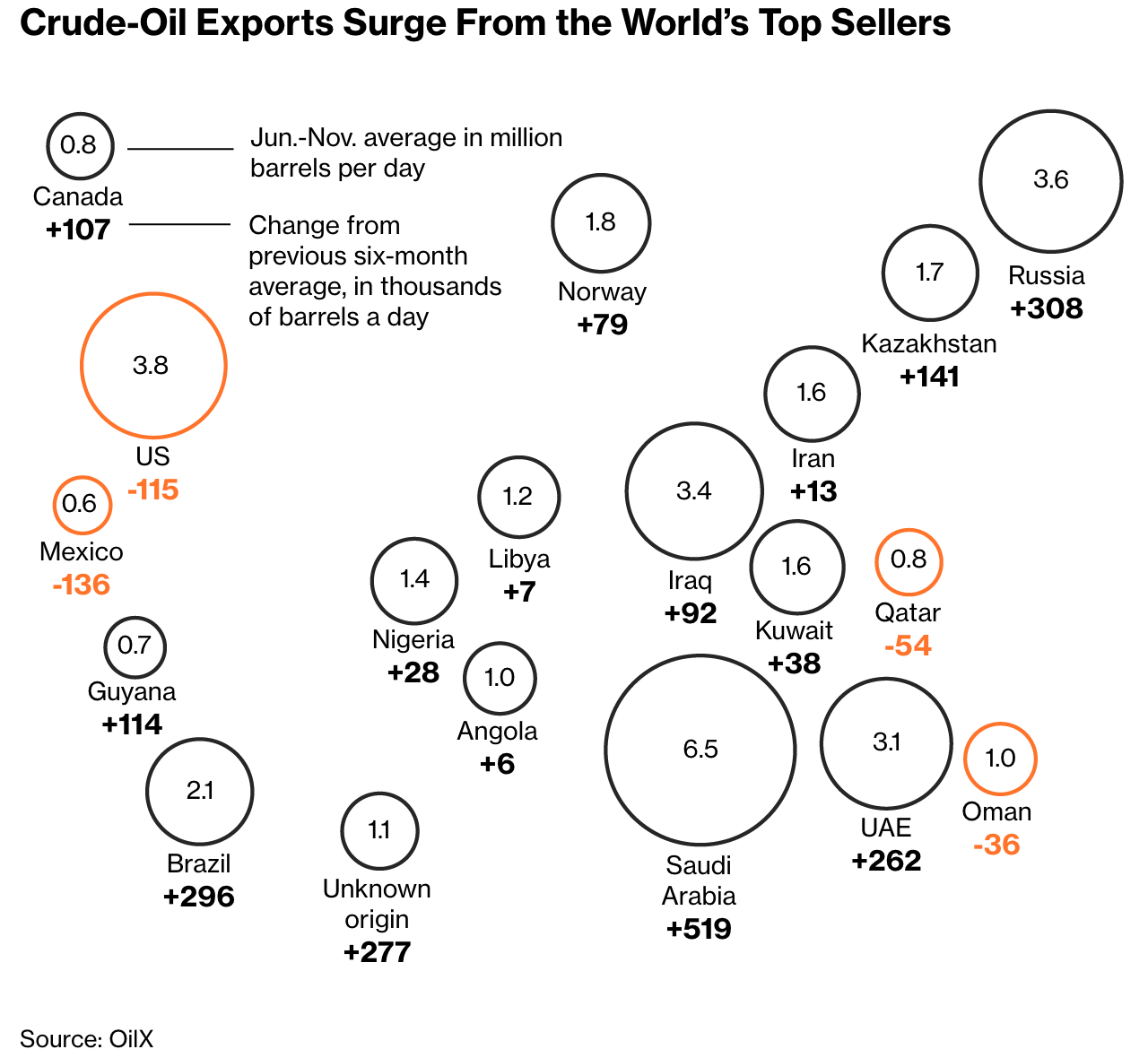
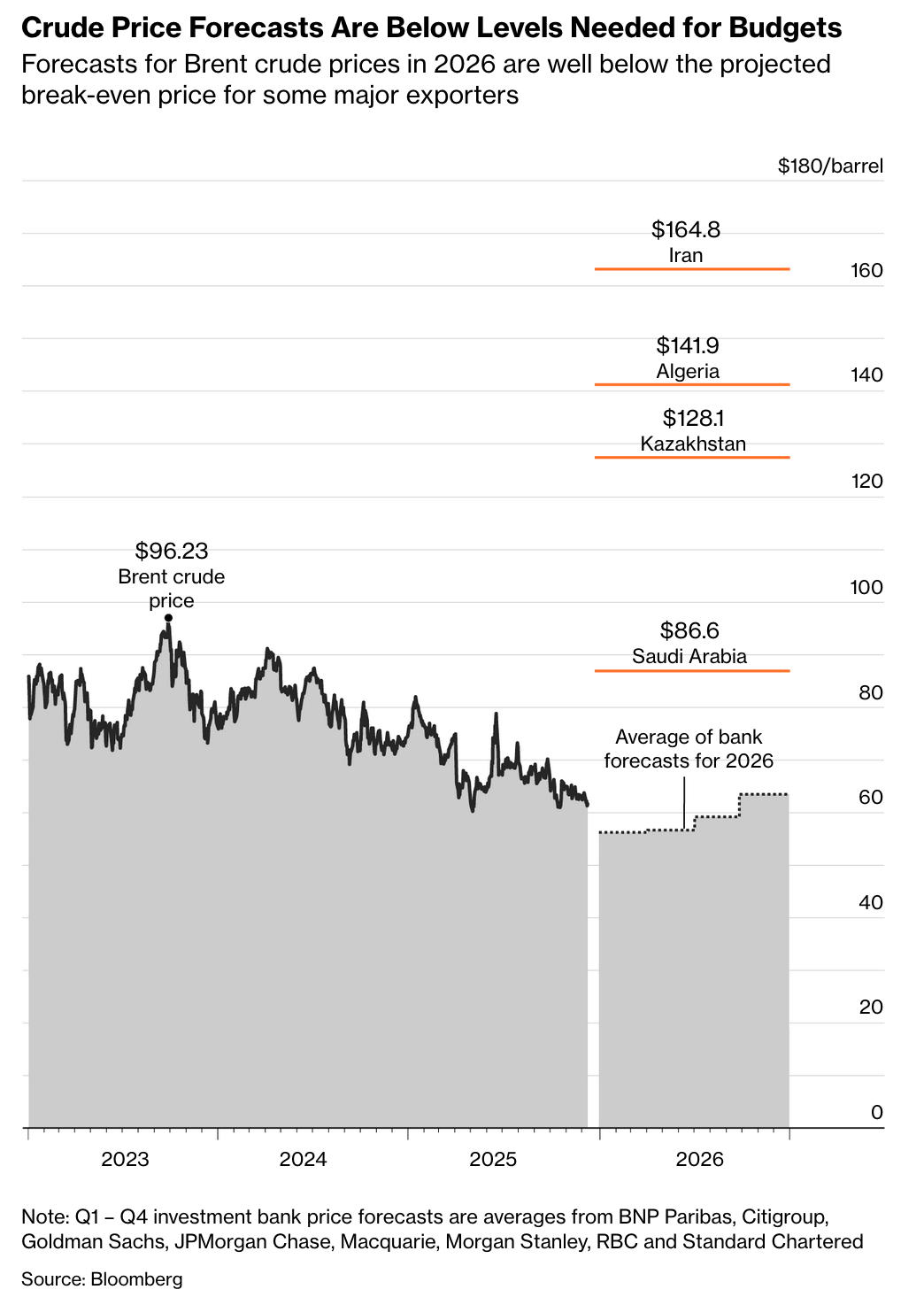
Global oil markets are facing a growing supply glut as production surges from both long-established exporters and new producers like Guyana, which has ramped up from zero to nearly 1 million barrels a day in just four years. OPEC and its allies, along with rising output from the U.S., Brazil, Canada, Argentina, and even sanctioned producers such as Russia, Iran, and Venezuela, are adding barrels faster than demand is growing. As a result, oil inventories on water are swelling, benchmark Brent crude has fallen about 20% this year to near $60 a barrel, and many traders expect oversupply to persist into 2026, potentially pushing prices into the $50s.
Lower oil prices are benefiting consumers through cheaper gasoline and easing inflation, delivering political and economic relief in countries like the U.S. However, they pose serious fiscal challenges for oil-dependent nations such as Saudi Arabia, Russia, and several OPEC members that require much higher prices to balance their budgets. Energy companies are responding with layoffs, tighter spending, and pressure on suppliers, even as some producers continue drilling due to technological gains and long-term demand expectations.
NOTE: And now that the US is taking control of Venezuela’s oil reserves (for the time being), you can bet we’ll be putting even more of a squeeze on other countries.
4. Maduro, Venezuela, The U.S.—And The Oil Shock China Can’t Price In
The U.S. capture of Venezuelan President Nicolás Maduro triggered immediate but targeted reactions in energy markets, signaling not a global oil shock but a looming squeeze in heavy sour crude. Venezuela accounts for less than 1% of global oil consumption, yet its Merey 16 crude is critical for refineries with coking capacity that cannot easily substitute lighter grades. Market indicators—such as widening diesel cracks and tanker rerouting—reflect concern over refinery-specific feedstock shortages rather than broad supply disruption.
China is particularly exposed on three fronts:
Financial — China Development Bank holds an estimated $17–19 billion in outstanding oil-backed loans to Venezuela, now at heightened risk of structural write-down amid regime change and possible “odious debt” claims.
Operational — Independent Chinese refiners, especially in Shandong, are optimized for Venezuelan heavy crude and now face costly, imperfect substitutes.
Strategic — Washington’s action demonstrates a willingness to disrupt Chinese commodity supply chains in the Americas.
While Chevron’s joint ventures continue operating under a renewed U.S. Treasury license—sending barrels primarily to U.S. refiners like Valero and Marathon—China must now replace lost Venezuelan supply in a tighter, higher-priced market. Alternative heavy crudes from Canada or Mexico exist, but competition for those barrels will likely raise costs across the system.
5. No Rules
NOTE: A cousin of mine started a Substack titled Union Brief. I’ve been very impressed by his writing and the topics he’s covering—economy, education, history, and more.
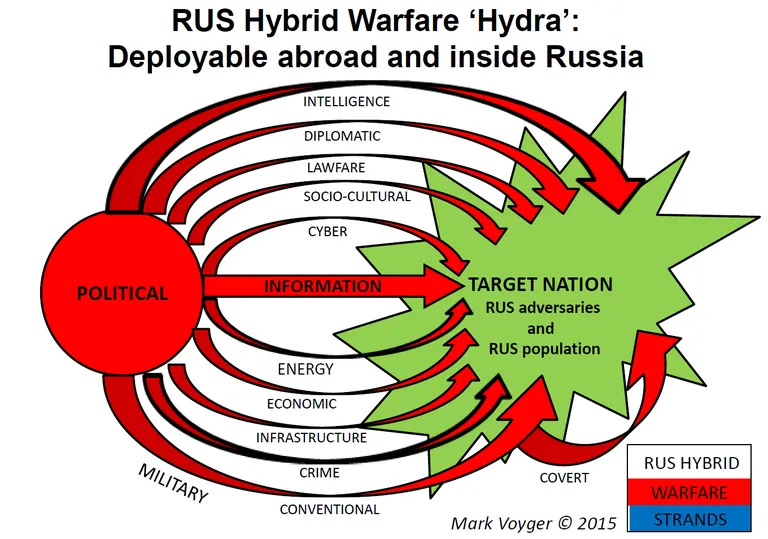
He recently published a three-part series titled No Rules on how warfare is changing. In Part 1 he covers the death of traditional warfare, in Part 2 he covers tempo, and in Part 3 he covers the future of warfare. It’s a well-reasoned series that I recommend reading. Given this morning’s attack on Venezuela and capture of Maduro, it was a prescient series of posts.
Hard not to appreciate a series that shows how Russia yields its Instruments of Power:
ECONOMY
NOTE: This occurred in early December in case you missed it:
6. US FED Injects $13.5B in Liquidity Overnight as QT Ends, Bitcoin & MSTR Stock React
The U.S. Federal Reserve injected $13.5 billion in overnight liquidity through repurchase agreements, following an additional $25 billion earlier in the day, as quantitative tightening came to an end. The move ranks among the largest liquidity injections since the Covid era and signals short-term stress in funding markets, echoing conditions seen during past repo crises. The operations provided banks and primary dealers with short-term funding backed by Treasury and mortgage-backed securities. While such liquidity injections are typically supportive of risk assets, the timing—amid broader market weakness—has raised questions about underlying financial system pressures.
7. Instacart’s AI-enabled pricing may bump up your grocery costs by as much as 23%, study says
Instacart uses AI-driven pricing experiments that can charge different customers different prices for identical grocery items, sometimes with variations as high as 23%. An investigation by Consumer Reports and Groundwork Collaborative found that all tested shoppers were exposed to these experiments, with some products showing multiple price points that could add up to as much as $1,200 a year for a typical family. Because prices are presented without comparison to what others see, consumers often have no way of knowing they may be paying more, raising concerns about fairness and transparency.
The practice has drawn scrutiny from the Federal Trade Commission, which is investigating whether such pricing may be deceptive. While Instacart says only a limited number of retail partners use short-term, randomized price tests and denies using personal data to set prices, consumer advocates warn that AI-powered dynamic pricing could increasingly allow companies to charge shoppers the maximum they are willing to pay—challenging long-standing expectations that grocery prices are the same for everyone.
8. All That Cheap Chinese Stuff Is Now Europe’s Problem
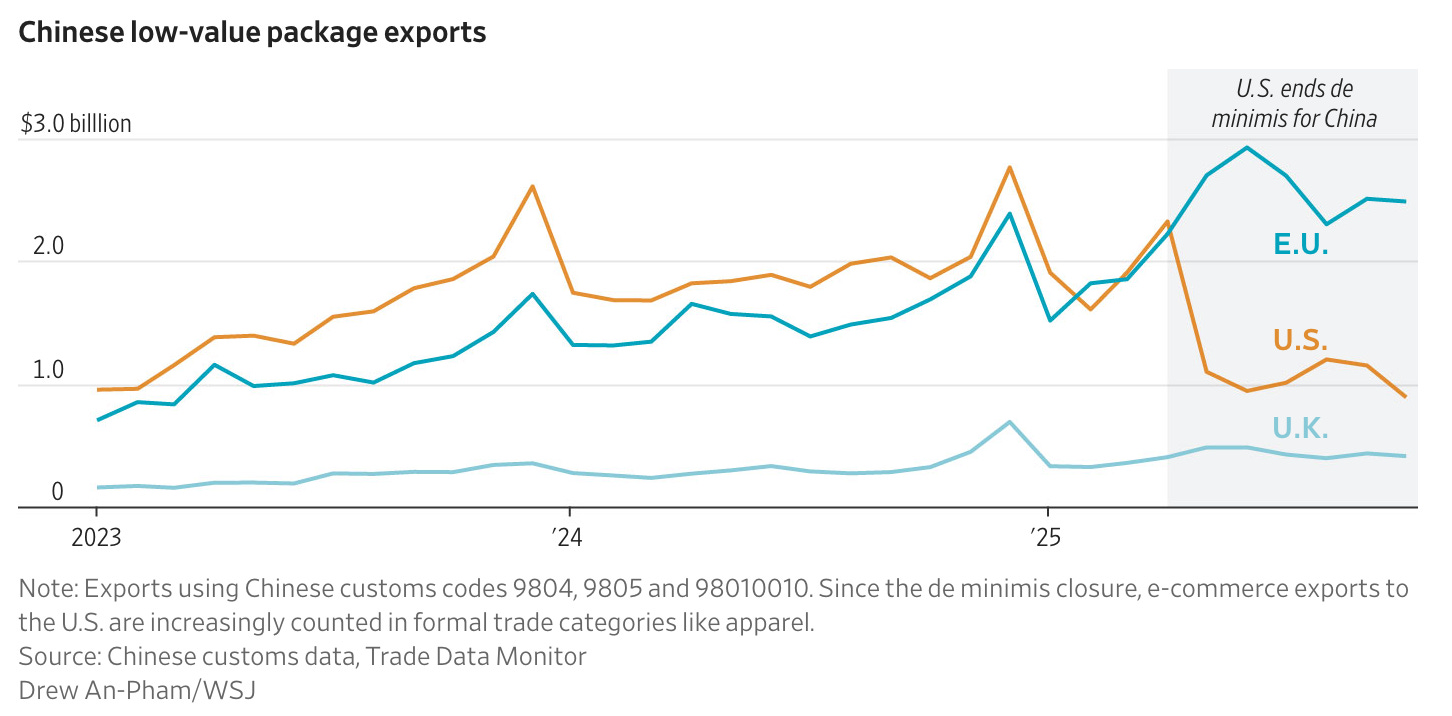
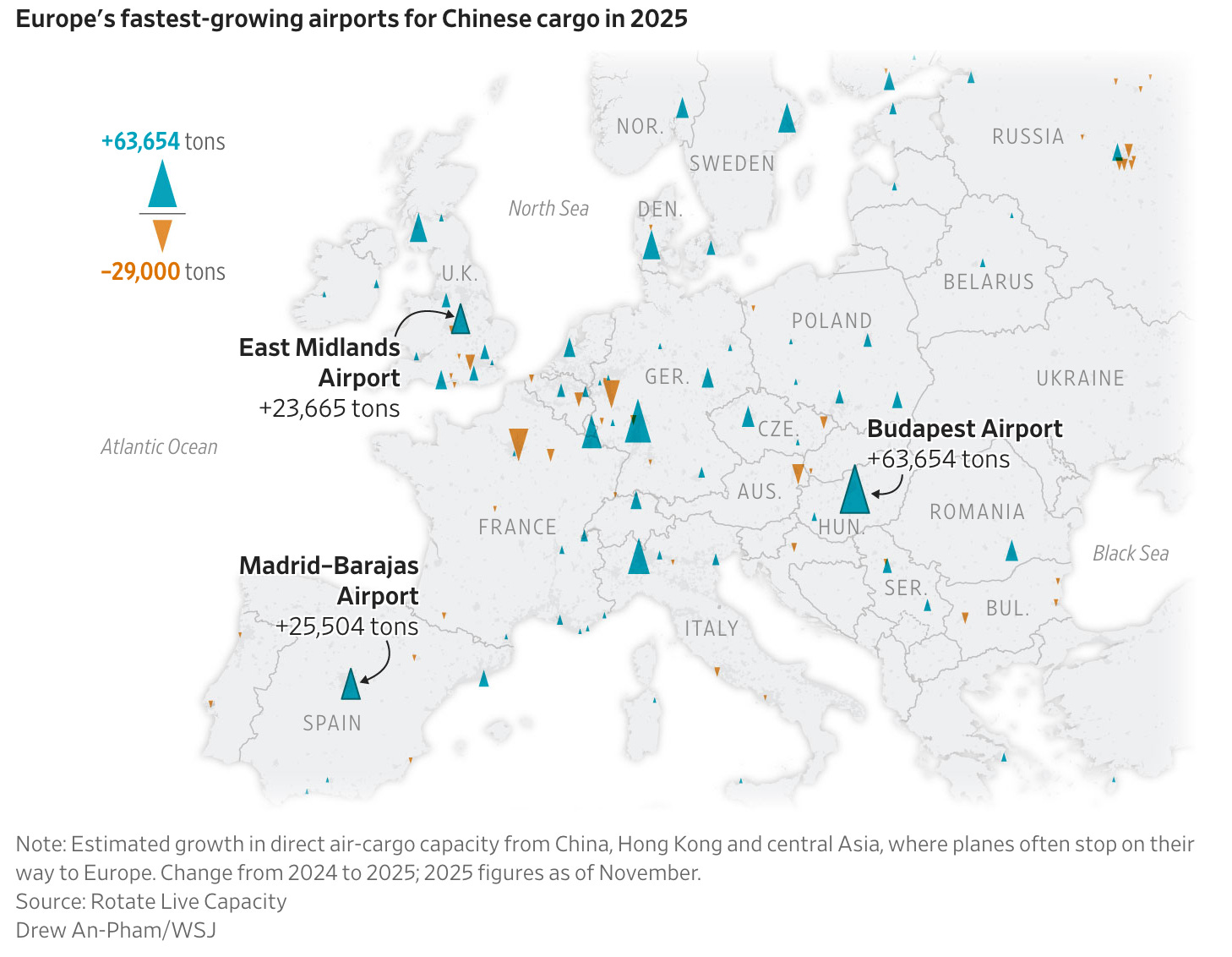
U.S. tariffs under President Trump have sharply reduced Chinese exports to America, redirecting a flood of low-cost goods into Europe instead. Chinese e-commerce companies such as Shein and Temu have rapidly expanded across the EU and the U.K., taking advantage of higher duty-free thresholds for small packages and building fast logistics networks that include cargo airlines, European warehouses, and informal “family warehouses” run by Chinese immigrants. As a result, Europe has overtaken the U.S. as China’s largest market for low-value package exports, helping push China’s trade surplus past $1 trillion.
The surge has sparked backlash across Europe over consumer safety, environmental impact, and unfair competition. Regulators have found widespread violations of EU product standards on Chinese platforms, while retailers warn the influx is undercutting prices and threatening millions of jobs. In response, the EU plans to impose fees on small packages and fully close its de minimis loophole by 2028, with the U.K. following later. Despite protests and regulatory scrutiny, European consumers—strained by years of weak growth—continue to embrace the ultra-cheap convenience, making it difficult to slow the flow of Chinese goods.
9. Greece pays off debt worth 5.3 billion euros ahead of schedule
Greece has paid off €5.3 billion in bailout-era debt years ahead of schedule, covering loans originally due after 2031. The early repayment is expected to save the country €1.6 billion in interest through 2041 and reduce its debt to below 120% of GDP by 2029, according to government officials.
The debt stemmed from Greece’s first euro zone bailout in 2010, during the crisis that nearly forced the country out of the euro and led to years of austerity and social unrest. While Greece’s economy is steadily recovering, it still carries the highest debt-to-GDP ratio in the euro area, making the early repayment a significant step toward improving its long-term financial position.
NOTE: Wow, way to go Greece!
Government
10. Thinking Differently About Trust in Government
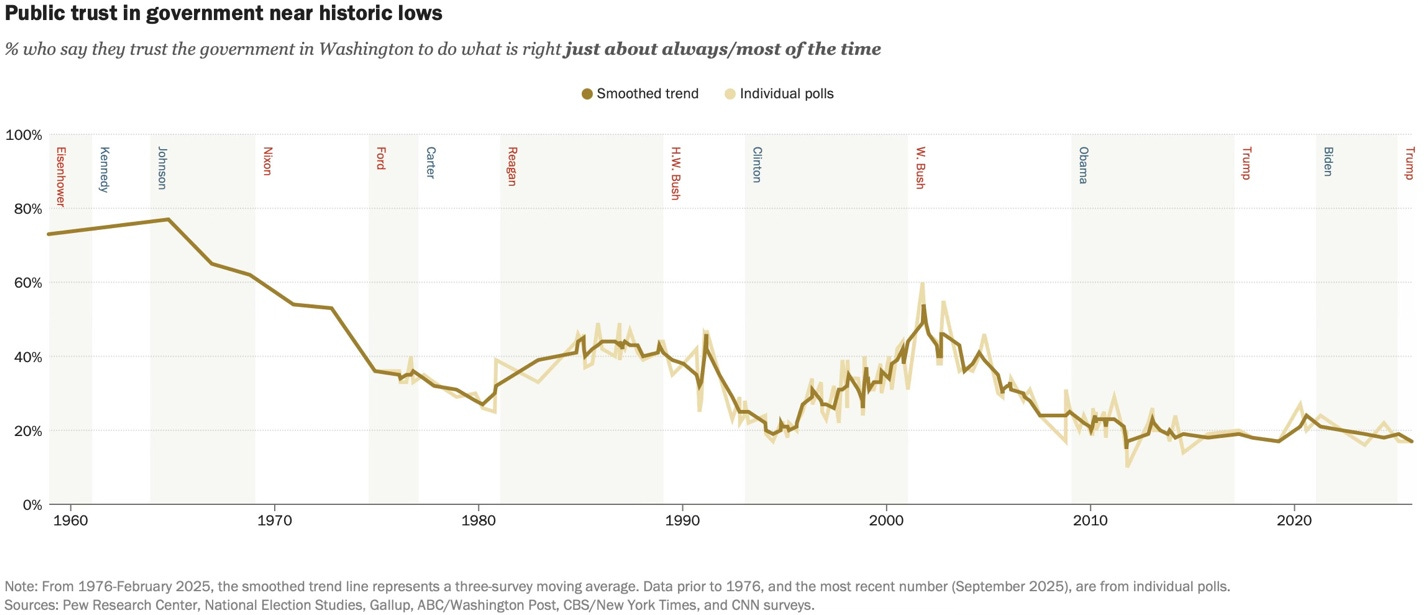
Americans’ distrust of the federal government is not a recent phenomenon but a decades-long trend that began with the expansion of government in the 1960s. As Washington’s size and role grew, so did opportunities for criticism, conflict over moral and regulatory issues, and perceptions of inefficiency, waste, and scandal. Brief increases in trust following economic booms or national crises have never reversed the overall decline, which has been reinforced by polarization, media scrutiny, slow or failed government programs, and high-profile breakdowns such as pandemic fraud and infrastructure delays. Many Americans also see skepticism as healthy, believing distrust pressures politicians to perform better.
Given these dynamics, trust levels from the mid-20th century are unlikely to return. The familiar polling question about trusting Washington “to do the right thing” now yields historically low results and offers limited insight into how trust might be rebuilt. The argument is that measuring public confidence in specific agencies and functions—tracked consistently over time—would better capture how performance affects trust. More nuanced, regular polling could clarify where confidence is earned or lost, but ultimately restoring trust depends less on surveys and more on competent, accountable governance.
NOTE: Salient arguments by the author of the article above. I have to wonder, is our government too big? We know a certain percent of waste and inefficiency is always going to exist within an organization, but how do we control it? We have an incredibly powerful US military, yet haven’t passed a financial audit in nine years.
DEFENSE
11. Pentagon fails financial audit for 8th year in a row
The Pentagon failed its financial audit for the eighth straight year, remaining the only major federal agency never to pass since audits were mandated in 2018. The latest Defense Department report identified 26 material weaknesses and two significant deficiencies, including major accounting failures in the Joint Strike Fighter program, where assets in the Global Spares Pool were omitted or inaccurately recorded, resulting in a material misstatement of the department’s financial statements.
Defense leaders acknowledged the problems but emphasized continued commitment to reform. The Pentagon reported $4.65 trillion in assets and $4.7 trillion in liabilities worldwide, and Defense Secretary Pete Hegseth said the department is using audit results to guide improvements and strengthen fiscal accountability. The Pentagon’s chief financial officer said the goal is to resolve critical issues and achieve a clean audit by 2028.
12. U.S. Flips History by Casting Europe—Not Russia—as Villain in New Security Policy
The Trump administration’s new National Security Strategy sharply breaks with past U.S. policy by directing its strongest criticism at Europe rather than traditional adversaries. It portrays European nations as declining, overly constrained by the European Union, weakened by immigration, and increasingly unreliable as allies. The document accuses European governments of undermining democracy, warns of “civilizational erasure,” and frames the EU and other transnational institutions as threats to sovereignty. European leaders and analysts reacted with alarm, viewing the strategy as a declaration that the trans-Atlantic partnership that has underpinned Western security since World War II is effectively over.
Strikingly, the strategy does not name Russia as a threat and instead casts the U.S. as a mediator between Europe and Russia, criticizing Europe’s approach to Ukraine and calling for an end to NATO’s expansion. Analysts argue the document aligns more closely with Russian interests and signals an intent not to withdraw from Europe but to reshape it politically, including by encouraging resistance to Europe’s current trajectory from within. European officials pushed back, emphasizing Europe’s strong democratic credentials and warning that the strategy represents a profound and destabilizing redefinition of U.S.–European relations.
NOTE: The new National Security Strategy can be found here.
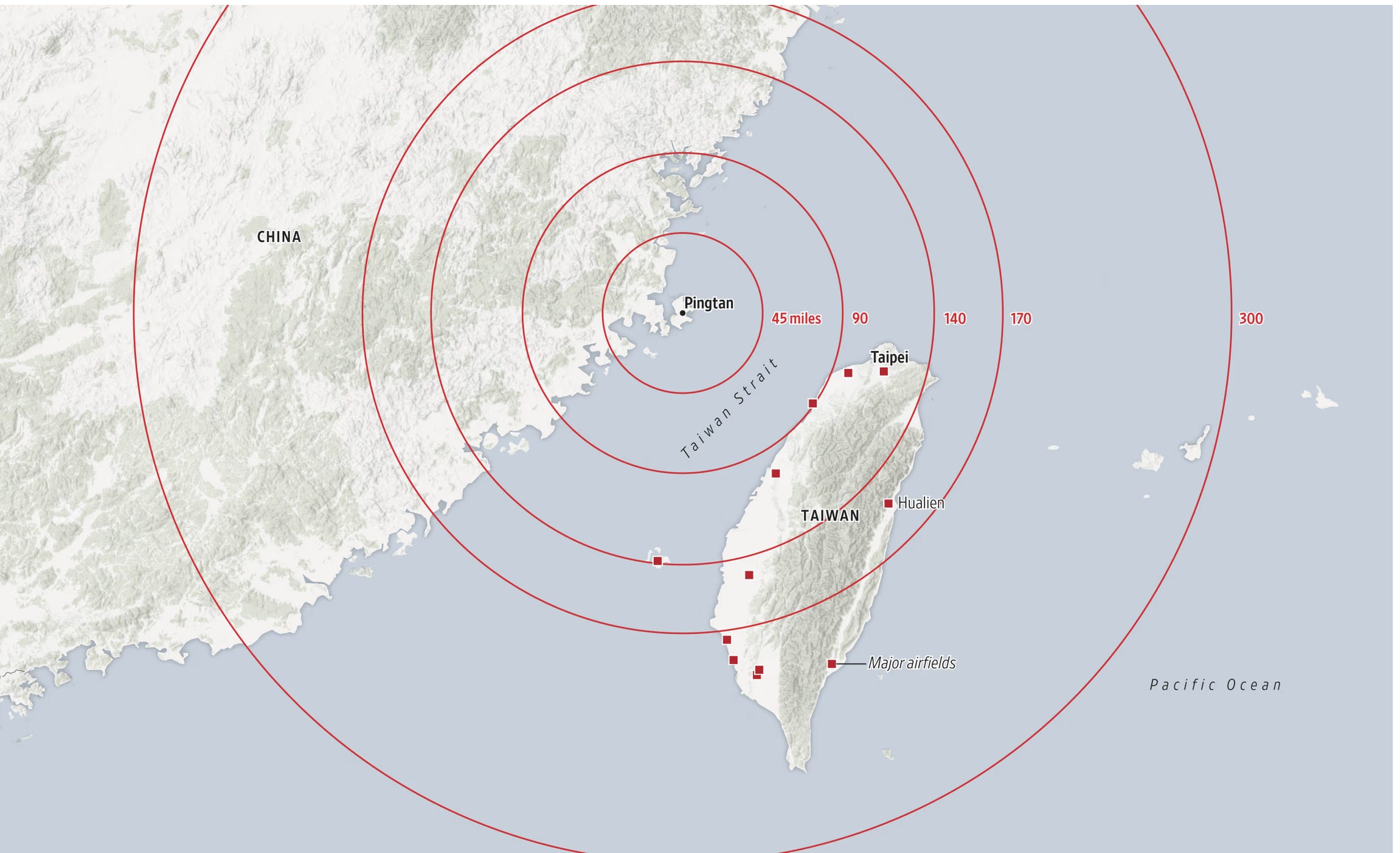
13. See How a Chinese Invasion of Taiwan Could Unfold
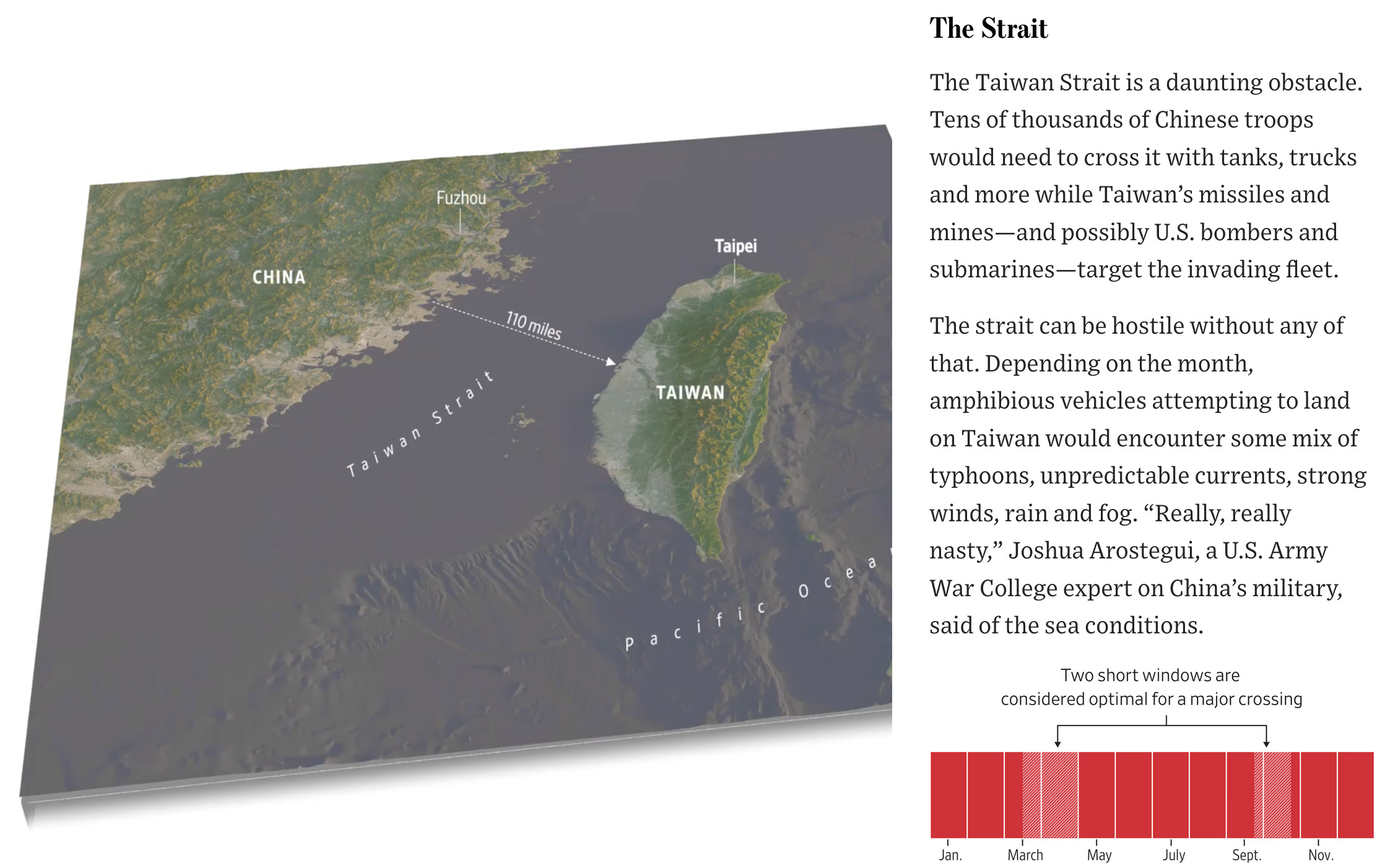
A Chinese invasion of Taiwan would be one of the most complex and destructive military operations imaginable, requiring forces to cross the treacherous Taiwan Strait under heavy fire and seize limited, difficult landing zones on a mountainous, densely populated island. Taiwan’s terrain, weather, narrow beaches, and urban concentration favor defenders, who could exploit tunnels, cities, and chokepoints to slow or bleed invading troops. Any conflict would be extremely costly, risk U.S. intervention, and have profound global economic and geopolitical consequences.
Military planners envision three broad phases: an initial missile and air campaign to cripple Taiwan’s defenses and deter U.S. involvement; a perilous amphibious assault using a mix of military and civilian vessels to land troops and equipment; and a push to seize ports and ultimately Taipei, where urban warfare would be fierce. While China has rapidly expanded its missile forces, amphibious units, and logistics capabilities—including reliance on civilian ships and mobile piers—the operation would still hinge on overcoming immense logistical hurdles and sustained resistance, making the outcome highly uncertain and the risks extraordinarily high.
NOTE: Absolutely exceptional article from WSJ—visuals and analysis are well done.
Health
NOTE: No surprise here—a systematic review and meta-analytic investigation comprised of data from 98,299 participants across 71 studies revealed that “greater engagement with [short-form video platforms such as TikTok, Instagram Reels, and YouTube Shorts] platforms is associated with poorer cognitive and mental health in both youths and adults.” You are becoming dumber and more mentally unwell by all your scrolling:
14. Feeds, Feelings, and Focus: A Systematic Review and Meta-Analysis Examining the Cognitive and Mental Health Correlates of Short-Form Video Use
NOTE: Love this video from Nike. Why risk it? Because you can. In an era when many young people are hesitant to take risks, even seemingly little ones, Nike is doing its part to counter the narrative. It’s OK to fail, it’s NOT OK to not try. Young people — get out there and do things!
15. WHY DO IT? | NIKE
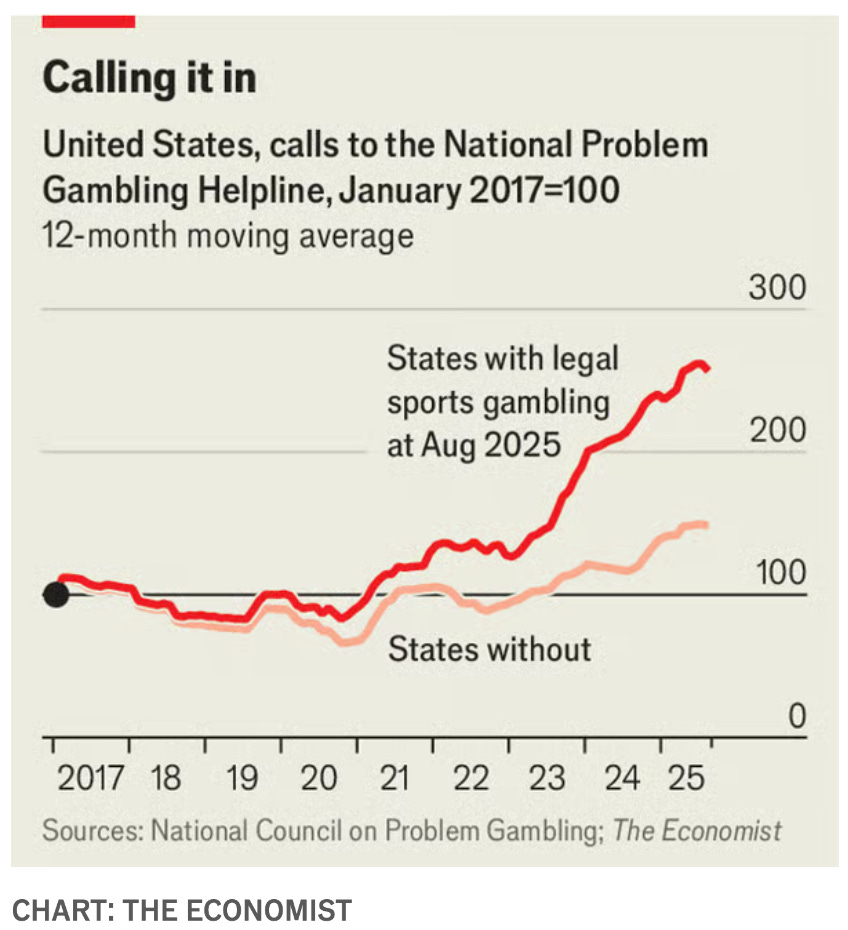
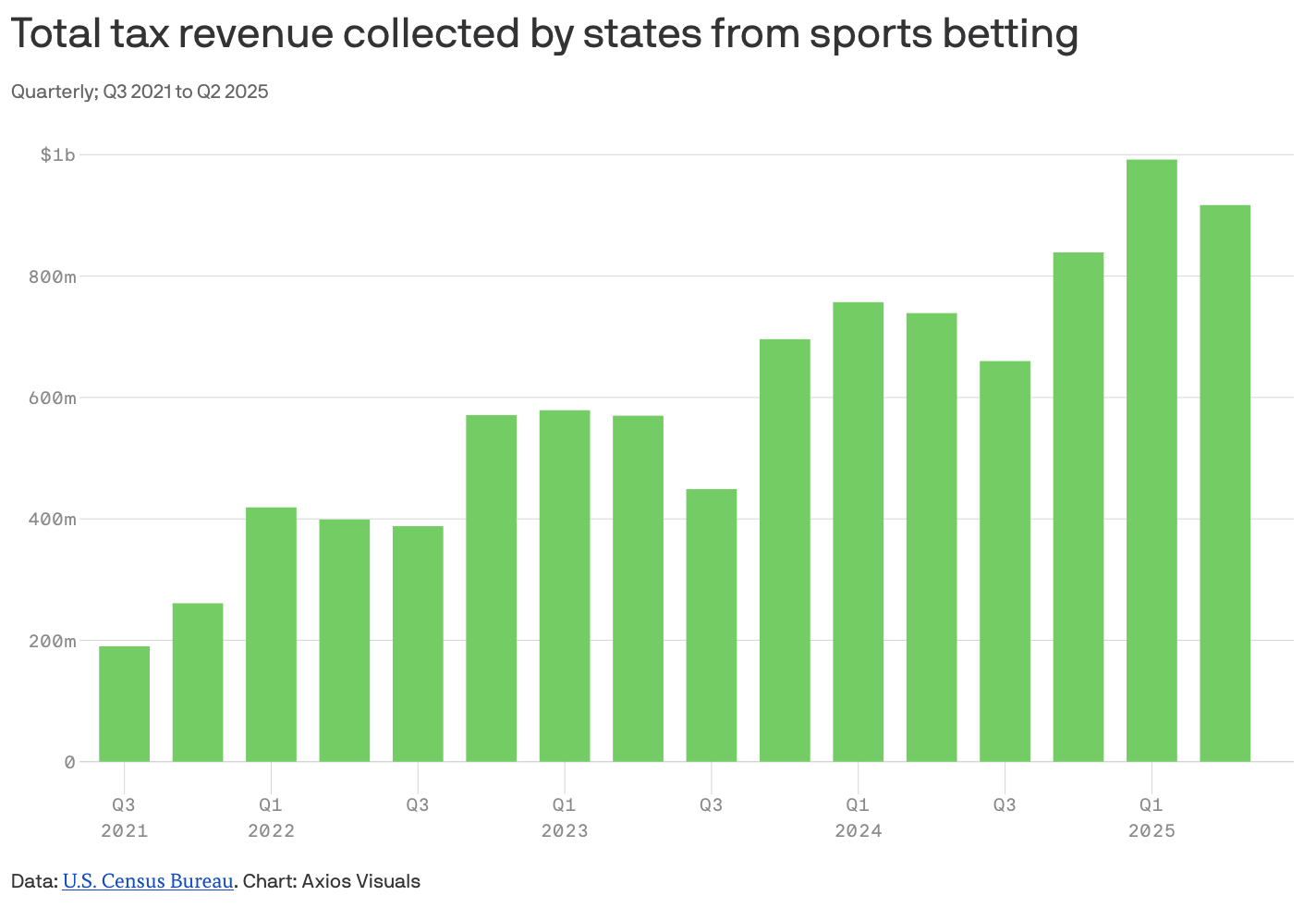
16. College campuses have become a front line in America’s sports-betting boom
Sports betting has rapidly reshaped how Americans—especially young men—engage with sports since its legalization began in 2018. Now legal in most states, betting is deeply woven into college culture, media, and social life, with apps, promotions, and gambling odds embedded in broadcasts and online platforms popular with students. While legalization has brought oversight and tax revenue, it has also normalized constant wagering, particularly on college campuses where sports are omnipresent and many students are betting for the first time away from home.
The consequences are increasingly visible: a significant share of young men report financial trouble, emotional dependence, and disrupted daily life tied to betting, with counselors, psychiatrists, and bankruptcy lawyers seeing sharp rises in gambling-related harm. Colleges and the NCAA face mounting challenges, including harassment of student-athletes, integrity breaches in games, and scandals involving insider betting. Efforts to regulate, curb sponsorships, and limit certain wagers have been inconsistent, leaving a system where betting is easy, risks are high, and for many young gamblers, losses are simply followed by another bet tomorrow.
17. America’s Seniors Are Overmedicated
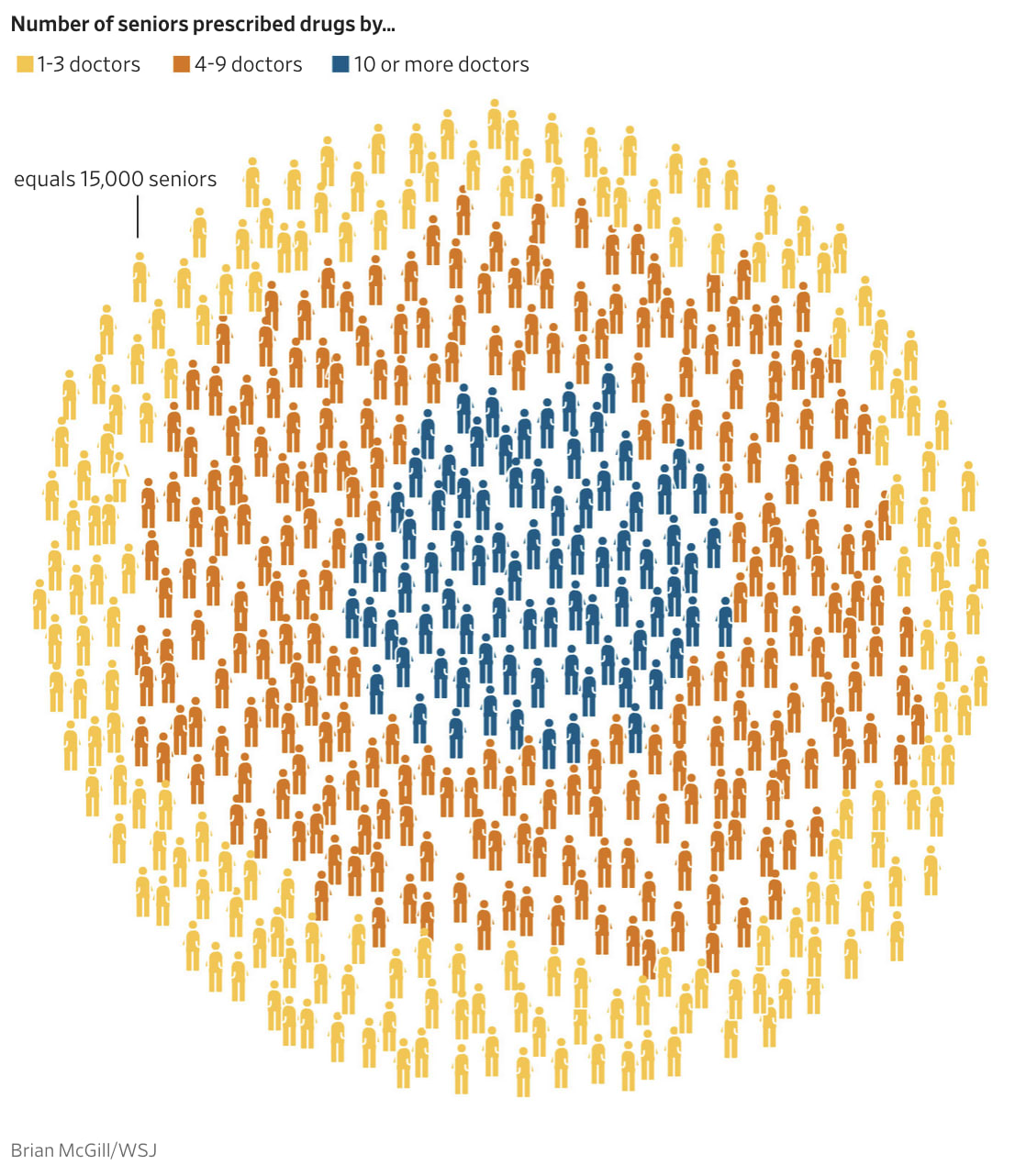
Older Americans are increasingly prescribed large numbers of medications, often by multiple doctors, creating dangerous combinations that can lead to confusion, falls, and serious injuries. One in six Medicare seniors takes eight or more drugs, frequently including medications that geriatric experts warn older patients should avoid, such as benzodiazepines, muscle relaxants, antihistamines, and drugs like gabapentin that affect the central nervous system. These risks are compounded by fragmented care, incomplete medication records, and limited oversight, even though Medicare mandates some medication reviews that often fail to reduce overall drug use.
In 2022, 7.6 million seniors were simultaneously prescribed eight or more medications for at least 90 days. Of those seniors, 3.9 million took 10+ drugs at once. And more than 419,000 of them were prescribed 15+ drugs at the same time. Among the seniors in the Journal analysis who were taking eight or more drugs, 3.6 million had prescriptions for at least one medication that geriatricians say elderly patients should generally avoid.
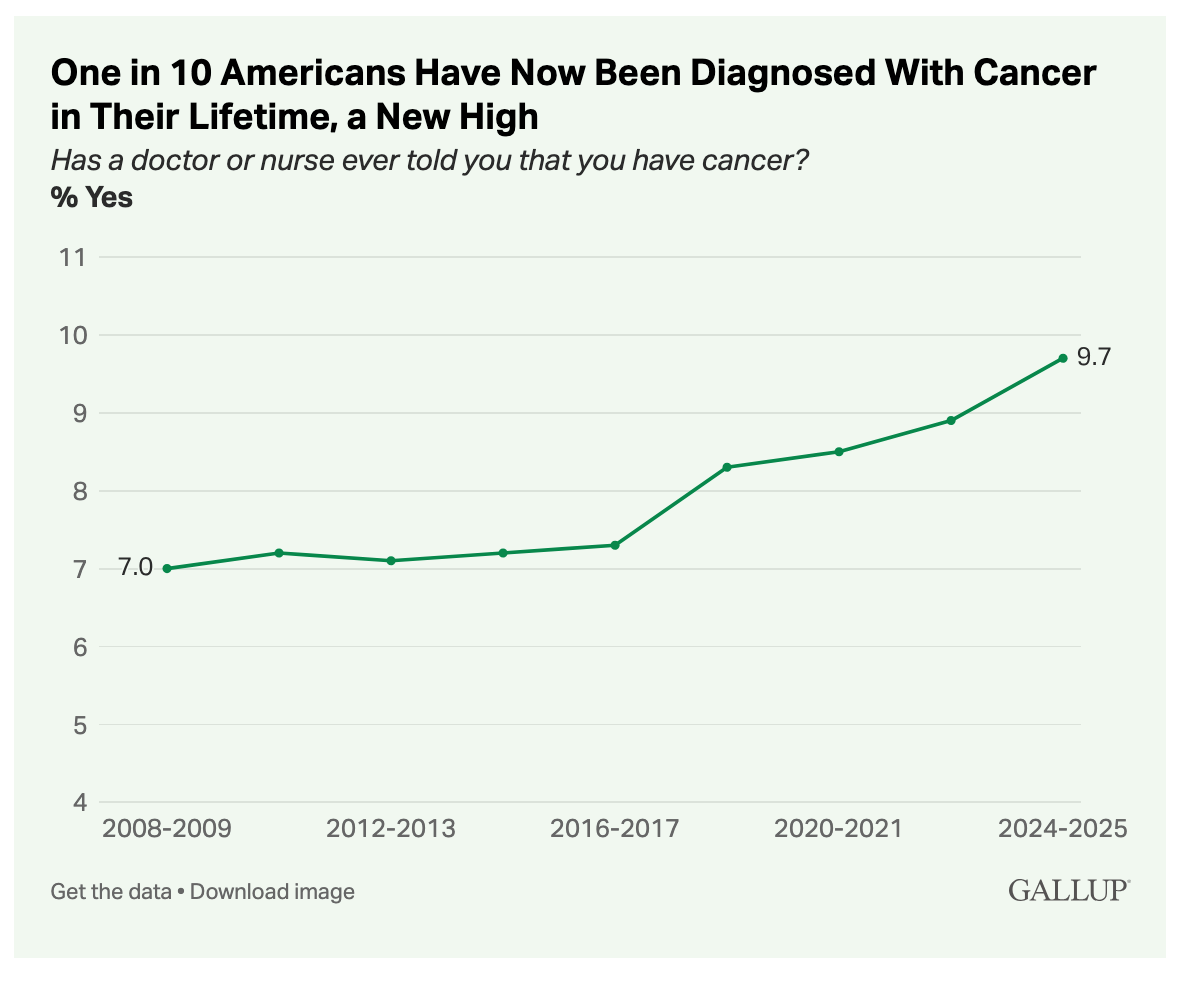
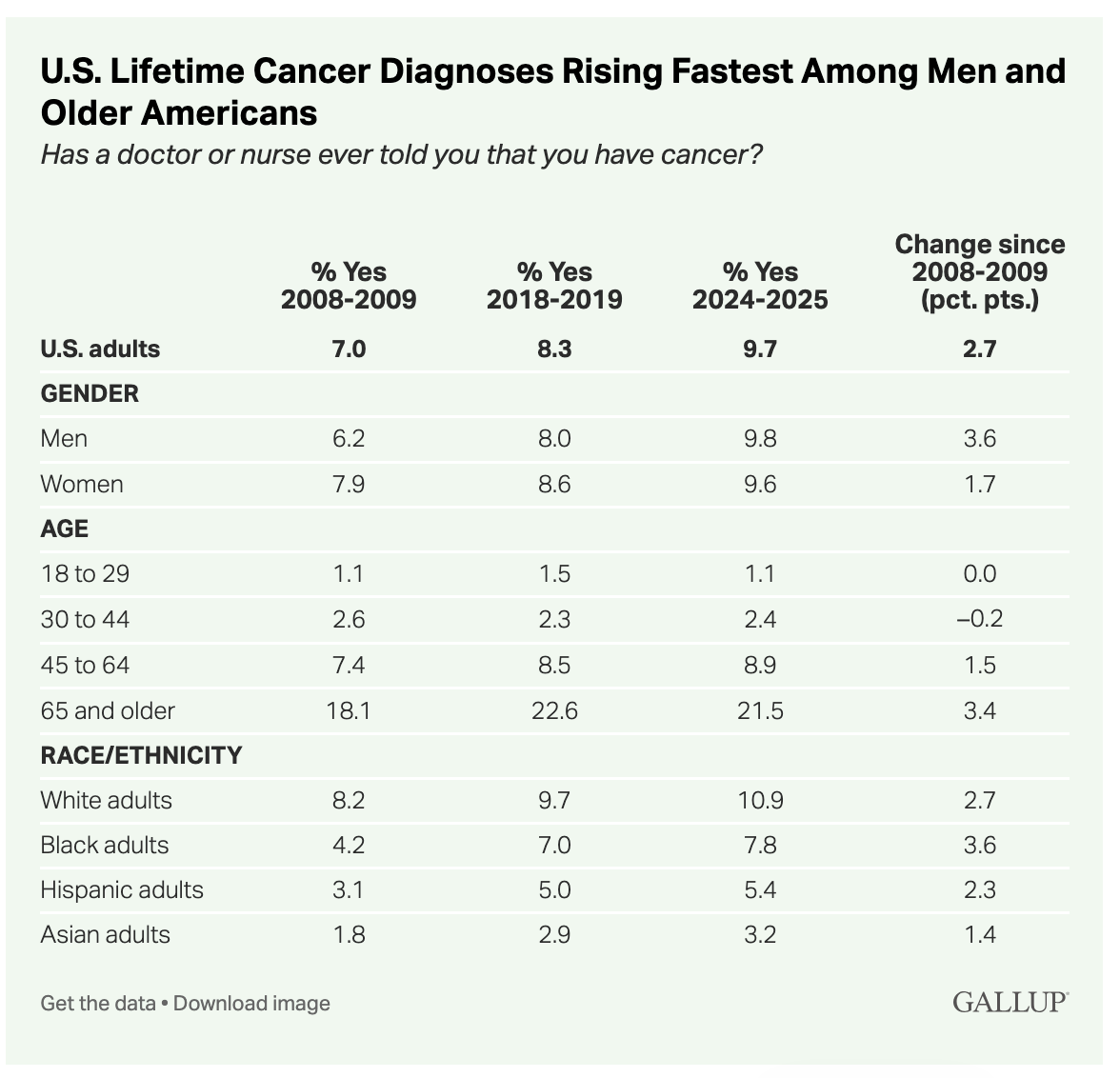
18. Nearly One in 10 U.S. Adults Report Having Had Cancer
Nearly one in ten U.S. adults (9.7%) now report having been diagnosed with cancer at some point in their lives, up sharply from 7% in 2008–2009. This increase is not driven by rising rates of new cancer cases, which have modestly declined overall, but by falling mortality and improved survival that allow more people to live longer after diagnosis. Advances in treatment have raised five-year survival rates, while cancer death rates have steadily dropped, resulting in a growing population of survivors.
The rise in lifetime cancer prevalence is concentrated among older Americans, reflecting both improved survival and a rapidly aging population. Adults 65 and older now report cancer diagnoses at much higher rates, while prevalence among younger adults has remained relatively stable despite increases in some early-onset cancers. The trend spans racial and ethnic groups and has narrowed gender differences, with men now slightly more likely than women to report a lifetime diagnosis. While these patterns reflect progress in treatment, they also signal growing long-term demands on the healthcare system as millions of survivors require ongoing monitoring, care, and support.
19. Accommodation Nation
Disability accommodations in higher education have expanded rapidly, transforming what was once a simple process of administering exams into a complex logistical challenge. Universities are struggling to meet demand as growing numbers of students receive official disability designations that grant extra time, separate testing spaces, or technology use. At elite institutions, testing centers are often overwhelmed, forcing professors to improvise solutions that can undermine fairness and even increase distraction rather than reduce it.
The surge reflects rising diagnoses of ADHD, anxiety, and depression, along with universities making accommodations easier to obtain—trends that are most pronounced at highly selective schools. At institutions like Harvard, Brown, and Amherst, 20% to more than 30% of undergraduates are registered as disabled, with most receiving accommodations. The result is a paradox in which the most academically successful universities now report the highest shares of students deemed unable to succeed without special academic adjustments, raising questions about equity, standards, and the purpose of accommodations.
20. Could Massachusetts Become the First State to Undo Legal Weed?
Momentum is building behind a national backlash against marijuana legalization, led by activists who argue that commercialized cannabis has harmed public health. In Massachusetts, organizers have gathered enough signatures to advance a 2026 ballot measure that could repeal recreational marijuana legalization, while other states are moving to block future legalization efforts and federal lawmakers have targeted THC-infused products. Influential critics such as drug policy scholar Kevin Sabet contend that legal cannabis fuels addiction, mental illness, and social harm, particularly among youth, and accuse the marijuana industry of adopting tactics pioneered by Big Tobacco.
Sabet argues that rising concerns about psychosis, violence, and addiction are shifting public opinion and policy, even as he opposes criminalizing individual marijuana use. He says the Trump administration is largely skeptical of legalization, despite some internal pressure to ease restrictions, and frames marijuana commercialization as a broader “addiction-for-profit” problem that weakens society and national competitiveness. With polling showing declining support for cannabis and recent policy setbacks for legalization advocates, opponents believe the U.S. may be entering a new phase of resistance to the marijuana industry’s expansion.
Housing
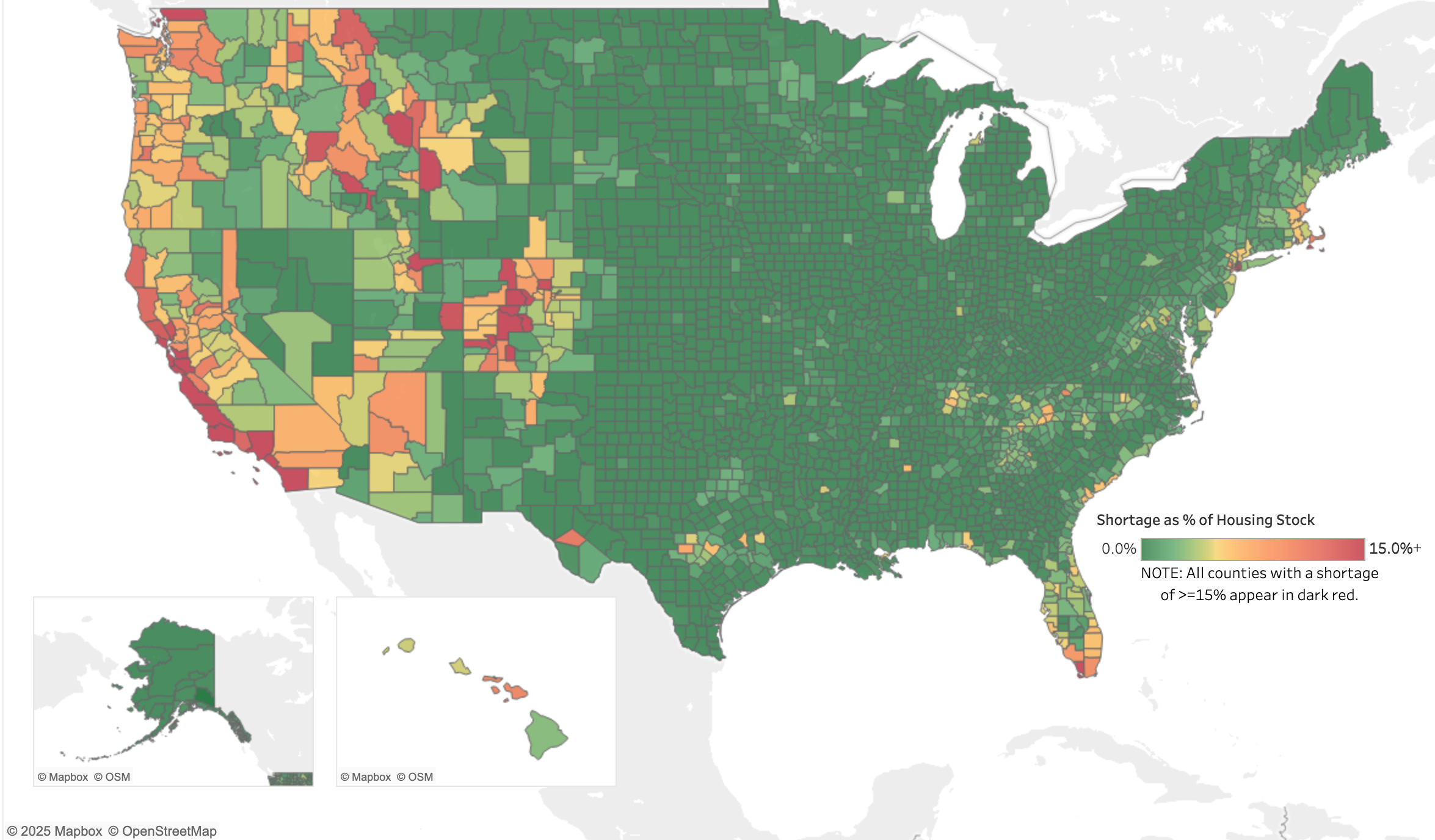
21. America’s Six Million Home Shortage: Why California Is at the Epicenter
The U.S. housing shortage is estimated at roughly six million homes, but nearly one-third of that gap is concentrated in California and nearby western states. New analysis shows that California alone accounts for about 1.4 million excess missing homes, with ten neighboring “blast zone” states adding another 600,000. If these 11 states had built housing at rates similar to the rest of the country, the national shortage would be far smaller. The most severe shortages cluster in coastal California and the Mountain West, where housing scarcity exceeds 15% of existing supply in many counties.
The crisis stems largely from decades of restrictive zoning, environmental rules, and local opposition to new development, which have driven prices far above national norms and pushed millions of Californians to relocate across the West—exporting affordability problems to neighboring states. The analysis argues that meaningfully easing America’s housing shortage requires boosting supply where constraints are most severe, particularly by allowing denser housing, smaller lots, and mixed-use development with streamlined approvals. These changes, it concludes, could substantially close the West’s housing gap within a decade.
NOTE: Link to below map here.
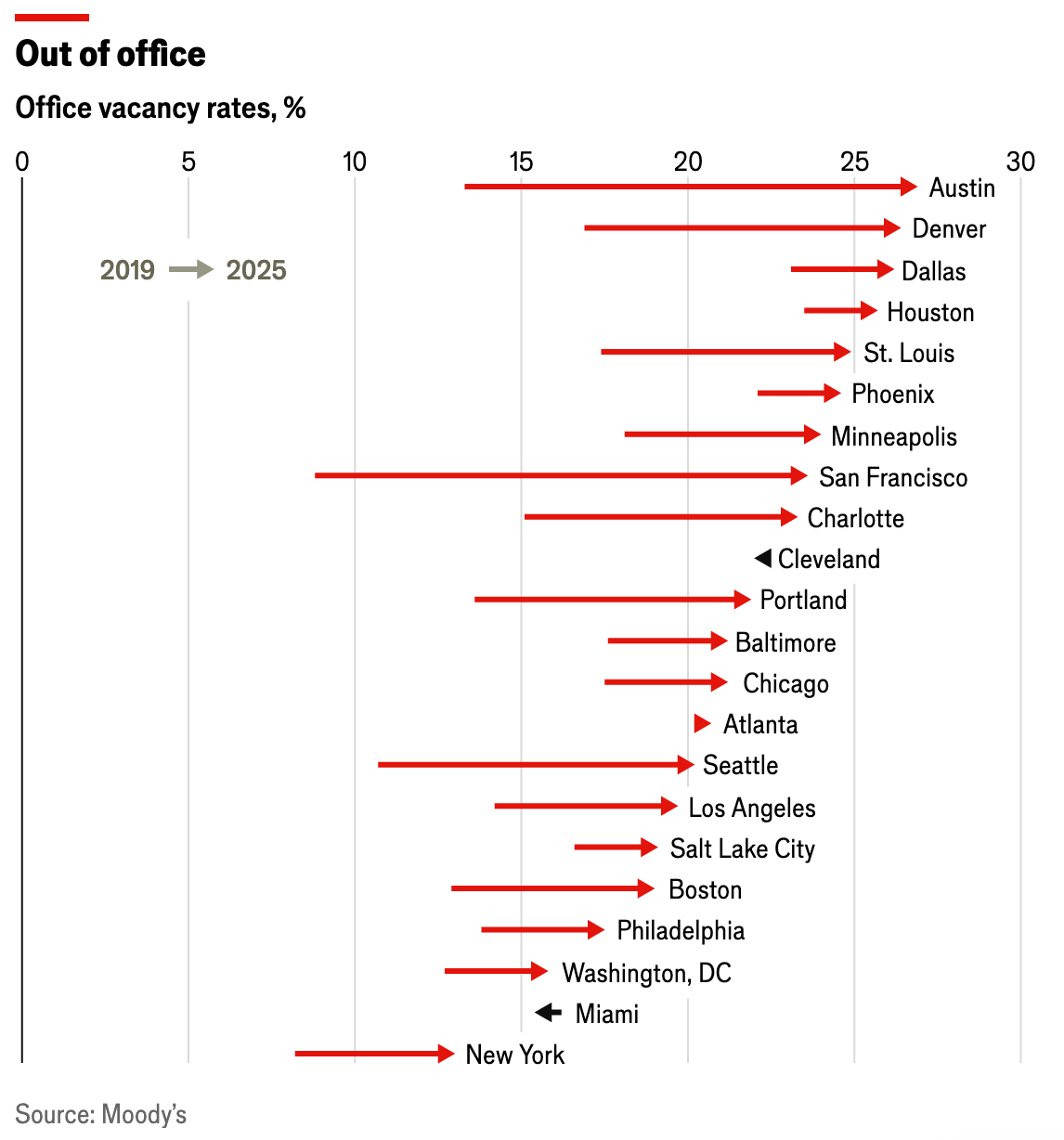
22. America’s work-from-home capitals are in a sorry state
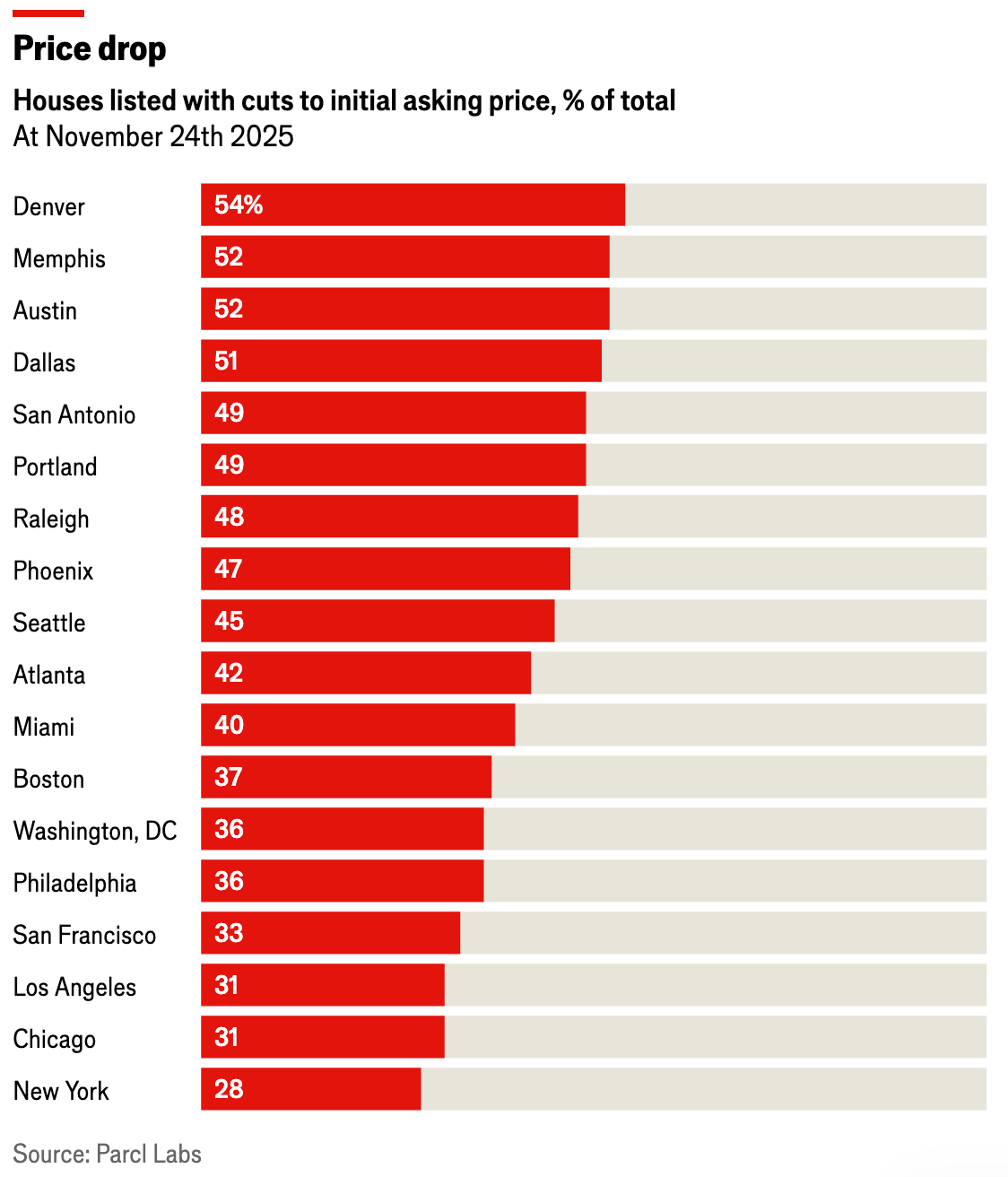
Remote work has become a permanent feature of the U.S. economy, with about 15% of workers in major metropolitan areas working from home most days and even higher shares in cities like Austin, Denver, San Francisco, Seattle, and Portland. As pre-pandemic office leases expire, the financial impact on city centers is becoming clearer: office vacancies exceed 25% in some cities, property values are falling, and tax revenues tied to commercial real estate are shrinking. These trends are straining municipal budgets, particularly in cities with high concentrations of remote workers.
Reduced commuting has also cut spending on transportation, retail, and services, worsening deficits for transit agencies and local governments. Slowing migration into former work-from-home magnets and rising borrowing costs are now pressuring housing markets, further weakening the tax base. In response, cities are freezing hiring, cutting services, and preparing layoffs, even as budget shortfalls spread nationwide. The shift to remote work, accelerated by the pandemic, is leaving lasting fiscal challenges for American cities.
23. Top Gun Traders: Stock Bets and Crypto Culture Take Over the Military
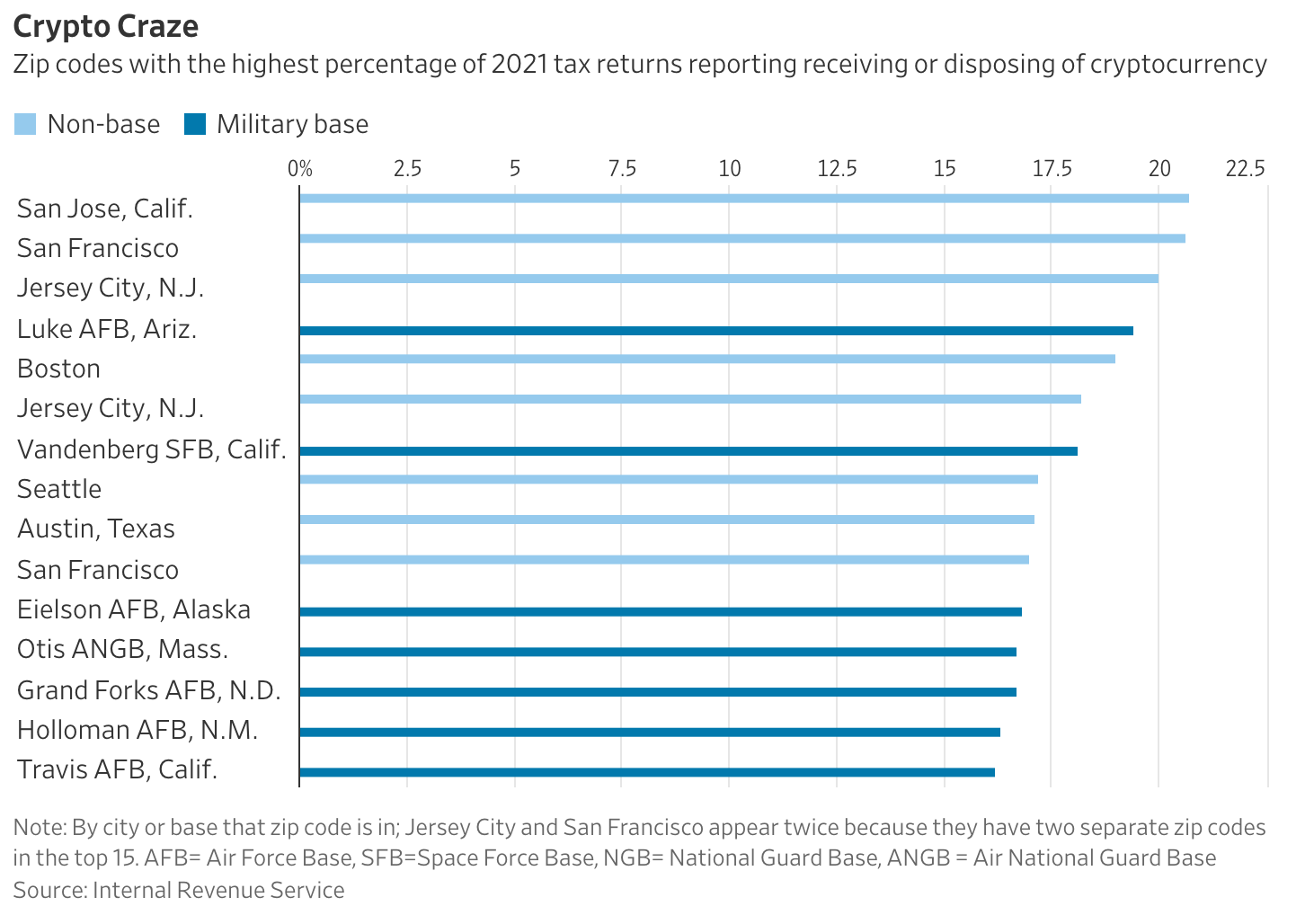
A booming stock and crypto market has turned U.S. military bases into hubs of intense investing activity, with servicemembers trading stocks, cryptocurrencies, and meme assets from deployments, barracks, and even aircraft carriers. Young troops with steady pay, strong job security, and access to investing apps have embraced risk-taking, sharing tips through group chats and social media. Military communities played an outsized role in early crypto adoption, and many servicemembers have built significant wealth through tech stocks, bitcoin, and index funds, with visible signs ranging from luxury cars to high-end watches.
The culture also carries substantial risks. Peer-driven hype, concentrated bets, and limited experience with prolonged market downturns have left some troops vulnerable to sharp losses, scams, and overconfidence. Financial advisers and veterans warn that high valuations and reliance on a narrow set of assets could lead to painful reversals if markets correct. While some servicemembers have shifted toward diversified investing after losses, the mix of camaraderie, competition, and easy access to trading continues to fuel both notable successes and costly failures.
Life
24. Conservative Young Women Flip the Script: Kids First, Then Career
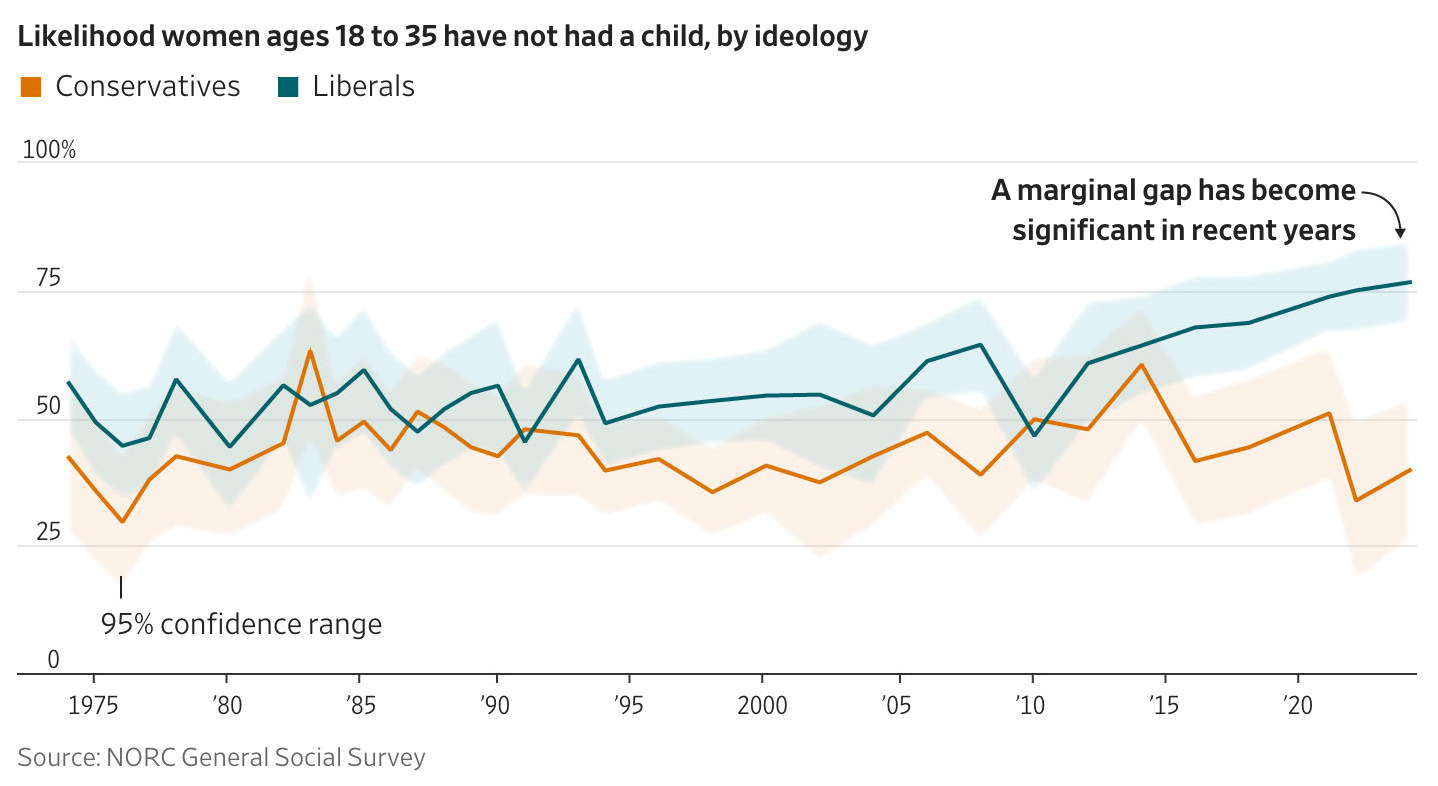
There is a growing divide between conservative and liberal women over how to balance career and family, with many conservative women rejecting the long-dominant idea that family should wait until after career establishment. Instead, they promote a “seasons of life” approach—prioritizing marriage and children earlier, then scaling careers up or down over time. Influential conservative figures and organizations encourage young women to pursue education and work, but not at the expense of starting a family, criticizing egg freezing and the “you can have it all at once” mindset as misleading. The broader message is that meaning, not just career success, should guide life decisions, even if that means delaying or reshaping professional ambitions. Data show the gap has widened sharply: by 2024, about 75% of liberal women ages 18–35 were childless, compared with roughly 40% of conservatives.
Entertainment
NOTE: This year I saw two movies about bird watching, which is not a hobby of mine. They were funny movies so I thought I’d pass them on to you here. Yes, I know movies about birding may sound boring, but these two movies make the topic enjoyable.
25. The Big Year
Two bird enthusiasts try to defeat the cocky, cutthroat world record holder in a year-long bird-spotting competition. It’s a comedy, as you might suspect, starring Owen Wilson, Jack Black and Steve Martin.
Listers: A Glimpse into Extreme Bird Watching
Two brothers learn about competitive birdwatching by becoming birdwatchers—spending a year living in a used minivan, traveling the country to compete in a ‘Big Year’. This is a funny, documentary-style movie about actually trying to become record holders. Warning: it does have adult language.
Appreciate the shoutout! Currently working on a piece about Maduro and the Venezuela situation - the operation today is an interesting case study.