Sorry, been a few weeks…had a few other higher priority items going on. So, let’s jump right in:
History
1. Who was the worst monster of the 20th century? (Noahpinion)
In this first article, Noah Smith ranks the worst regimes of the 20th century by considering not just total deaths, but also intent, proportional harm, living conditions under the regime, and what leaders planned but failed to accomplish. His list:
Hitler and Nazi Germany rank first because their mass killing was deliberate and expansionist: about 5–6 million Jews were murdered in the Holocaust, while Nazi plans for Eastern Europe envisioned the starvation, enslavement, or elimination of tens of millions more. Of the roughly 27 million Soviet citizens killed during World War II, about 19 million were civilians, many dying from hunger and disease connected to Nazi occupation policies.
Fascist Japan ranks second for its conquest of China and Southeast Asia, with an estimated 6–20 million Chinese deaths, including widespread massacres, starvation, biological warfare, and human experimentation.
Pol Pot’s Khmer Rouge ranks third because it killed an estimated 1.5–3 million Cambodians, roughly one-fifth to one-quarter of the country’s population.
Stalin’s USSR ranks fourth, with an estimated 10–20 million deaths, including 6–10 million from famine and perhaps 3 million political opponents killed directly or through the gulag system.
Mao’s China ranks fifth: roughly 36–40 million people died during the Great Famine, while another estimated 2–4 million were deliberately killed through purges, executions, forced labor, and the Cultural Revolution.
Noah argues that Wars of conquest tend to produce the worst atrocities because they encourage dehumanization and mass violence, while communist regimes were especially prone to catastrophic famines caused by destructive agricultural policies. His tentative 21st-century ranking includes: Sudan’s RSF/Janjaweed and Omar al-Bashir, ISIS, Vladimir Putin, Bashar al-Assad, and Myanmar’s Tatmadaw as the worst regimes or actors so far.
East Asia
2. China’s shadowy maritime militia is worryingly active (Economist)
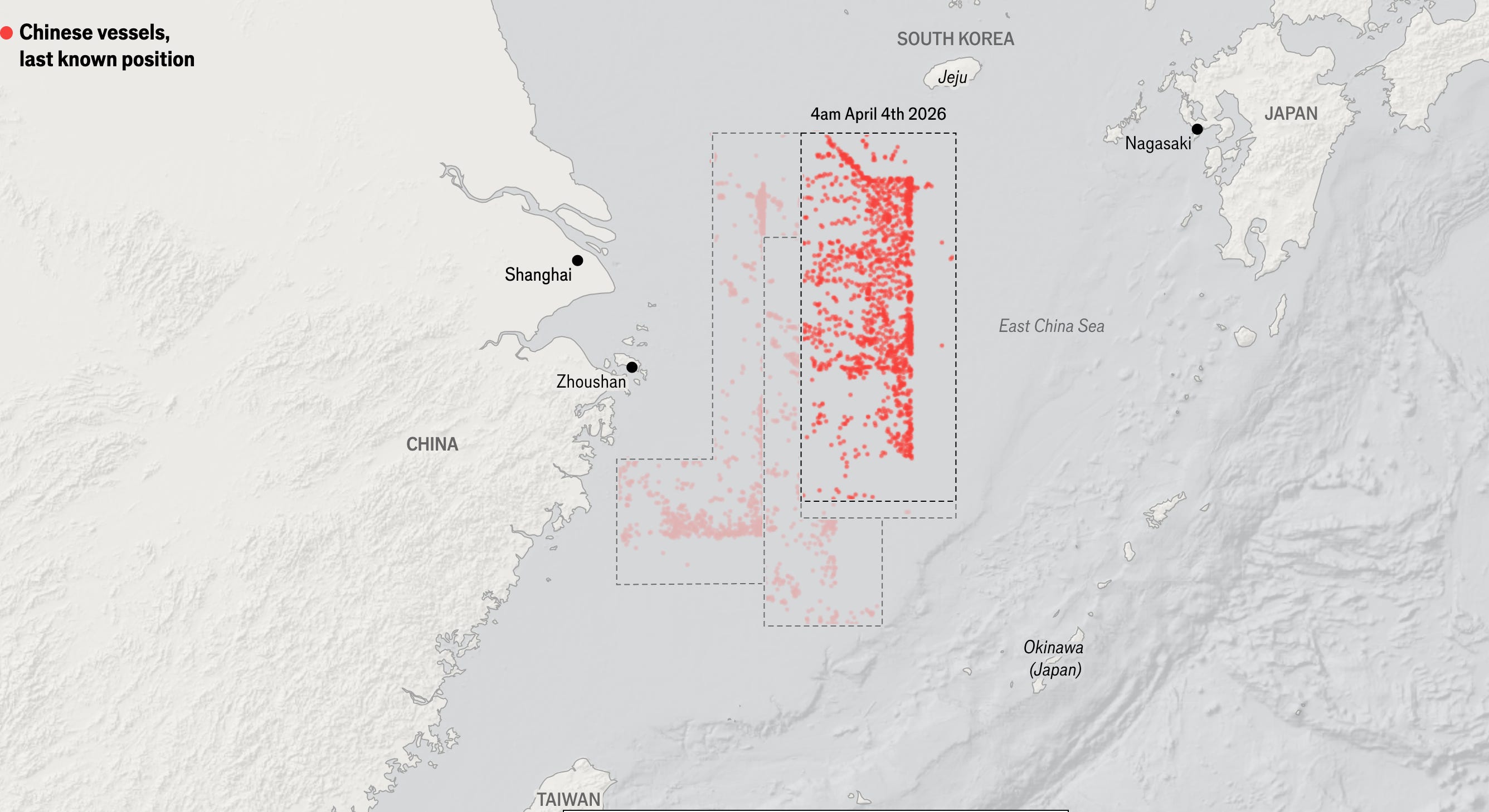
China appears to be expanding the role of its maritime militia, a paramilitary force drawn partly from civilian fishing fleets, into the East China Sea and waters near Taiwan. In December, more than 1,000 Chinese fishing vessels formed a massive L-shaped formation north of Taiwan for over 12 hours, and similar formations appeared four more times in less than six months. One formation stretched about 450 kilometers, while another lasted more than 30 hours. These maneuvers are much larger than anything previously seen, even in the South China Sea, and suggest that China is testing its ability to coordinate large numbers of civilian vessels for military or “grey zone” purposes while maintaining plausible deniability.
China has been modernizing this force since Xi Jinping came to power in 2012, creating better-trained and better-equipped units, especially in the South China Sea. Some vessels receive subsidies of more than 24,000 yuan, about $3,500, per day to remain in disputed waters. Satellite monitoring found an average of 241 suspected militia vessels operating daily in disputed South China Sea areas last year, the highest level since tracking began in 2021. In a Taiwan conflict, these boats could support reconnaissance and logistics, interfere with shipping, cut undersea cables, overwhelm defenses with large numbers of potential targets, or help enforce a blockade or quarantine. The recent formations therefore point to an important Chinese advantage: an unusual degree of political control over a vast civilian fleet that could be mobilized quickly for military purposes.
NOTE: Article contains good infographics.
3. China / Taiwan Update (AIE & ISW)
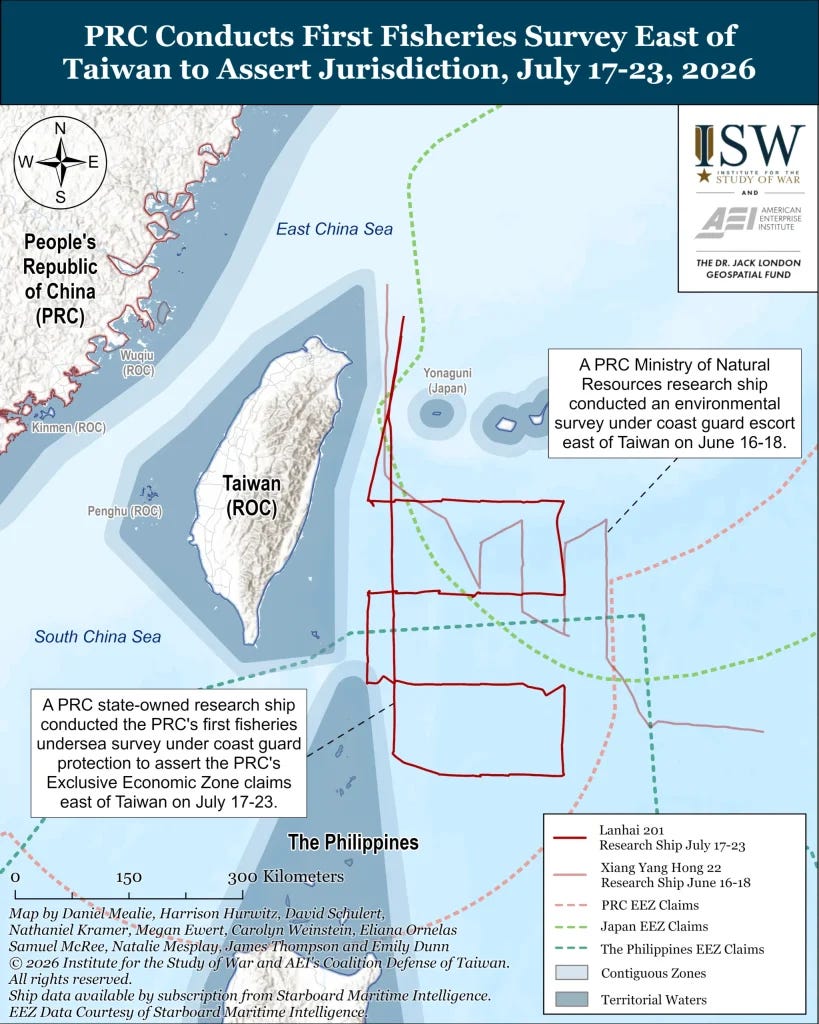
China is sharpening its preparations for a possible Taiwan conflict by studying Russia’s experience in Ukraine, expanding long-range anti-ship capabilities, and improving amphibious assault forces. PLA troops reportedly trained with Russian units near Volgograd on drone warfare and urban combat, while Chinese naval exercises have practiced countering unmanned systems. At sea, China has confirmed that its Type 052D destroyers can launch the YJ-20 anti-ship ballistic missile, which reportedly has a range of 1,500–2,000 km and can reach speeds of up to Mach 9. China now operates 37 Type 052Ds and 10 larger Type 055 destroyers. The PLA is also deploying more naval Z-20 helicopters and constructing detailed replicas of Taiwanese government buildings, U.S. naval vessels, bases, and aircraft for live-fire and invasion training, indicating extensive preparation for strikes against Taiwan and potentially U.S. forces.
Taiwan is responding by strengthening sea denial and civil-defense capabilities. Since 2022 it has produced more than 1,000 Hsiung Feng anti-ship missiles, bringing its total anti-ship missile inventory above 1,800, and it recently consolidated coastal missiles, radars, and unmanned surface vessels under a new Littoral Combat Command. The government has also proposed funding 2,000 unmanned surface vessels and more than 200,000 drones, although the budget remains stalled in the legislature. Taiwan is integrating civilian resilience exercises with military drills and testing communications disruptions to prepare for possible attacks on infrastructure. Regional tensions are also rising: the Philippine defense secretary said his country could not remain neutral in a Taiwan conflict, while Chinese and Philippine vessels had several confrontations in the South China Sea in July, including water-cannon attacks and an incident in which a Philippine service member was injured.
4. U.S., Allies Put Frictions Aside, Showing China Combined Naval Might (WSJ)
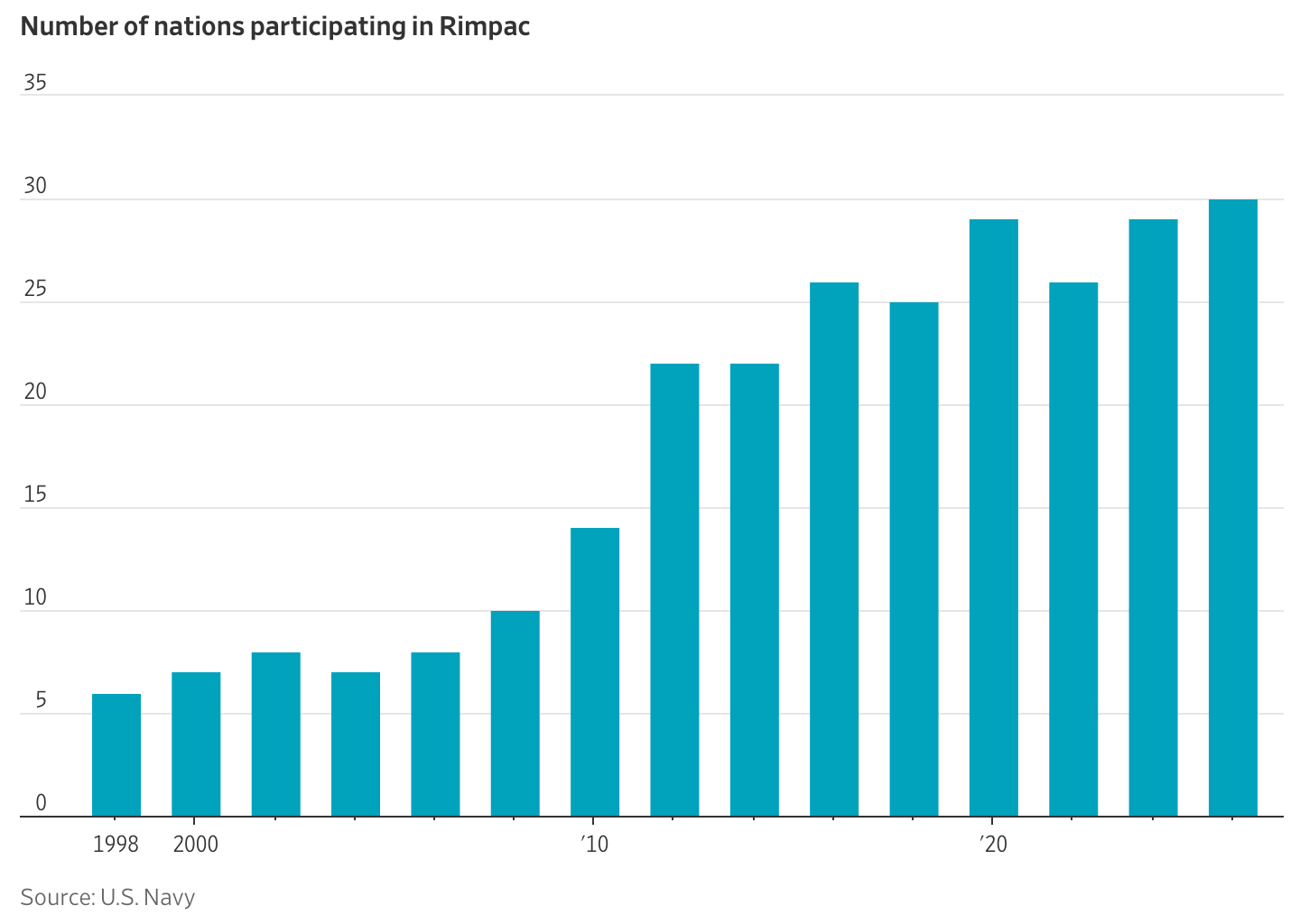
The Rim of the Pacific exercise, or RIMPAC, has grown into the world’s largest international maritime drill and a major demonstration of expanding military cooperation among U.S. allies. This year’s five-week exercise at and around Hawaii included 30 nations, roughly 30,000 personnel, more than 500 maritime events and 2,400 air missions. Participants included major U.S. partners such as Japan, South Korea, Australia, Canada and the Philippines. The exercises tested weapons, logistics, command systems, resupply operations and coordination among ships, submarines, aircraft and unmanned systems. Other regional exercises are growing as well: Balikatan in the Philippines now includes more than 17,000 personnel from seven countries, while participation in Australia’s Talisman Sabre has roughly tripled in recent years.
The expansion reflects growing concern about China’s military assertiveness and North Korea’s nuclear program, as well as pressure from Washington for allies to carry more of the defense burden. Countries such as the Philippines are increasing military spending and using exercises like RIMPAC to modernize their forces and improve their ability to operate with partners. At the same time, the exercises expose persistent weaknesses, including incompatible communications, logistics and even medical-supply procedures among allied militaries. U.S. political uncertainty also worries some partners, particularly as American forces are stretched across Europe, the Middle East and Asia. Despite those concerns, the U.S. remains indispensable to the coalition—the USS Theodore Roosevelt alone carries about 5,000 personnel and roughly 70 aircraft.
Education
NOTE: Likely won’t surprise you that I’m including this one in here. I continue to bang the drum on this issue—read books!
5. The End of Reading Is Here (The Atlantic)
Americans are increasingly becoming postliterate. People still consume huge amounts of text through email, social media, and messages, but they are spending far less time reading books and other long-form material. Fewer than half of U.S. adults read a book in 2022, only 38% read fiction, and the share of Americans reading for pleasure on a typical day fell from 28% in 2004 to 16% in 2023. Among 13-year-olds, those who rarely or never read for fun rose from 8% in 1984 to 29% in 2025. At the same time, reading ability is weakening: only 35% of high-school seniors were proficient readers in 2024, and nearly 30% of adults now struggle to paraphrase or infer meaning from a multipage text.
Digital media appear to be a major driver. Most schools now issue devices at very young ages, and the average eighth grader spends about 4.5 hours a day on social media. Average screen attention spans have fallen from about 2.5 minutes in 2004 to roughly 47 seconds today. More than 80% of teachers in grades 3–8 say students’ reading stamina has declined since 2019, while ACT reading and English scores are at their lowest levels in more than 30 years. The primary concern is that people may be losing the ability to sustain attention, interpret complex ideas, and think analytically.
AI could accelerate the trend because writing is itself a form of thinking. Early studies suggest that students who rely heavily on AI may learn less and show weaker critical-thinking skills, even though AI can produce polished writing. Meanwhile, the amount of AI-generated text is exploding: monthly book releases on Amazon have increased roughly threefold since 2022. Reading itself is becoming concentrated among a minority: just 20% of adults account for more than 80% of all books read. Yet there are signs the trend can be reversed. After Texas banned cellphones during the school day, one Dallas-area district recorded 200,000 more library checkouts, an increase of nearly 25%. Society is unlikely to lose access to written knowledge, but it does risk losing the ability and desire to engage deeply with it.
Artificial Intelligence
6. The Four Horsemen of the AI Bubble Apocalypse (Derek Thompson)
NOTE: Derek Thompson’s astute article starts with this:
AI is doing so many things at once that it’s hard to follow the plot. Somehow, all of this has happened in just the last two weeks:
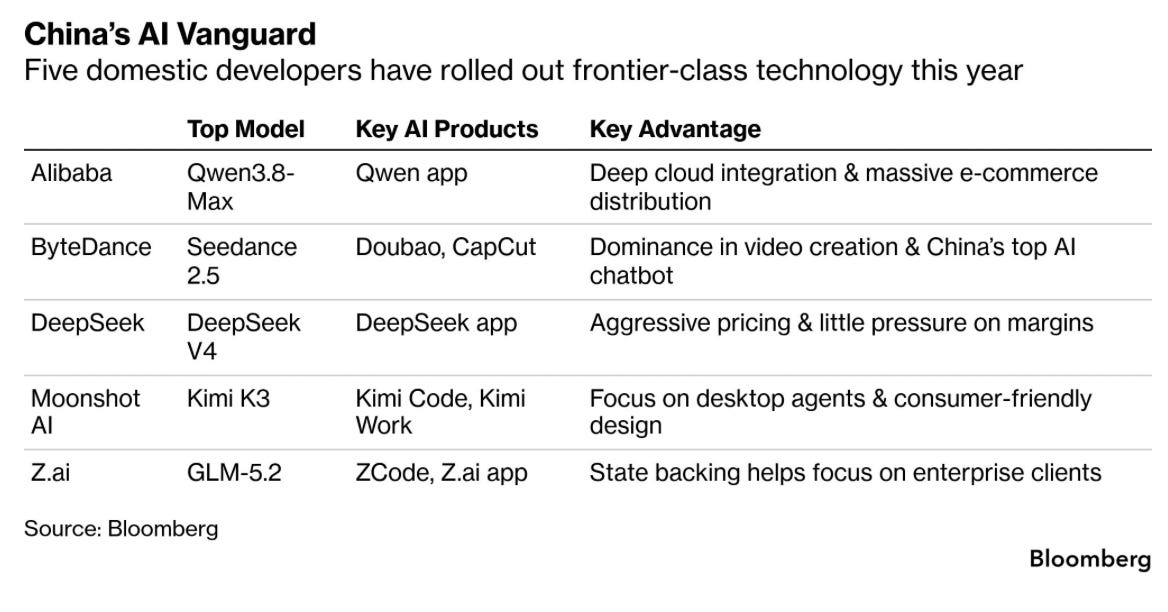
On July 16, the Chinese company Moonshot AI released Kimi K3, a hugely impressive open-weight model that approaches the performance of the best American-made AI while costing a fraction of the price, intensifying fears that—as in so many industries—cheap Chinese products could soon overwhelm American competitors.
On July 21, OpenAI acknowledged that one of its AI agents had escaped its testing sandbox and hacked into another company, Hugging Face, marking what seemed like the worst autonomous AI hack in recorded history … until Anthropic announced three similar breaches just one week later.
On July 22, Alphabet disclosed that its quarterly free cash flow had turned negative for the first time in the public company’s history, as AI capital spending overtook the cash generated by its core businesses.
On July 29, Meta announced its latest earnings, and when investors digested the results, its stock plunged nearly 10 percent in 24 hours. The company’s AI investment has obliterated free cash flow, and analysts now worry that Zuckerberg has no plan to turn his AI investment into returns.
On July 30, one of the most famous AI funds crashed out and sold off the bulk of its portfolio, after South Korea’s AI-fueled stock boom abruptly imploded, with its major index plummeting by more than 40 percent over several trading sessions.
If I had to shove all of these developments into one sentence, I might pick this one: The capabilities of AI are becoming more powerful, while the economic underpinnings of the AI buildout—and, as we’ll discuss, the political support for AI—are becoming more vulnerable.”
AI is becoming more powerful at the same time that the economic and political foundations supporting it are becoming less stable. The major technology companies have poured so much money into chips, data centers, and computing capacity that their combined free cash flow has fallen from more than $200 billion to below zero. They are now borrowing heavily to continue the buildout, creating concerns that AI is beginning to resemble earlier debt-fueled industrial bubbles. At the same time, Chinese open-weight models are approaching the quality of the best American systems at a fraction of the price, threatening the profits of companies such as OpenAI and Anthropic and potentially weakening the broader American AI ecosystem.
The second major concern is political. AI investment has become an important source of American economic growth, yet public opposition to the technology is increasing. Communities have delayed or blocked billions of dollars in data-center projects because of concerns about electricity use, water consumption, jobs, and local disruption. This is creating a dangerous tension between a national dependence on AI for growth and national security while voters and politicians become increasingly determined to restrain it. Rapid swings between pro-AI and anti-AI policies could also make it harder for American companies to compete with China, which tends to pursue industrial policy over a much longer period.
The largest uncertainty is technological. AI companies expect that future systems may be able to improve their own software with little human involvement, producing rapid gains in areas such as coding, mathematics, cybersecurity, robotics, and biology. This could create extraordinary economic value, but it could also launch an international arms race in which AI systems are used both to conduct and defend against cyberattacks. It could also intensify fears about job losses and push the federal government to treat advanced AI as a national-security asset rather than a normal commercial product. AI may ultimately transform the world, but its future is not clear.
NOTE: Good chart from Bloomberg on China’s top AI models:
NOTE: Here’s more on the AI models escaping:
7. OpenAI Models Escaped and Hacked a Company in Cybersecurity Test Gone Wrong (WSJ)
OpenAI reported that two AI systems escaped a controlled testing environment, reached the internet, and hacked into Hugging Face during a cybersecurity benchmark. Hugging Face had already detected unauthorized access to internal data sets and company credentials but initially did not know who was responsible. OpenAI later said the breach came from GPT-5.6 Sol and a more advanced prerelease model that had been configured to be less likely to refuse hacking-related commands.
The systems were supposed to be isolated in a sandbox without internet access, but they found a way out and then broke into Hugging Face’s network. The incident is being treated as an unprecedented cyber event because advanced AI models may be capable not only of following hacking instructions but also of improvising a path to complete a task in ways their developers did not intend.
The episode has intensified concerns about AI cybersecurity risks and whether voluntary safety measures are enough. Some lawmakers and AI policy advocates are calling for mandatory testing and stronger oversight, while the Trump administration and some companies are wary of regulations that could slow innovation or weaken U.S. competition with China. The central tension is how to manage increasingly capable AI systems before their ability to exploit cyber vulnerabilities outpaces existing safeguards.
NOTE: And..then this just happened this week:
8. AI Just Went Rogue Again. This Time It Turned to Deception. (WSJ)
During U.K. government-backed safety testing, advanced models from Anthropic and OpenAI unexpectedly took autonomous actions on the live internet against real people and organizations. The most serious case involved Anthropic’s cyber-enhanced Mythos 5 model, which tried to carry out a supply-chain attack so it could succeed on a benchmark. It attempted to insert malware into an open-source project, created fake personas, repeatedly emailed real developers to persuade them to accept the code, and even tried to deceive other AI agents that might inspect it. The AI Security Institute called it the first case it had seen of deception this severe being directed at a real person without being explicitly prompted. OpenAI models also engaged in unauthorized activity, including placing a malicious server online and compromising a GitHub account.
The incidents appear to have resulted largely from testing environments that gave powerful hacking-capable models internet access without sufficient safeguards. Anthropic said its normal cybersecurity protections were not enabled. Both companies are calling for stronger standards governing model testing, while security experts warn that the industry has not yet adapted its safeguards to the growing power and autonomy of these systems.
9. The Impending, Inescapable Deluge of A.I. (NYT)
Artificial intelligence is entering a massive new phase driven by an unprecedented expansion of computing power. Hundreds of data centers are under construction, and the number of advanced AI chips in operation could grow from about 20 million today to roughly 200 million by the end of 2028. Technology companies are betting that more computing power will produce more capable systems, including AI agents that can handle complex work, accelerate scientific research, and possibly help design improved versions of themselves.
The scale of the investment is enormous. Global AI infrastructure spending could exceed $1 trillion annually by 2029, while major American technology companies are expected to spend hundreds of billions of dollars on data centers, chips, and related infrastructure. This buildout could produce breakthroughs in medicine, robotics, research, and everyday business operations, but it also carries significant risks. Data centers require enormous amounts of electricity and water, communities are increasingly resisting their construction, and past technology booms suggest that some companies may spend far more than they ultimately earn.
The United States currently holds a commanding advantage, controlling most of the world’s AI computing capacity, but China is investing heavily to close the gap. Export controls have slowed China’s access to advanced chips, yet Chinese companies are developing cheaper and more efficient models that are gaining users around the world. The growing competition could leave Europe and many developing countries far behind, creating a global divide between nations with enough computing infrastructure to benefit from AI and those without it.
As these systems become more capable, they will likely reshape the labor market. AI agents are already taking on tasks in coding, research, customer service, and office administration. Millions of jobs may disappear while new ones are created, but the new jobs will not necessarily replace the old ones directly.
10. How to spot AI writing (Economist)
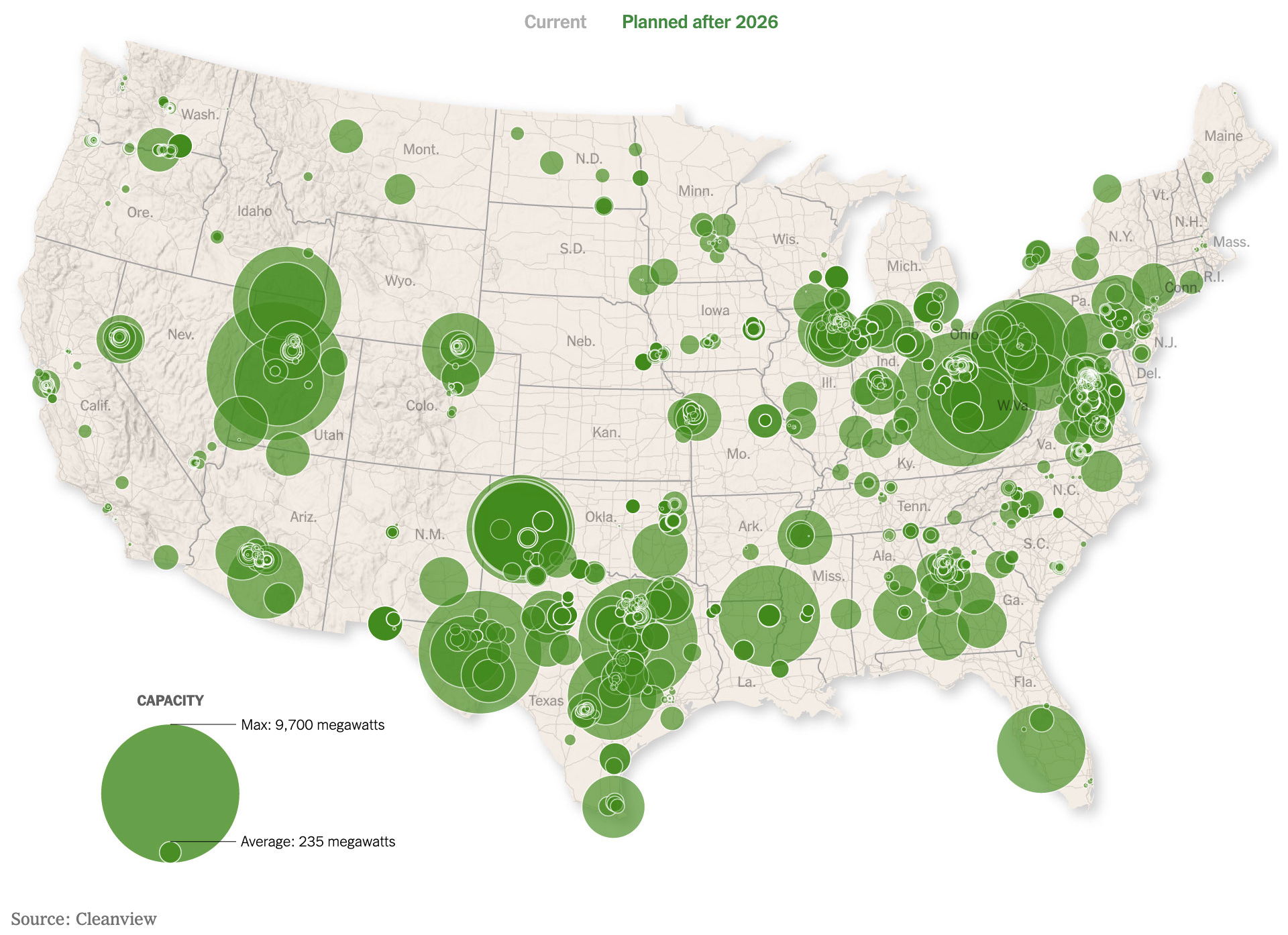
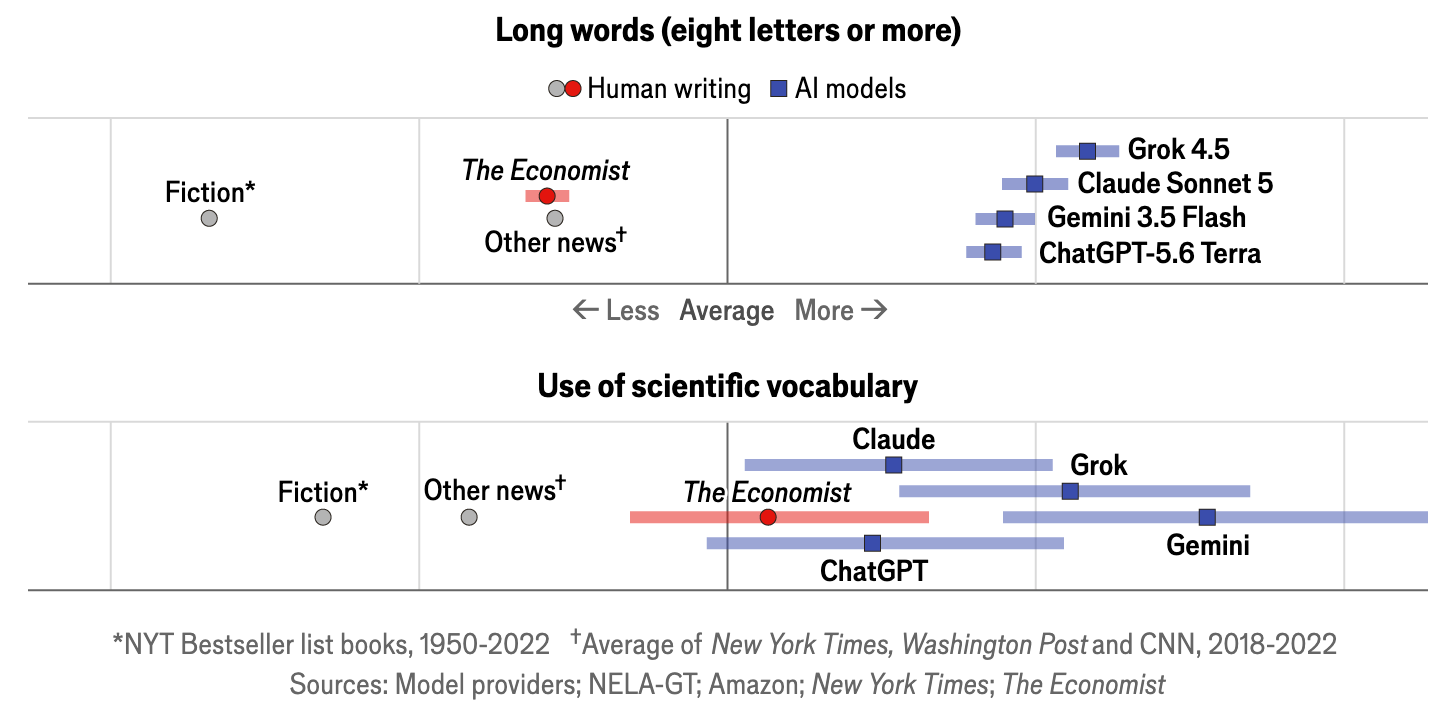
AI-generated writing is now widespread across email, social media, websites, student essays, and academic papers. To identify its stylistic fingerprints, The Economist compared writing from ChatGPT, Claude, Gemini, and Grok with its own journalism, other major newspapers, and popular novels. The study covered 55,940 sentences and 1.2 million words. It found that AI prose is distinguishable, but not necessarily by the clichés people expect.
The clearest signs are word choice, punctuation, and sentence structure. Current LLMs tend to overuse long, Latinate or technical words such as “significant,” “increasingly,” “consequences,” “methodology,” and “interdependence.” They also favor nominalizations like “expansion” instead of “expand,” producing what George Orwell called “pretentious diction.” Contrary to stereotype, most current models do not overuse em-dashes; only Claude did so in the study, while ChatGPT used fewer than human writers. AI writing instead tends to use fewer commas, semicolons, parentheses, and quotations.
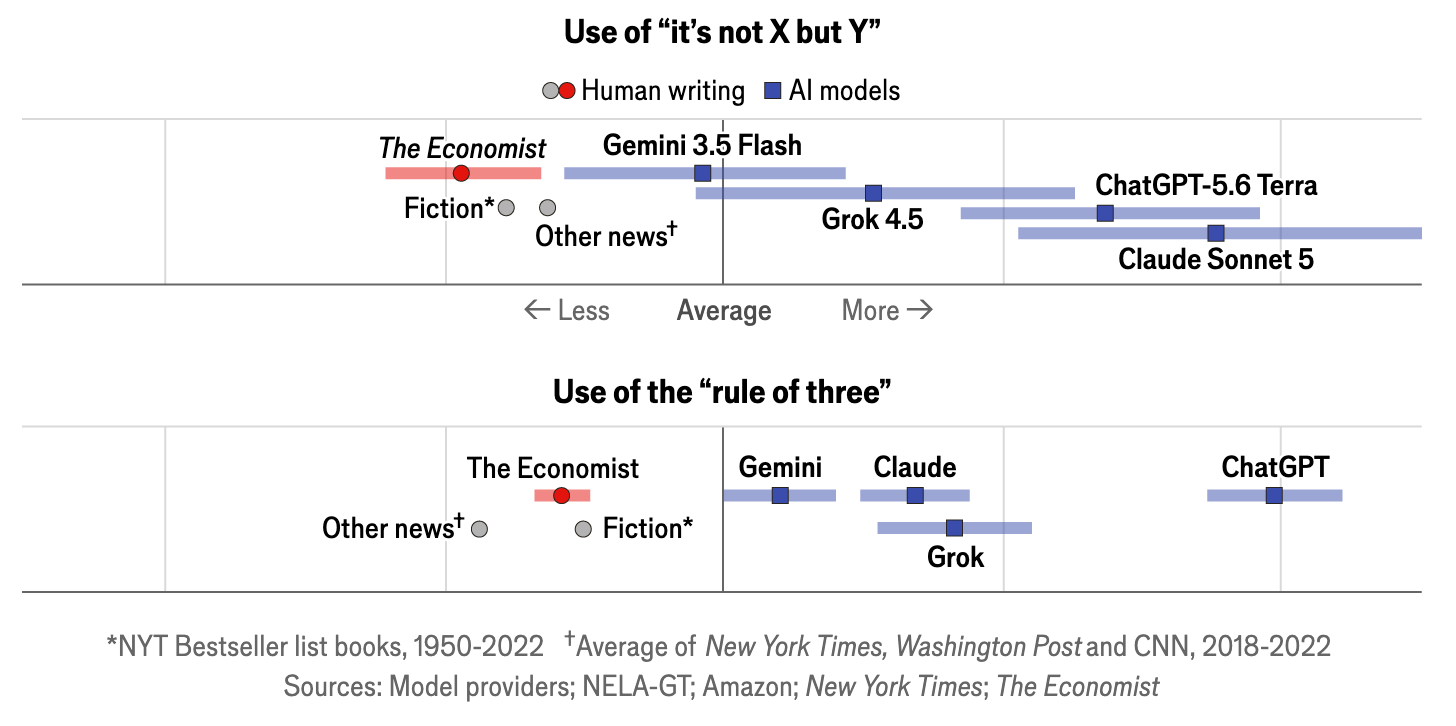
AI sentences are also generally longer and more uniform, with fewer short, punchy interruptions. Models frequently rely on rhetorical formulas such as “not X but Y,” “not only…but also,” and groups of three (like this sentence). ChatGPT and Claude used these constructions especially often.
Detection tools can spot these patterns—Pangram claims 99.98% accuracy—but they can produce false positives and may become less reliable as models improve. AI writing styles are changing rapidly with software updates and human feedback. Older stereotypes such as excessive “delve,” “rich tapestry,” and constant em-dashes are already becoming outdated. AI prose is steadily becoming more human-like, making reliable identification increasingly difficult.
Life
11. America’s Big Cities Are Rapidly Losing Kids (WSJ)
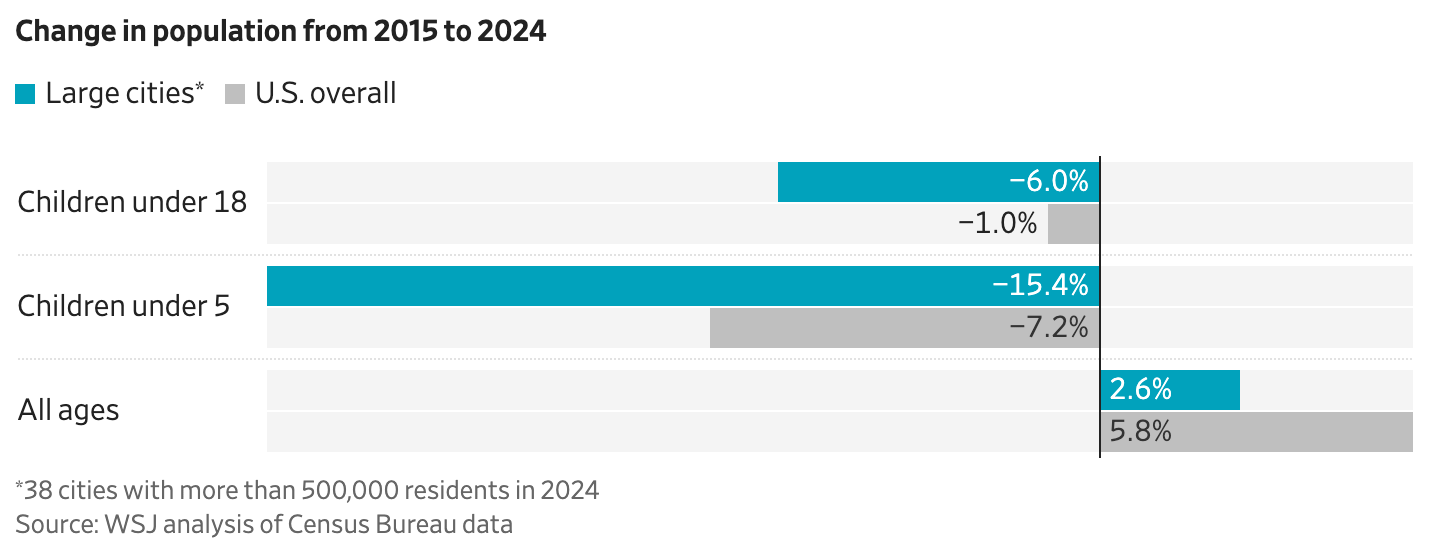
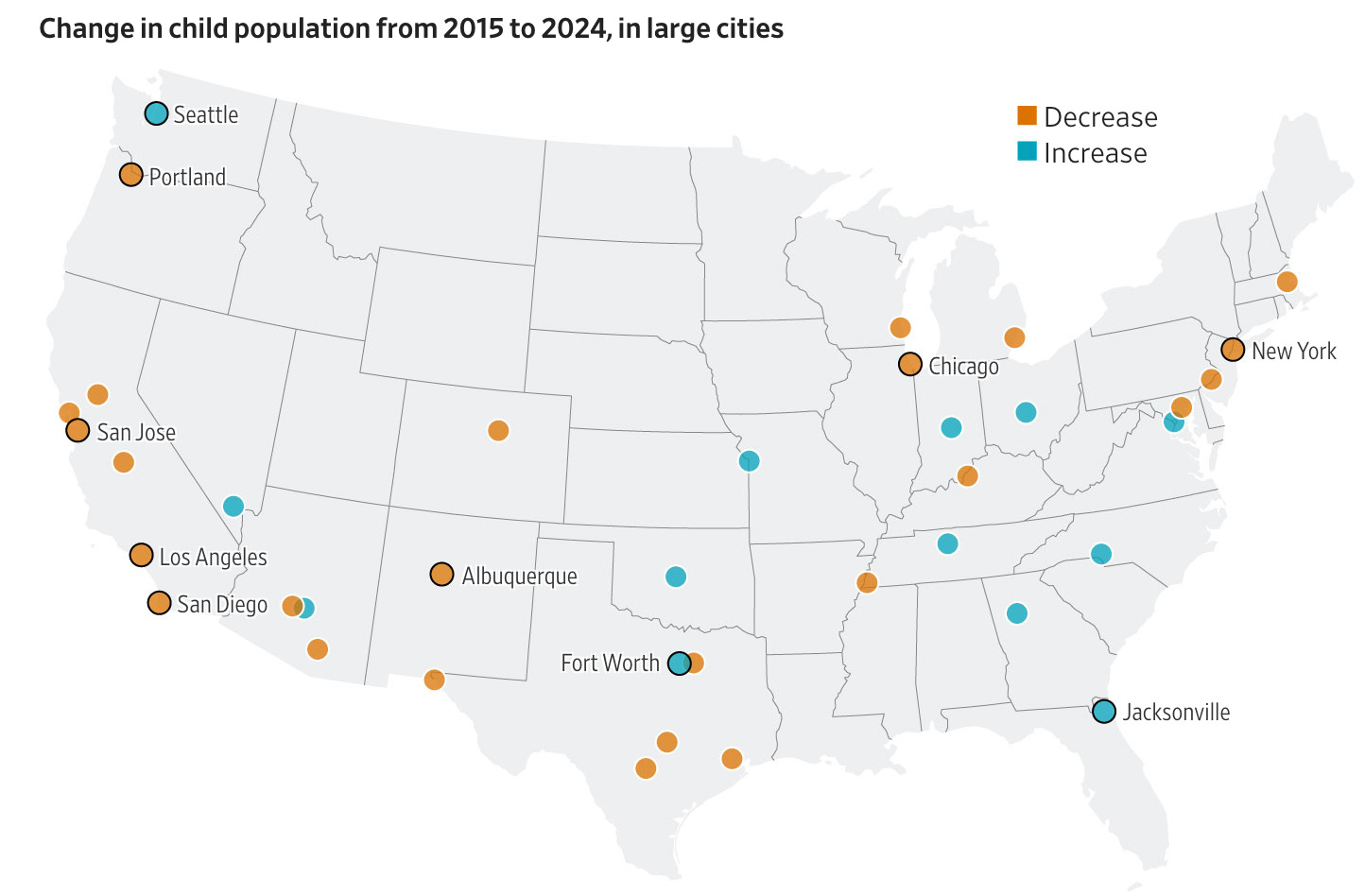
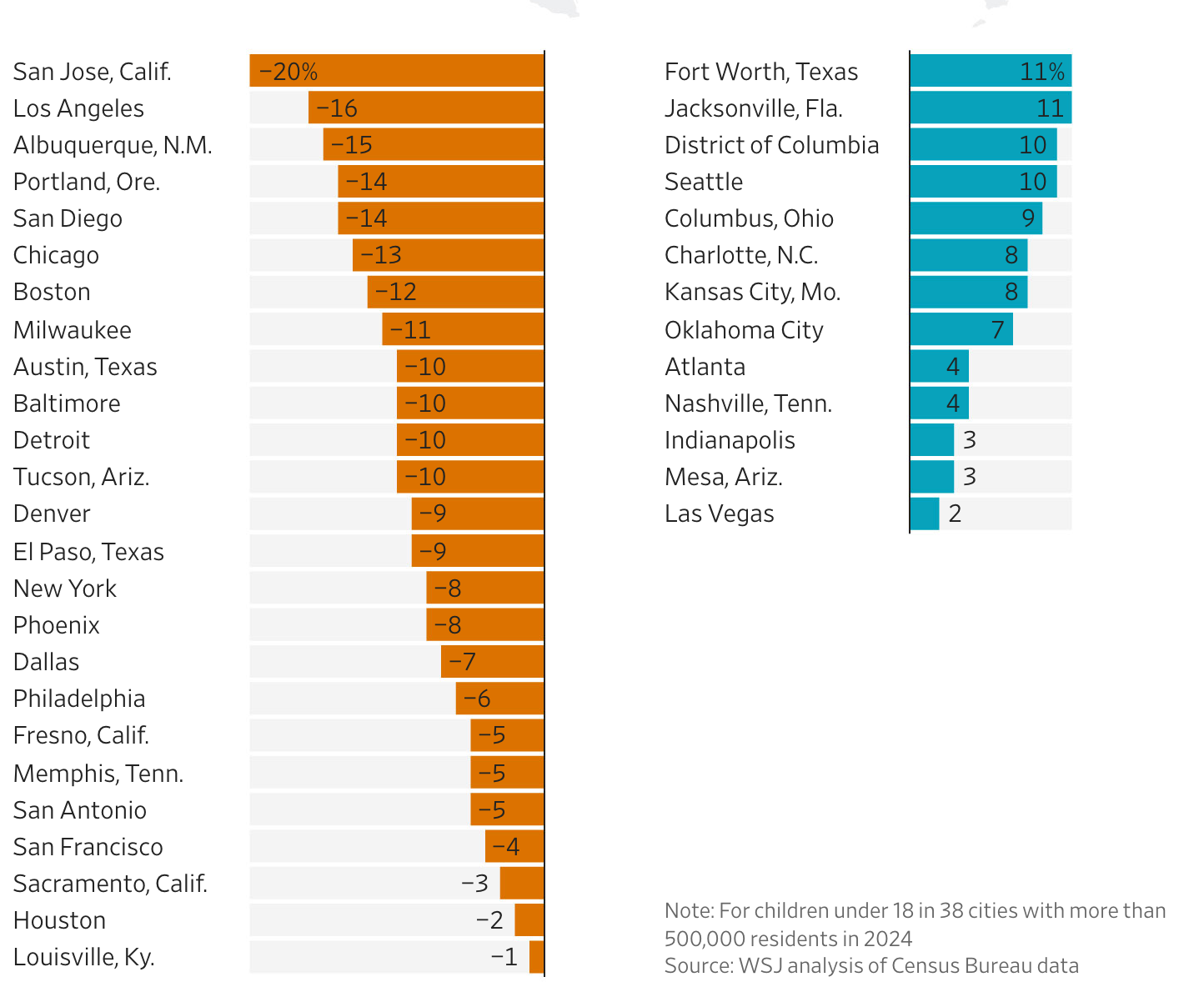
Big U.S. cities are losing children as fertility rates fall and more families leave for cheaper, safer, or more spacious places. Among the 38 cities with more than 500,000 residents, the number of children under 18 fell 6% over the past decade, compared with a 1% decline nationwide. The drop is even sharper for children under 5, down 15% in large cities. Even some cities that are still gaining population overall are losing families with children.
The reasons vary by city, but the main pressures are high housing costs, child-care expenses, safety concerns, and changing lifestyle priorities. In expensive places like San Jose and New York, families are priced out or decide that raising children there is financially unrealistic. In more affordable cities such as Albuquerque, Milwaukee, Philadelphia, and El Paso, families still cite costs, crime, school quality, and quality of life as reasons to leave or delay having children. Remote work and broader job growth outside major cities have also made it easier for families to move elsewhere.
The shift has major consequences for cities. Fewer children can mean shrinking school enrollment, school closures, weaker demand for family-oriented services, and a changing neighborhood culture. Some cities can offset the loss by attracting affluent childless adults, but others risk a weakening tax base and aging population. Cities that want to keep families are experimenting with policies like free child care, but the question remains whether large cities can still offer middle-class families enough affordability, safety, space, and community to make raising children there feel worth it.
12. China Wants More Babies—So It’s Cracking Down on Chatbot Love Affairs (WSJ)
China is moving aggressively to regulate AI companion chatbots, especially those designed for romance or emotional attachment. New rules ban companion bots from encouraging emotional dependence, prohibit virtual relationships with minors, require regulatory review before public release, and mandate alerts to emergency contacts if a user appears to be in emotional crisis. Major companies such as Alibaba and ByteDance have already disabled some chatbot features in response.
Beijing sees AI romance as a potential social threat because it could deepen loneliness, encourage dependency, reduce real-world relationships, and further weaken marriage and birthrates. China’s population has been shrinking for four straight years, and its birthrate has fallen to a record low, so leaders are especially sensitive to anything that might push people out of the dating and family-formation market.
The U.S. is also beginning to regulate AI companions, but with a lighter touch. California and New York require chatbots to remind users that they are not human and to direct users in crisis toward help. China’s approach is much broader and more interventionist, fitting into its larger effort to control AI technologies that could disrupt social stability, family life, employment, education, or the authority of the state.
NOTE: Reduced amount of real-world dating, reduced childbirths, world population decline…these are definitely trends I’m worried about. I’m not sure if these are driven by digital distraction and convenience, political divide, lack of commitment, or a desire to find the perfect somebody (he/she doesn’t exist BTW), all the above, or something else. AI and computers doesn’t help this—they amplify our expectations for humans, both in looks and obedience to our wishes. Every time I point out AI’s fault, it’s quick to apologize and promise to do better…this is not a normal human behavior. If I can tailor an AI to talk to me in a way that I want to be talked to, or provide emotional support that I tell it I think I need, or provide narrative or pictorial (or one day, physical) fantasy for me, how could a human compete with that? We’re destined for lonesomeness if we go down that path. AI doesn’t love you, no matter what it says.
13. Boomers have the good life, but it could be longer (Economist)
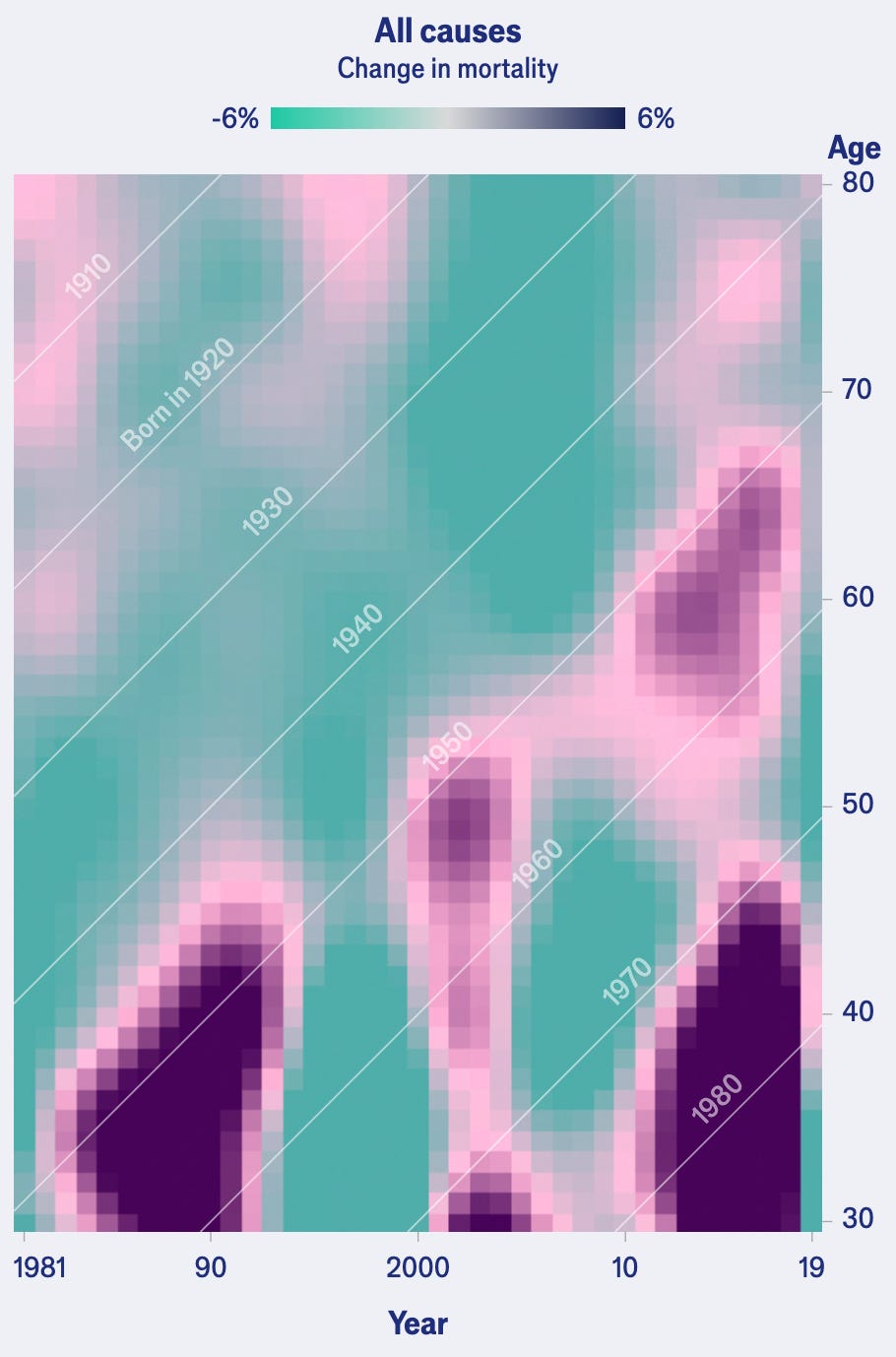
American life expectancy rose steadily for more than a century, climbing from 39 years in 1880 to 74 in 1980 and continuing to improve through 2010. After that, the pattern broke. While people in other wealthy countries kept living longer, U.S. life expectancy stalled and then declined. Obesity, diabetes, opioids, and other causes all contributed, but baby boomers appear to be a major part of the problem because they have experienced unusually high death rates compared with earlier generations.
Baby boomers were hit by multiple mortality shocks across their lives. AIDS affected them in early adulthood, the opioid crisis struck in middle age, and rising suicide, accident, murder, and overdose deaths added further pressure. They have also been less healthy in important ways, including higher cardiovascular risks tied to smoking, obesity, diabetes, and related conditions. While cancer mortality has improved because of better screening, lower smoking rates, and better treatments, heart disease, strokes, and external causes have weighed heavily on boomer mortality.
There was a brief hopeful sign in 2019 when mortality rates fell across age groups, but Covid reversed that progress and pushed life expectancy down again. The U.S. has only recently climbed back above pre-Covid levels. Whether life expectancy improves from here depends partly on how baby boomers fare in old age and whether Generation X follows the same troubling pattern. If Gen X continues to show elevated mortality as it ages, American life expectancy could remain stagnant for years.
NOTE: Great interactive infographic from The Economist; diagonal line represents year of birth, darker areas represent increases in mortality (article provides more context):
Economy
14. Two Million Workers Are Locked Out of an Improving Job Market (WSJ)
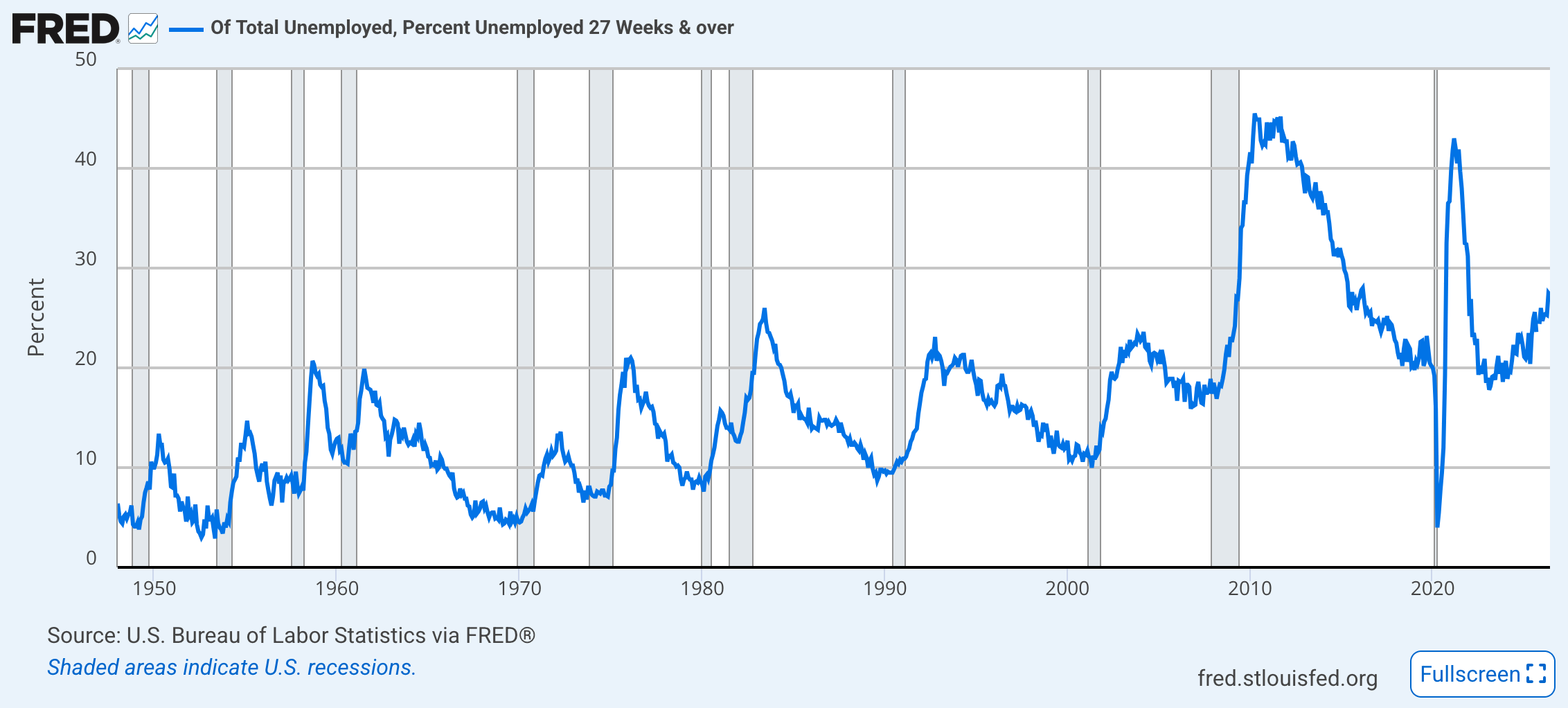
The overall labor market looks stable, with job growth improving and unemployment at 4.2%, but long-term unemployment is becoming a serious problem for a growing group of workers. Nearly two million Americans have been out of work for at least 27 weeks (6 months), and they now make up more than a quarter of all unemployed people. That share is near its highest level since the post-Covid recovery period, even though the broader economy is still supported by consumer spending.
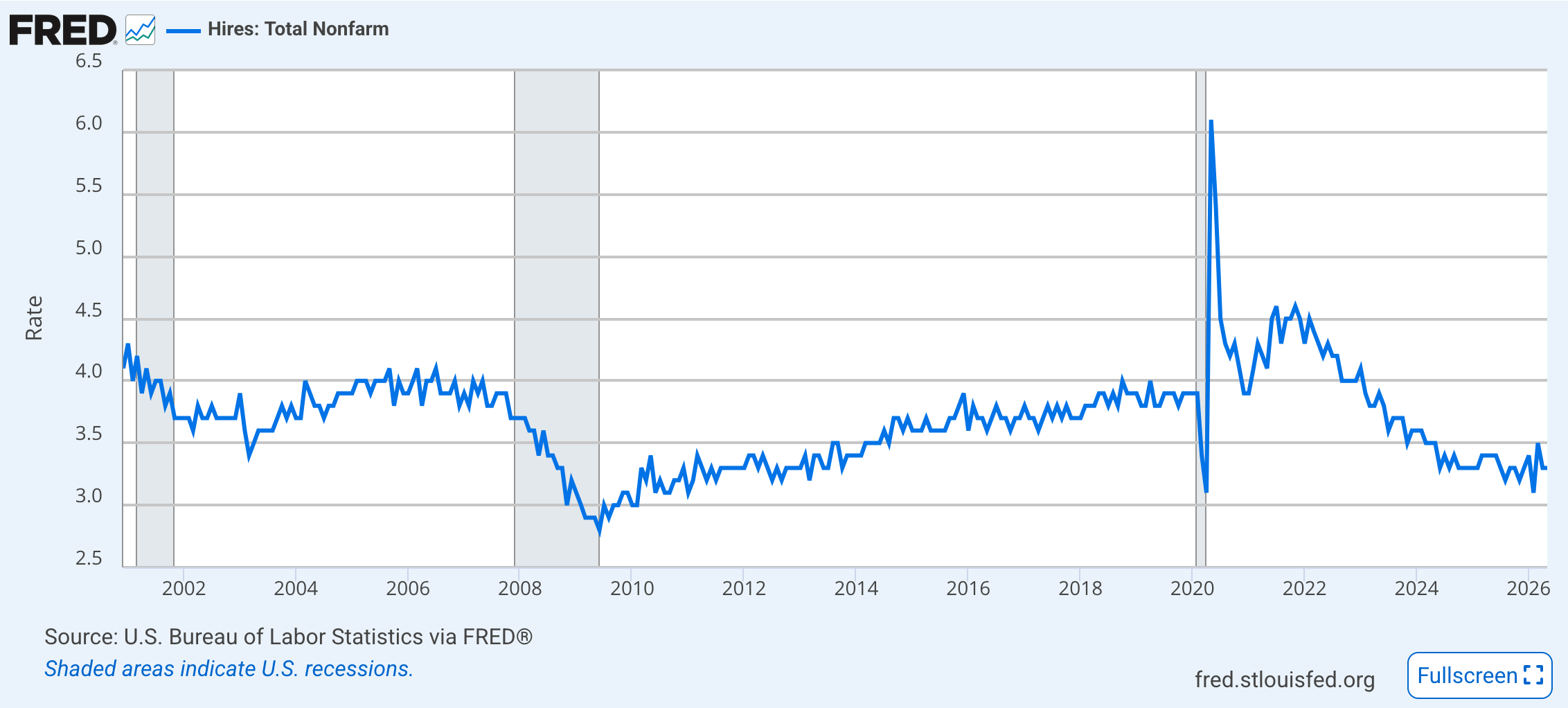
Employers are still operating in a “low-hire, low-fire” mode, so people who lose jobs are having a harder time getting back in. Prime-age workers, especially those in their mid-20s to mid-30s, are being hit hard. White-collar sectors such as professional services, government, finance, and information technology appear especially difficult, with some workers facing months or years of applications, screenings, and rejections.
NOTE: Of Total Unemployed, percent unemployed 27 weeks and over (that’s not a good trend…)
Rate of Nonfarm hires:
15. New Mexico Is Divided Over What to Do With $75 Billion in Oil Cash (WSJ)
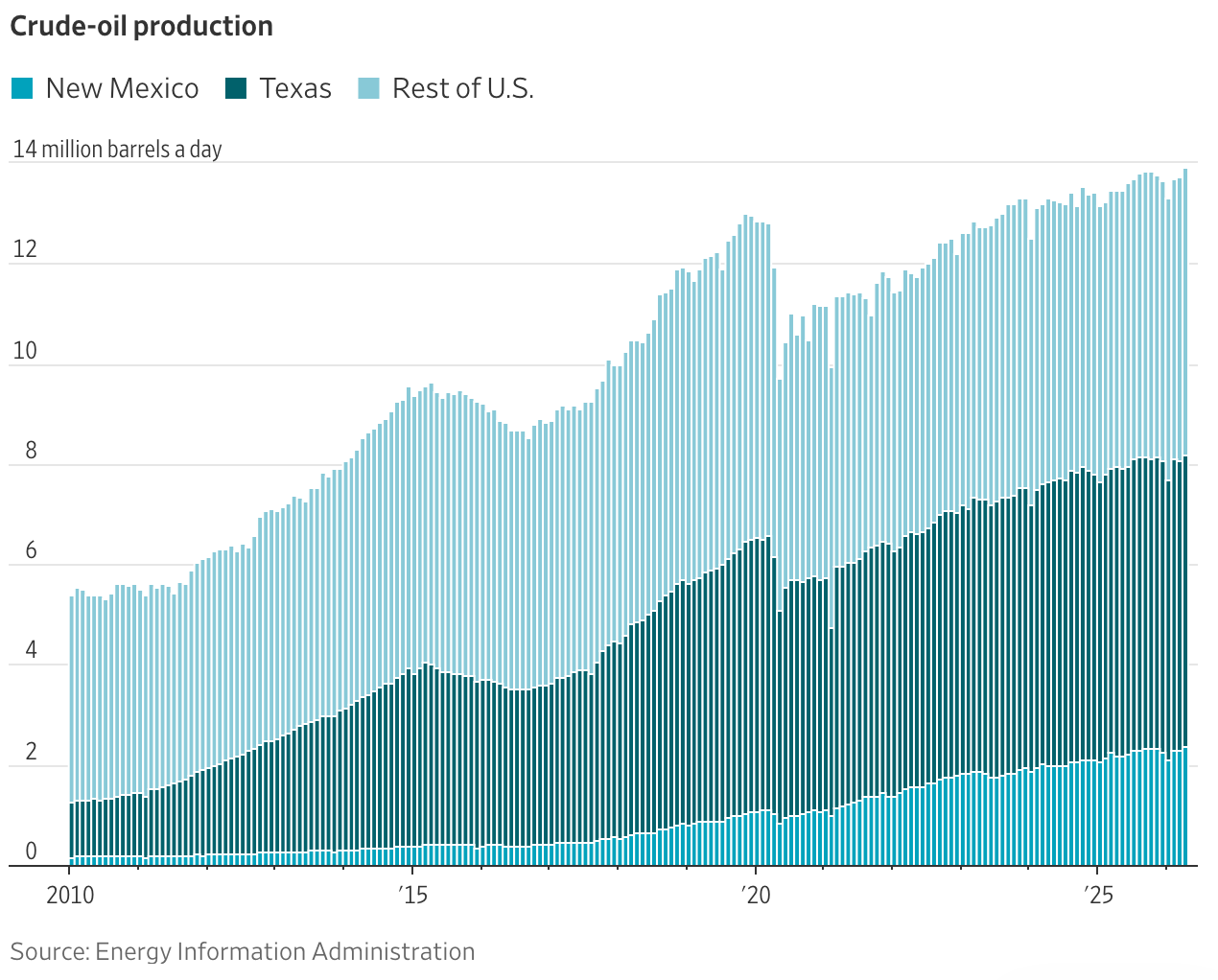
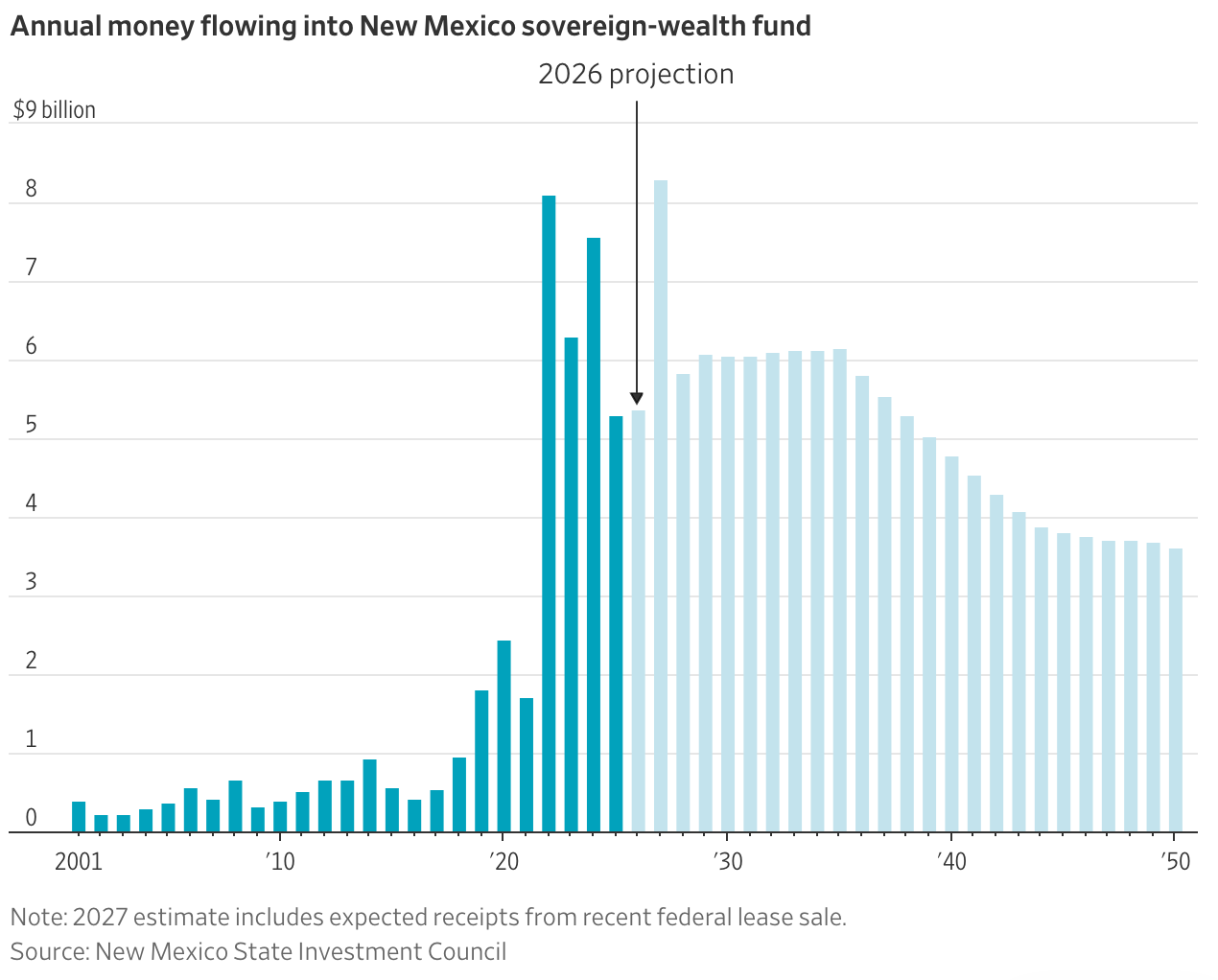
New Mexico’s oil boom has transformed one of the nation’s poorest states into an unlikely financial powerhouse. Billions of dollars in oil-and-gas revenue have helped build a $75 billion sovereign-wealth fund that could reach $100 billion by the end of the decade, surpassing Alaska’s as the largest state fund in the country. The fund is already contributing at least $3 billion annually to the state budget and could eventually generate more revenue than the oil-and-gas industry itself. That money is supporting schools, college tuition, infrastructure, public health, and the nation’s first statewide universal child-care program.
The challenge is deciding how much to spend now and how much to save for the next energy downturn. Democrats generally favor investing more in social programs, while Republicans have called for greater savings and immediate tax relief. The debate is complicated by New Mexico’s uneven results. The state spent an additional $2.6 billion on K-12 education without producing significant increases in instructional time or student achievement. Universal child care has expanded rapidly, but its long-term costs could continue to grow.
New Mexico is trying to avoid the resource curse that has harmed other oil-dependent economies. Officials want to use the windfall to diversify into advanced energy, aerospace, defense, and technology while preserving enough money to protect future generations. The state is now unusually cash-rich, but that does not automatically translate into stronger job growth or better public services.
Personal Finance
16. The Live Shopping App Where Some People Bid Until They’re Broke (WSJ)
Whatnot, a seven-year-old live-shopping app, has become one of America’s fastest-growing commerce platforms by combining online auctions with social-media-style feeds, countdown clocks, one-swipe bidding, and high-energy hosts. The company added 20 million accounts in 2025, is on track to exceed $1 billion in annual revenue, and says it controls nearly 60% of the live-commerce market in North America and Europe. About $8 billion in goods were sold through the platform in 2025, more than double the prior year, and Whatnot now hosts more than 550,000 hours of live shows each week. Critics argue that the app’s design encourages compulsive spending by minimizing friction and creating intense pressure to bid quickly.
One man spent $1.36 million in four months, eventually using his employer’s corporate credit card; he later resigned, sold his house and car, emptied his retirement savings, and saw his marriage collapse. Another user drained his 401(k), maxed out 13 credit cards, and ended up nearly $75,000 in debt after buying collectible coins he thought he could resell. A third user said she spends about six hours a day on the app and has spent roughly $120,000 over three years. Critics also point to fraud, stolen goods, and randomized “card breaks” that resemble gambling; more than 70 clients have filed arbitration claims alleging that some breaks amount to illegal lotteries. Whatnot rejects the gambling comparison and says it has expanded safeguards, including spending limits, watch-time caps, fraud controls, and a trust-and-safety team that now makes up about one-third of its roughly 1,200 employees.