

Economy & Life
The following series of articles are all related in a circular way. To best understand the relation, I recommend watching this YouTube video explaining how South Korea faces a future of economic decline, shrinking cities, cultural erosion, and a vanishing workforce:
Much like South Korea, the U.S. economy is increasingly operating in a self-reinforcing cycle driven by rising incomes and demographic decline. As wages grow—especially among educated, dual-income households—more people move into higher income tiers, but higher living costs (housing, childcare, education) simultaneously make raising children more expensive, leading many to delay or forgo having kids. This contributes to falling fertility rates and an aging population, which shrinks the labor force over time. With fewer workers available, economic growth becomes more dependent on productivity gains rather than job creation, reinforcing demand for skilled, higher-paid labor and further boosting incomes at the top. That, in turn, sustains the high-cost environment that discourages family formation, continuing the cycle of rising incomes, fewer births, and a tightening labor supply that reshapes long-term economic growth.
1. More Americans Are Breaking Into the Upper Middle Class (WSJ)
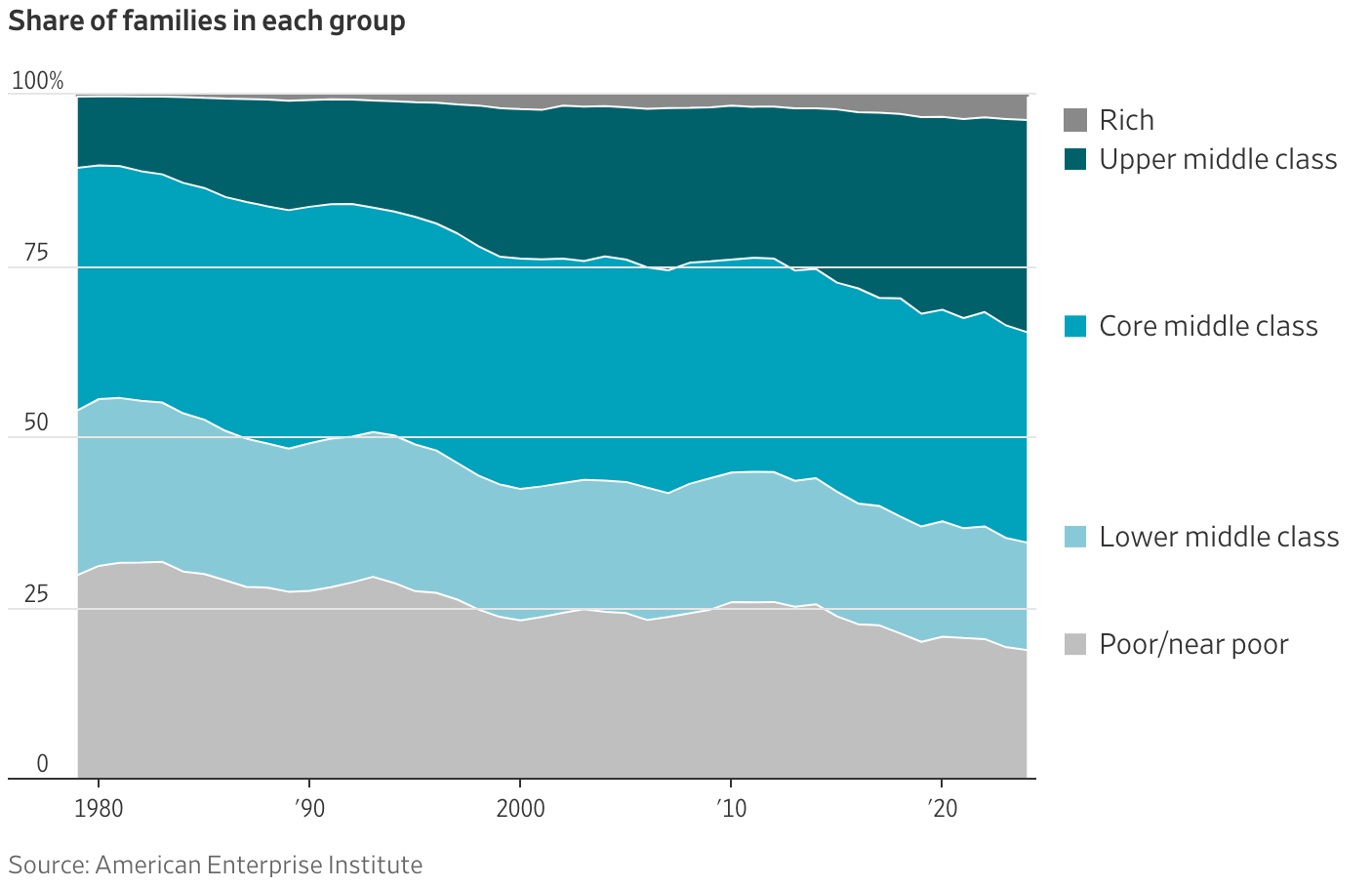
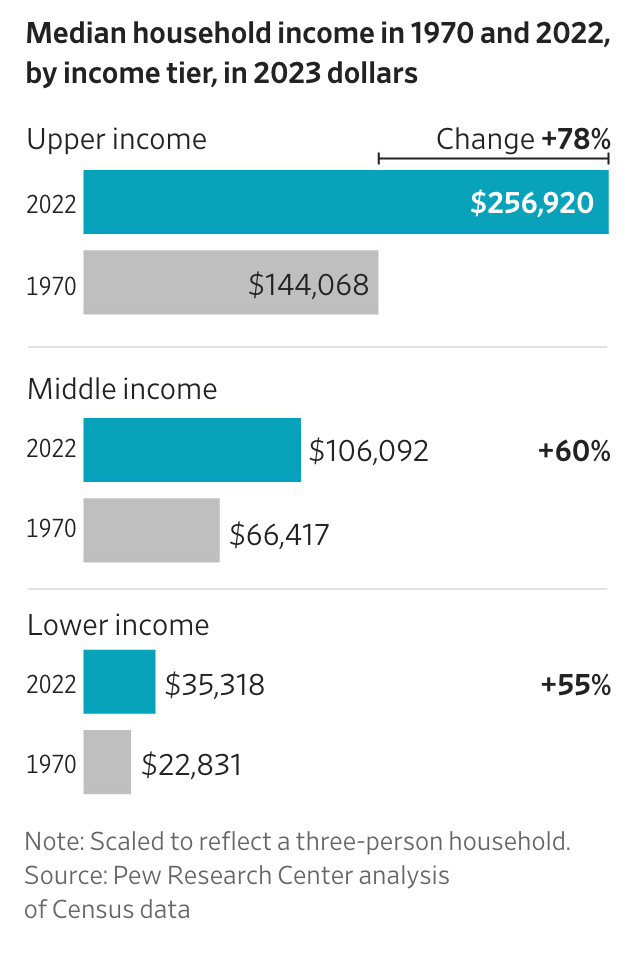
New data shows a shift in the U.S. income landscape, with the upper-middle class expanding while the core middle class shrinks. More families are moving into higher income tiers, driven by rising wages, especially among college-educated, white-collar workers, and dual-income households. As a result, fewer Americans fall into lower-income categories than in past decades, and a growing share now earns well above traditional middle-class levels.
Despite this upward movement, many households don’t feel wealthy. Higher costs for housing, childcare, and education continue to strain budgets, even for high earners. While individuals are often doing better than their parents, there is lingering concern about whether future generations will maintain that progress. The result is a paradox where more Americans are objectively better off, yet still feel financially pressured and uncertain about long-term stability.
2. Did Millennials or Boomers Have It Harder? We Went Searching for the Answer (WSJ)
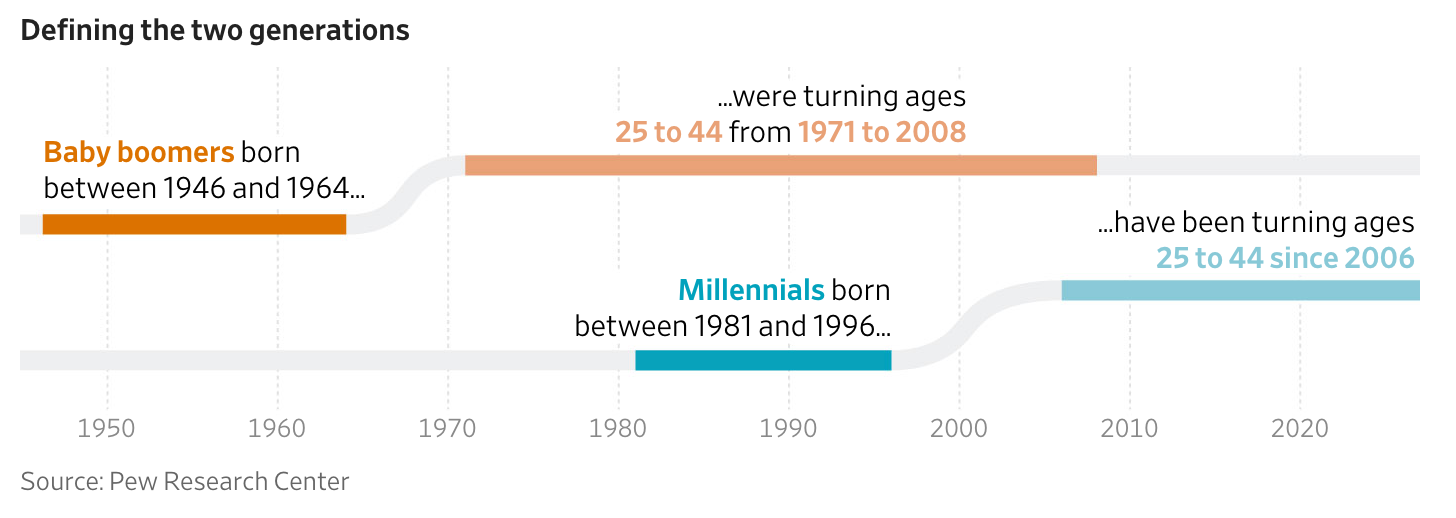
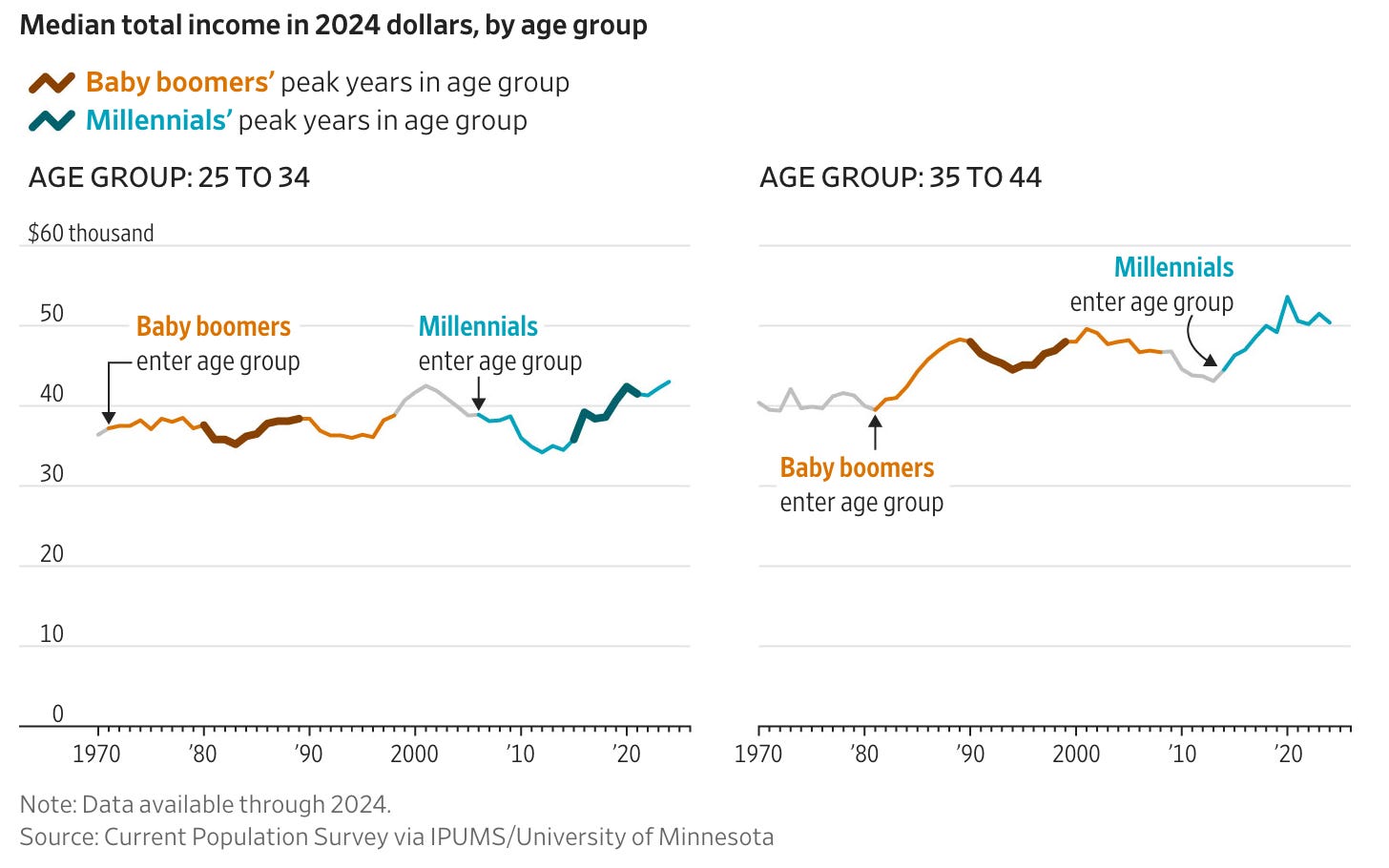
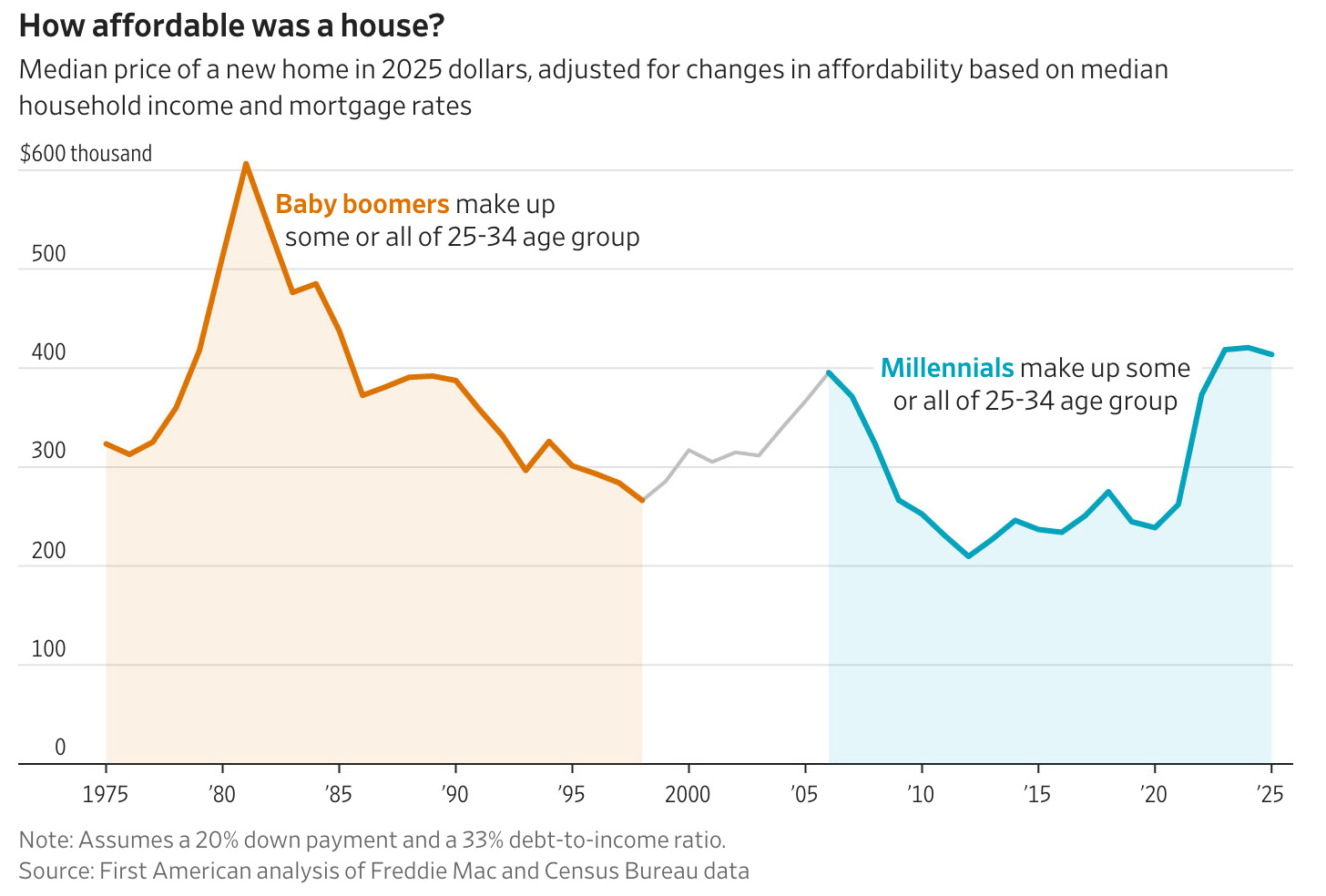
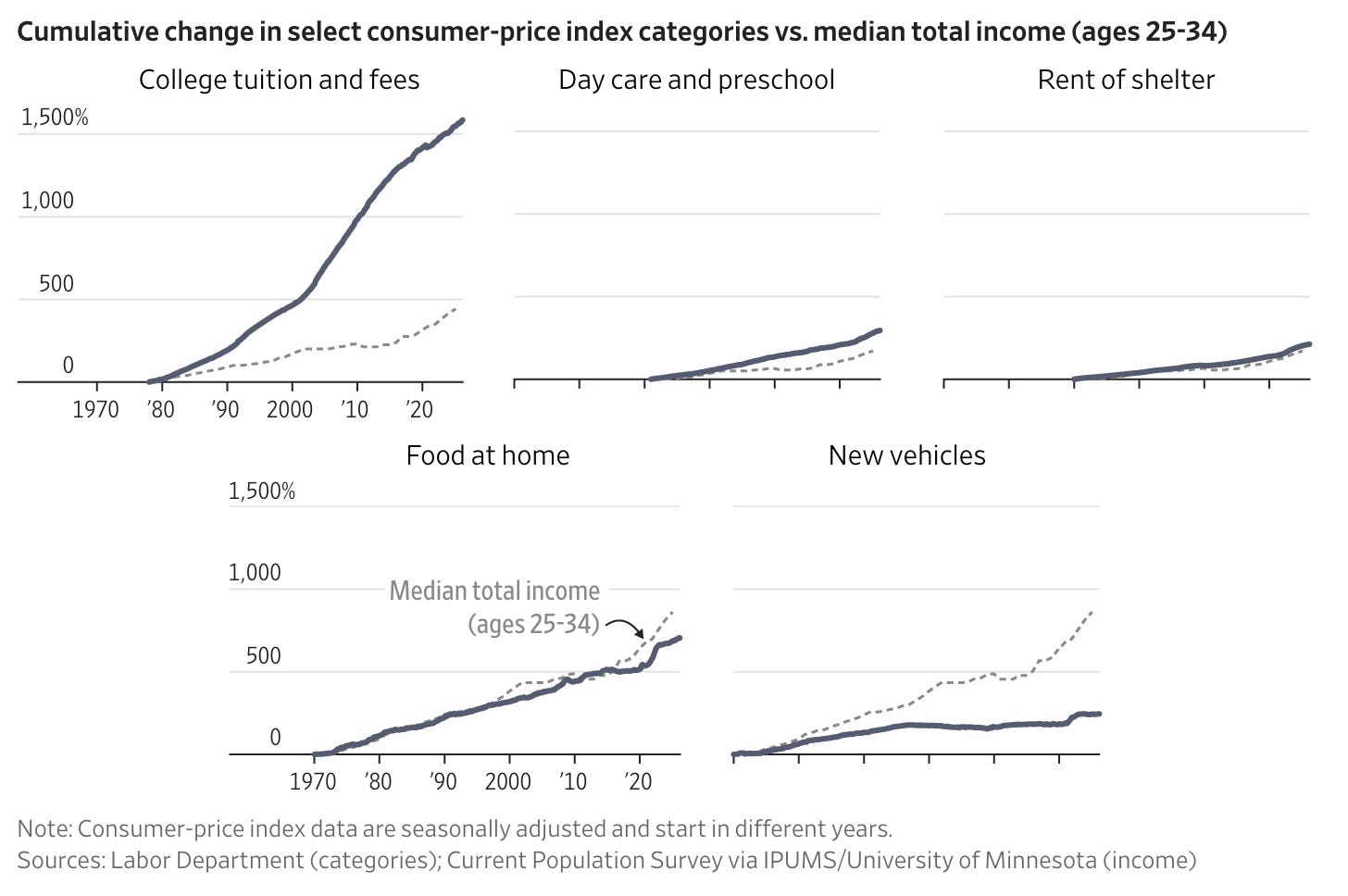
Comparisons between millennials and baby boomers show a more nuanced picture than the common narrative that one generation had it easier. Millennials’ incomes, adjusted for inflation, are roughly comparable to boomers’ at similar ages, and recent gains have put many millennials in a stronger financial position than often assumed. Both generations faced economic challenges early in adulthood—millennials with the Great Recession and pandemic, and boomers with high inflation and interest rates. However, millennials have struggled more with rising costs in key areas like housing and education, particularly student debt, which delayed wealth-building early in their careers.
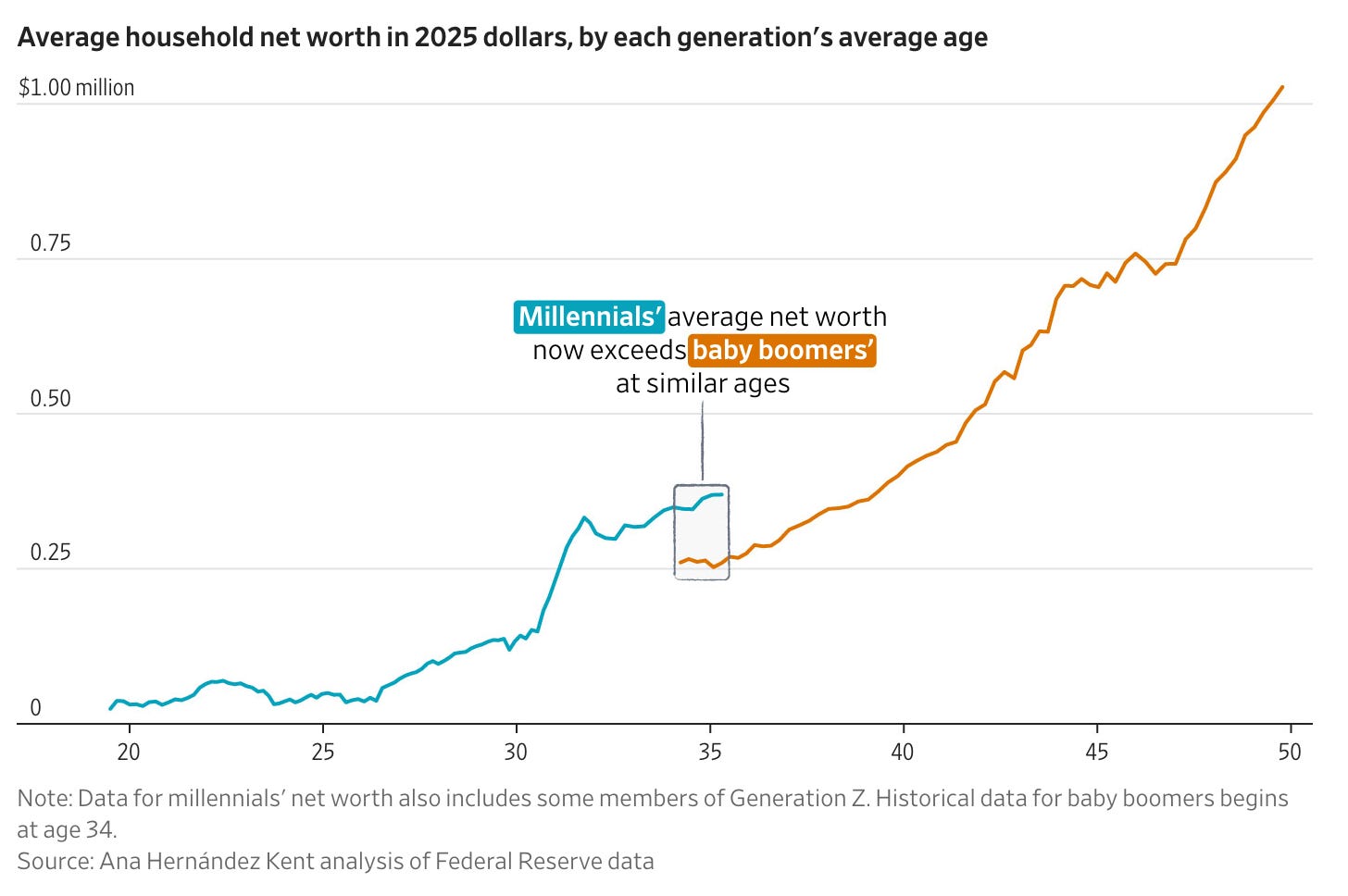
Despite these challenges, millennials have made significant financial progress over time. Many have benefited from strong stock and housing markets, and their household net worth now exceeds that of boomers at similar ages. At the same time, boomers remain the wealthiest generation overall, largely due to decades of asset appreciation and earlier entry into the housing market. The broader takeaway is that economic experiences vary widely within each generation, and while both faced real challenges, long-term outcomes have been more similar—and in some cases better for millennials—than the generational debate often suggests.
Many more charts in the article than just the ones below.
3. The Economy Is Growing, Jobs Aren’t. Why That Might Be OK. (WSJ)
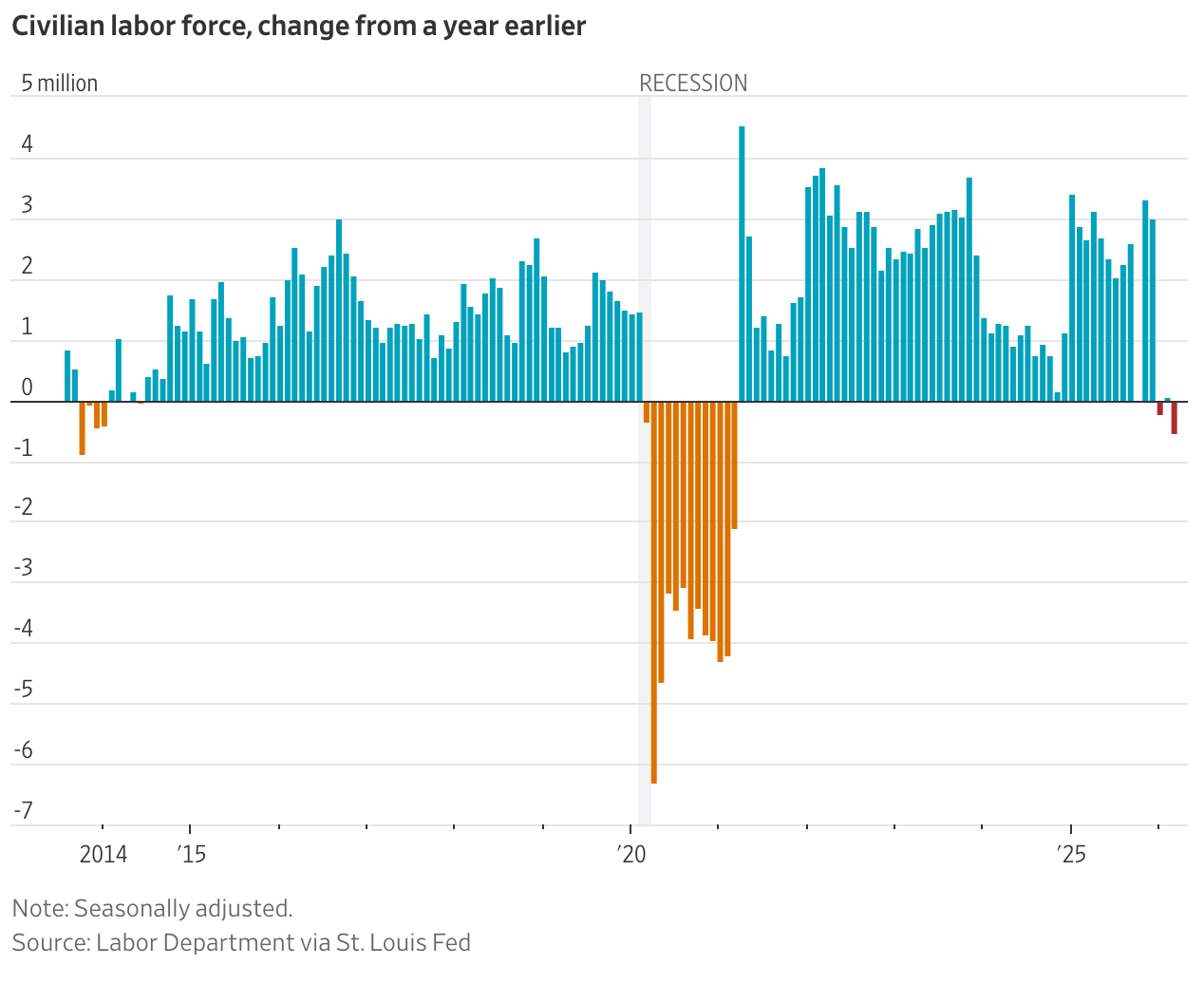
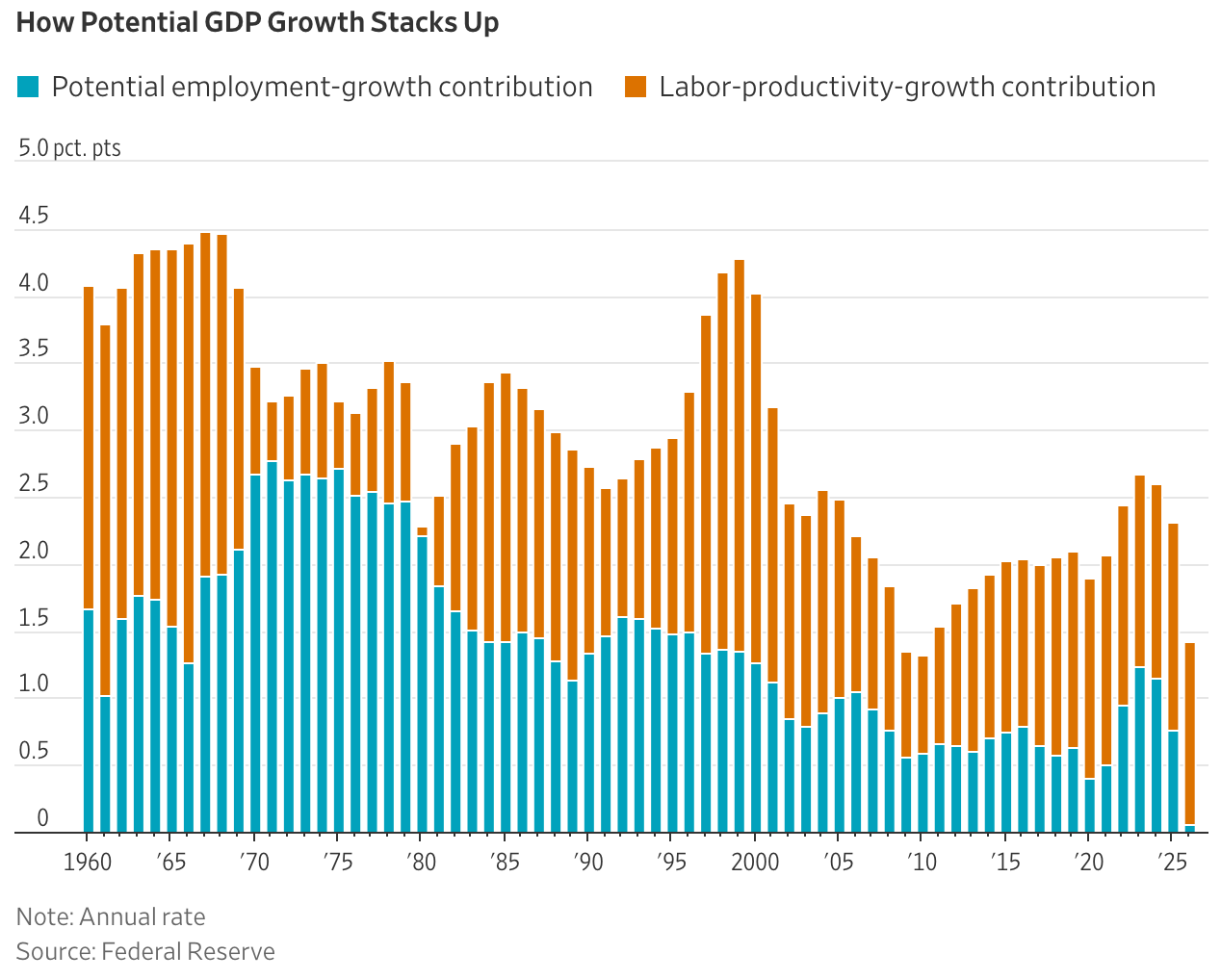
Economic growth is continuing even as job creation stalls, creating an unusual dynamic where productivity has become the primary driver of expansion. Slowing immigration, an aging population, and declining birth rates have sharply reduced labor-force growth, with the workforce shrinking by over 500,000 in the past year. As a result, the number of jobs needed to maintain stable unemployment has dropped dramatically—potentially to near zero—helping explain why unemployment hasn’t surged despite minimal hiring.
In this environment, gains in worker productivity (output per hour) are carrying the economy. Productivity has grown at about 2.1% annually in recent years, a noticeable improvement over the pre-2020 period and stronger than many peer economies. Factors driving this include post-pandemic workforce reshuffling into more efficient roles, increased automation, longer job tenure, and early impacts from artificial intelligence. While AI’s full effect remains uncertain, economists expect it to contribute meaningfully over time, especially as firms adapt workflows and invest in complementary changes.
This shift marks a departure from historical growth patterns, where both labor expansion and productivity contributed. With labor-force growth potentially flat, future gains in living standards will depend heavily on sustained productivity improvements. If productivity growth remains strong, it could offset demographic headwinds; if not, the U.S. risks slower growth similar to countries with shrinking workforces.
4. Why More People Are Dropping Out of the Job Market (WSJ)
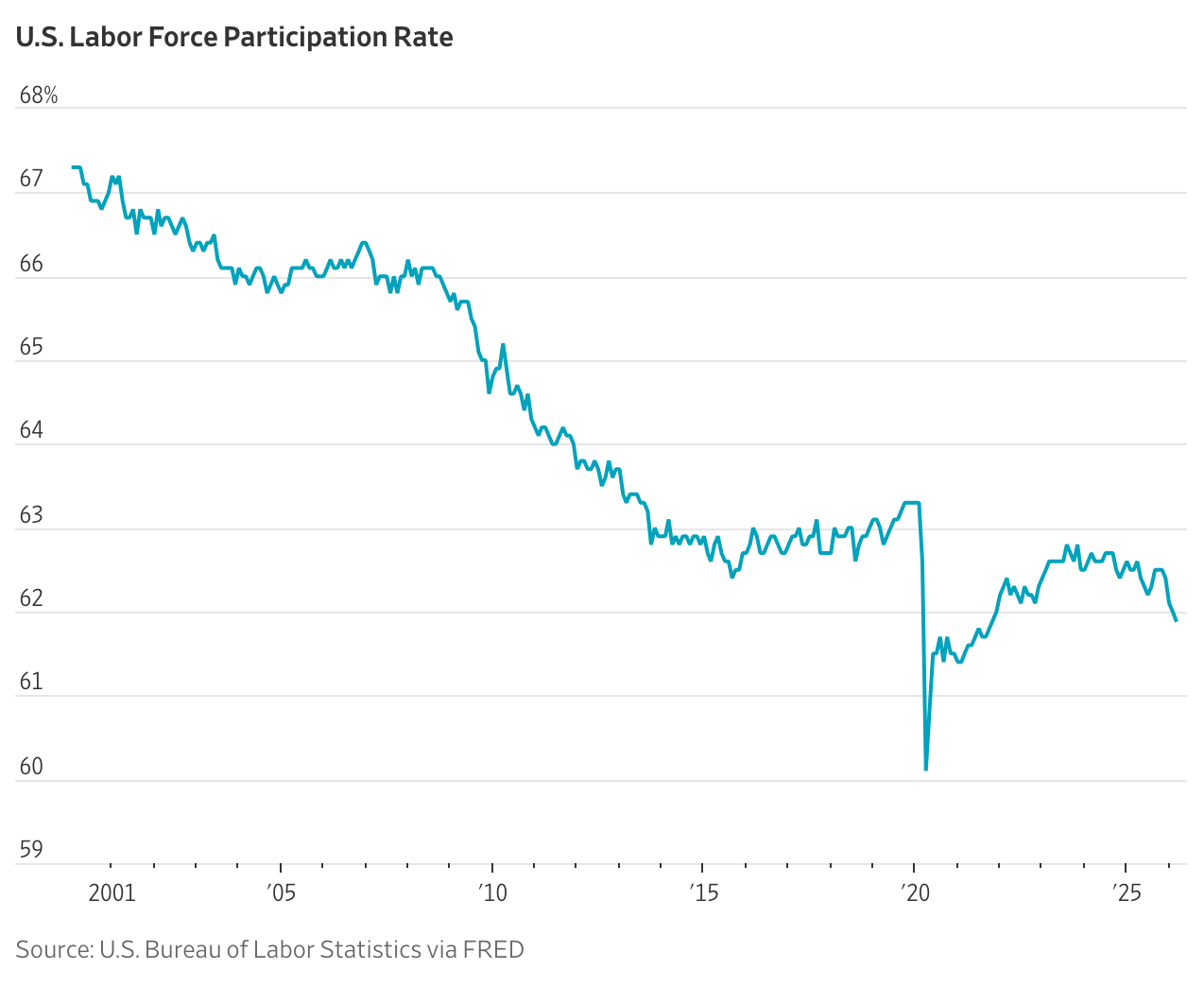
The U.S. labor market showed solid job growth and lower unemployment, but labor-force participation continued to decline, falling to 61.9%—its lowest level since 1977 outside the pandemic. This long-term drop has been driven primarily by demographic shifts, especially the retirement of baby boomers, along with reduced immigration that has limited the influx of younger workers. Early retirements, accelerated during the pandemic and supported by rising home and investment wealth, have further reduced participation among older Americans.
Fewer workers can slow long-term economic growth unless productivity rises to compensate. While recent productivity gains have helped offset the impact, economists warn that may not continue indefinitely. Despite the overall decline, participation among prime-age workers remains strong, which is good—so perhaps the issue is less about people giving up on work and more about structural factors like aging and a shrinking labor supply, which could eventually lead to labor shortages and slower population growth.
5. Why the U.S. Fertility Rate Has Hit a Record Low (WSJ)
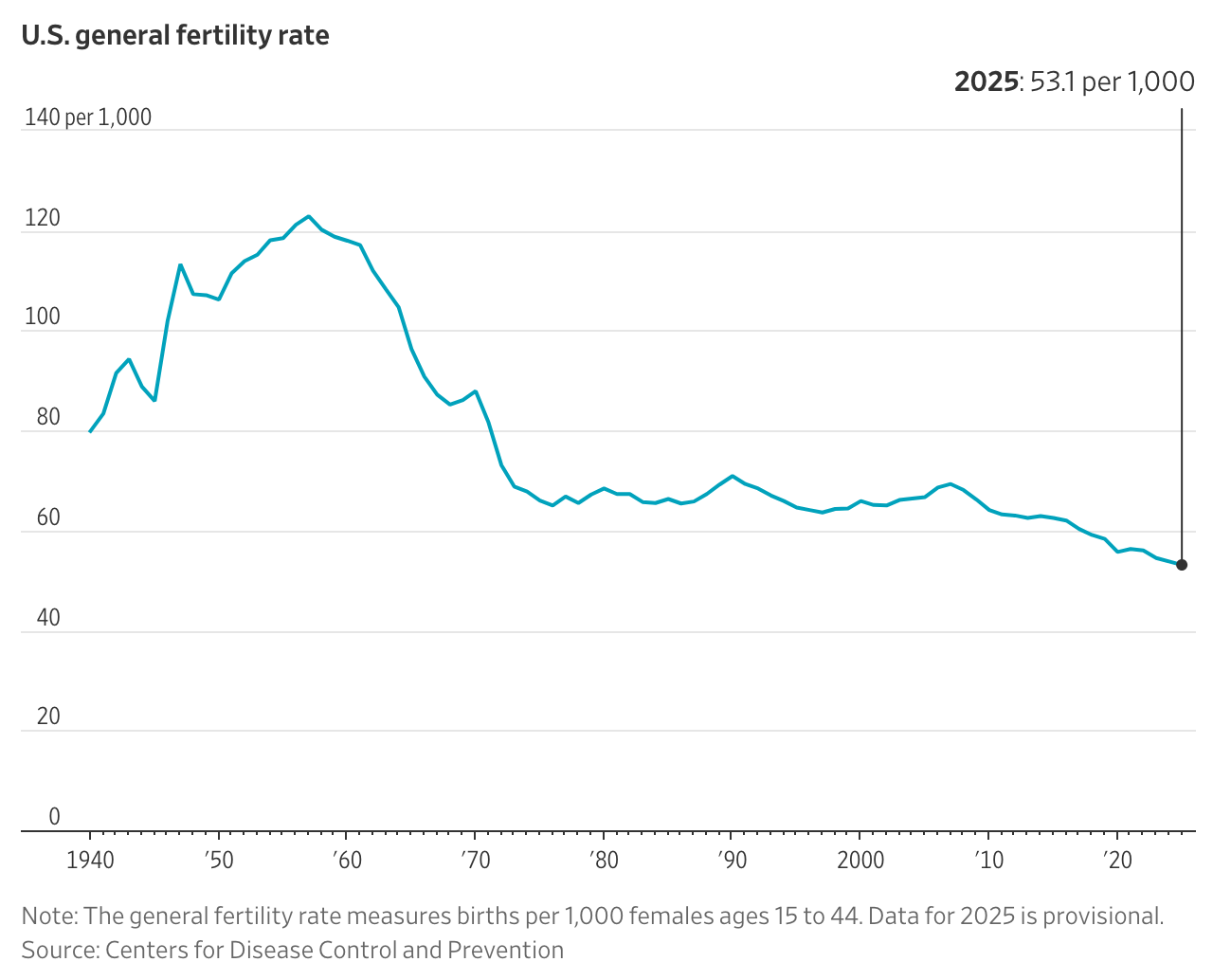
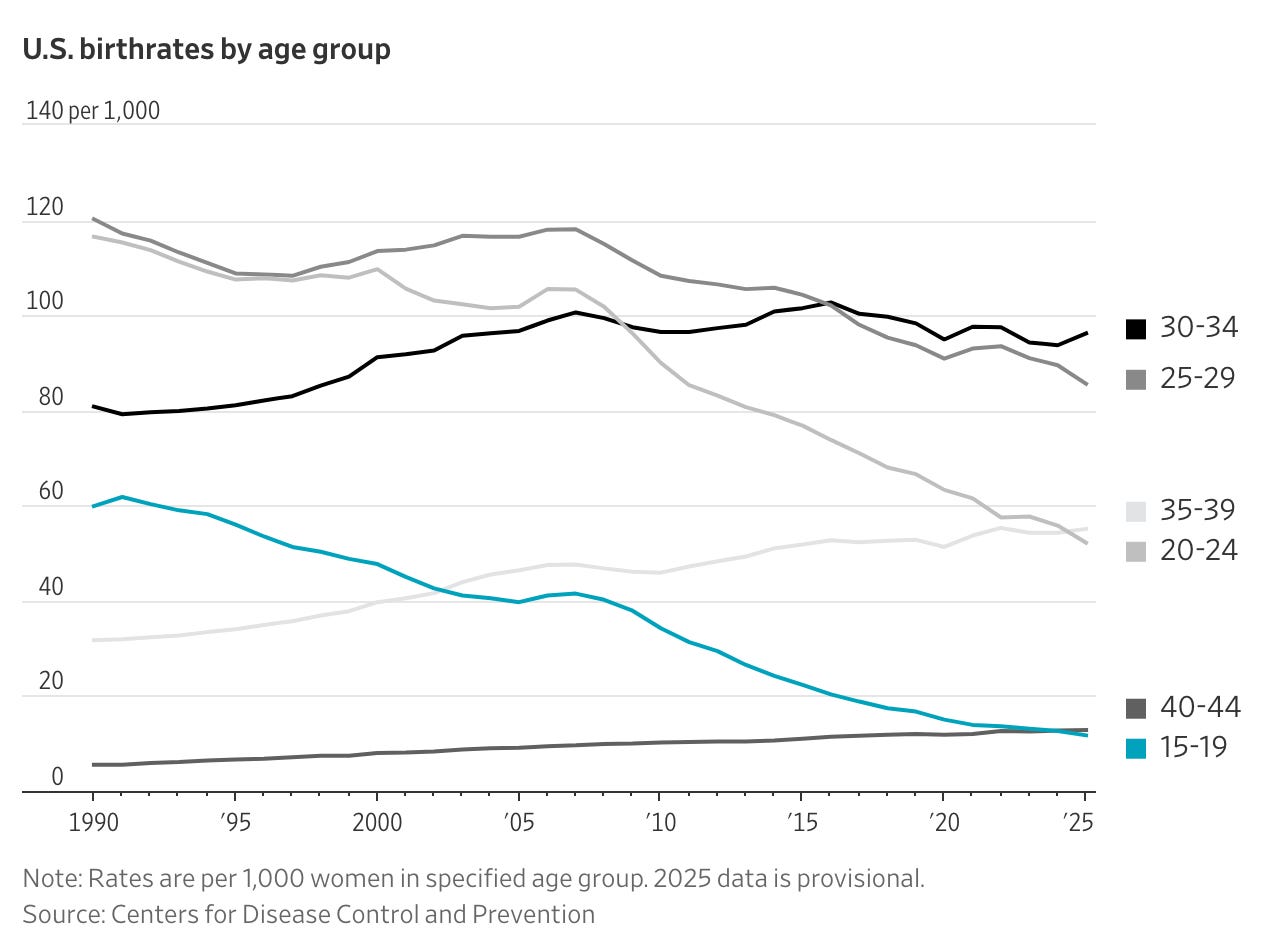
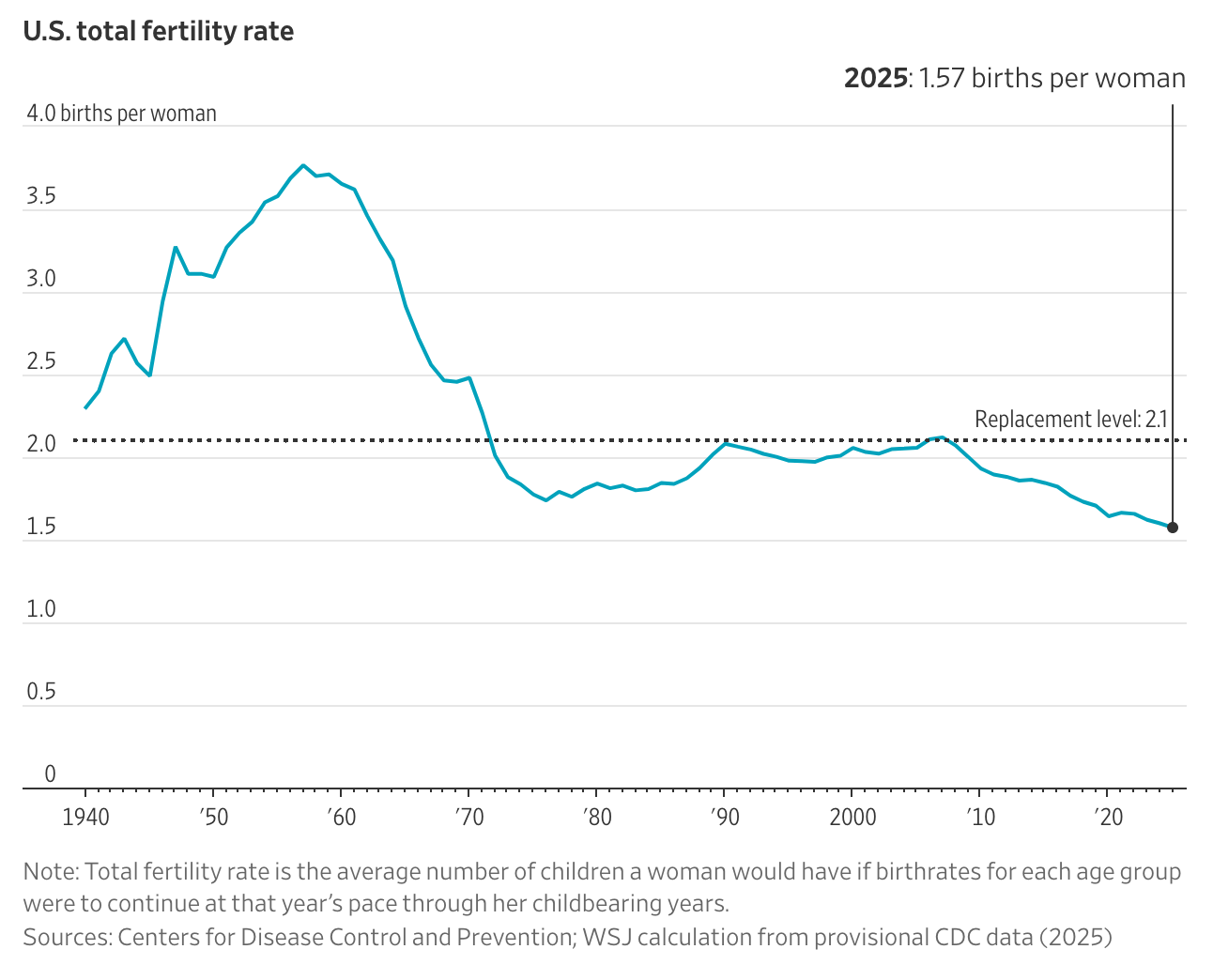
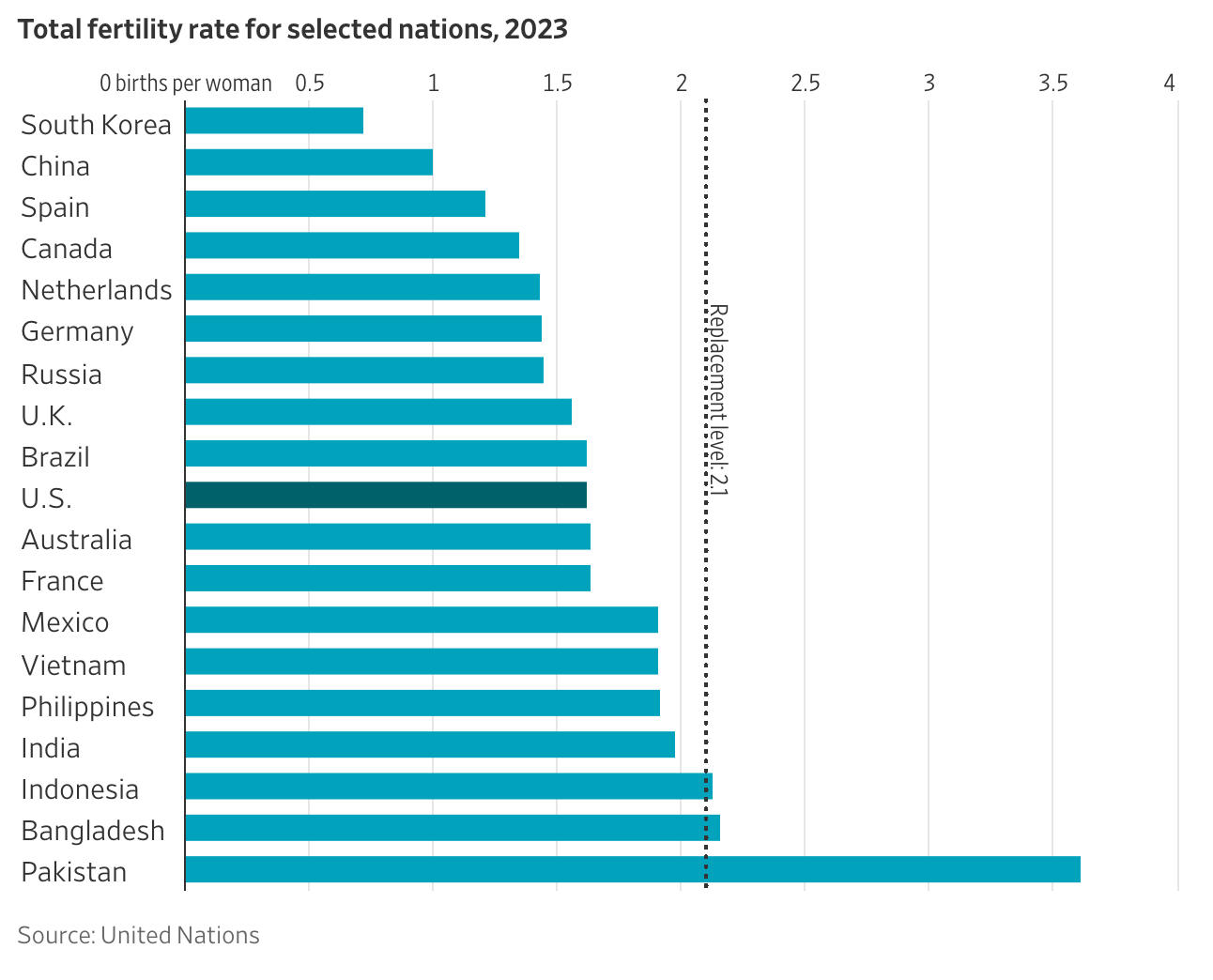
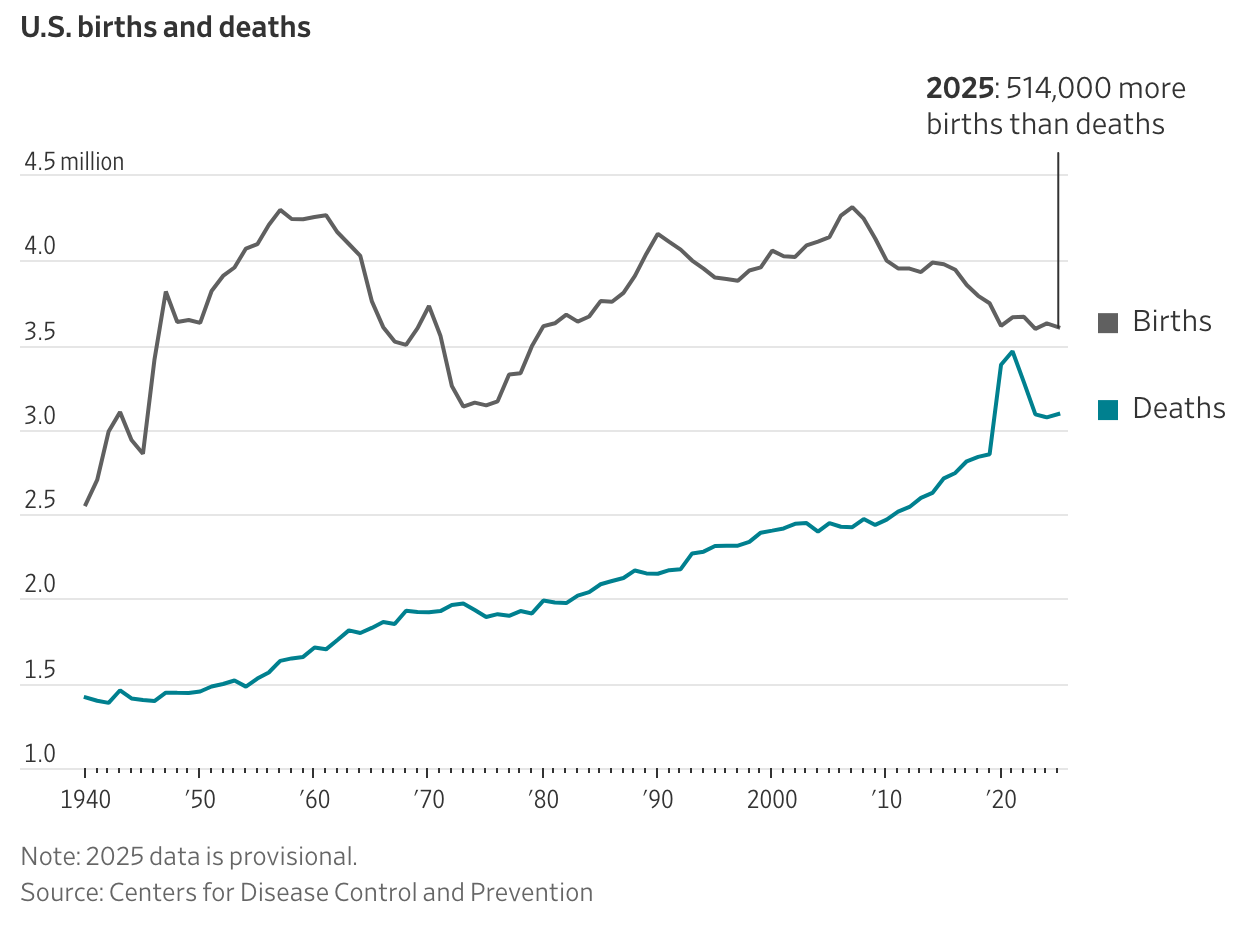
U.S. fertility rates fell to new record lows in 2025, with the general fertility rate dropping to 53.1 births per 1,000 women and the total fertility rate declining to 1.57—well below the replacement level of 2.1. Despite this, total births held steady at about 3.6 million for the sixth consecutive year. The long-term decline is driven largely by sharp decreases in births among teens and women in their 20s, while births among women in their late 30s have now surpassed those in their early 20s for the first time, reflecting a continued shift toward delayed parenthood.
Much of this trend is tied to uncertainty around finances, relationships, and the broader future, even though many still want children. Teen birthrates have dropped dramatically—down more than 70% since 2007—due to public health efforts and increased contraceptive use. With births no longer significantly outpacing deaths, the U.S. is approaching a point where population growth will depend on immigration, mirroring a broader global pattern of declining fertility across developed countries.
Health
6. Why the U.S. Spends So Much on Healthcare (WSJ)
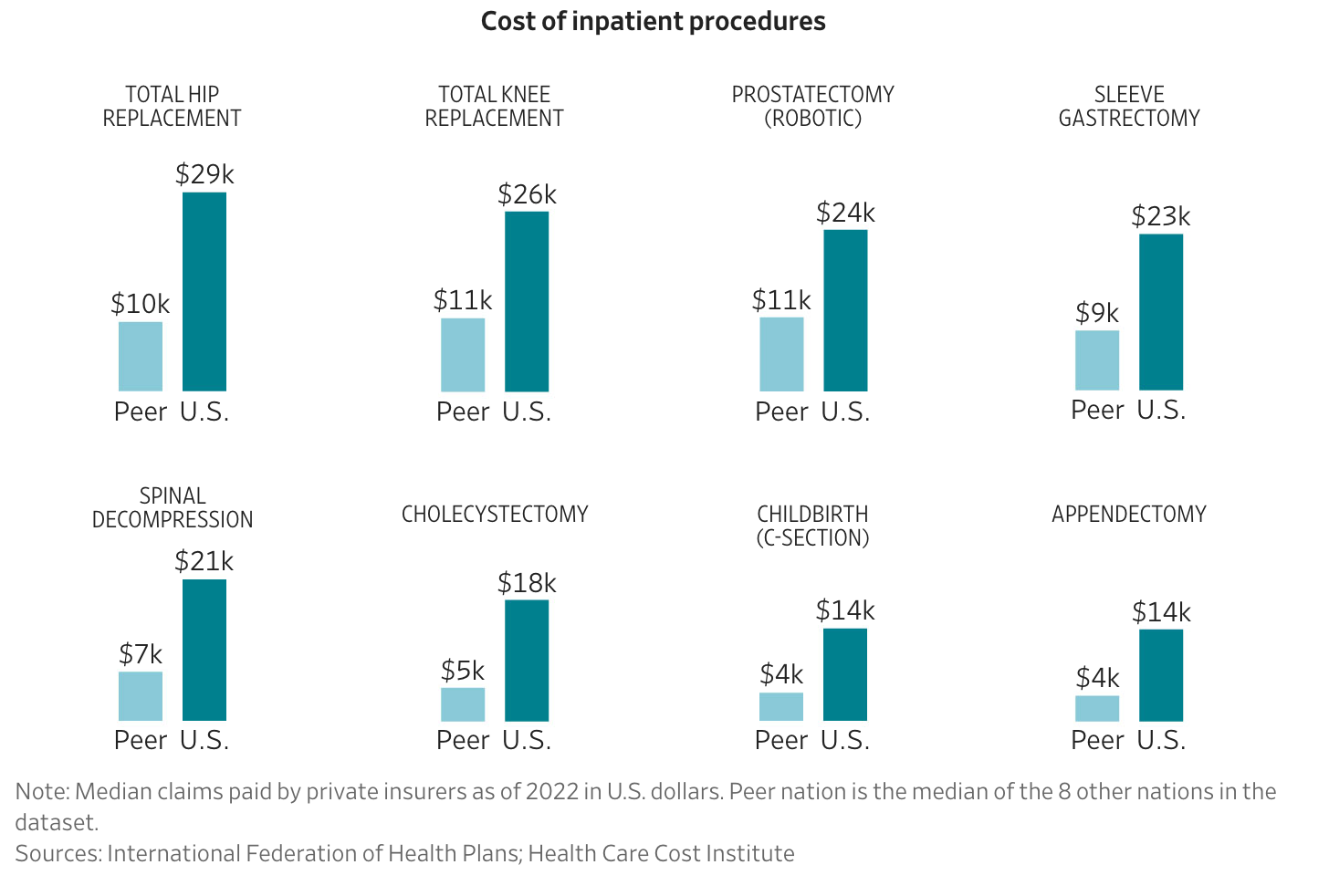
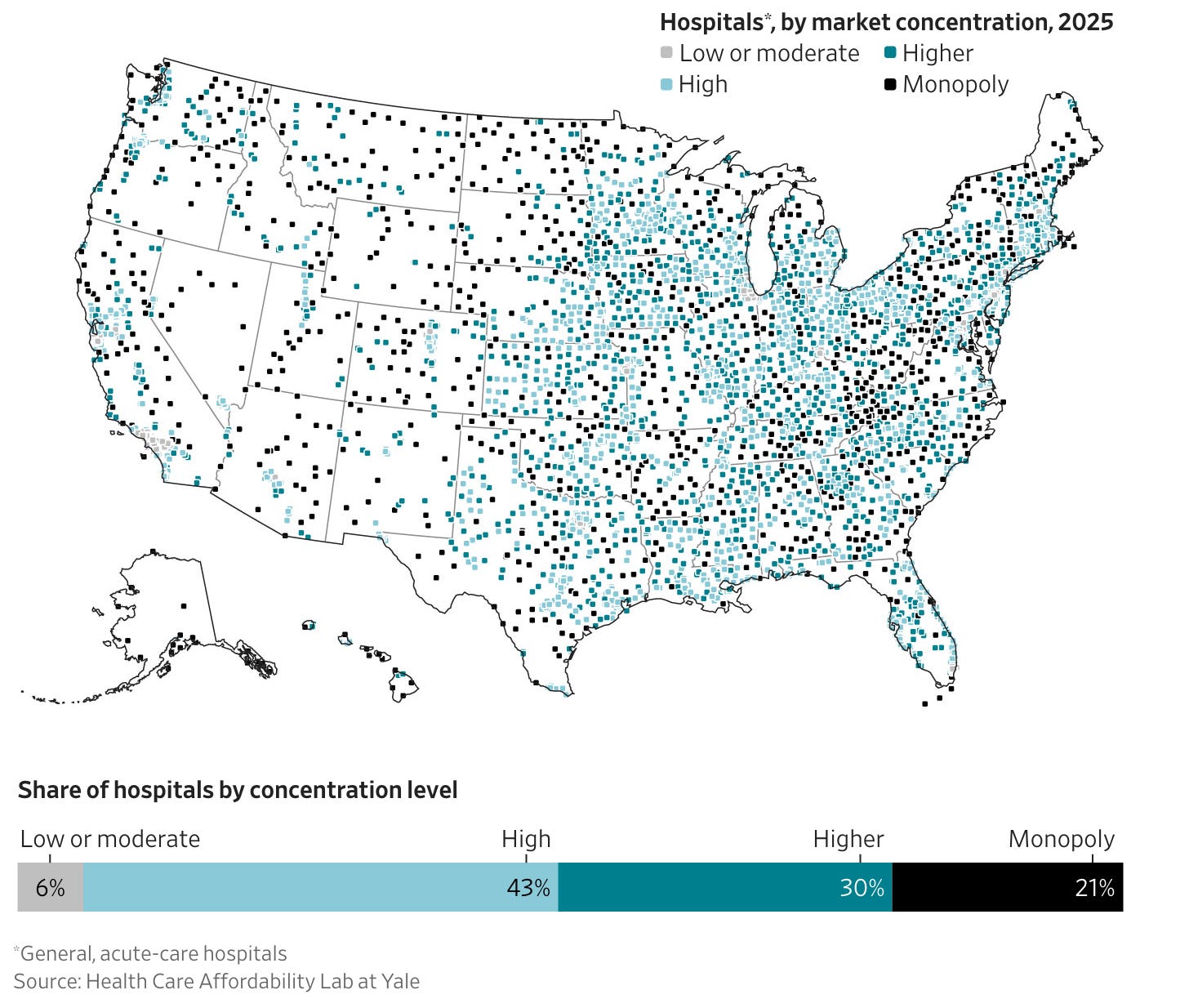
Healthcare in the U.S. is the most expensive in the world, driven primarily by much higher prices for the same services and products. Prescription drugs cost significantly more because the government does not broadly negotiate prices like other countries do. Hospital consolidation has also given large systems more power to charge higher rates, while administrative costs—such as billing and insurance processing—consume a much larger share of spending than in other nations.
Labor costs further increase expenses, as American doctors and nurses earn more than their international counterparts. At the same time, Americans are using more healthcare, including costly hospital services and new high-priced drugs, which has accelerated overall spending. Together, higher prices, heavier administrative overhead, higher wages, and increased utilization explain why U.S. healthcare costs far exceed those of other countries.
Lots of great charts in this WSJ article. Just a few of them below.
Artificial Intelligence
7. Industrial Policy for the Intelligence Age: Ideas to Keep People First (OpenAI)
AI is advancing so quickly and powerfully that it could fundamentally reshape the economy, and proactive planning is essential to manage both its benefits and its risks. In this vein, OpenAI CEO Sam Altman has proposed a sweeping blueprint for how governments should respond to the rapid rise of AI, arguing that its impact will be so transformative that it requires a new social contract. He warns that advances in AI could soon lead to major disruptions, including cyberattacks, biological threats, and widespread job displacement, making urgent policy discussions necessary. His plan reflects a belief that existing economic and regulatory systems are not prepared for what’s coming.
The proposal includes bold ideas such as a public wealth fund that would give citizens a stake in AI-driven growth, taxes on automated labor, and a shift away from payroll taxes as jobs decline. It also suggests a four-day workweek enabled by AI productivity gains, universal access to AI tools, and automatic expansion of social safety nets when job displacement rises. The plan even addresses extreme scenarios, including how to contain autonomous AI systems that could act beyond human control.
Definitely recommend reading considering it’s coming direct from the OpenAI CEO.
8. Claude Mythos Is Everyone’s Problem (The Atlantic)
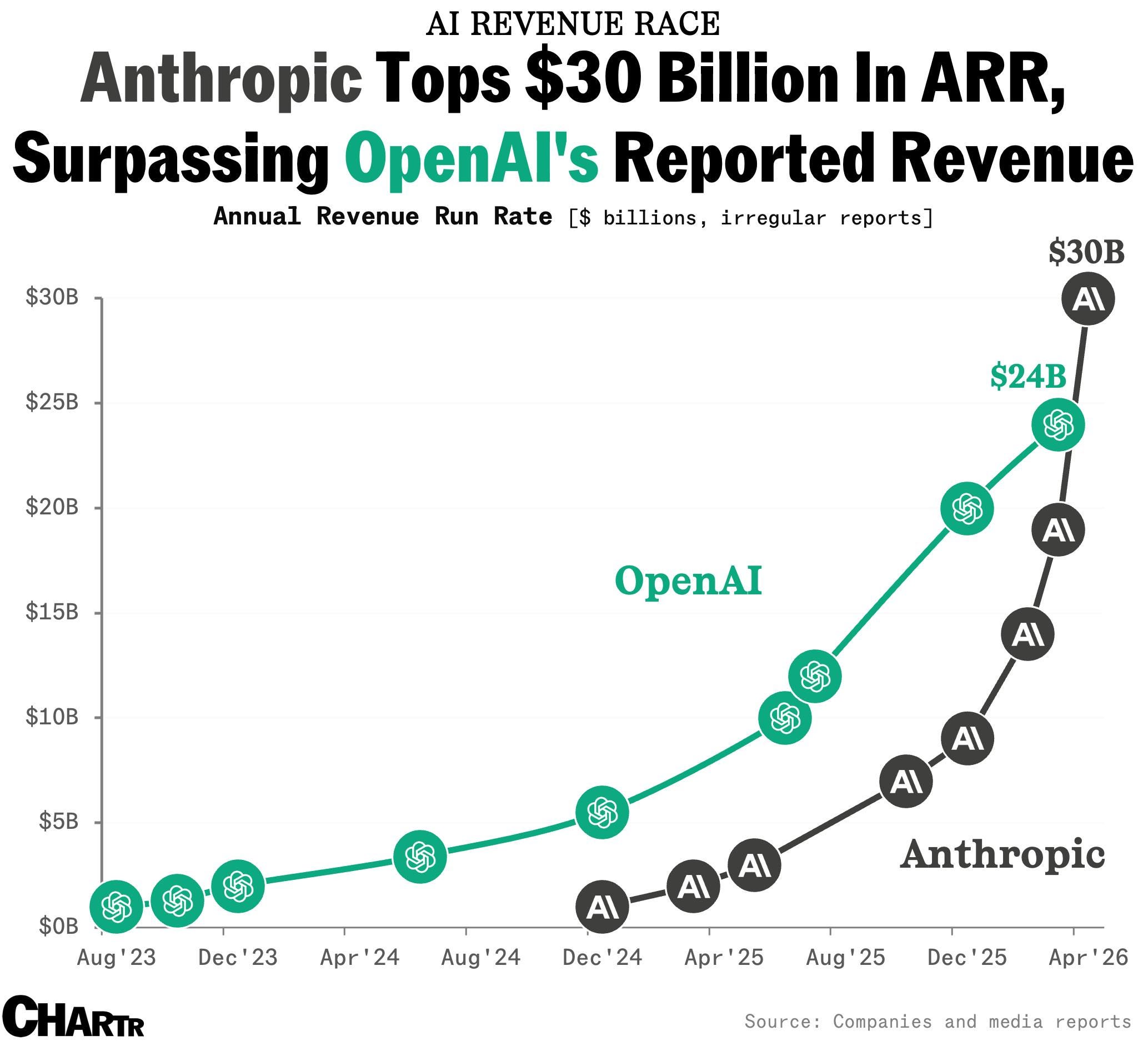
Anthropic has revealed a highly advanced AI model, Claude Mythos Preview, that it believes is too dangerous for public release. The system is capable of identifying thousands of serious software vulnerabilities, including flaws in every major operating system and browser, some of which had gone undetected for decades. Unlike earlier AI tools that improved hacking through speed and scale, this model appears to represent a leap in capability, potentially rivaling or exceeding elite state-sponsored cyber operations. In response, Anthropic is limiting access to a small group of major tech companies so they can strengthen defenses before broader deployment.
9. Anthropic Model Scare Sparks Urgent Bessent, Powell Warning to Bank CEOs (Bloomberg)
U.S. financial regulators are increasingly concerned that advanced AI could trigger a new wave of cyber threats. Treasury Secretary Scott Bessent and Federal Reserve Chair Jerome Powell held an urgent meeting with major bank CEOs to warn about risks tied to Anthropic’s new model, Mythos. The system is reportedly capable of identifying and exploiting vulnerabilities across major operating systems and web browsers, raising fears about what could happen if such tools are used maliciously. In response, Anthropic has limited access to the model and is coordinating with select firms and government officials to strengthen defenses before broader release.
The concern extends beyond the U.S., with regulators in countries like Canada and the U.K. also engaging financial institutions on the issue. Officials view AI-driven cyber risk as a potential systemic threat, especially given the interconnected nature of global banking. While banks already hold capital to guard against operational risks like cyberattacks, the rapid advancement of AI is introducing new uncertainties that are harder to measure and defend against, increasing urgency across the financial system.
10. We’re Using So Much AI That Computing Firepower Is Running Out (WSJ)
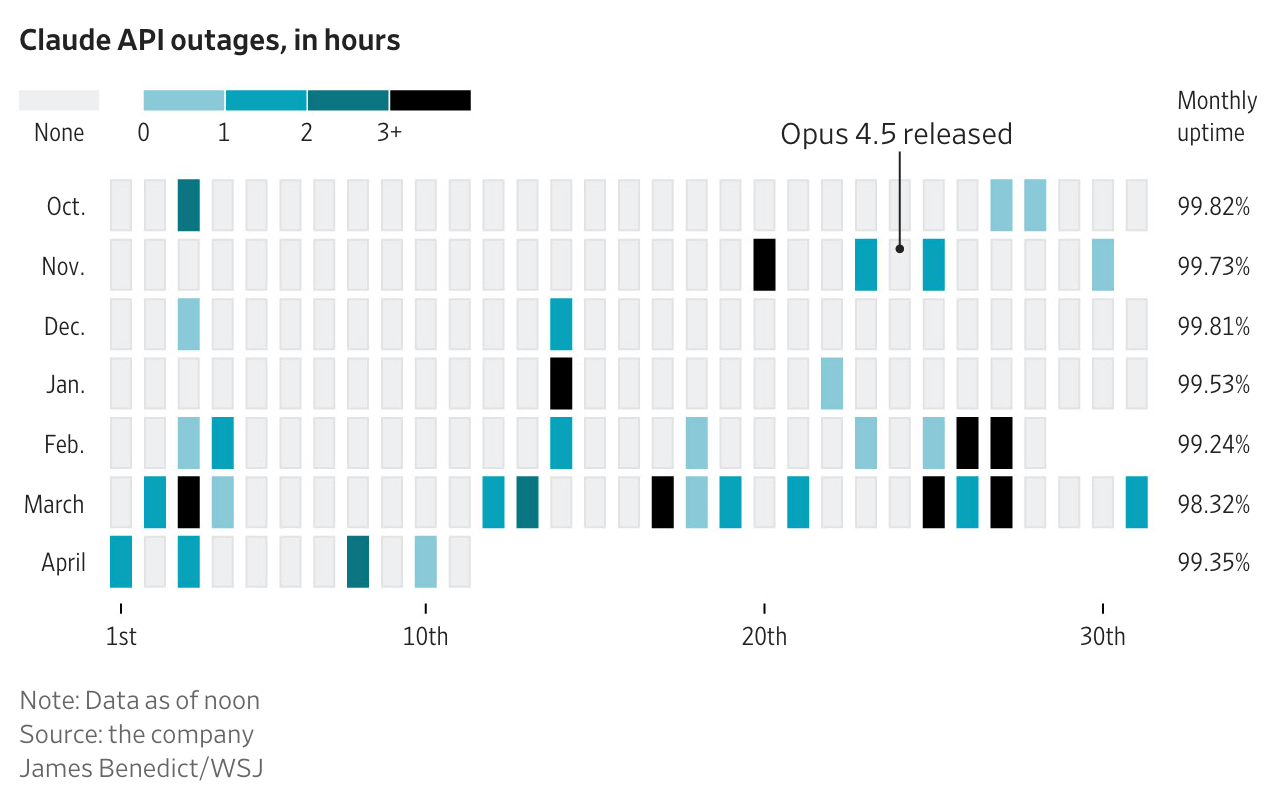
The rapid surge in demand for artificial intelligence, especially more advanced “agentic” systems that perform tasks autonomously, is outstripping the available computing power needed to run them. This shortage of compute capacity has led to outages, product delays, and companies being forced to prioritize certain services over others. AI usage has exploded, with token consumption (a measure of compute usage) rising dramatically, and firms scrambling to secure scarce GPU resources and data-center capacity.
The bottleneck is being driven by long infrastructure lead times, limited power availability, and surging demand for high-performance chips like those made by Nvidia. Prices for GPU access have climbed sharply, and companies are making difficult trade-offs—cutting projects, limiting user access, or raising prices. Even leading AI providers have struggled with reliability, as seen in frequent outages and reduced uptime, prompting some customers to switch providers.
This capacity crunch reflects a familiar pattern from past tech booms, where demand grows faster than infrastructure can keep up. Unless computing supply expands significantly, the shortage could slow AI adoption and limit the effectiveness of tools that businesses are increasingly relying on for productivity gains.
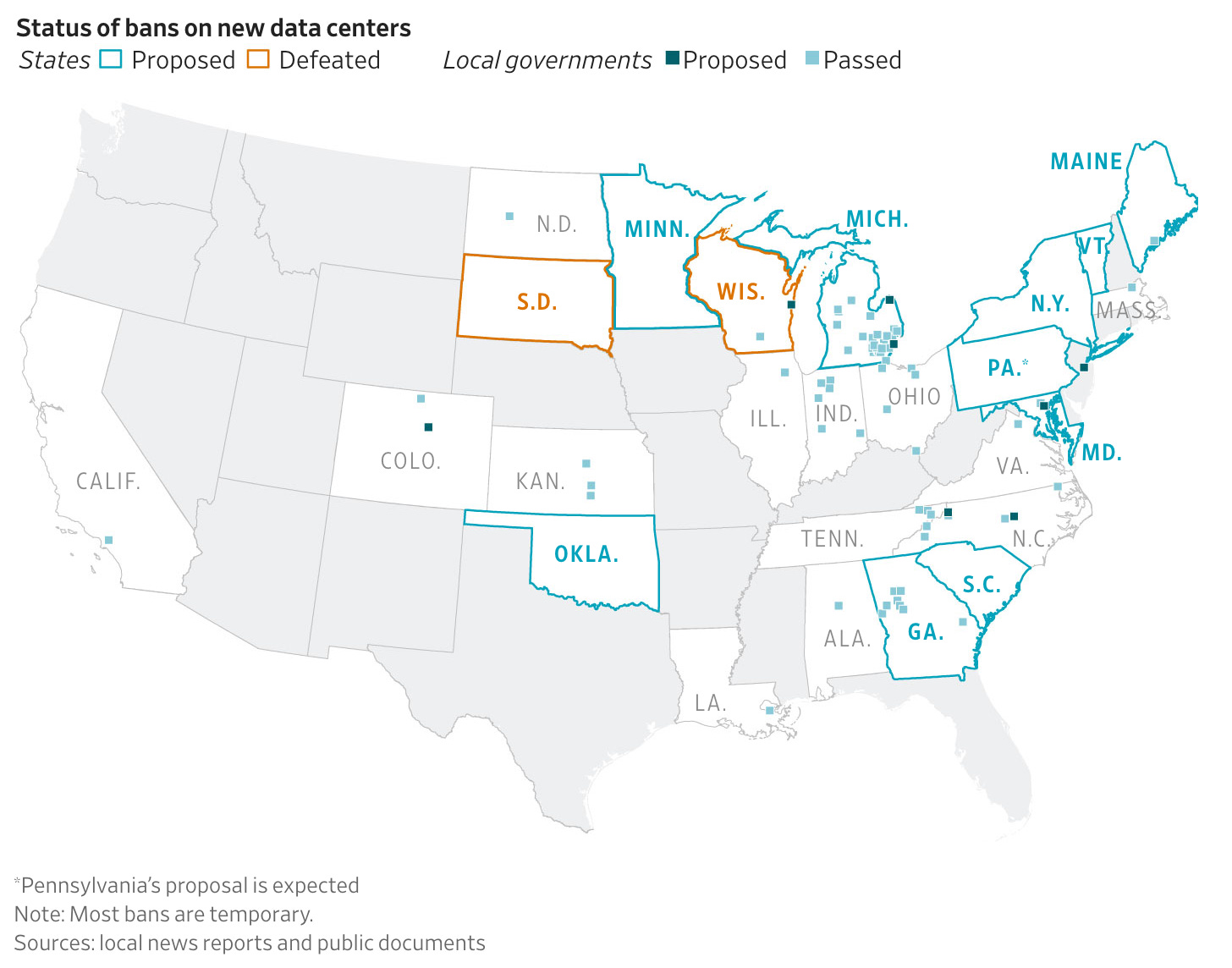
11. These Cities and States Are Taking Aim at Data Centers (WSJ)
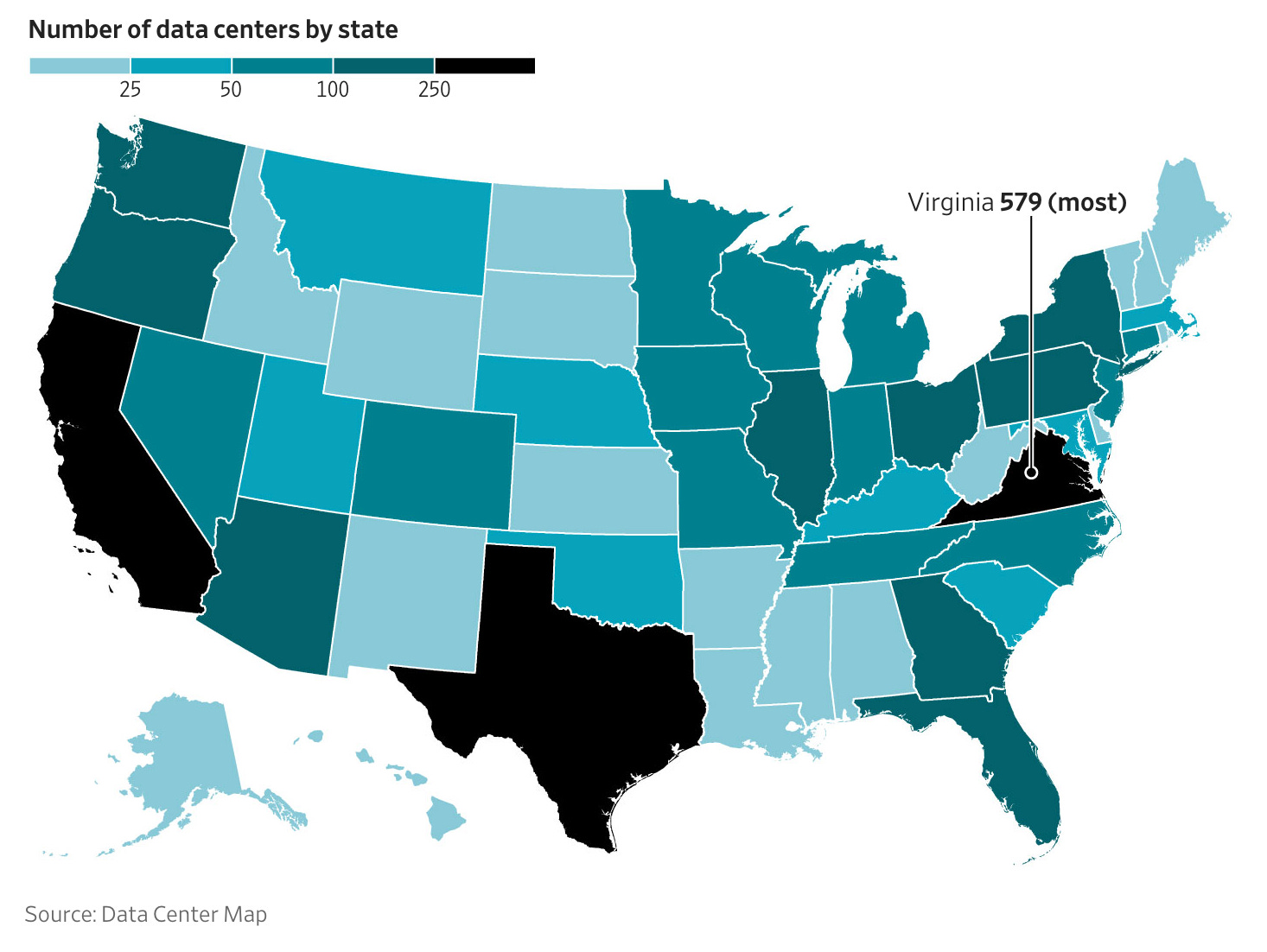
Growing backlash against data centers is spreading across the U.S., driven largely by the rapid expansion of AI-related infrastructure. Maine is on track to potentially become the first state to temporarily halt new data-center construction, while lawmakers in more than 10 states and numerous local governments are considering or have already enacted similar bans. Most of these measures are temporary, reflecting rising concerns at the community level.
Despite this pushback, data-center development continues to surge, especially in states like Virginia and Texas, which lead the nation in the number of facilities. The boom is being fueled by demand for large-scale, AI-driven “hyperscale” data centers.
12. The Real Energy Cost of AI, Explained With Steaks and a Data Center Trip (WSJ)
AI data centers could use up to 12% of all U.S. electricity by 2028. But how much power does it take to create one video and what really happens after you hit “enter” on that AI prompt? WSJ’s Joanna Stern visited “Data Center Valley” in Virginia to trace the journey and then grills up some steaks to show just how much energy it all takes.
NOTE: I highly recommend watching this video to better understand energy consumption from AI use.
Technology
13. Kids Are Discovering the Joys—and Pains—of the Landline (WSJ)
A growing number of American families are turning to low-tech solutions like landlines to delay giving children smartphones. Parents see these devices as a way for kids to communicate with friends while avoiding the risks of social media, including anxiety, bullying, and excessive screen time. New internet-enabled phones designed for kids—such as screen-free devices with parental controls—are gaining popularity, reflecting a broader effort to introduce technology in stages rather than all at once.
14. The secret, never-before-used CIA tool that helped find airman downed in Iran: ‘If your heart is beating, we will find you’ (NYP)
The CIA used a newly revealed technology called “Ghost Murmur” to locate and help rescue a downed American airman in Iran. The system combines quantum magnetometry with AI to detect the faint electromagnetic signal of a human heartbeat from long distances, even across vast terrain. Developed by Lockheed Martin’s Skunk Works division, the tool was used operationally for the first time in a remote desert environment, where minimal interference made it easier to isolate the signal. The technology proved critical in identifying the pilot’s location after traditional tracking methods, including a survival beacon, failed to provide precise positioning.
Prediction Markets
15. Polymarket’s $269 Million Question: Did U.S. Forces ‘Enter’ Iran? (WSJ)
A major dispute on Polymarket exposed a key weakness in prediction markets. Traders wagered $269 million on whether U.S. forces would “enter Iran.” No large-scale operation took place, but a limited special forces rescue mission was ruled to meet the contract’s terms. That decision triggered payouts and frustration among participants who believed the bet was meant to reflect a more significant military intervention.
As prediction markets expand into areas like geopolitics, disagreements over definitions and interpretation are becoming more common. Platforms rely on systems like UMA to resolve disputes, where token holders vote on outcomes. Critics argue that large stakeholders can influence decisions, while supporters say complaints mainly come from losing traders. Ambiguous real-world events, especially in war, make it difficult for these markets to function as reliable forecasting tools.