Economy
1. Corporate America Is Minting Money—and Not Just in Tech and Finance (WSJ)
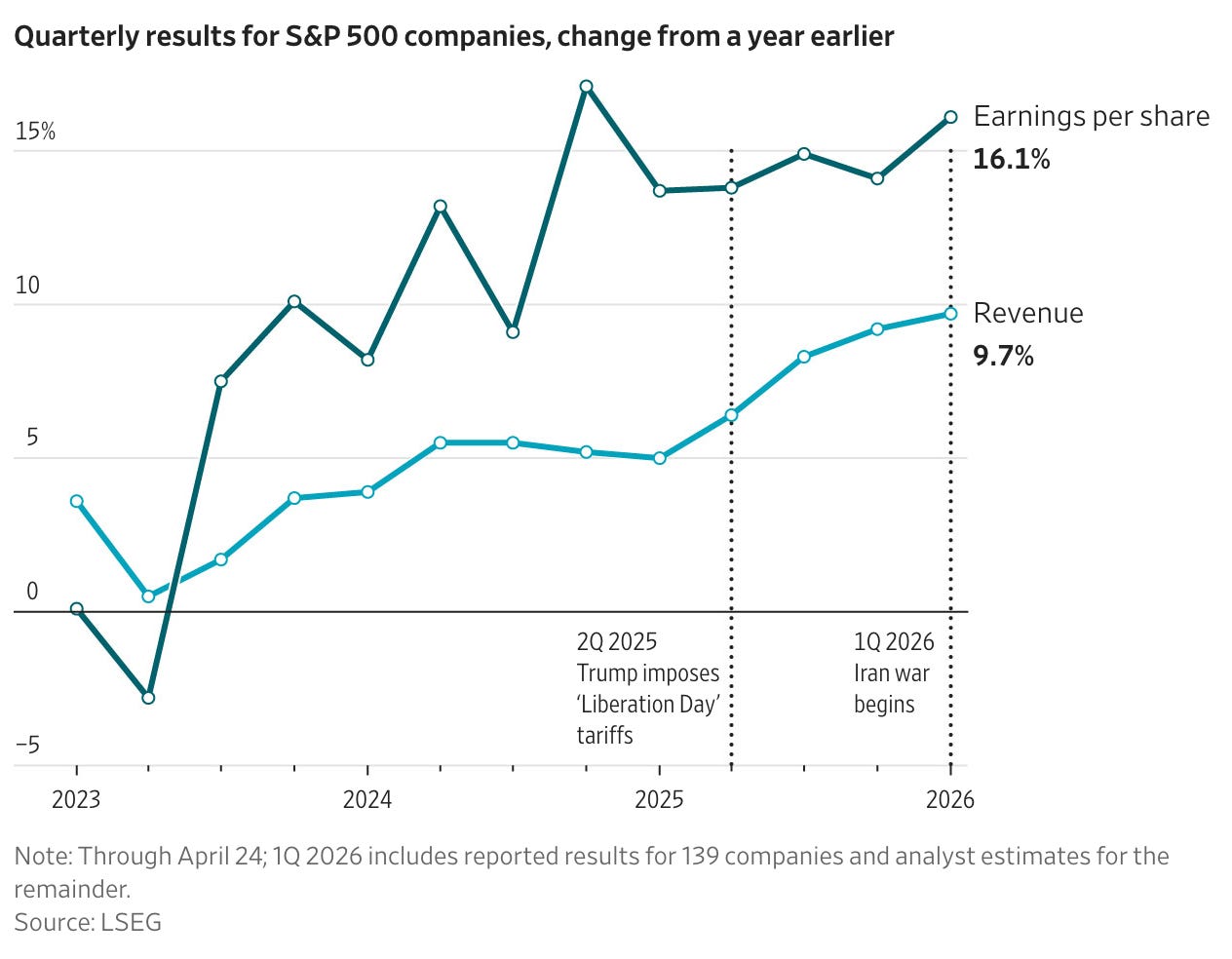
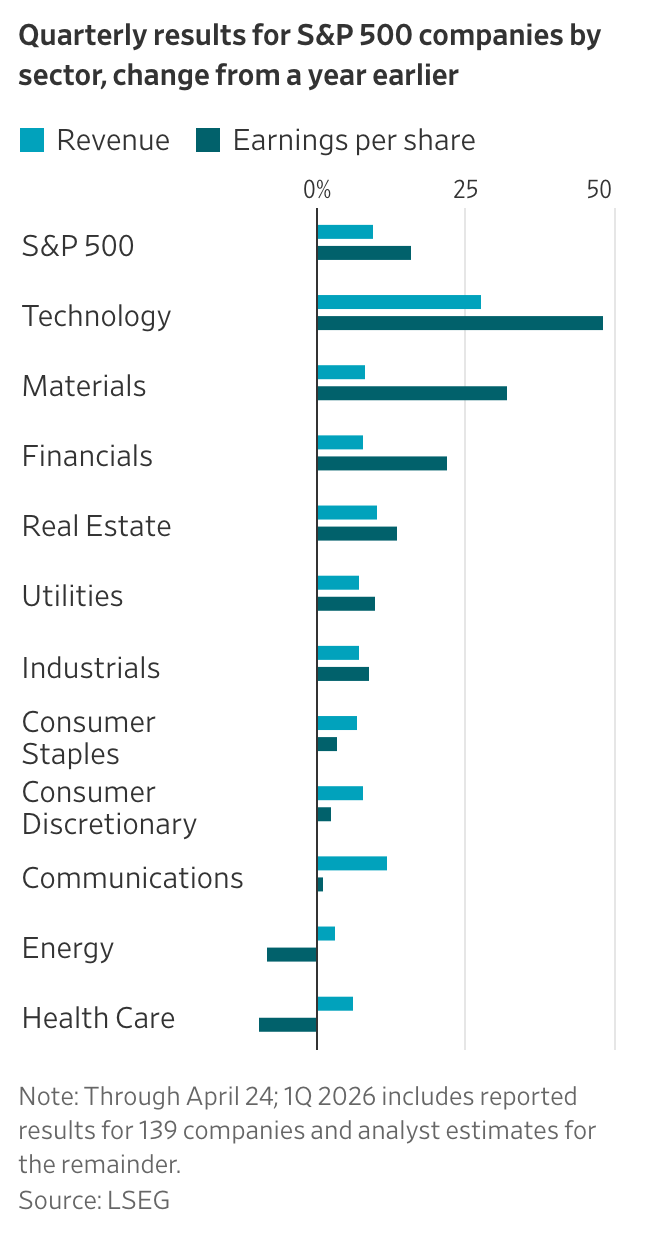
Large U.S. companies are reporting strong profits and revenue growth despite economic uncertainty, geopolitical tensions, and weak consumer sentiment. Early results from S&P 500 firms show earnings expected to grow more than 13% year-over-year for a sixth straight quarter, with gains expanding beyond tech into sectors like finance and materials. Many companies are benefiting from real sales growth, efficiency gains, and pricing power—even in industries affected by higher costs, such as airlines.
However, this strength is uneven. Consumer-facing sectors are lagging as households feel pressure from inflation, high energy prices, and broader uncertainty, contributing to record-low consumer sentiment. Spending remains resilient among wealthier individuals, creating a “K-shaped” economy where strong corporate performance masks underlying disparities. Larger firms continue to outperform smaller and more consumer-dependent businesses, reinforcing a widening gap in economic outcomes.
2. Aircraft Technicians Make Six Figures and Airlines Can’t Find Enough of Them (WSJ)
The aviation industry is facing a growing shortage of aircraft maintenance technicians as a large share of the workforce nears retirement. More than 40% of mechanics are over 60, and demand is rising as airlines manage aging fleets and a backlog of new aircraft orders. The shortage is expected to reach thousands of workers in North America, pushing wages up sharply and making the role an increasingly attractive, high-paying career path that doesn’t require a traditional college degree.
Despite strong pay and job security, the pipeline of new workers remains limited due to low awareness, training bottlenecks, and high dropout rates in certification programs. Schools also struggle to retain instructors who can earn more in the field. In response, airlines and companies are expanding training programs, offering bonuses, and improving working conditions, but the industry still risks losing significant experience and expertise as older technicians retire.
3. America’s Pandemic Car Bubble Is Now Trapping Buyers in Debt (WSJ)
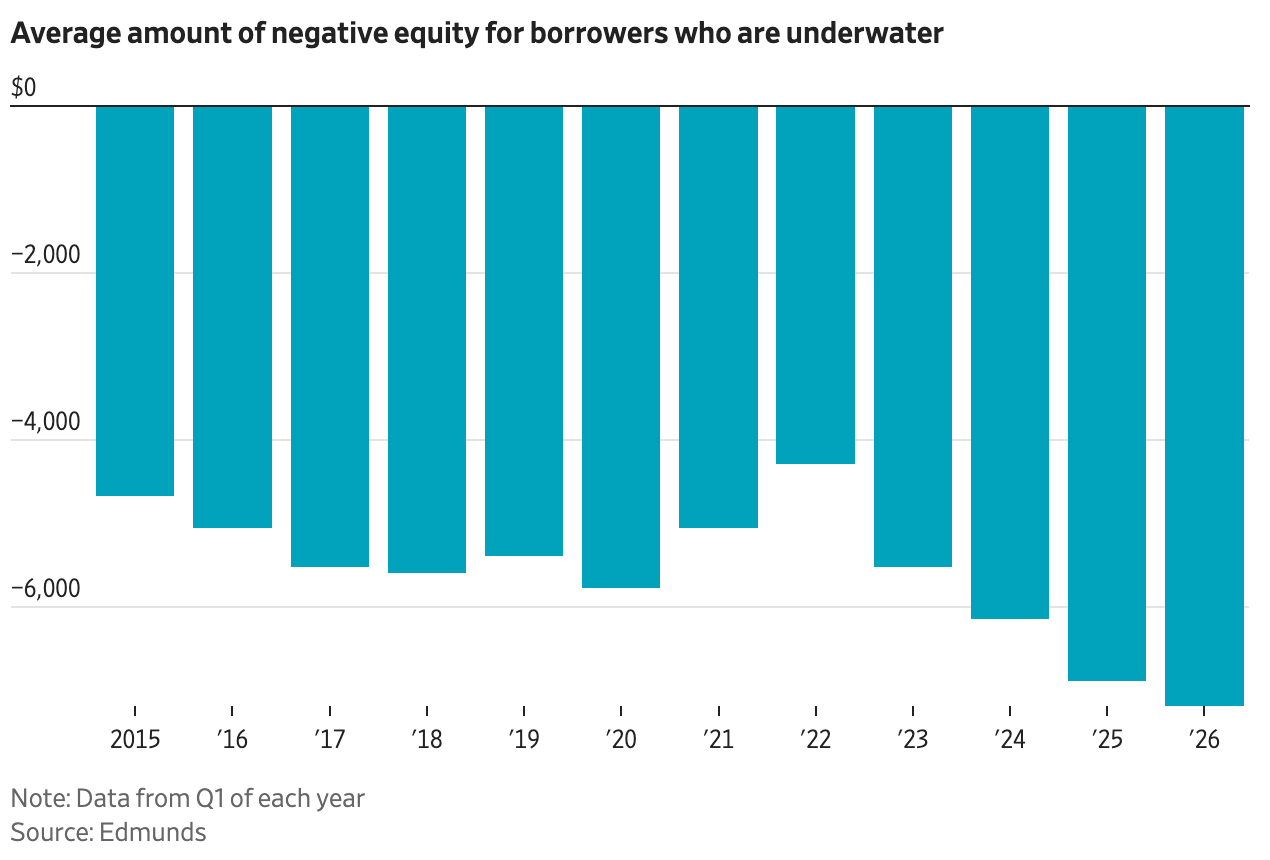
A growing number of U.S. car buyers are “underwater” on their loans, owing more than their vehicles are worth, with the problem worsening in recent years. About 30% of trade-ins now carry negative equity, with borrowers owing an average of $7,200, up sharply from five years ago, and some cases far higher. This trend is largely driven by pandemic-era vehicle price spikes, when buyers overpaid amid shortages, and are now trying to trade in depreciated cars.
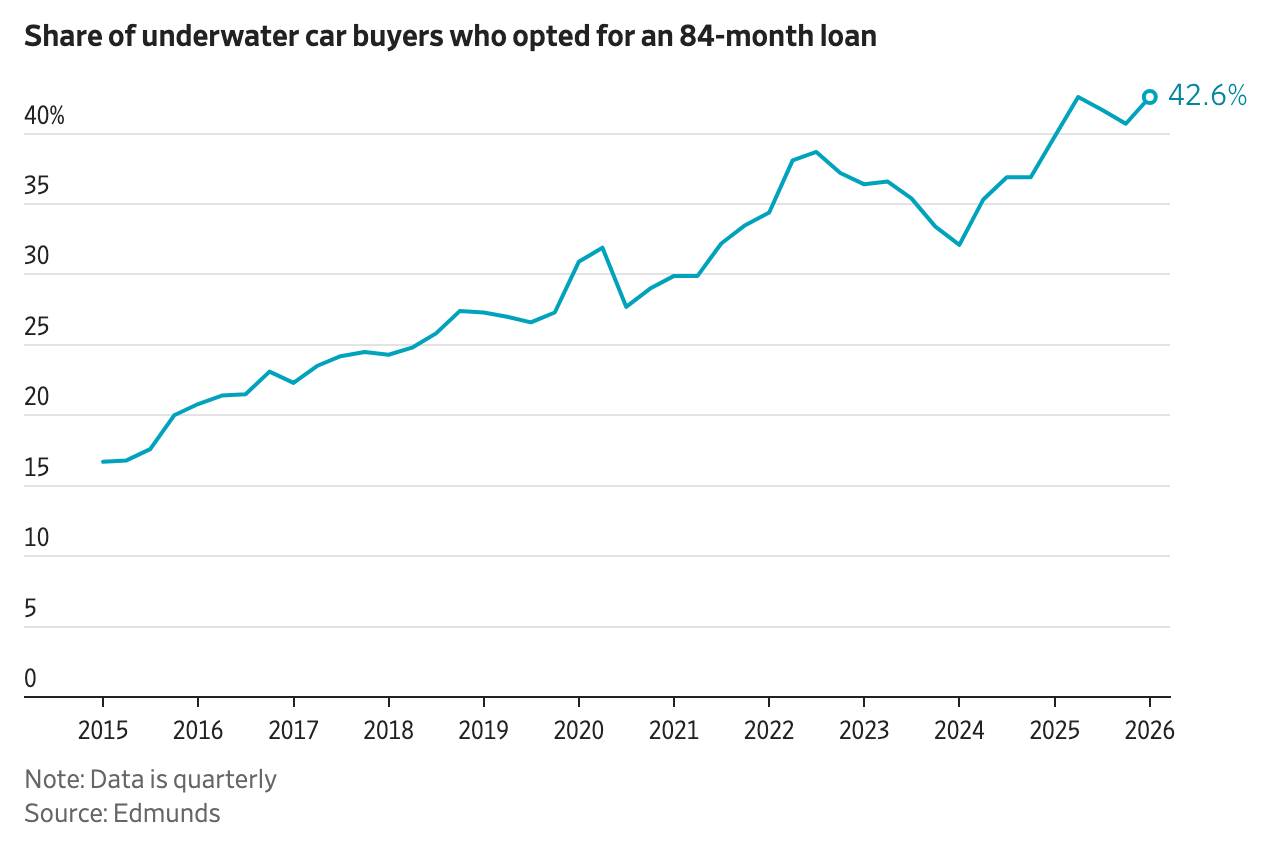
To manage high costs, many buyers are taking on longer loans and rolling old debt into new ones, increasing total borrowing and monthly payments. This cycle compounds financial strain, raising the risk of defaults and repossessions, which are already climbing. While some consumers remain financially stable, those with negative equity face growing difficulty securing loans and escaping mounting debt.
4. The $50 Movie Ticket Has Arrived (WSJ)
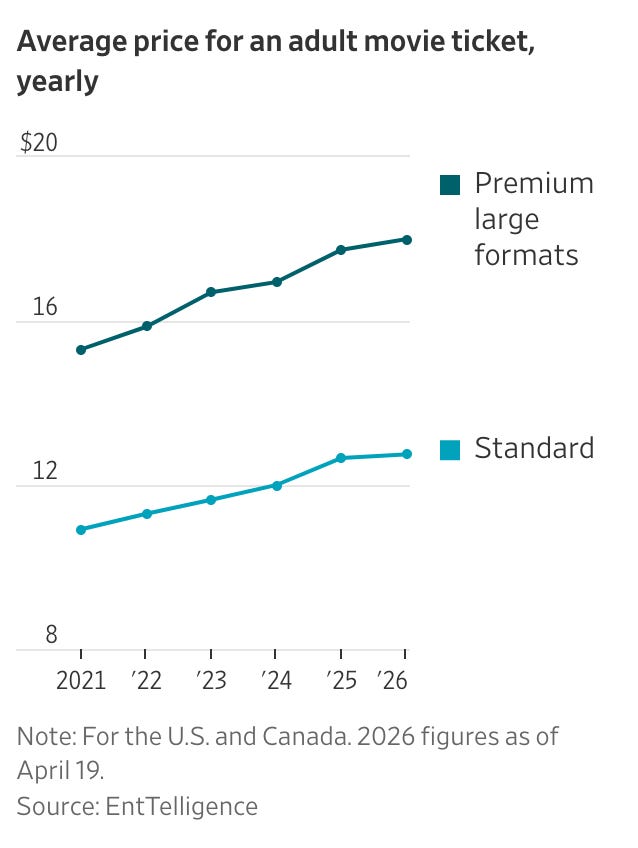
Movie theaters are increasingly adopting airline-style pricing, charging significantly higher prices for premium experiences as overall attendance declines. Tickets for top formats, like IMAX showings of major releases, can reach $50, reflecting a shift toward maximizing revenue from dedicated moviegoers willing to pay more. While theaters are earning more per customer, total ticket sales remain down more than one-third from pre-pandemic levels, as many consumers turn to streaming platforms instead.
To offset fewer visitors, theaters are expanding premium screens, adding surcharges for popular films, and relying more heavily on concessions, where spending has surged. This strategy, however, risks turning moviegoing into an occasional luxury rather than a regular habit, raising concerns within the industry about affordability and long-term demand, especially as studios release fewer films and tensions grow over pricing and distribution strategies.
5. World’s Top Producer of Condoms Raises Prices as Iran War Rattles Supply Chains (NYT)
Karex, the world’s largest condom producer, plans to raise prices by up to 30% as the Iran war disrupts global supply chains. The conflict, especially the effective closure of the Strait of Hormuz, has driven up oil and gas prices, sharply increasing costs for essential materials like synthetic rubber, nitrile, and packaging. Some inputs have doubled in price, forcing the company to pass costs on to consumers.
Karex, which manufactures about one in five condoms globally for brands like Durex and Trojan, warned that continued disruptions could halt production if even a single key material becomes unavailable. Despite rising demand, particularly in developing countries, the company fears shortages, potential job losses, and even panic buying if the conflict persists.
Energy
6. U.A.E.’s OPEC Exit Deals Major Blow to Cartel Amid Middle East Oil Squeeze (WSJ)
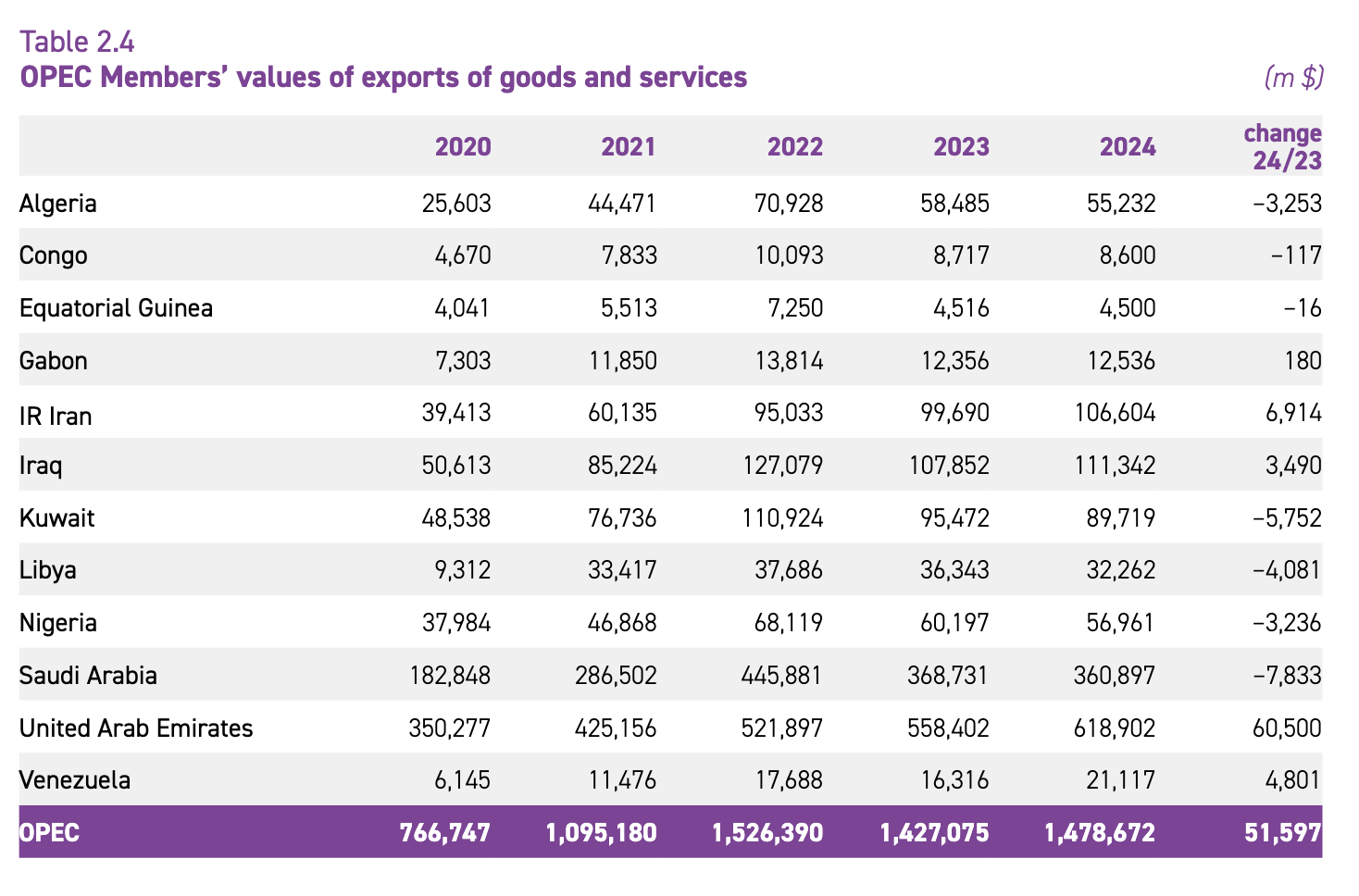
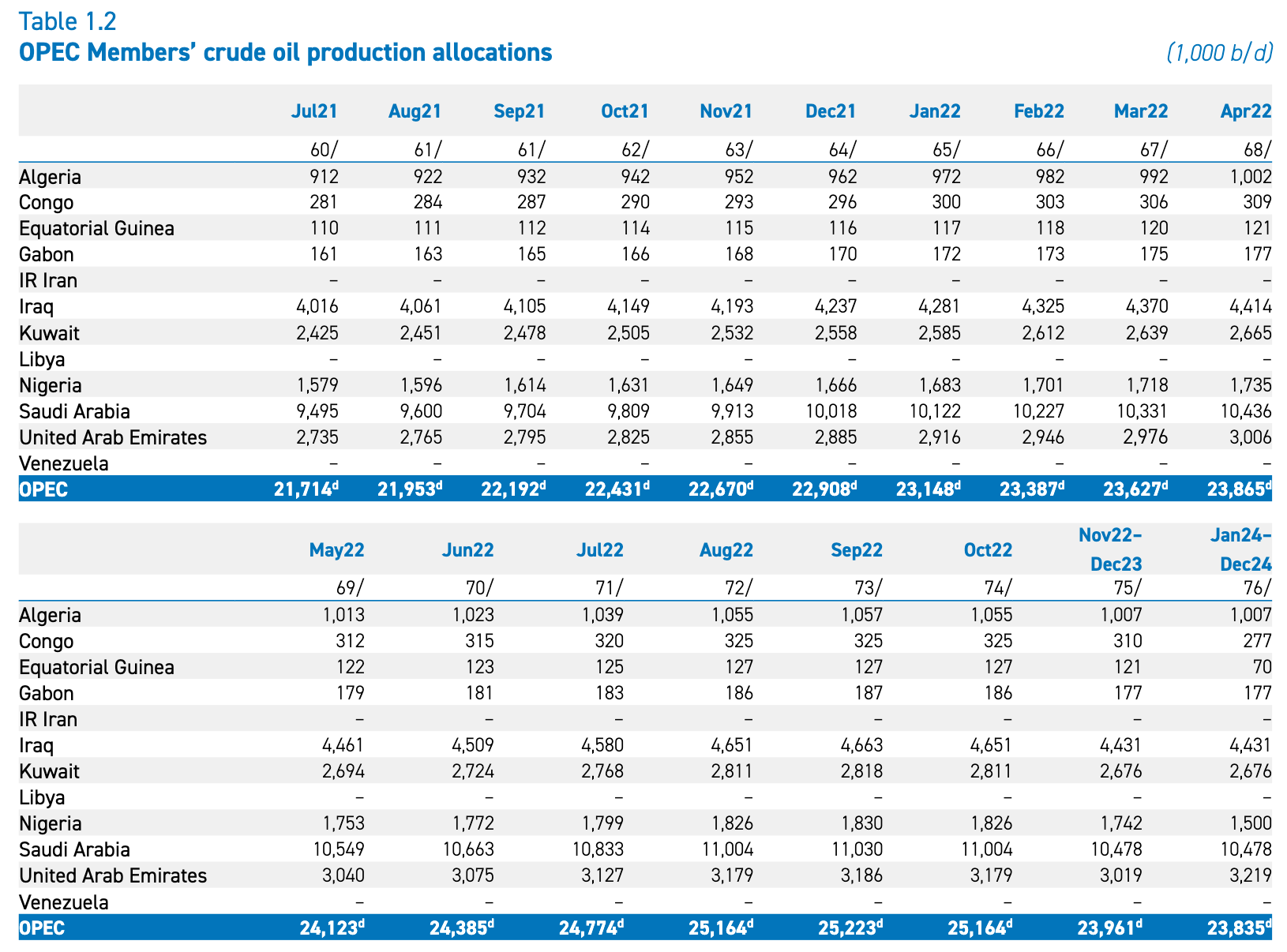
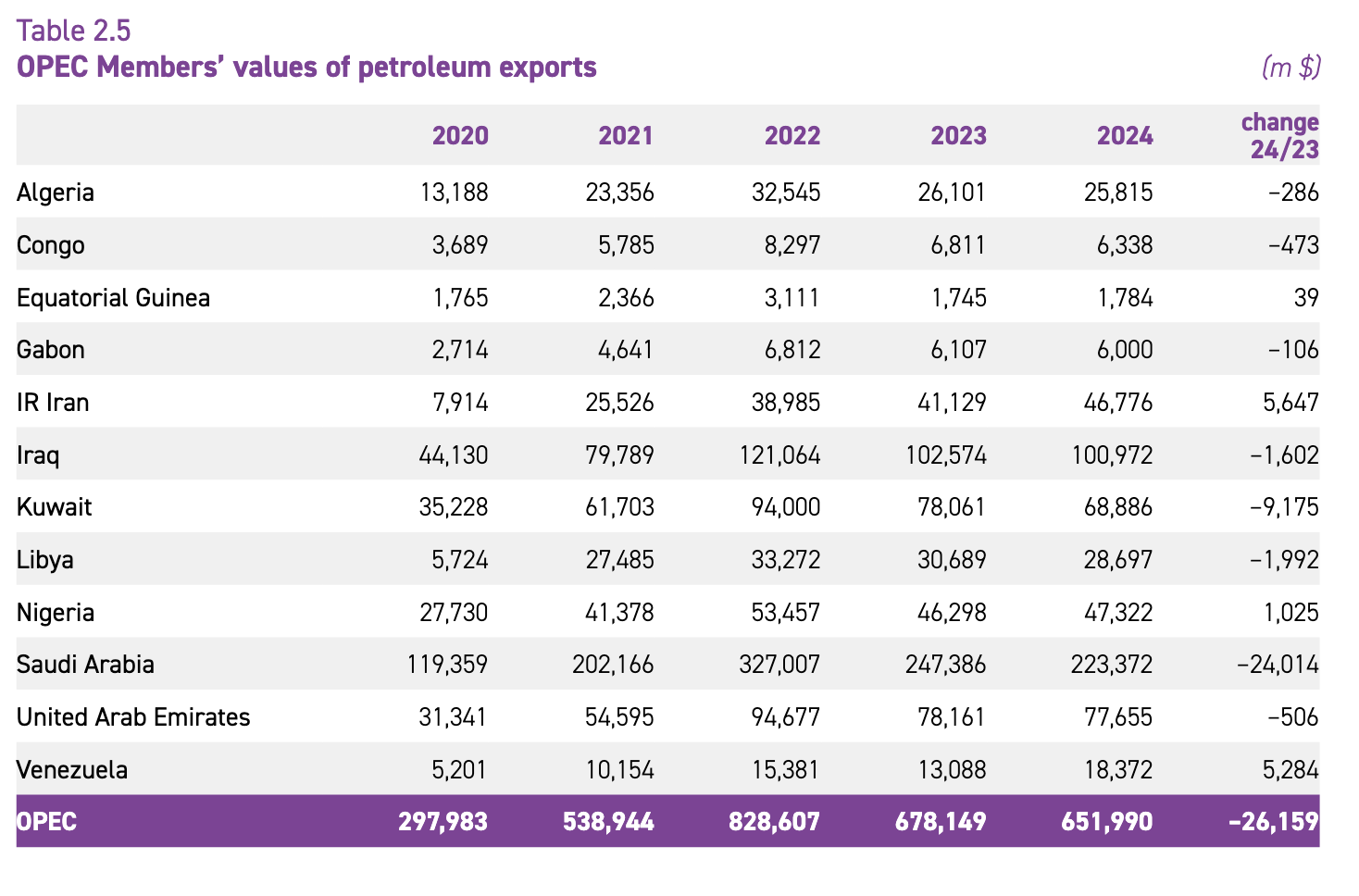
The United Arab Emirates has announced it will leave OPEC and the broader OPEC+ alliance, delivering a major blow to the cartel’s ability to manage global oil markets. The move comes amid heightened geopolitical strain from the Iran war, which has disrupted exports through the Strait of Hormuz and deepened divisions among member states. As OPEC’s third-largest producer, the UAE’s exit removes about 13% of the group’s production capacity and one of its few members with significant spare capacity—undermining its influence during a critical supply shock.
Frustrated by production limits and strained relations with Saudi Arabia, the UAE is seeking greater independence to expand output and pursue its own energy strategy. Its ability to bypass Hormuz via overland routes, combined with relatively low production costs, gives it flexibility to increase exports and stabilize revenues as regional instability disrupts tourism and broader economic activity.
NOTE: The following charts from the 2025 OPEC Annual Statistical Bulletin do a good job of showing the leverage the UAE has and how its production has been limited by OPEC to a greater degree than Saudi Arabia’s production.
Prediction Markets
7. Most Prediction Market Traders Are Losing Money While Bots Rack Up Gains (Bloomberg)
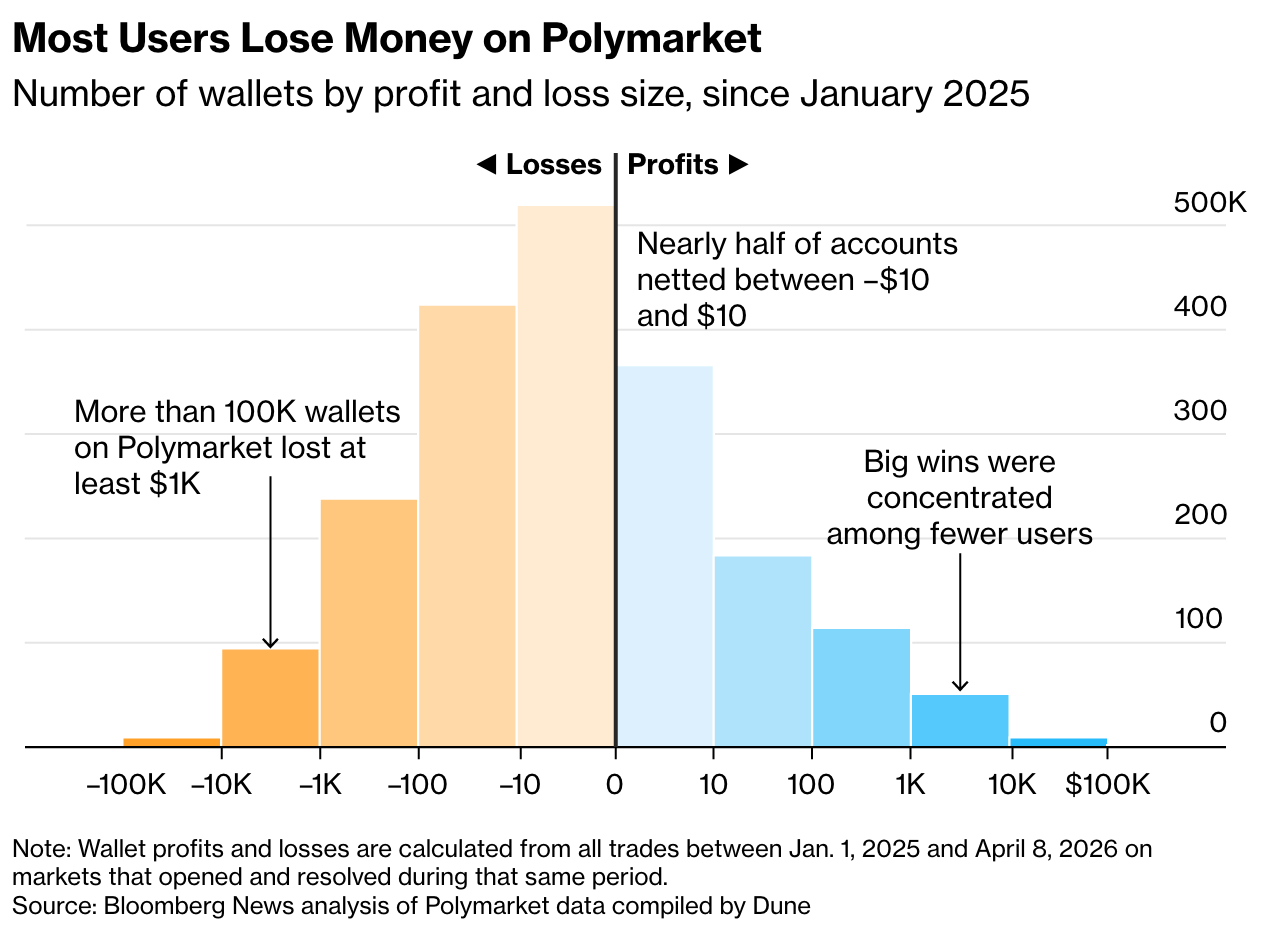
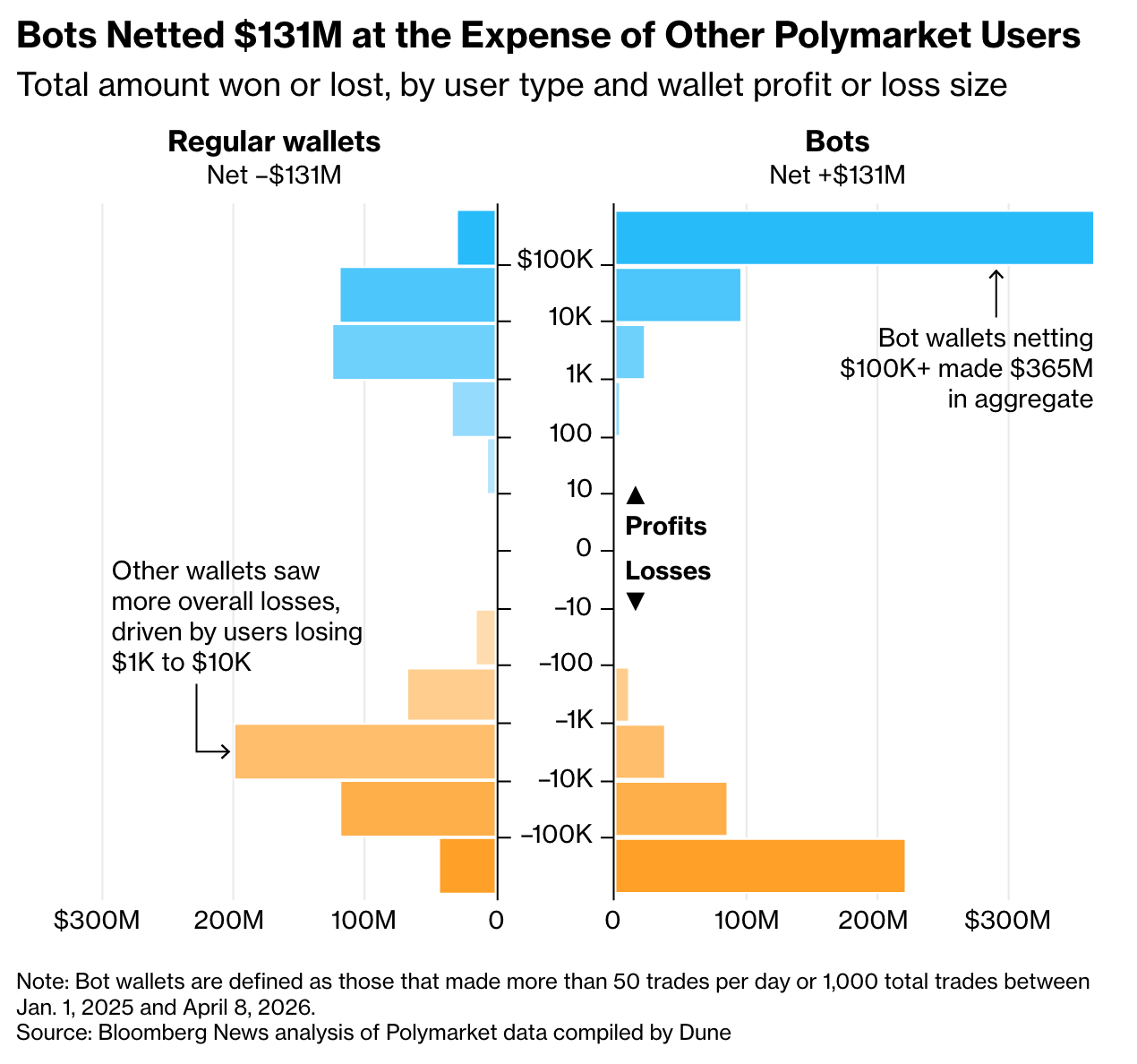
Prediction markets are often promoted as an easy way to make money, but most participants are losing—frequently by large amounts. Data from Polymarket shows that since early 2025, over 100,000 accounts lost at least $1,000, nearly double the number that achieved similar gains, with total losses among typical users reaching about $131 million. Research indicates that around 69% of traders lose money, while profits are heavily concentrated among a tiny top tier.
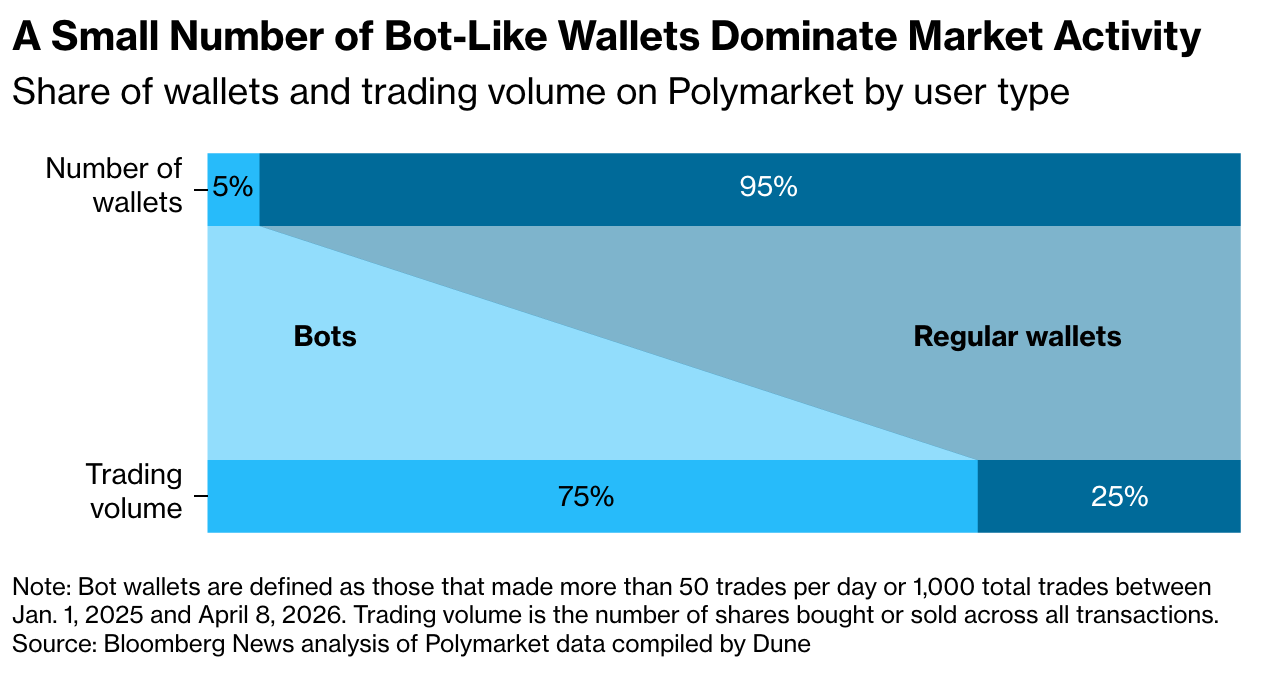
The gains are largely captured by a small group of high-frequency, bot-like traders who dominate trading volume and exploit timing and pricing advantages rather than superior predictions. Retail traders, despite often correctly forecasting outcomes, tend to enter markets too late and at worse prices, leading to losses. The structure of these markets, where a wrong bet can result in a total loss, combined with the dominance of sophisticated players, makes consistent profits unlikely for most users.
8. Did a Mystery Trader Tamper With the Temperature to Win Big on Polymarket? (WSJ)
Prediction markets are facing growing scrutiny after multiple incidents suggesting manipulation of outcomes used to settle bets. The latest controversy involves weather-based wagers on Polymarket, where suspicious temperature spikes at Paris’s Charles de Gaulle Airport triggered large payouts. Investigators at Météo-France are examining whether the data was tampered with after anomalies showed sudden temperature jumps not reflected at nearby stations, allowing traders to profit thousands of dollars from unlikely bets.
Traders have previously raised concerns about manipulation in markets tied to geopolitical events, including incorrect data used to settle bets on the war in Ukraine and pressure placed on journalists whose reporting influenced outcomes. Because many of these contracts rely on external data sources, any error or interference can directly affect payouts. In response, platforms have begun tightening rules. Polymarket recently banned insider trading and participation in markets where users could influence outcomes, aligning more closely with regulated competitors like Kalshi. Still, its international platform remains largely unregulated, leaving ongoing concerns about integrity, oversight, and the vulnerability of these markets to manipulation.
9. Enforcement update: Kalshi continues crackdown on political insider trading (Kalshi)
Kalshi disclosed three enforcement cases involving political candidates illegally trading on markets tied to their own elections, flagged through new safeguards designed to prevent insider trading. The cases involved candidates in Minnesota, Texas, and Virginia who placed bets on their own races or candidacies, violating exchange rules. Two cooperated with investigations and received smaller fines and five-year suspensions, while a third who failed to cooperate was fined more heavily and also suspended.
Kalshi emphasized that even small trades can undermine market integrity and that violations will be penalized, with more serious cases potentially referred to regulators like the Commodity Futures Trading Commission or the Justice Department. The enforcement actions underscore the platform’s effort to proactively monitor and prevent manipulation in politically sensitive markets.
Artificial Intelligence
10. America’s Largest Landowner Is Using AI to Digitize the Forest (WSJ)
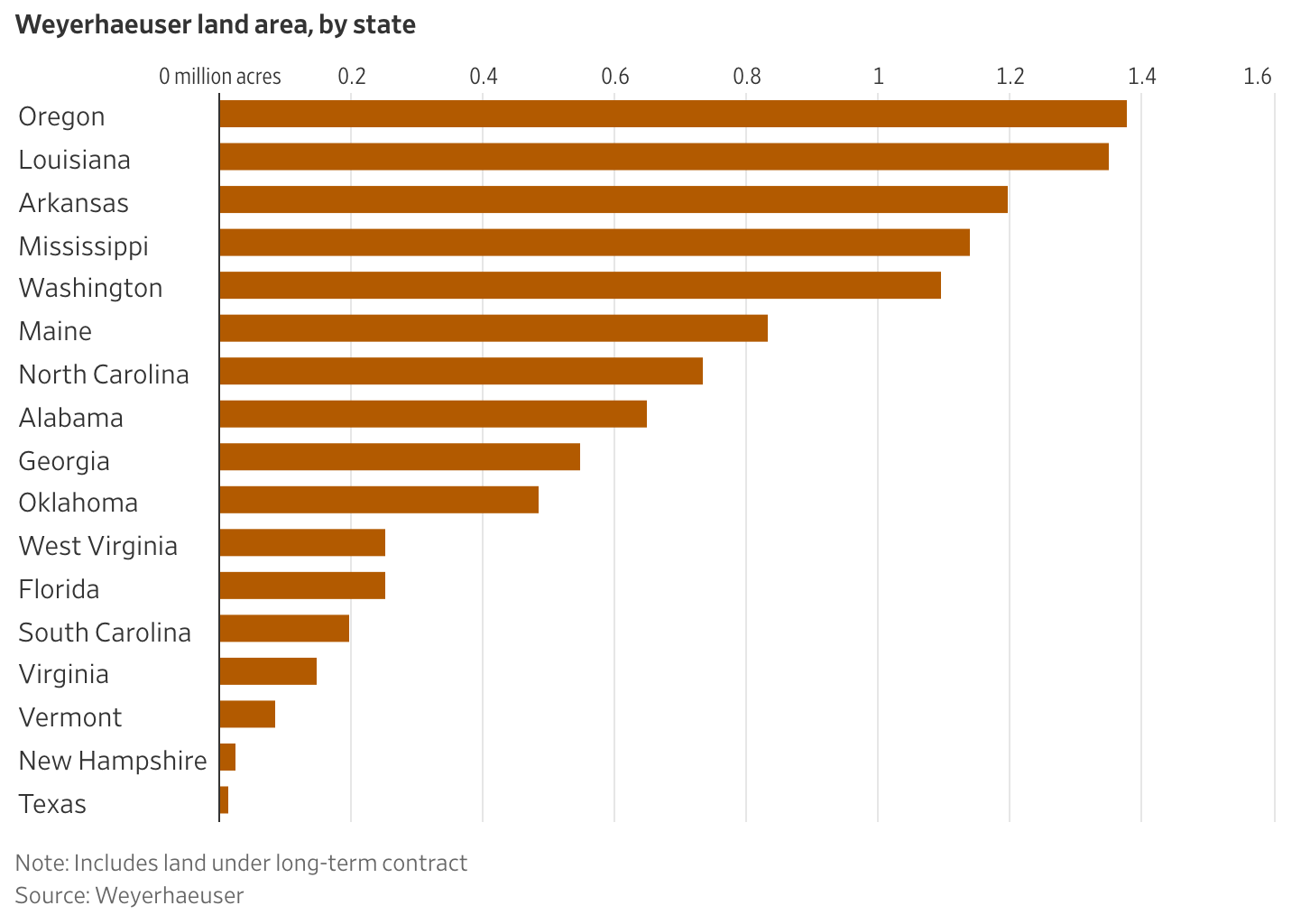
Weyerhaeuser, the country’s top logging company and largest landowner, is investing heavily in artificial intelligence to modernize forestry, aiming to boost profits by $1 billion by the end of the decade through efficiency gains rather than higher lumber prices. The company is applying AI across its operations, from monitoring mill equipment and optimizing truck routes to matching production with real-time market demand. More advanced initiatives include building a “digital twin” of its vast timberlands using satellite imagery, drones, and lidar to track individual trees and improve long-term forest management decisions.
AI is also transforming how forests are planted and harvested. Models analyze drone footage to measure seedling survival rates faster and more accurately than manual counting, while experiments with semi-autonomous logging equipment allow operators to control machinery remotely. The company is developing systems that guide which trees to cut or preserve, using algorithms to maximize long-term value. These efforts reflect a broader push to bring automation and data-driven decision-making to an industry that has historically relied on manual labor and experience-based judgment.
Education
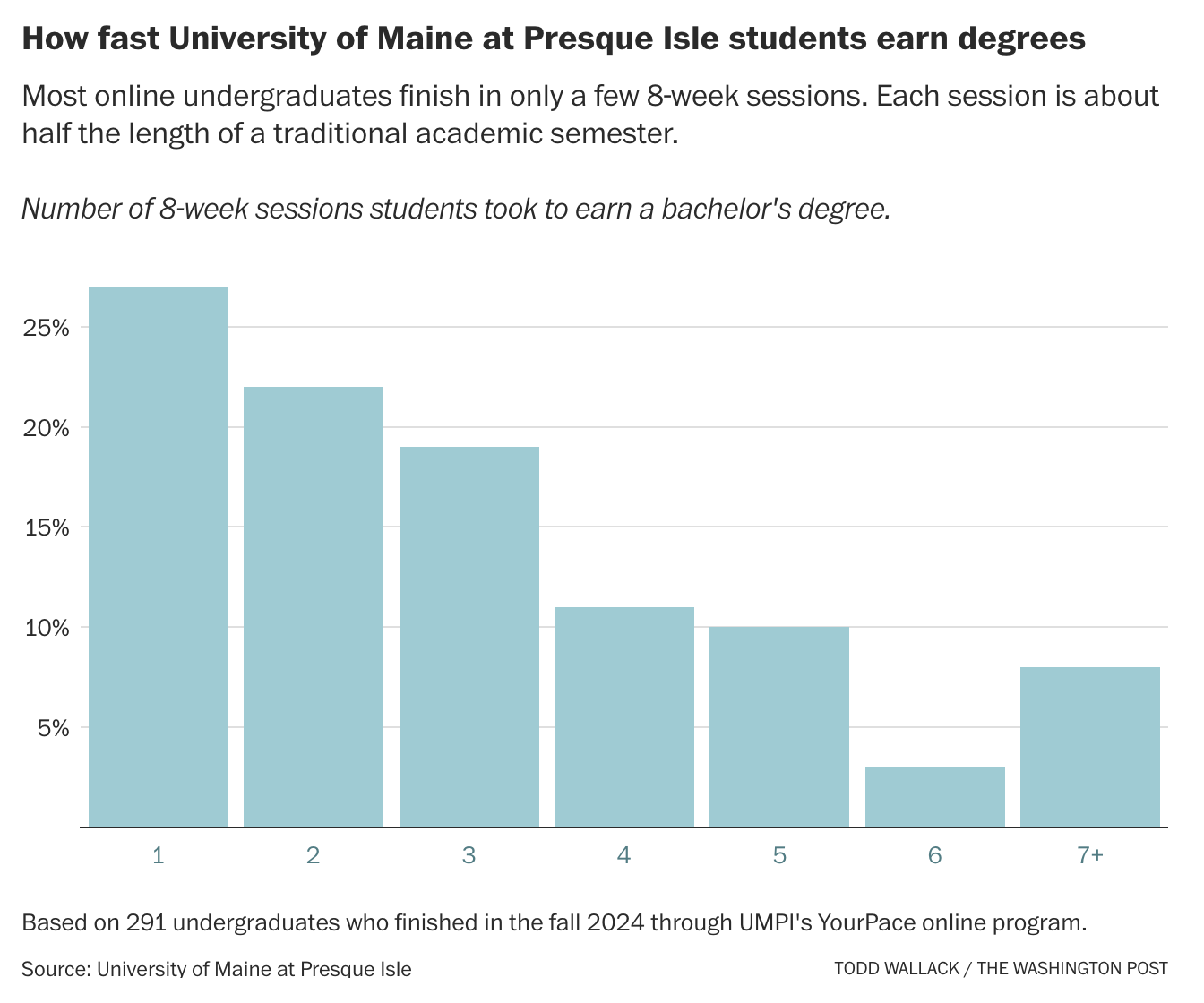
11. Students are speeding through their online degrees in weeks, alarming educators (WP)
A growing trend in higher education, often called “degree hacking” or hyper-accelerated degrees, allows students to earn college credentials in months instead of years by leveraging online, competency-based programs. At schools like the University of Maine at Presque Isle and Western Governors University, students can transfer large amounts of prior credit, complete coursework at their own pace, and take unlimited classes per term for a flat fee, dramatically reducing both time and cost. Some students have completed bachelor’s and even master’s degrees in a matter of weeks or months for just a few thousand dollars.
Supporters argue these programs provide flexible, affordable pathways for working adults who need credentials quickly, especially those with prior experience. Critics, however, question whether such rapid completion undermines the depth and value of a degree, raising concerns about learning quality, academic integrity, and long-term credibility. While the model is expanding and helping many advance their careers, it is also sparking debate over what a college degree should represent.
12. States Are Learning the Wrong Lesson From the ‘Mississippi Miracle’ (Atlantic)
In this piece, Rachel Canter argues that Mississippi’s dramatic rise in reading and math performance, often called the “Mississippi miracle,” was not driven by the science of reading alone, but by a broader system of strict accountability and high expectations. Beginning in the early 2000s and accelerating after 2008, the state implemented policies that graded schools, intervened in failing districts, and enforced consequences for poor performance. Its 2013 literacy law required students to meet reading standards before advancing, backed by frequent assessments and parent notifications, ensuring pressure across the entire system to improve outcomes.
Equally important was strong implementation by the state education system, which took a more active role in enforcing reforms and supporting schools. While other states have tried to replicate Mississippi’s success by adopting phonics-based instruction, many have avoided the strict accountability measures that made the reforms effective. The result is that without sustained pressure, clear standards, and consistent execution, similar efforts elsewhere are unlikely to produce the same gains. Mississippi’s success reflects a long, disciplined process, not a quick policy fix.
Life
13. We’re All Talking to Each Other Less Than We Did a Decade Ago (WSJ)
People are speaking significantly less than they did a decade ago, largely due to the rise of digital communication and lifestyle changes that reduce everyday interaction. Research from the University of Missouri-Kansas City and the University of Arizona found that average daily word counts dropped from about 16,600 in 2005 to 11,900 in 2019—a decline of roughly 28%, with further decreases likely after the pandemic. Younger people show slightly sharper declines, but the trend spans all age groups, driven by factors like smartphones, texting, fewer shared living arrangements, and reduced community engagement.
This decline has broader implications for social connection and cognitive development. Conversation builds attention, responsiveness, and social skills, and reduced speaking, especially among parents with young children, may hinder language development and increase loneliness. While experts caution that more data is needed, they suggest small behavioral shifts, like talking more in daily life or engaging more with children, could help reverse the trend.
14. Sabastian Sawe just broke the 2-hour marathon barrier in $450 Adidas “supershoes” (Sherwood)
Sabastian Sawe became the first person to run a sub-two-hour marathon in an officially recognized race, finishing the London Marathon in 1:59:30—an extraordinary pace far beyond elite 5K standards and more than a minute faster than the previous world record set by Kelvin Kiptum in 2023. Just seconds later, Yomif Kejelcha also broke the barrier, marking a historic moment in distance running.
All three top performers, including Tigist Assefa—who set a women-only world record of 2:15:41—wore the same cutting-edge shoe from Adidas, giving the brand a major victory over rival Nike, which had long pursued the sub-two-hour milestone.