

Economy & Jobs
NOTE: Good report from the Institute for Family Studies:
1. The Roots of Working-Class Men’s Discontent: Fathers and Hope
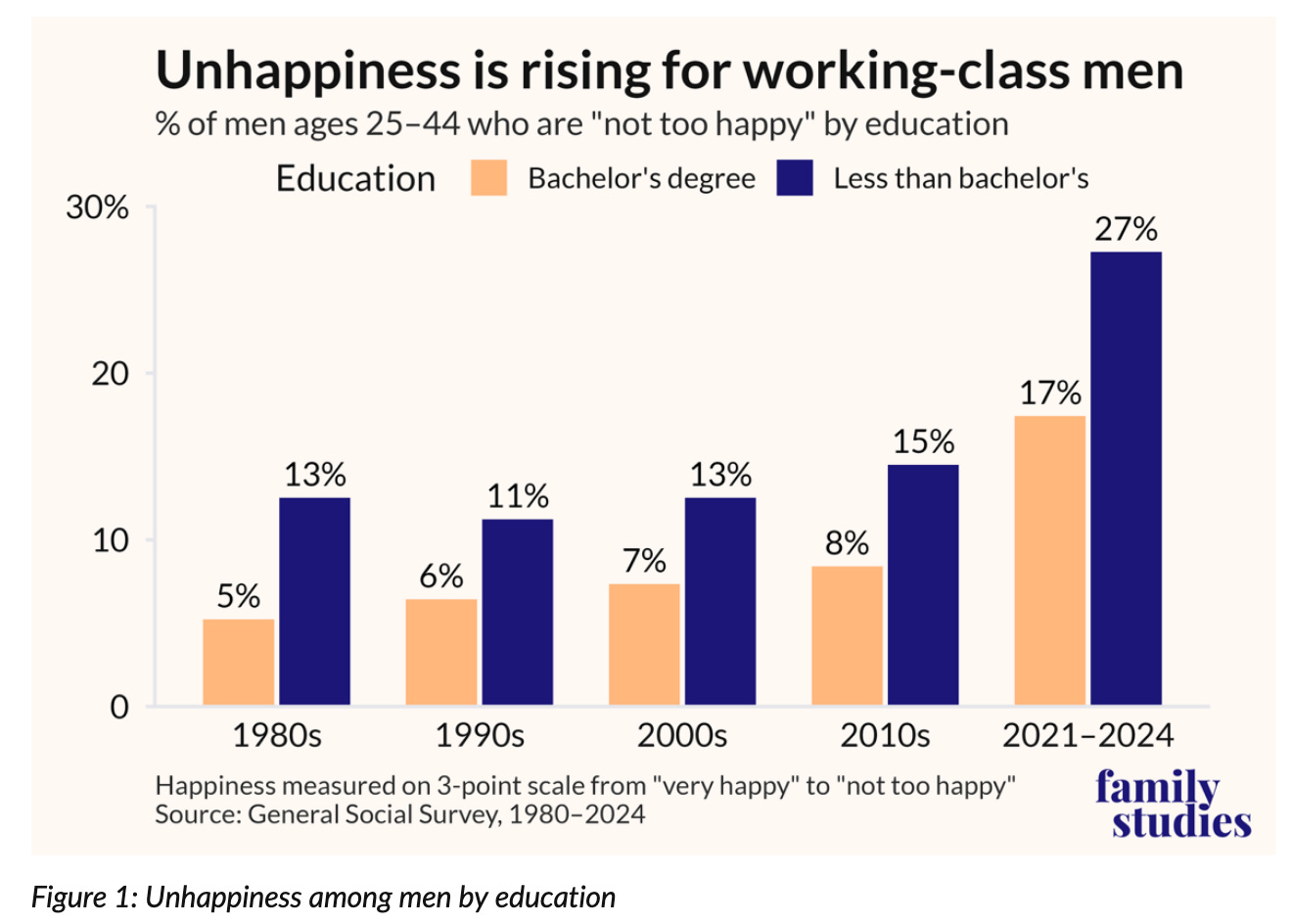
Young working-class men report lower levels of hope, purpose, and overall well-being than college-educated men, but the gap is most pronounced among younger men ages 25 to 44. Among men 45 and older, class differences in well-being are much smaller. This suggests that the struggles of working-class men are not evenly distributed across all ages; younger working-class men appear to be experiencing the sharpest sense of discontent.
Young working-class men are less likely than college-educated men to have grown up with married parents, to have had a good relationship with their father, or to have felt loved by their father. They are also less likely to report strong relationships with their mother or parents who attended church. These family factors explain a meaningful share of the well-being gap, especially when it comes to hope.
In addition, the father-son relationship stands out as the most important factor in explaining differences between young working-class and college-educated men. The findings suggest that family instability, father absence, and weaker childhood relationships also shape whether young men grow up with hope, purpose, and a belief that their lives matter.
2. Internships Are More Crucial Than Ever—and Even Harder to Find
Internships are becoming more important for landing a first job after college, but they are also getting harder to secure. Internship postings have fallen on platforms like Handshake, while applications per posting have surged. Students are responding by starting the career process earlier, with freshmen and sophomores competing for roles that once may have been pursued later in college.
The pressure is tied to a tougher entry-level job market. Recent graduate unemployment has been high, many graduates are underemployed, and AI appears to be reducing some intern-level tasks, especially in fields like finance and back-office work. Some companies are expanding internship classes, but others are cutting programs or canceling internships altogether. As a result, students are looking for alternatives, including unpaid project work, campus consulting groups, and nonprofit experience.
3. A New Lost Generation: Why Gen Z Is Unprepared for the Workplace
Gen Z employees are entering the workplace with weaker social and communication skills than previous generations, largely because they have had fewer in-person relationship experiences, spent more of their education online, and learned to communicate through texts, chats, and asynchronous tools. That leaves many younger workers less prepared for the messy, face-to-face parts of work, such as handling criticism, resolving conflict, reading team dynamics, and knowing when to approach a colleague versus a boss.
The solution is to make workplace communication clearer and more direct. Teams should explain norms instead of assuming new employees will pick them up automatically. They should set expectations for which issues belong in chat, email, phone calls, Zoom, or in-person conversations. Leaders should also create a culture where asking questions is normal, especially around feedback, conflict, jargon, and unwritten rules. Younger employees need more explicit guidance, and workplaces need communication habits that make sense across generations.
4. America’s Fastest-Growing Cities Are in the Exurbs
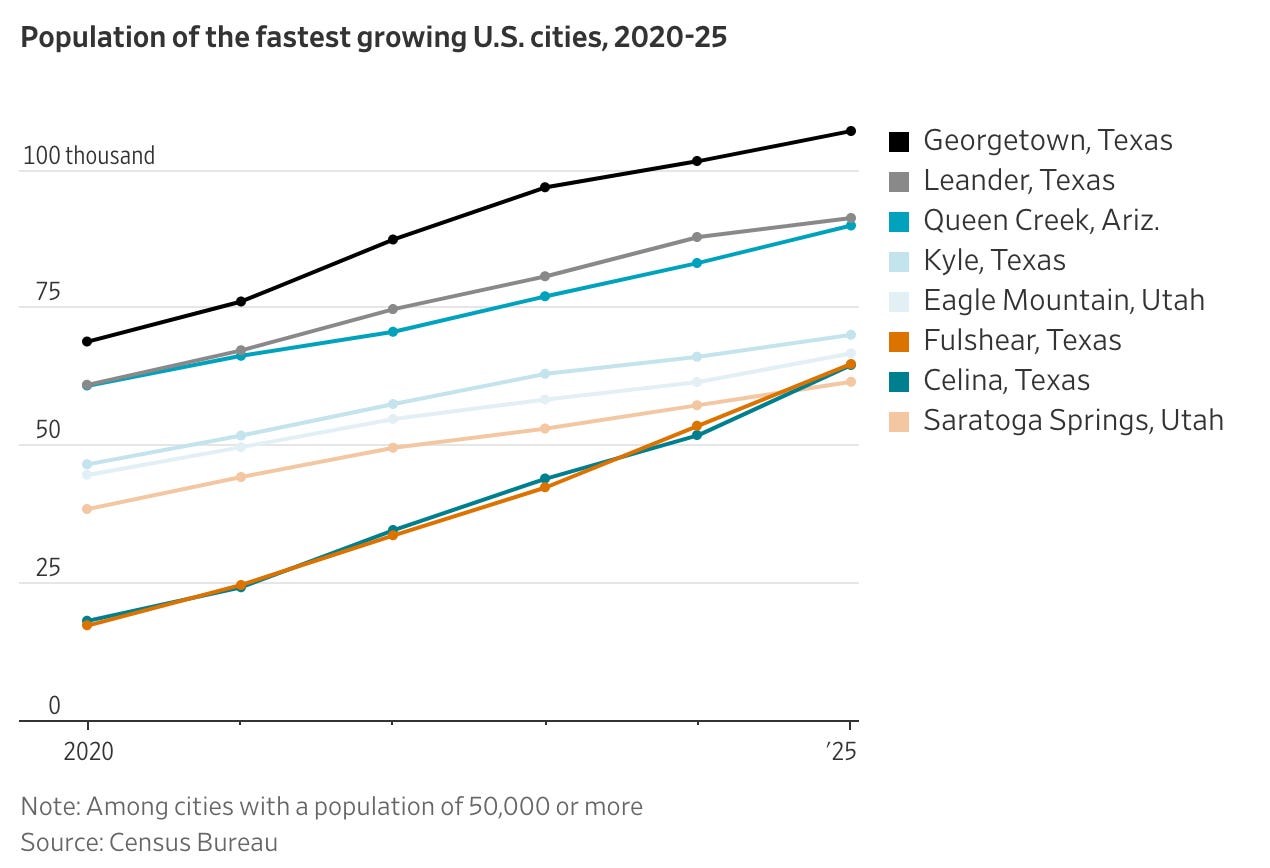
Exurban communities on the edges of major metros are driving much of America’s city growth. Fulshear, Texas, west of Houston, grew from about 17,000 people in 2020 to more than 64,000 by mid-2025, making it the fastest-growing U.S. city over 50,000 people. The same pattern is visible around Dallas, Phoenix, and the Austin & San Antonio corridor.
5. Global Wealth Report 2026: Global wealth rose over 10% in 2025
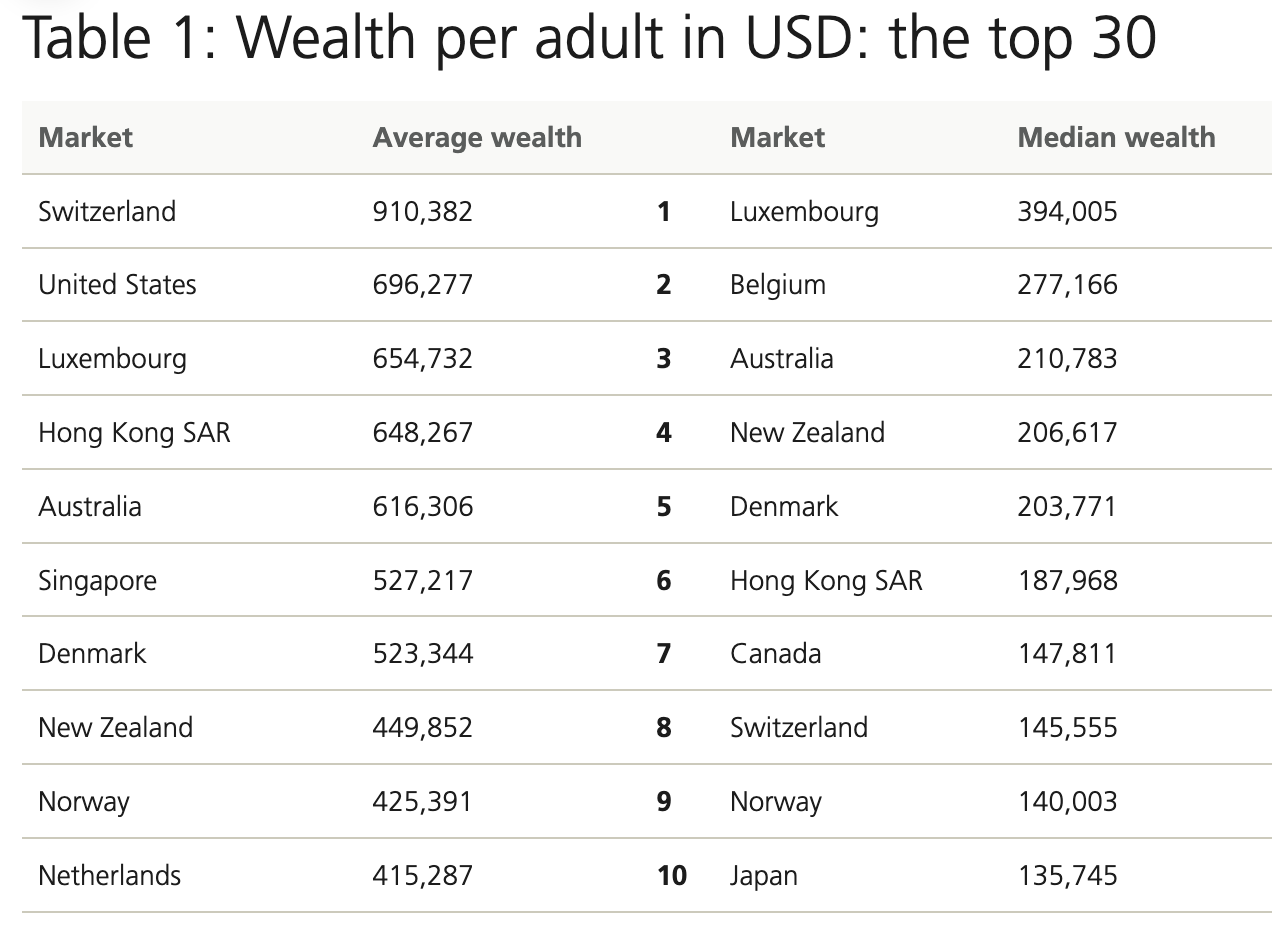
Global personal wealth grew sharply in 2025, rising 10.8% in U.S. dollar terms, the fastest pace since 2017 and the third straight year of growth. The increase was driven by strong financial markets, rising nonfinancial assets, and currency effects from a weaker U.S. dollar. Wealth growth was strongest in Europe, the Middle East, and Africa, followed by the Americas and Asia-Pacific. North America remained the wealthiest region on average, while Switzerland ranked first among countries for average wealth per adult.
The number of millionaires also continued to rise. Nearly one million people became new U.S.-dollar millionaires in 2025, equal to more than 2,600 per day. The United States accounted for almost half of those new millionaires, while mainland China, Japan, Germany, the United Kingdom, and France each had more than 2 million millionaires overall. More than half of global personal wealth remained concentrated in the United States and mainland China.
The gains were not evenly shared. Higher wealth tiers, especially those above $5 million, grew especially quickly, with strong momentum in mainland China, Australia, and the United States. At the same time, the gap between average wealth and median wealth shows that gains are increasingly concentrated among richer households. Many middle-wealth households still hold most of their assets in residential property, which can limit their exposure to financial-market gains. Future wealth growth will likely depend heavily on who has access to liquid, investable assets and the ability to diversify.
NOTE: Below are the top 10 in average wealth and median wealth. The U.S. is #28 in median wealth. Click on the article to see the full table.
Children
6. What Does a 13-Year-Old See on Snapchat in a Normal Week?
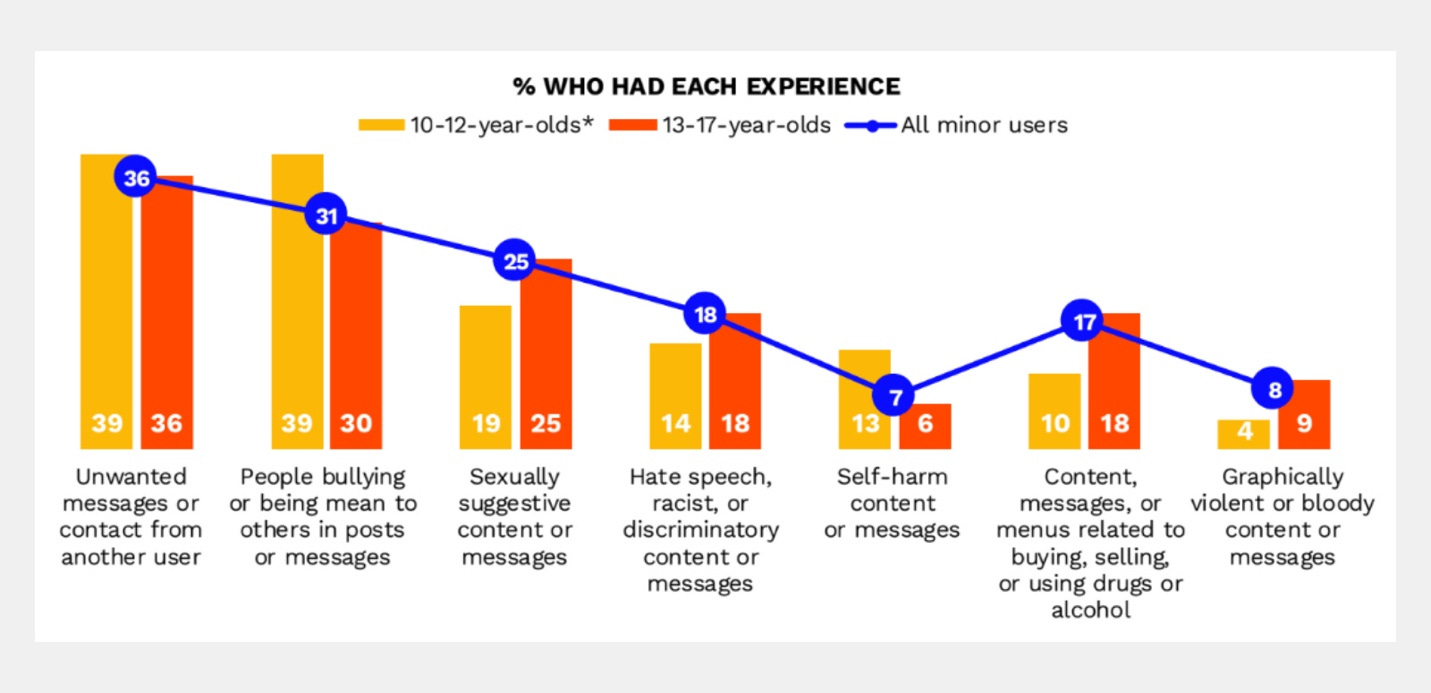
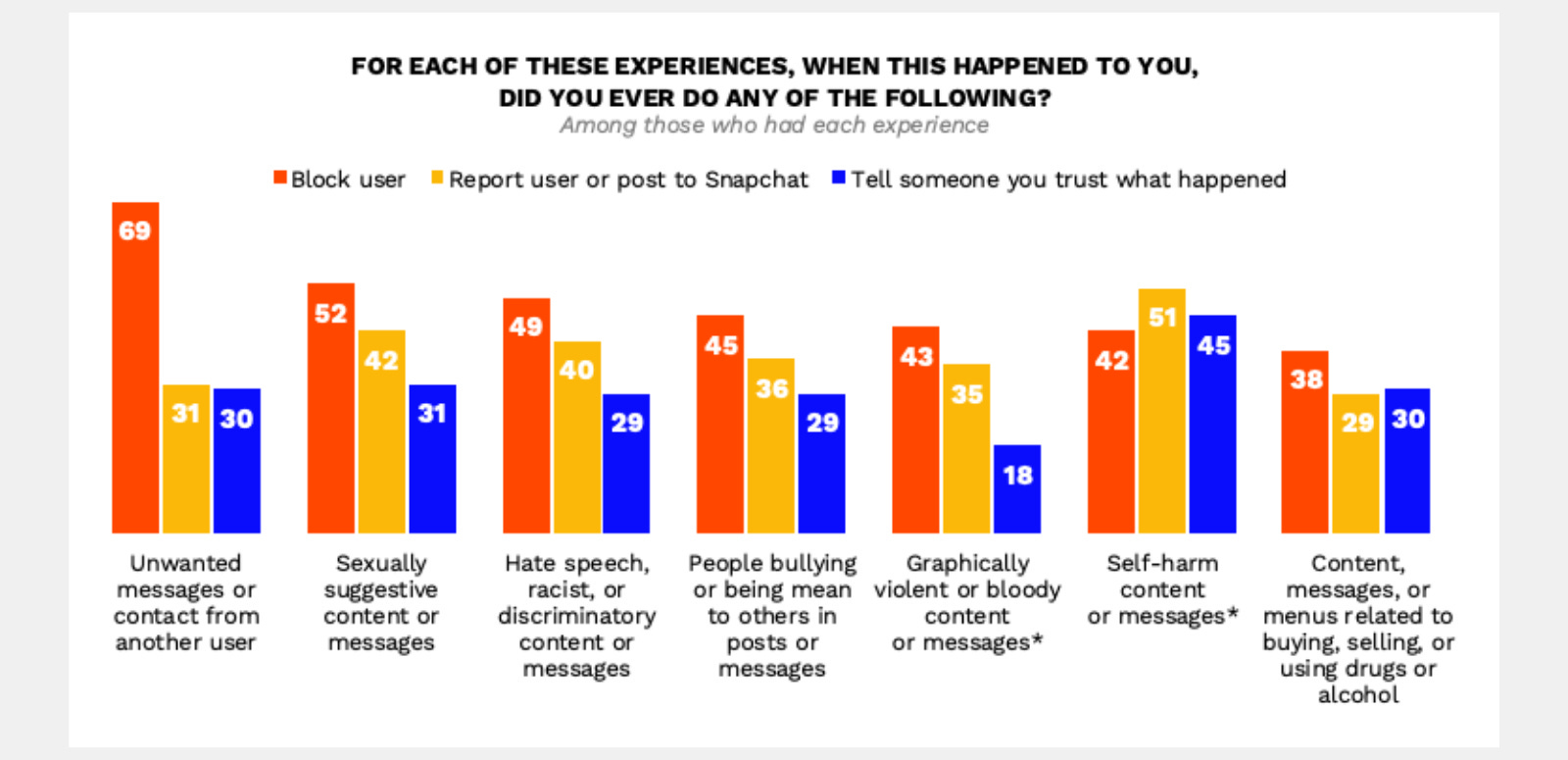
Snapchat is widely used by children and teens, but young users report frequent exposure to unsafe experiences, including unwanted contact, bullying, sexual content, drug and alcohol material, graphic violence, self-harm content, and sextortion. A survey of 1,000 U.S. adolescents ages 10–17 found that one in three encountered unsafe content or messages at least weekly, and 36% reported unwanted contact from other users. Many of these experiences happen during ordinary app use rather than because children seek them out.
The risks are tied to Snapchat’s design. Disappearing messages make harmful behavior harder to track. Public features such as Stories, Spotlight, Discover, Maps, and Find Friends expose minors to people and content beyond their real-life friends. Testing with brand-new accounts registered as 13-year-olds found that Snapchat recommended unknown adults, sexually suggestive videos, violent content, self-harm material, and drug-related videos at alarming rates, often through algorithmic recommendations.
Many children do not tell adults when something disturbing happens. Only 39% of kids who had an unsafe experience told someone they trusted, and many said they ignored it because they were “used to it.” That normalization is part of the concern that children are being exposed to content and contact that would not be acceptable offline, while parents are left trying to manage risks created by platform design. The core problems are product design, algorithms, weak safeguards, and a lack of accountability for platforms used by minors.
7. The Future of Elite Youth Sports Is Here—and It’s a Mess
Florida’s school-choice rules and the rise of NIL money have created something close to a high-school sports transfer portal. Athletes, especially in football, basketball, and baseball, are moving from school to school in search of better teams, more playing time, stronger competition, influential coaches, social-media attention, and a better shot at college recruiting. Florida recorded more than 7,000 athletic transfers this academic year, up from about 5,700 the year before, and some elite players now attend multiple high schools before graduation.
The system has changed the purpose of high-school sports for many families. Instead of being mainly about school, community, and development, sports are increasingly treated as a business strategy aimed at college scholarships, NIL deals, and future earnings. Coaches and schools are accused of recruiting athletes despite rules against it, but enforcement is difficult because families, schools, and coaches have little incentive to cooperate. Florida allows high-school athletes to earn NIL money, but very few deals are disclosed, raising concerns that some payments may be disguised recruiting incentives.
While elite programs may become more competitive, many coaches worry that constant movement teaches students to leave when things get hard rather than persevere. Most high-school athletes will never play Division I sports or land meaningful NIL money, yet families are increasingly organizing their children’s education around that unlikely finish line.
NOTE: And on that note, here’s a couple of hockey-related articles that amplify the concerns many parents are having about the unhealthy inflation of youth sports:
My Son’s Hockey Team and the Crisis of American Resentment
The Madness of Youth Hockey: Five-Figure Fees, Never-ending Seasons, Coddled Kids, and Manic Parents
Health
8. Why Americans are living longer again
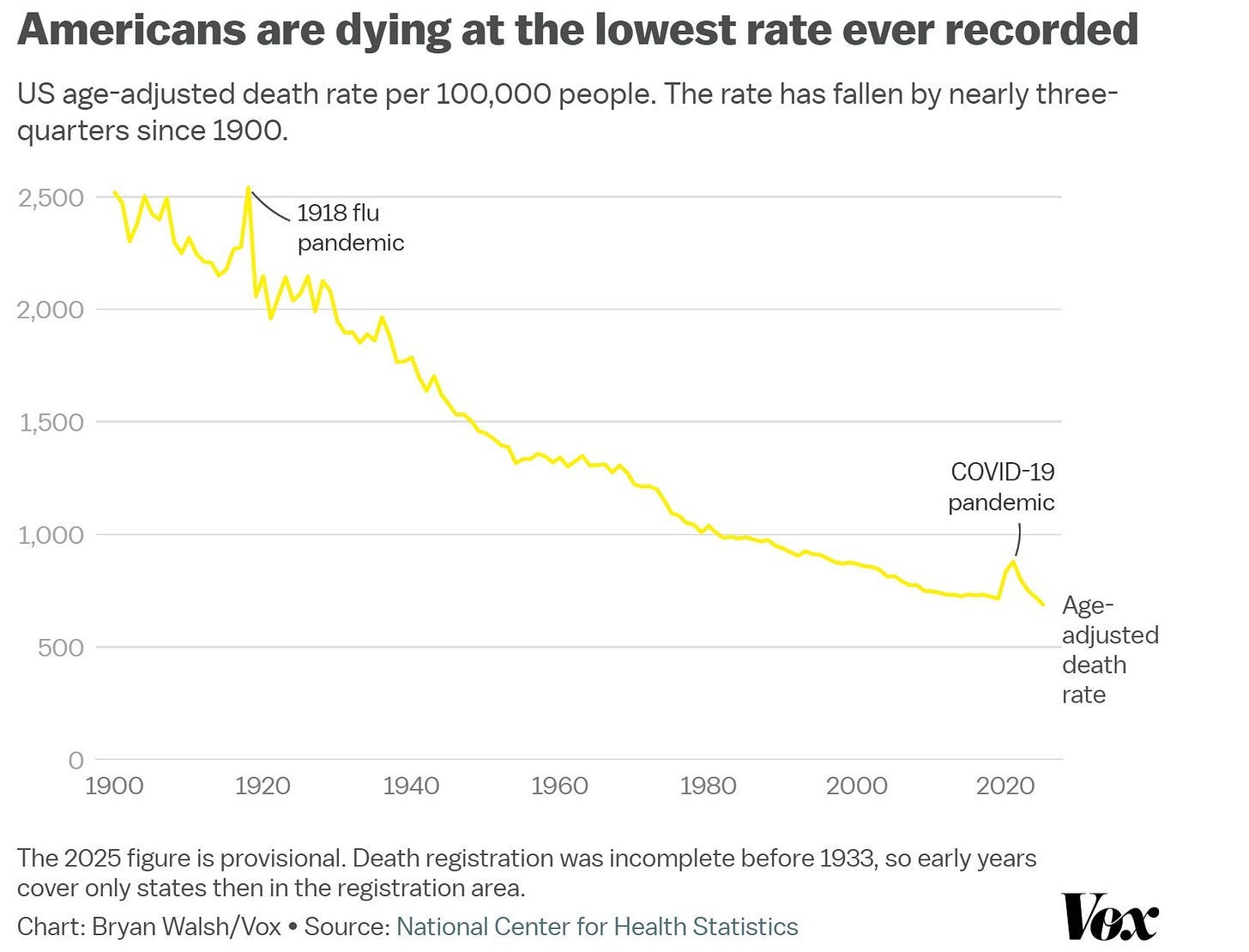
The U.S. just recorded its lowest death rate on record, with 689.2 deaths per 100,000 people in 2025. That likely means life expectancy will reach another record high after hitting 79 years in 2024. This improvement marks a return to America’s long-term pattern of falling death rates after a rough decade in which life expectancy stalled or declined because of Covid, drug overdoses, homicides, alcohol, and chronic disease.
The biggest driver of the recent improvement is the sharp drop in drug overdose deaths. Synthetic opioid deaths surged for years, especially because of fentanyl, but overdose deaths have fallen by nearly 40% in two years. Overdoses often kill younger adults, and preventing deaths at younger ages has a large effect on national life expectancy. Homicides have also fallen rapidly, Covid deaths have dropped, and death rates declined across all ten leading causes of death in 2024, including heart disease and cancer.
Longer-term progress is also continuing: infectious diseases that once killed large numbers of Americans have been largely controlled through sanitation, vaccines, antibiotics, and food safety. Cancer death rates have fallen dramatically since the early 1990s, and heart attack deaths have declined for decades.
Still, the U.S. lags behind peer wealthy countries by several years of life expectancy and continues to suffer from unusually high deaths among people under 70. Large gaps also remain by state, income, and education. America is healthier and less deadly than it was, but the gains are uneven, and major problems such as guns, alcohol, metabolic disease, and health inequality remain unresolved.
Education
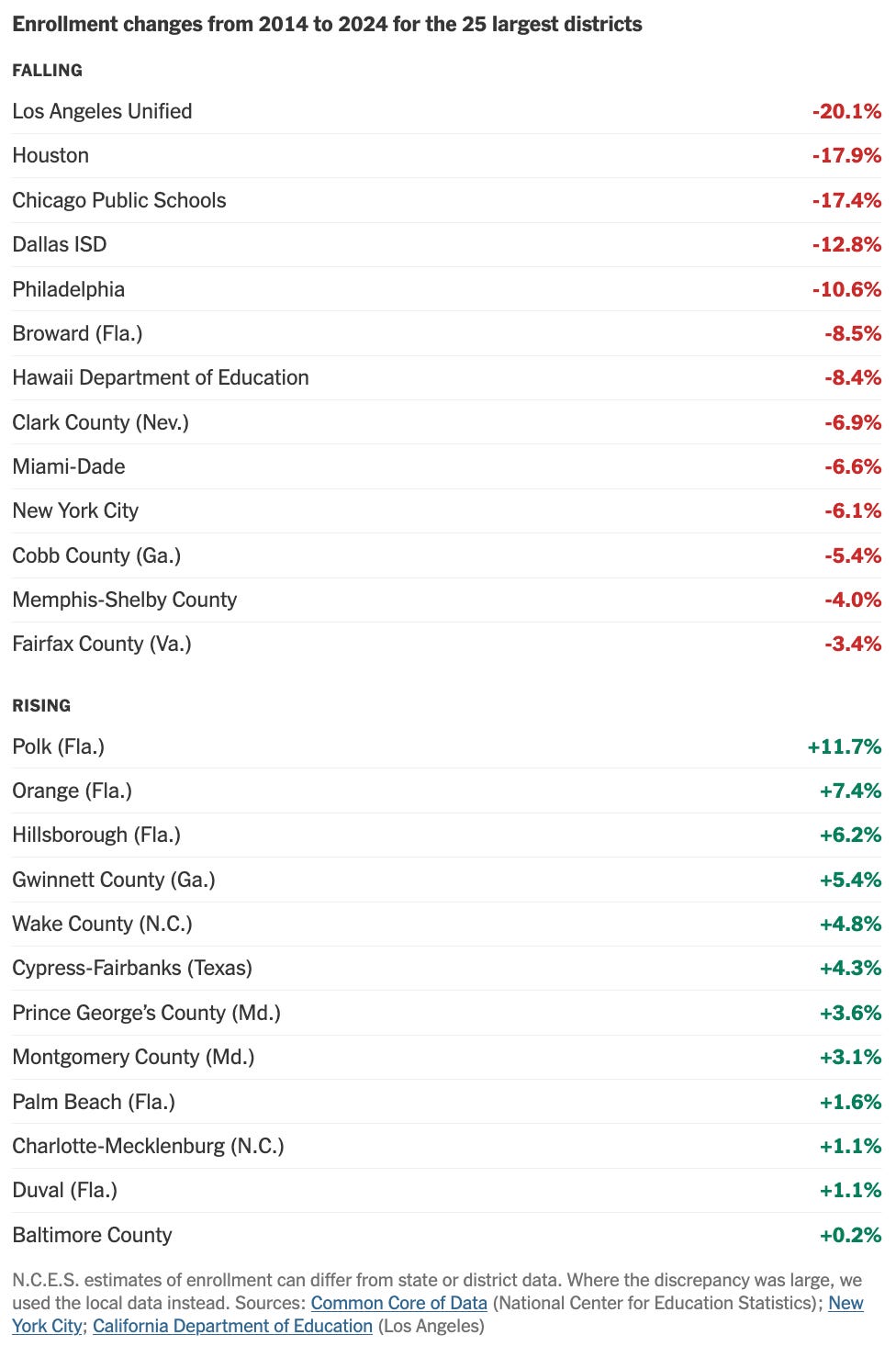
9. U.S. Schools Face a Crisis as the Number of Children Drops
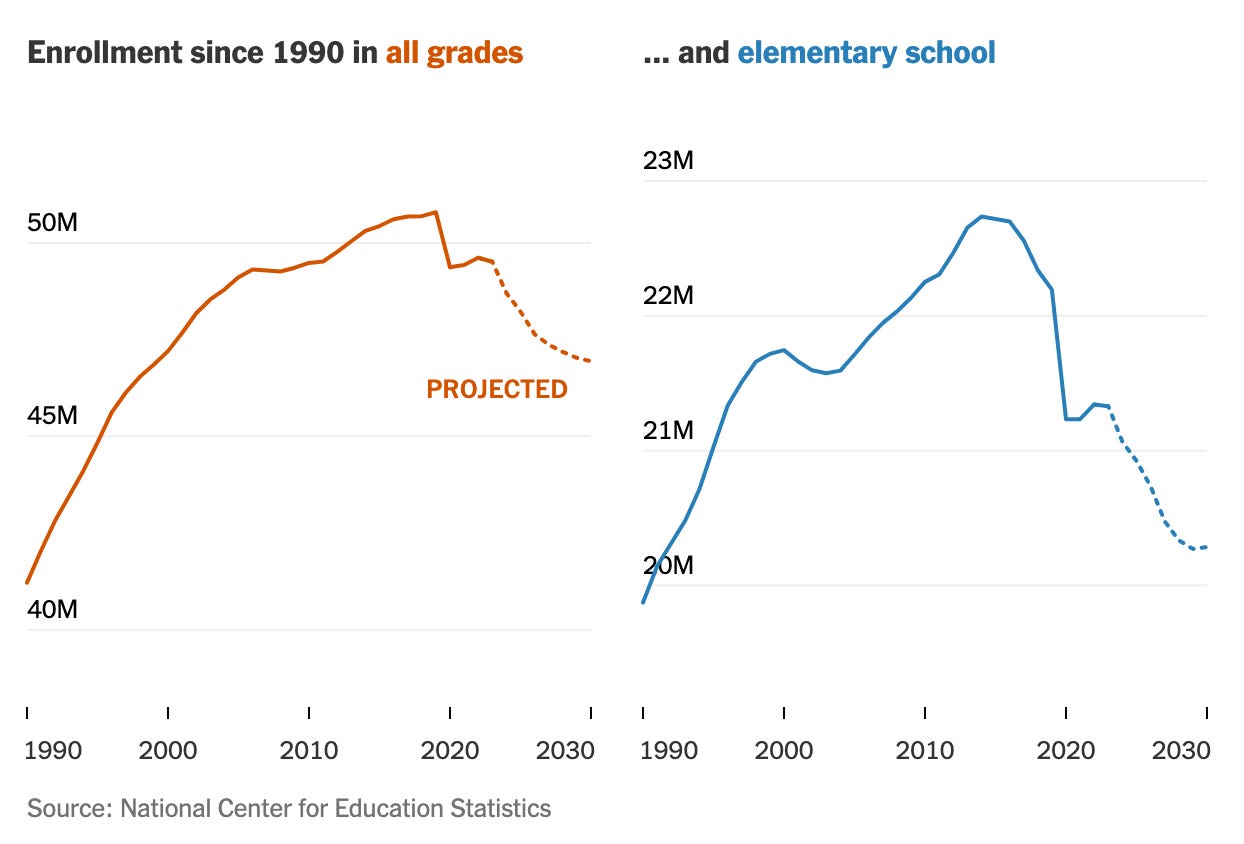
U.S. public school enrollment is shrinking as falling birthrates leave fewer children to fill classrooms. K-12 enrollment has declined in 30 states since the mid-2010s, and elementary enrollment was already falling before the pandemic. Covid accelerated the drop, but the deeper driver is demographic: the U.S. fertility rate peaked in 2007 and has fallen 24% since then. As larger cohorts graduate and smaller cohorts replace them, many districts are now facing long-term enrollment decline.
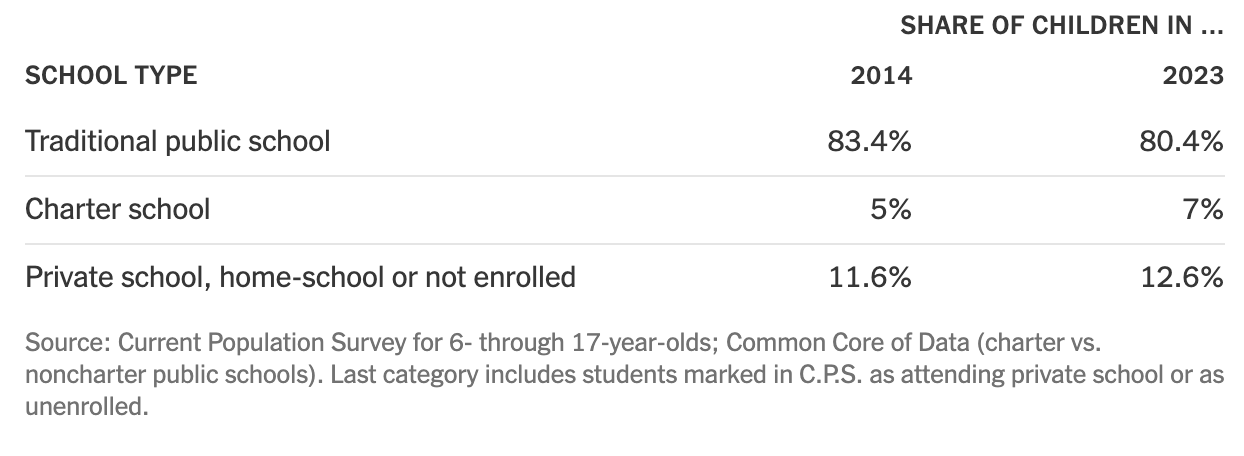
The impact is especially severe in large urban districts such as Los Angeles, Chicago, New York, Houston, Dallas, and Philadelphia, though smaller and suburban districts are shrinking too. High housing costs, family migration out of cities, reduced immigration, and competition from private schools, charter schools, home-schooling, and virtual schools are all adding pressure. Because school funding is tied to enrollment, fewer students often mean budget deficits, layoffs, fewer electives, fewer advanced courses, and difficult debates over school closures.
10. Why U.S. Test Scores Are in a ‘Generation-Long Decline’
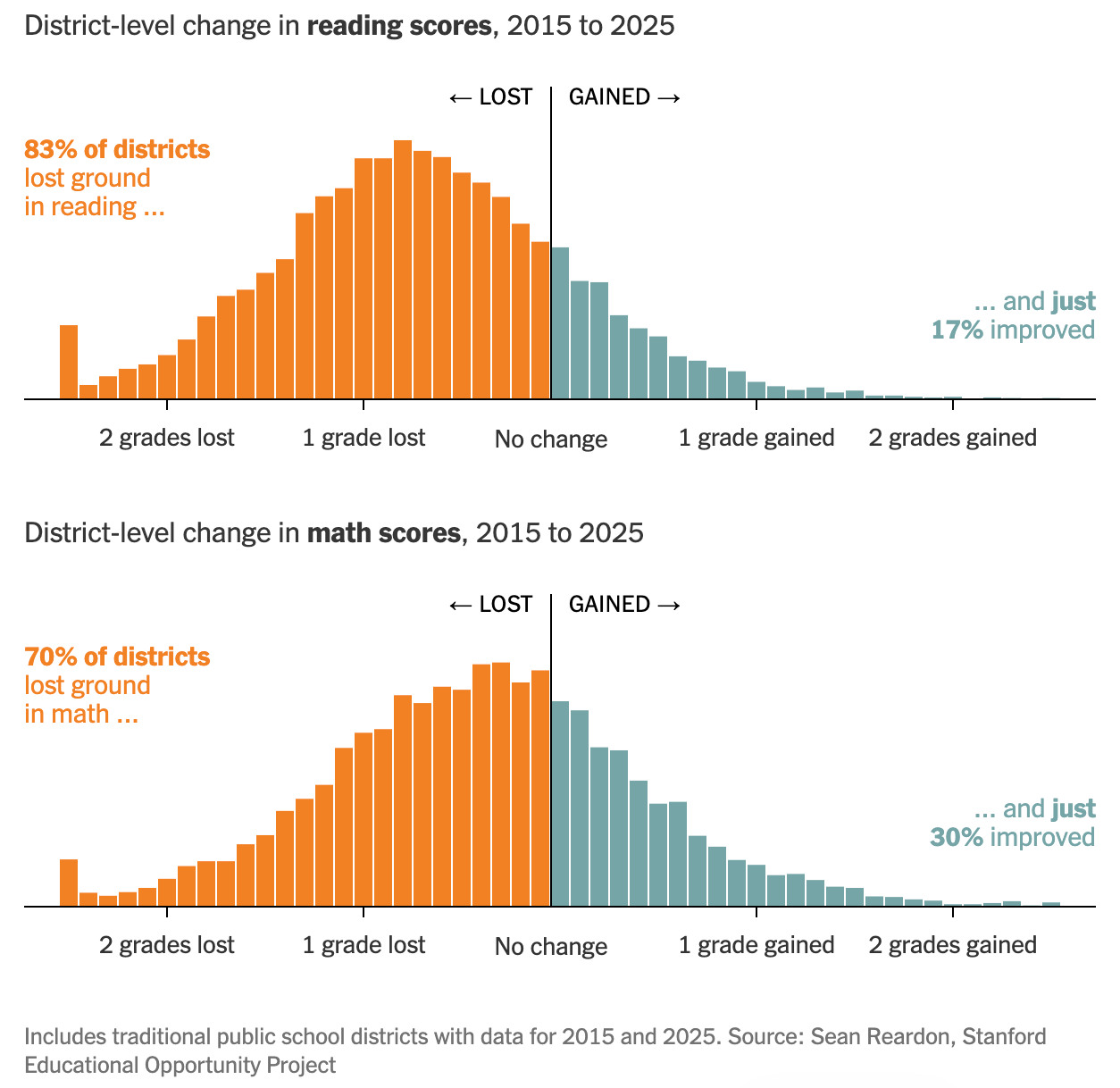
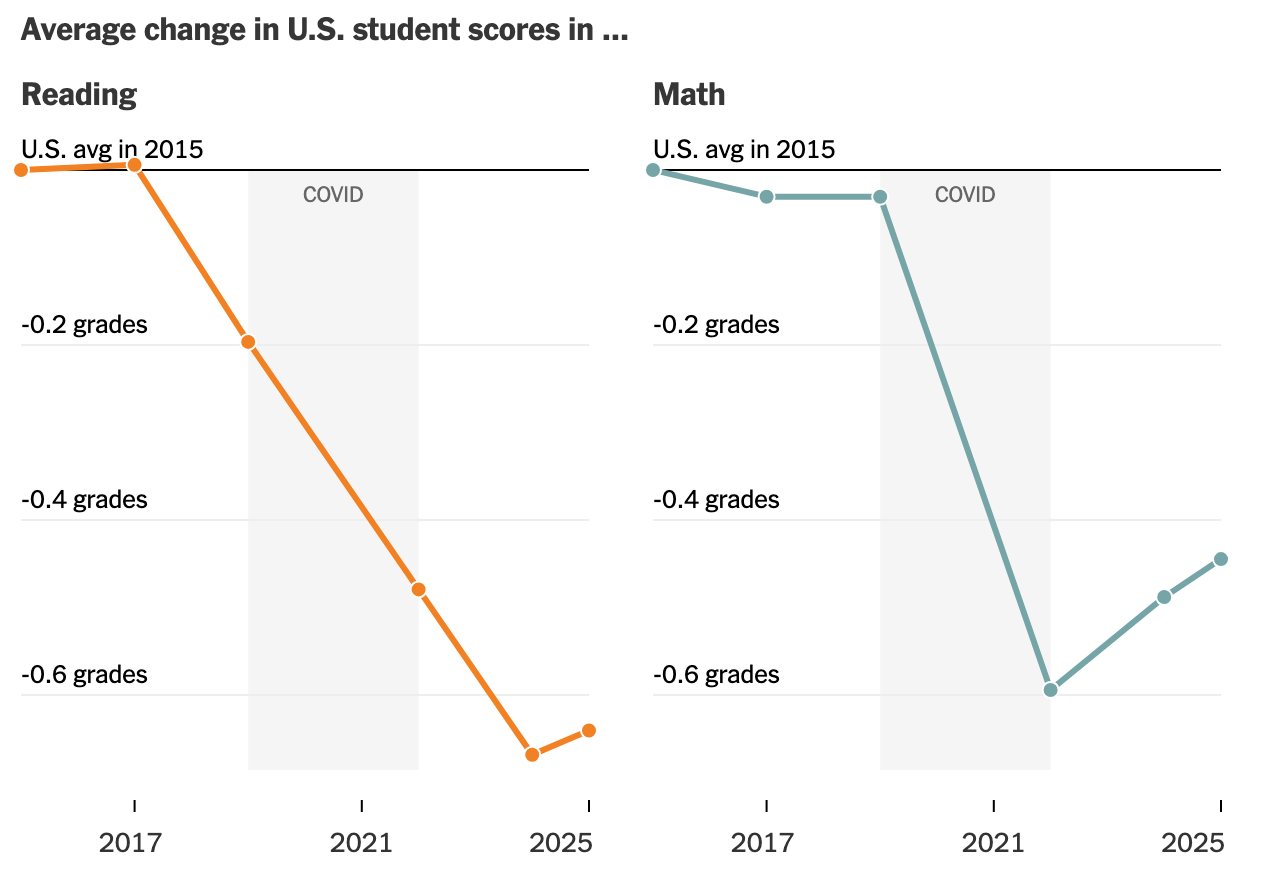
Student achievement has been declining across much of the United States for about a decade, not just since the pandemic. New district-level data from Stanford’s Educational Opportunity Project shows that reading scores are down in 83% of districts with available data, while math scores are down in 70%. Reading declined before, during, and after the pandemic, while math dropped sharply during school closures and has recovered somewhat, but not enough to regain lost ground.
Low-income districts suffered the largest losses, but many affluent districts also saw test scores fall, even if their students remain above grade level. The lowest-achieving students have been hit hardest. Researchers describe the trend as a decade-long “learning recession,” with some districts now reading a full grade level below where similar students were in 2015.
Several factors likely contributed. The rollback of federal accountability after No Child Left Behind may have reduced pressure on schools to raise achievement. At the same time, smartphones, social media, laptops, and tablets have changed how students read, focus, and persist through difficult work. Chronic absenteeism remains elevated, teen reading for pleasure has dropped, and many schools appear to have lowered expectations by assigning fewer full books and simplifying curriculum.
Art & Music
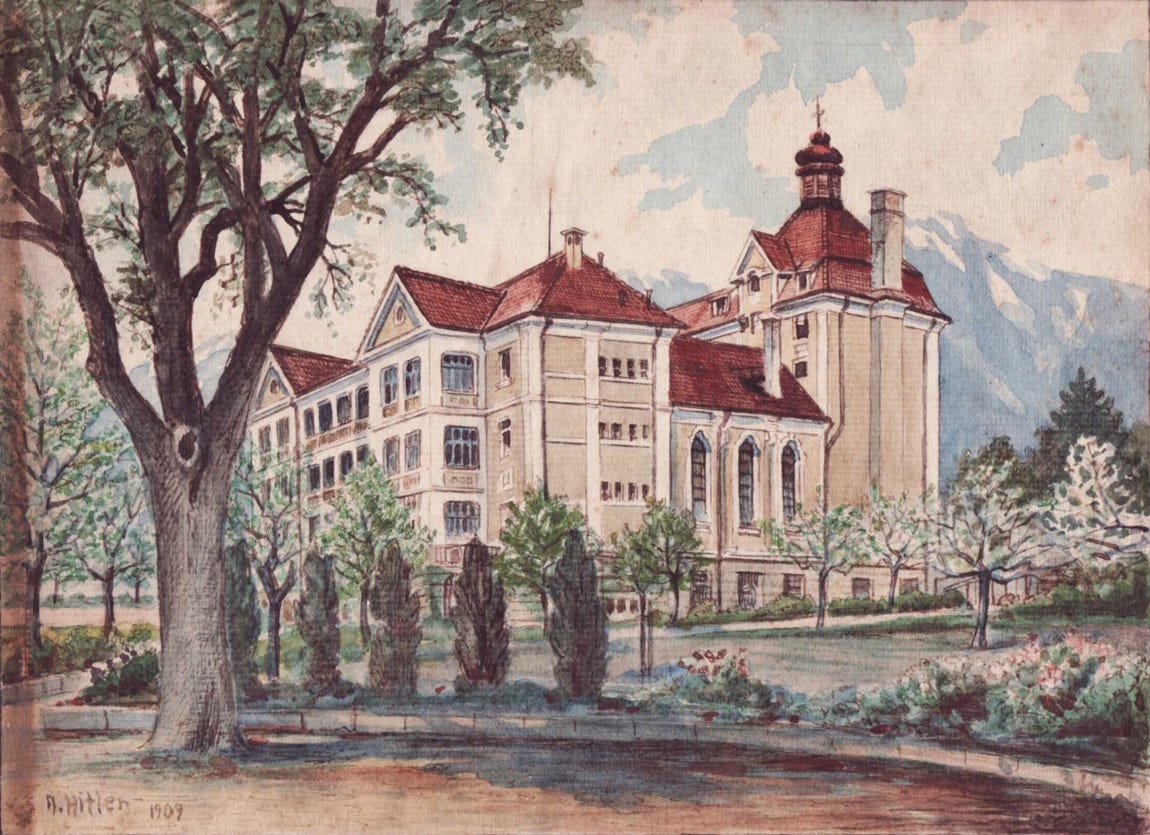
12. Paintings by Adolf Hitler
NOTE: An odd find this week—apparently Hitler was a pretty good painter. I say this not to praise him in any way, but that I found it an odd and interesting fact. Below are a couple of his paintings. You can find more information here on Wikipedia.

NOTE: If you like music theory, Rick Beato videos, Billy Joel, and/or some great piano playing, then you’ll like this one:
11. The Billy Joel Interview
For Fun
13. Google Earth’s Hidden Flight Simulator Is Now on the Web — Here’s How to Try It
Google has added a free Flight Simulator mode to the web version of Google Earth, making a feature that used to be hidden in the desktop app available through any browser. Users can fly over real satellite imagery, 3D buildings, terrain, landmarks, cities, mountains, and airports without installing software. It is not a serious alternative to Microsoft Flight Simulator or X-Plane, but it is useful for casual exploration, geography lessons, and getting a visual sense of unfamiliar airports or terrain.
How do I access Google Earth Flight Simulator? On the web, go to earth.google.com, click Explore Earth, then click the Tools menu and select Flight Simulator. On the desktop Google Earth Pro application, click Tools and select Enter Flight Simulator, or press Ctrl + Alt + A (Windows/Linux) or Cmd + Option + A (Mac). Both methods are free.
What are the controls for Google Earth Flight Simulator? Use the arrow keys for pitch and roll, Page Up to increase throttle, Page Down to decrease throttle, G to toggle landing gear, F to toggle flaps, and the space bar for brakes. Joystick input is supported on the desktop version and provides significantly smoother control than keyboard input.
14. Don’t Mess With These Steel Magnolias
The Dallas Mythics are a women’s armored medieval combat team that practices buhurt, a full-contact sport using real armor and real weapons. Unlike LARP or theatrical medieval shows, buhurt is actual combat, with fighters trying to knock opponents to the ground in team melees. Because the sport is small and male-dominated, most women’s teams are scattered and only come together at tournaments, but the Mythics have an unusual advantage: most of their roster lives in the Dallas area and can practice together regularly.

I always enjoy reading your curated compositions!