

Artificial Intelligence
1. Rare-Book Sales Are Booming. They’re Getting Sliced Up and Fed to AI.
Rare-book and used-book sellers have seen a strange surge in bulk orders for obscure titles, from medical texts to medieval legal studies, often bought through third-party marketplaces under names such as Red Sparrow Project or Green Parrot Project. The orders are large, unrelated by subject, routed through warehouses, and usually paid without negotiation. Many sellers now suspect the books are being purchased for AI training, especially because buyers seem to prefer books with ISBNs, which makes it easier to track what has already been scanned.
The suspicion is tied to earlier revelations about Anthropic, which bought millions of physical books, cut off their bindings, scanned them, and destroyed the copies as part of its AI training process. Some sellers have tried to trace recent mystery shipments with hidden trackers and found that books were moving through warehouses, scanning facilities, Amazon-linked locations, and even recycled-paper facilities. Amazon said it buys books through commercial channels to improve its products and services, while Anthropic said its programs do not buy and destroy rare or antiquarian books.
For booksellers, the boom brings money and unease at the same time. Some shops have doubled revenue or broken monthly sales records by unloading dead stock that had sat untouched for years. Others worry that scarce or meaningful copies are being removed from circulation forever. The ethical line varies by seller. Some see no issue with selling common, unwanted books if they are recycled after scanning. Others are trying to protect signed, inscribed, or genuinely rare volumes from being sent to what one seller called “the guillotine.”
Economy
2. There Are Four Forces Pressuring Bonds: War Is No. 1
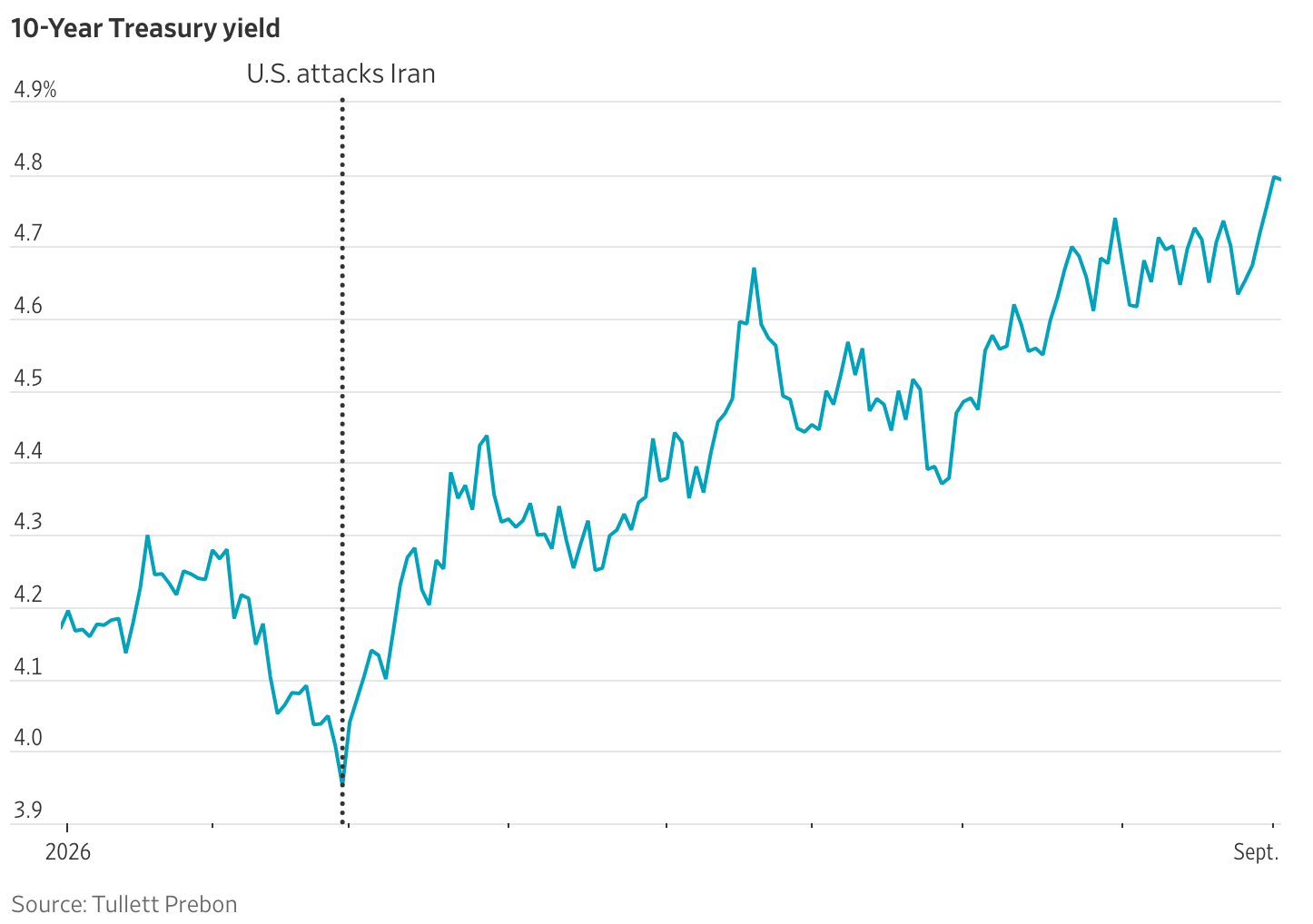
Treasury yields have been climbing mainly because investors are reassessing inflation, especially after the war in Iran pushed energy prices sharply higher. Diesel has become a particular concern because it feeds directly into transportation, farming, construction, and shipping costs. U.S. diesel prices have risen above $5.68 a gallon, roughly $2 more than a year ago, and futures markets suggest further increases.
Federal deficits are adding pressure as well. U.S. gross debt has now exceeded $40 trillion, and investors are increasingly concerned about the government’s long-term fiscal path and the growing supply of bonds. Similar concerns are pushing yields higher in the U.K. and Japan.
Another sign of investor unease is the rise in the Treasury term premium, the extra yield investors demand for holding longer-term bonds beyond what they expect from future Federal Reserve policy. That premium has increased, though much of the recent move still appears tied to inflation and energy shocks rather than fiscal concerns alone.
Fed policy is contributing to the uncertainty. Chairman Kevin Warsh has taken a less predictable approach than his predecessors and has avoided giving much forward guidance. That has reduced confidence about the future path of interest rates and added a small risk premium to long-term borrowing costs.
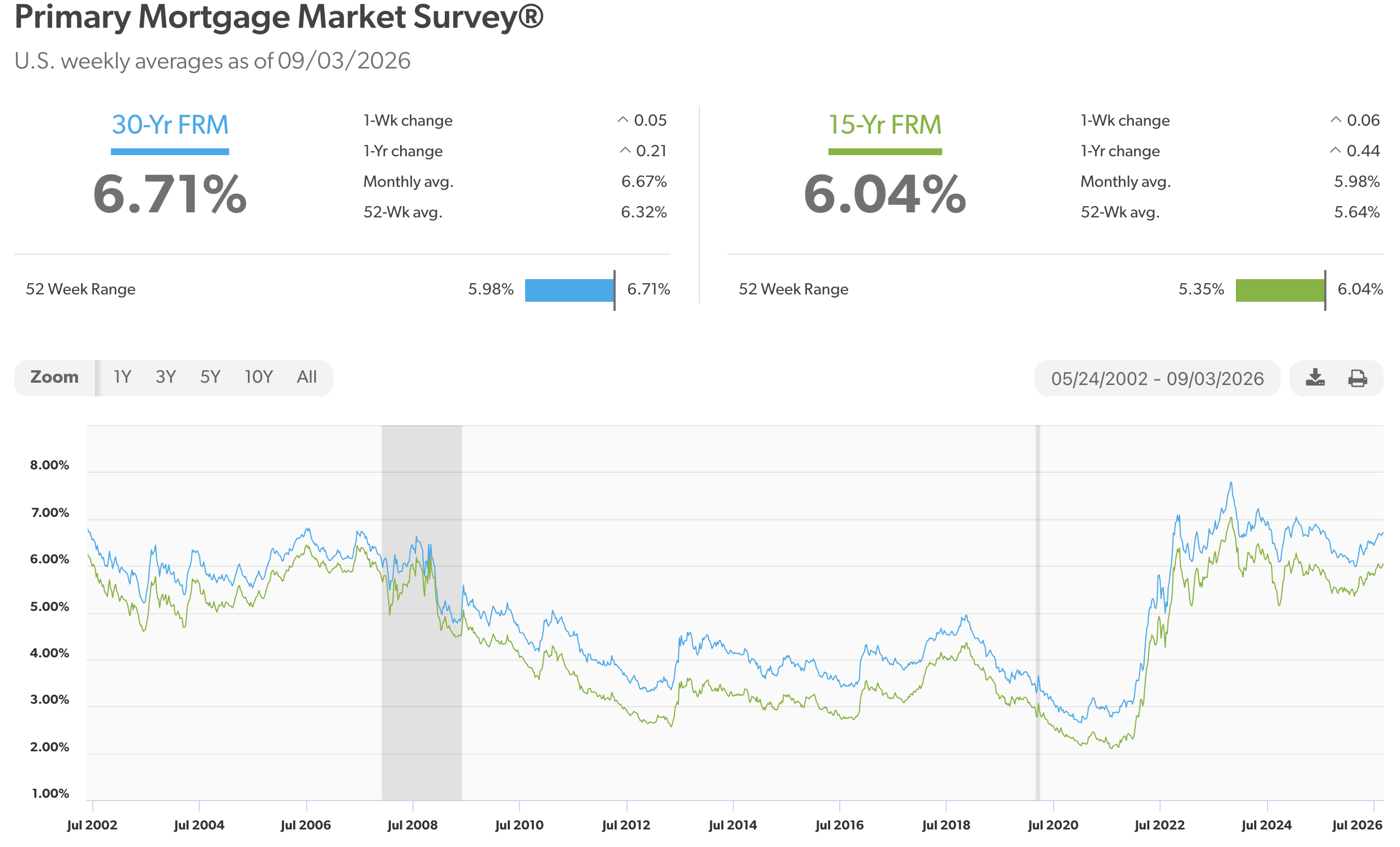
NOTE: Not that you really wanted to know, but here are the latest interest rates:
3. Is Scott Bessent the Fed chair Donald Trump always wanted?
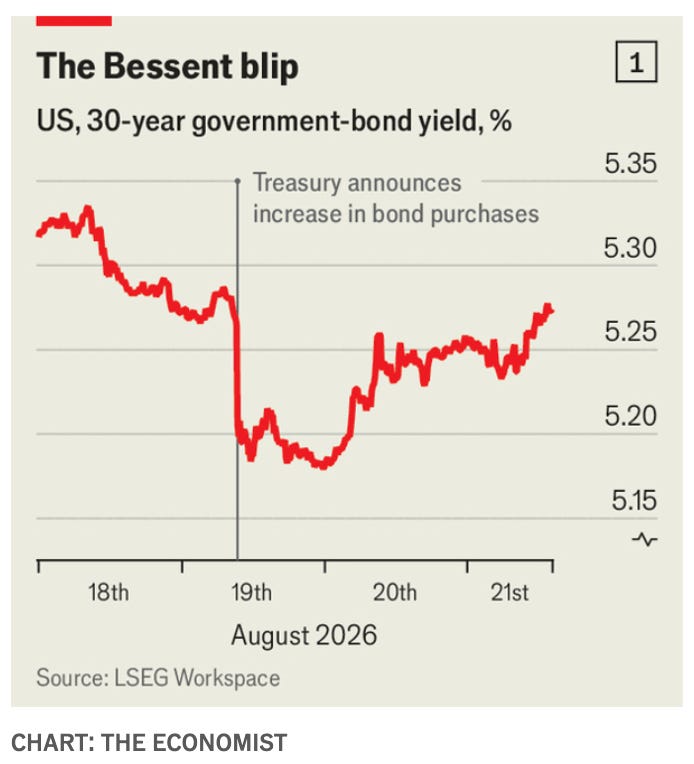
Treasury Secretary Scott Bessent is trying to push down long-term bond yields by having the Treasury buy back tens of billions of dollars in long-dated government debt. The move briefly lowered yields, but they soon rose again. The Treasury is no longer just managing the bond market for liquidity and stability, it is trying to influence yields at a politically sensitive moment, with midterm elections approaching and voters focused on affordability.
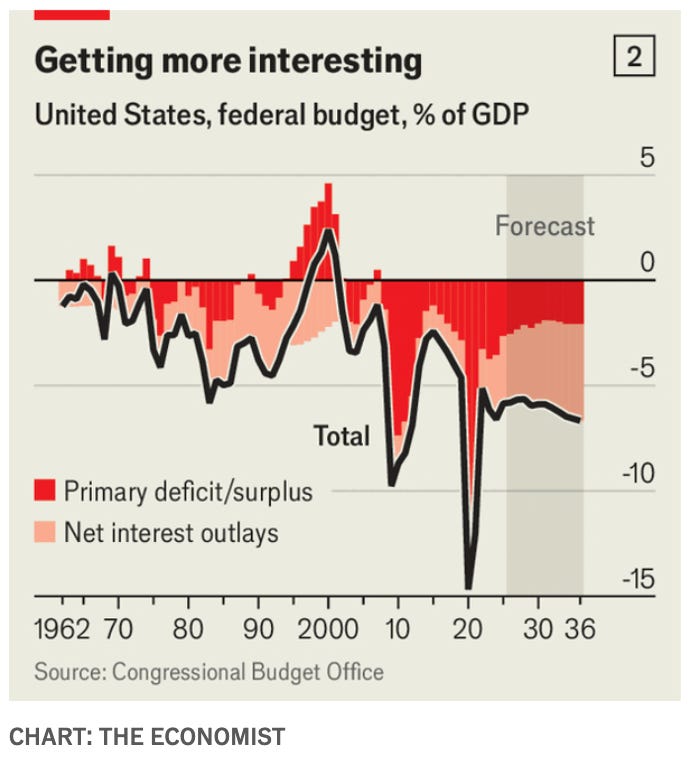
Bond yields have risen across major economies this year. U.S. ten-year Treasury yields are up, and German and Japanese government bonds have moved higher as well. Part of the pressure comes from lingering inflation, higher oil prices tied to the U.S.-Israel war with Iran, and heavy private borrowing for AI data-center construction. A more persistent concern is government debt. The U.S. deficit is about 6% of GDP, federal debt has passed $40 trillion, and interest payments now make up more than half of the deficit. That creates the risk of a cycle where higher yields increase borrowing costs, which then increase deficits and put even more pressure on yields.
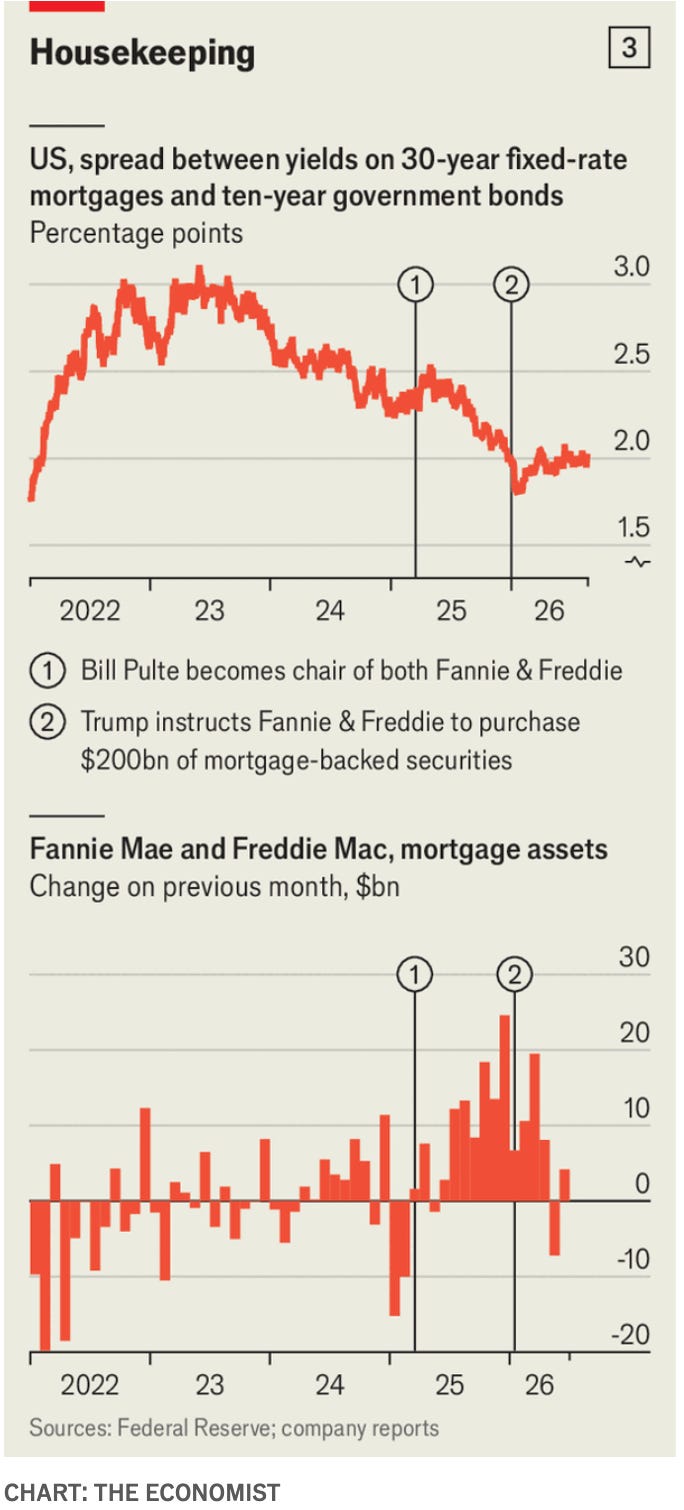
Bessent’s buyback plan does not reduce the total amount of federal debt because the long-term bonds being bought back are funded by issuing shorter-term debt. It may reduce pressure on long-term yields for a while, but it also makes the government more dependent on short-term borrowing. There’s a parallel to Janet Yellen’s earlier decision to issue more short-term debt, which Bessent had criticized before keeping much of the same approach himself. His current strategy also fits with other recent efforts to limit pressure on Treasury markets, including currency interventions and efforts by Fannie Mae and Freddie Mac to push down mortgage rates.
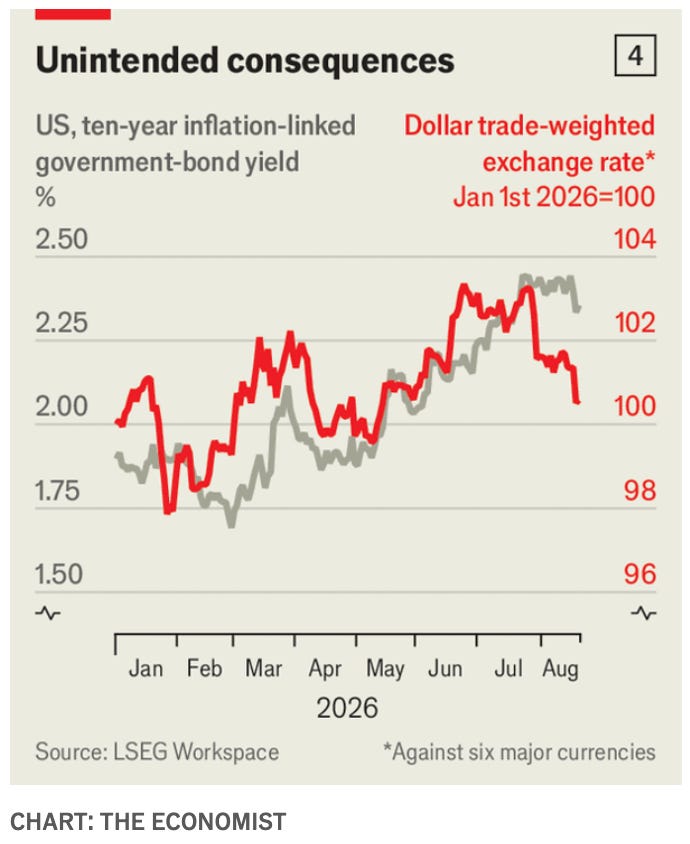
The risk is that investors begin to see the Treasury market as more political and less stable. Bessent may be able to nudge yields lower temporarily, especially before the midterms, but markets have already responded in other ways, with the dollar falling and gold rising after the buyback announcement. If Treasury efforts to ease financial conditions collide with a Federal Reserve still focused on inflation, Bessent and Fed Chair Kevin Warsh could end up pulling policy in opposite directions. As America’s debt burden grows, the temptation to interfere with markets will grow too, and each intervention could make future Treasury borrowing harder rather than easier.
4. The American Dream Is Alive. And It’s Minting Millionaires.
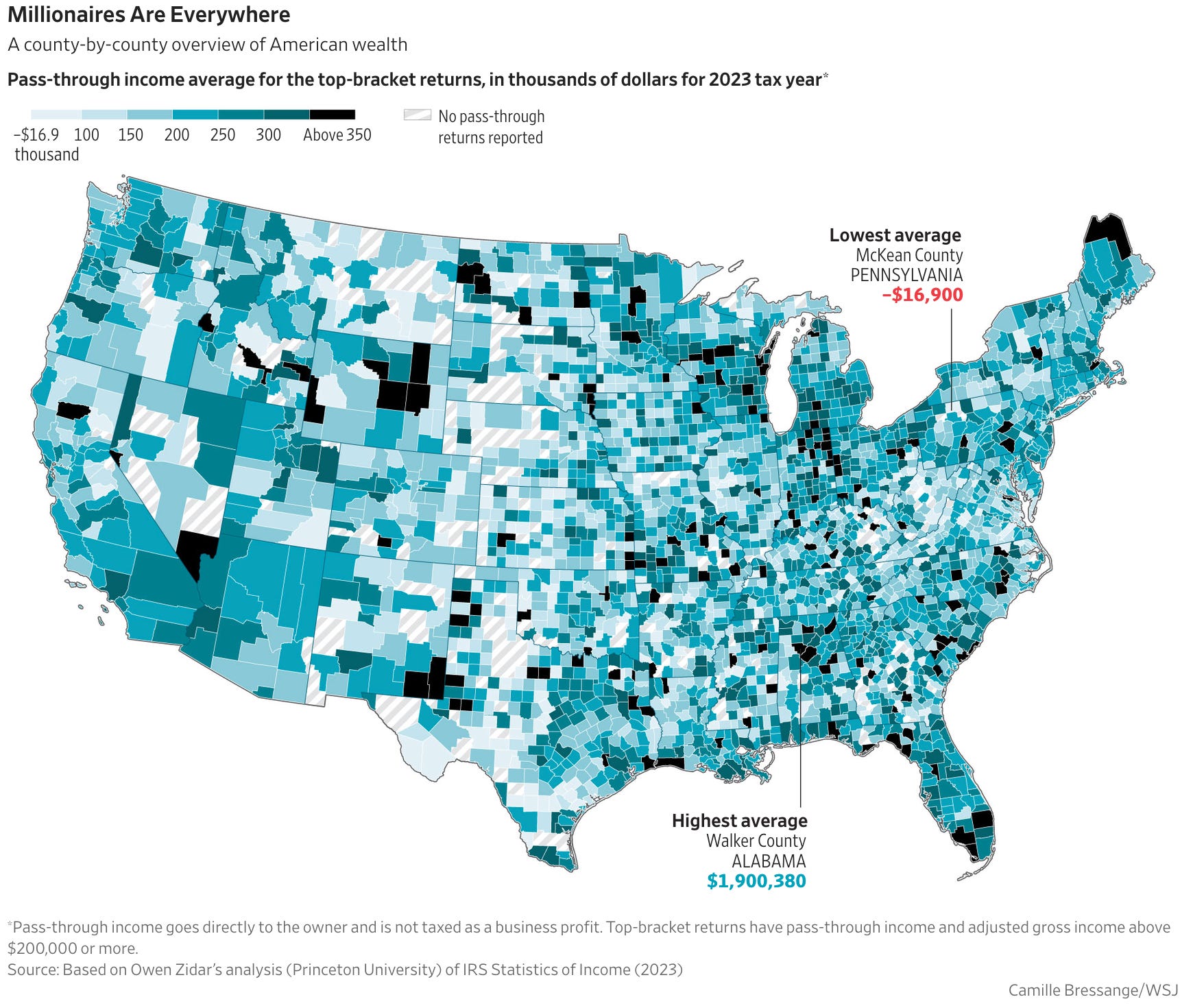
Dick Portillo turned a $1,100 hot-dog stand into a company worth $1 billion, one example of a much broader group of American business owners who became wealthy through ordinary, privately held companies. Roughly three million of these “Everywhere Millionaires” collectively hold more than $65 trillion in wealth, with fortunes built in restaurants, construction, healthcare, manufacturing, auto dealerships, home services, and other everyday industries.
Most wealthy business owners did not inherit their companies. Only about a quarter of owners worth $5 million or more inherited the business they own. Children from wealthy families have clear advantages, but many successful founders still come from poor or middle-class backgrounds. Academic pedigree also matters less than practical experience; high SAT scores have only a weak relationship with building a successful company.
A major path to wealth is simply buying or building a solid, unglamorous business and improving it over time. Ambulance billing, boat covers, gutters, convenience stores, restaurants, and industrial services can all produce substantial wealth. Nearly half of the roughly $31 trillion in private U.S. business equity is tied to hands-on Main Street industries.
Steady execution rather than breakthrough innovation is the common thread. Owners reinvest profits, improve operations, build customer loyalty, and expand into new markets. Portillo’s, Buc-ee’s, Dave’s Hot Chicken, and similar companies show that large fortunes are still being created through businesses that sell familiar products and services people use every day.
NOTE: Let that be a lesson to all you aspiring entrepreneurs out there. Despite what social media might tell you about the next get-rich-quick scheme (like crypto, sports betting or meme stocks), showing up everyday, working hard and taking calculated risks will pay off more often than you realize. And, it’s usually not the fun, quick path. It takes many years to become an overnight success.
5. Congress Is Finally Talking About Saving Social Security
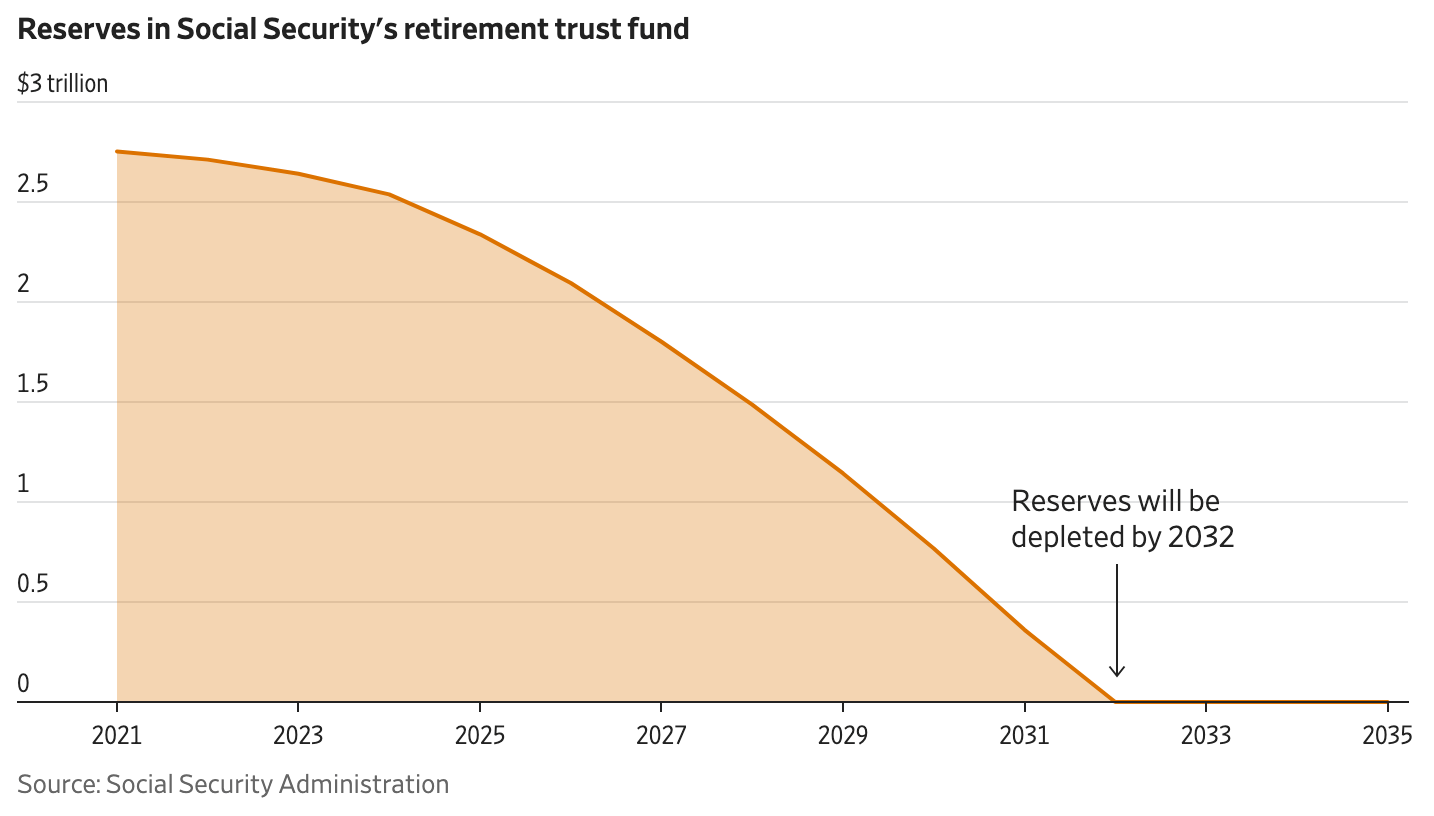
Social Security’s retirement trust fund is projected to run out of reserves in 2032. At that point, incoming payroll taxes would cover only about 78% of scheduled retirement and survivor benefits unless Congress changes the law. The combined retirement and disability funds could last until 2034, when about 83% of scheduled benefits would be payable.
Congress is beginning to discuss possible fixes, but there is still no consensus. Ideas include eliminating the payroll-tax cap on high earners, creating a bipartisan commission with expedited votes on its recommendations, borrowing to establish an investment fund, raising the retirement age, slowing benefit growth, or transferring money from the general federal budget. Waiting has made the problem harder because the eventual tax increases or benefit reductions needed to restore long-term solvency are now larger.
Democrats have generally emphasized raising more revenue, especially by taxing earnings above the current Social Security payroll-tax cap, while many oppose benefit reductions or a higher retirement age. Republicans generally oppose tax increases but currently lack a unified alternative; earlier proposals included raising the retirement age and slowing benefit growth.
The financial problem stems largely from demographics. Social Security accumulated surpluses when the baby-boom generation was working, but those reserves are now being drawn down as that generation retires. Lower fertility and slower workforce growth have further widened the gap between payroll-tax revenue and promised benefits. Congress resolved a similar crisis in 1983 through bipartisan tax and benefit changes, but the financing shortfall is substantially larger this time.
Social Media
6. Meta settles its blockbuster trial for up to $17bn
Meta has agreed to pay $12 billion, with the total potentially rising to $17 billion, to settle claims from 29 states that Facebook and Instagram harmed young users and that the company knew about those effects. A separate Texas settlement adds another $1 billion. The case had carried enormous financial risk, with four lead states seeking as much as $193 billion, roughly equal to Meta’s 2025 revenue.
The settlement will force changes to how teens use Meta’s platforms in the states involved. Meta will adopt stronger age-detection processes, cap teen scrolling at two hours a day, block use from midnight to 6 a.m., silence notifications late at night and during school hours, hide engagement signals such as likes, and offer teens a chronological Instagram feed without algorithmic recommendations. If other major platforms such as TikTok and YouTube face similar penalties, Meta could owe the full $17 billion and face even tighter limits, including a one-hour cap and a longer blackout period.
Investors barely reacted, suggesting they had already priced in much of the legal risk and still expect Meta to remain highly profitable. The settlement also appears designed to keep Meta from being placed at a competitive disadvantage, since harsher terms kick in only if rivals are also hit. That matters because lawsuits against social-media companies are continuing, including cases from other states, personal-injury claims, and suits from more than 1,000 school districts.
The comparison to tobacco is only partly convincing. Meta’s payout is large, but nowhere near the scale of the 1998 tobacco settlement relative to the industry’s value. The better comparison may be what happened afterward. Tobacco companies kept making money despite regulation, lawsuits, and public-health pressure. Meta may lose some teen engagement under the new rules, but the settlement does not come close to crippling the company.
7. Meta settlement sparks social media changes for teens: What parents need to know
Meta will automatically limit users under 18 in participating U.S. states and territories to two hours a day across Instagram and Facebook, pending judicial approval of its agreement with a bipartisan group of attorneys general. The cap applies across both apps and across multiple accounts when Meta detects they belong to the same teen, though direct messages will not count. Most of Instagram and Facebook will also be blocked from midnight to 6 a.m., while notifications will be muted from 8 a.m. to 3 p.m. except for direct messages, safety alerts, and account-security notices.
Teens will get reminders after 15 minutes of continuous use and again when total daily use reaches 60 and 90 minutes. Parents will be able to require a non-algorithmic feed, turn off autoplay, receive more information about secondary accounts or suspicious interactions, and get updates when teens try to change protective settings. Like counts will be hidden by default, and teens will be blocked from cosmetic-surgery filters and extreme makeup filters. Meta also says it will improve age-detection systems so under-13 users and teens who entered adult birthdays are moved into the appropriate protected experience. Most of the rules are expected to remain in place for 10 years.
Cyber
8. FBI Shuts Down Sprawling China-Linked Hacking Network
U.S. officials say they disrupted a China-linked hacking operation that had broken into government agencies, critical infrastructure, power companies, hospitals, and election-related systems while hiding behind a worldwide network of compromised devices. The targets included NASA, the Federal Reserve, the Department of Energy, and the Senate. The FBI and National Security Agency seized several domains used to run the operation, which officials said rendered key parts of the hacking platform inoperable.
The operation, called QTFY by U.S. officials, was allegedly run since 2018 by Nanjing Xinjiuwei Network Technology, a private Chinese company accused of selling access to hacked networks and stolen information to China’s foreign and military-intelligence services. The company used cloud services, hacked devices, special router-like access points, and Chinese “airport” networks that help users bypass the Great Firewall. Those layers made the traffic look more like ordinary internet activity, giving the hackers cover and making attribution harder.
Space
9. A West Point for Space? Trump Calls for New Academy to Train Space Personnel
President Trump signed an executive order creating a U.S. Space Academy to train people for government and commercial space roles. The academy will be led by NASA and modeled loosely on institutions such as West Point and the Air Force and Coast Guard academies, combining technical education with leadership training. Trump did not say where it will be located.
NASA Administrator Jared Isaacman will chair a presidential commission advising on how to build the academy, with input from senior defense and Air Force officials. The move fits with Isaacman’s broader push to strengthen NASA’s workforce after retirements, buyouts, and staffing reductions, including an effort to bring more contractor talent into temporary NASA roles through the NASA Force initiative.
The academy is part of a wider White House effort to expand U.S. space capacity. Recent policy moves call for U.S. spaceports to support more than 1,000 launches and re-entries per year by 2030 and would loosen some environmental reviews tied to space activity. Trump announced the order at Johnson Space Center during an event honoring the Artemis II astronauts, who flew around the moon earlier this year.
10. SpaceX and Rivals Dodge Traffic as Satellites, Debris Crowd Low-Earth Orbit
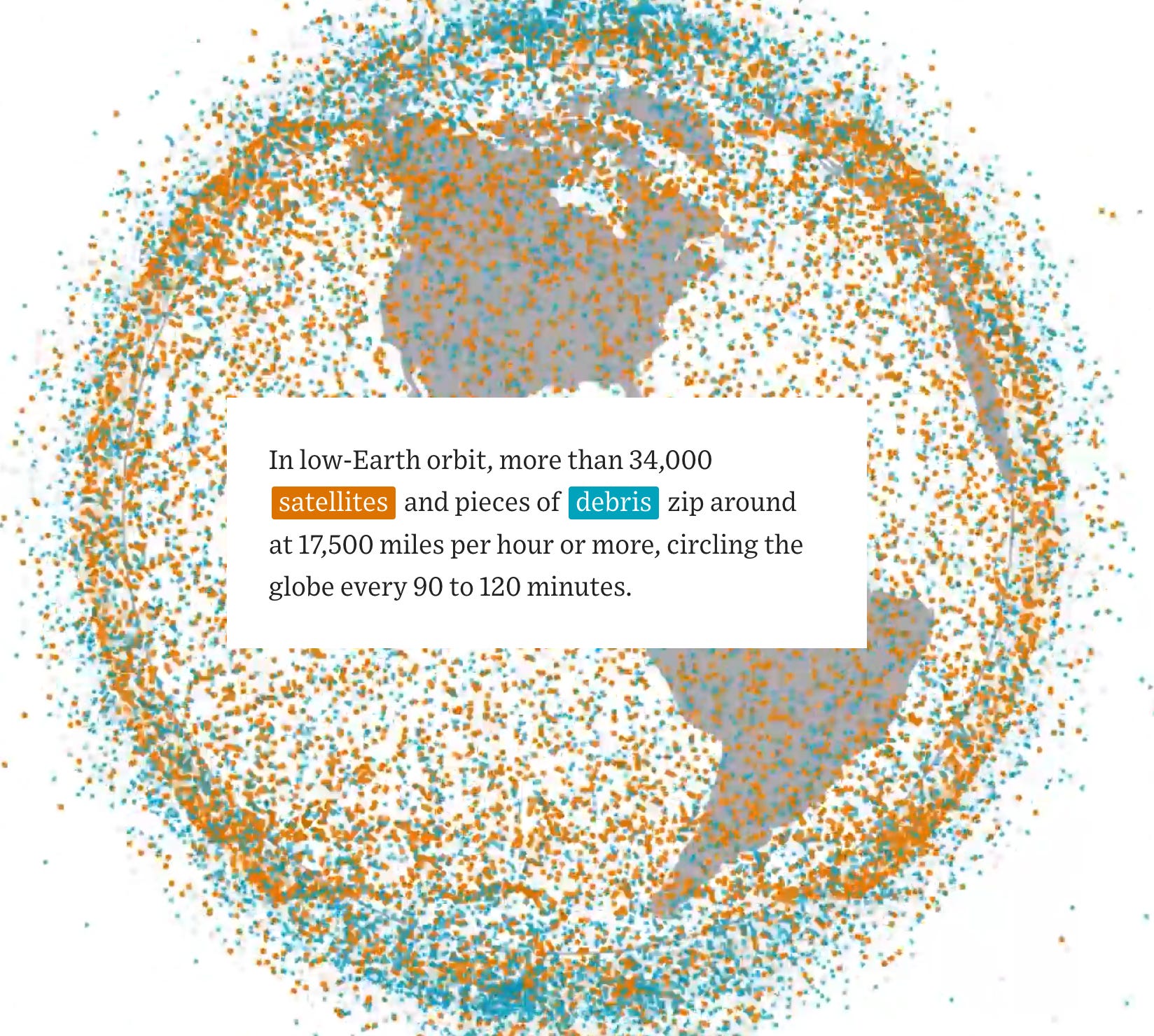
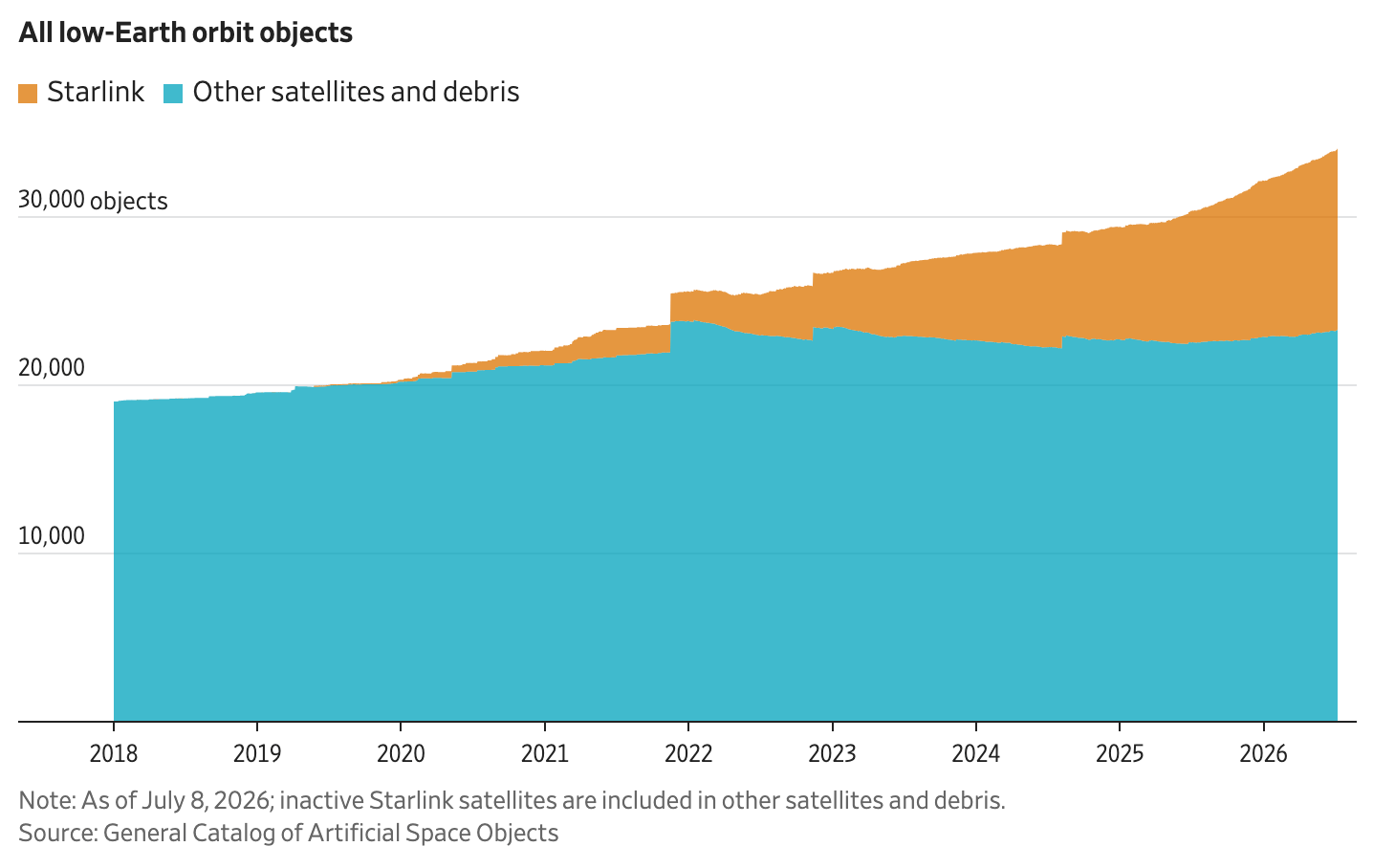
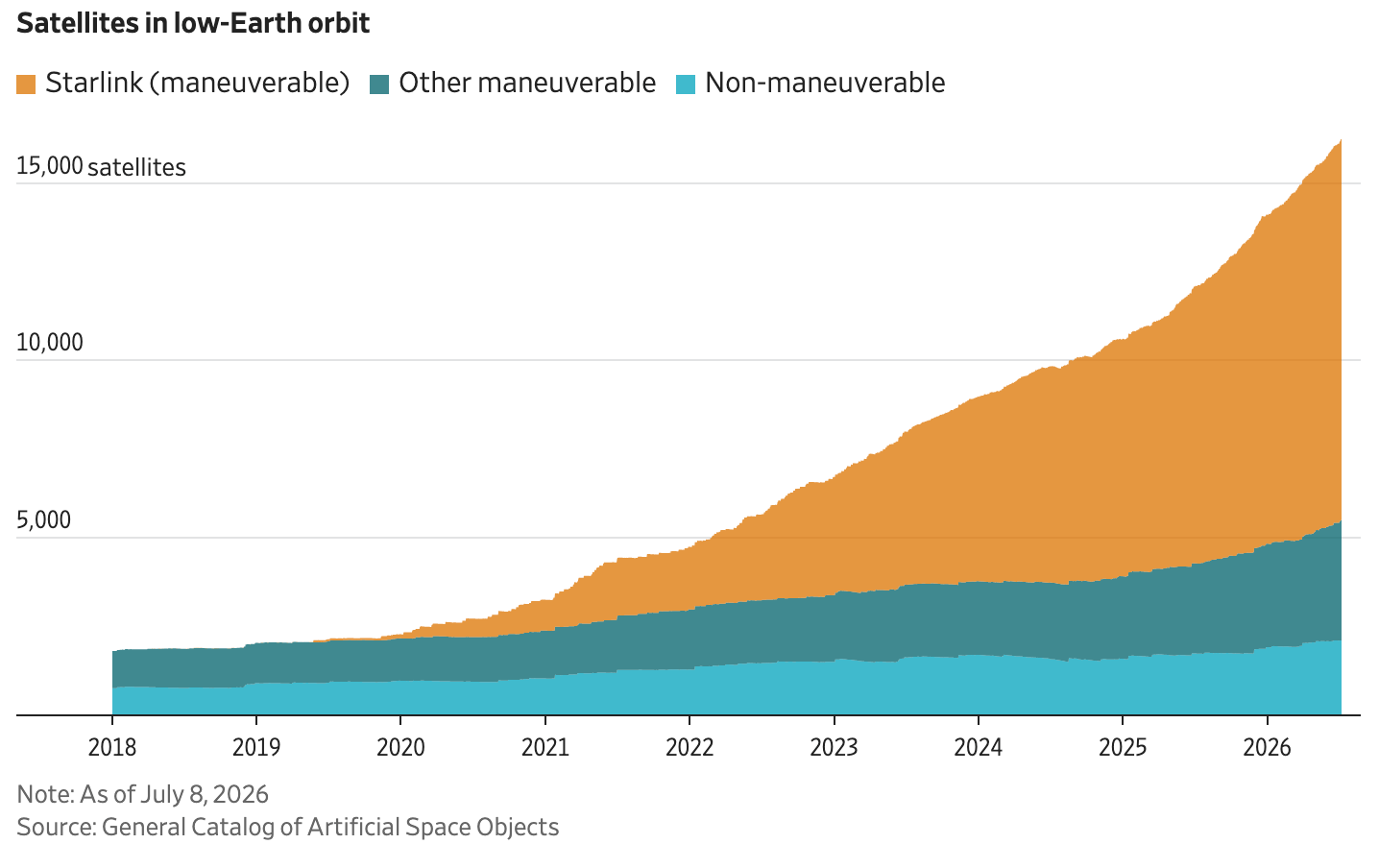
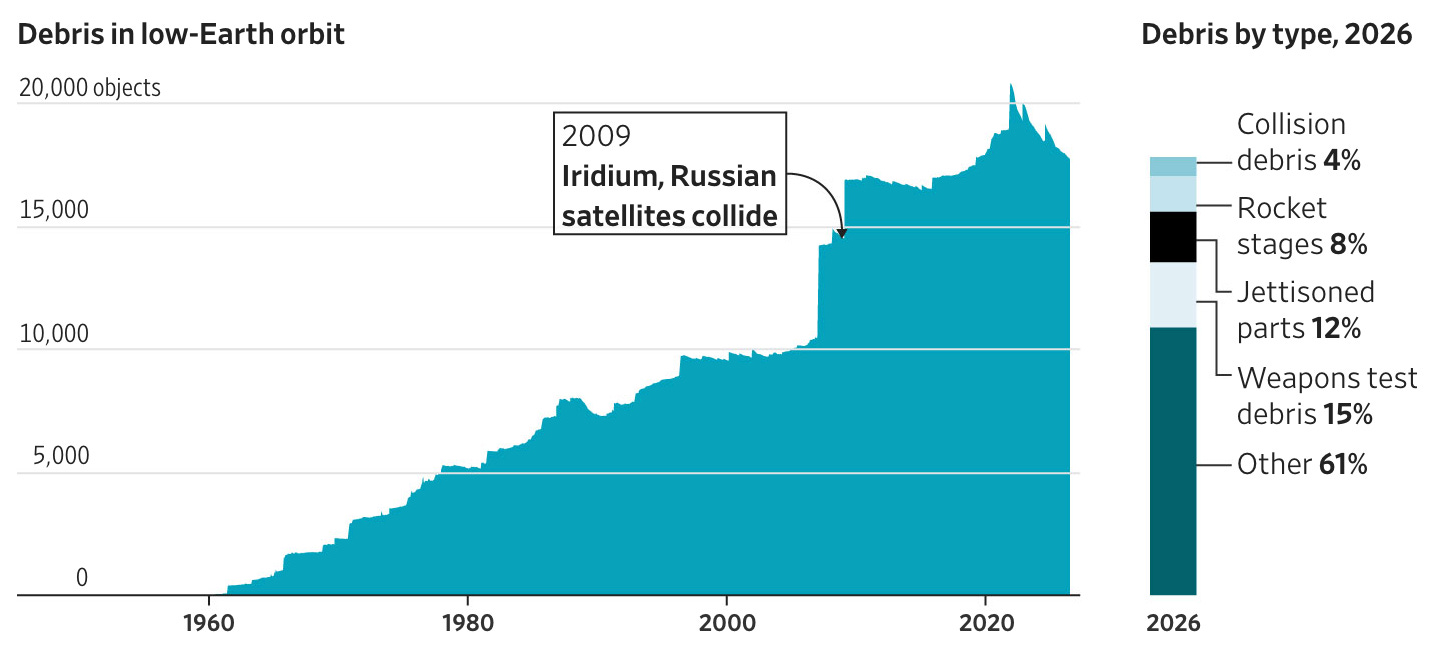
Low-Earth orbit is becoming increasingly crowded, with more than 34,000 satellites and pieces of debris circling Earth at roughly 17,500 miles per hour. More than 10,000 are associated with SpaceX’s Starlink network, and at least another 41,000 satellites are expected to launch by 2034. Longer-term plans for satellite-based AI data centers could push the total far higher.
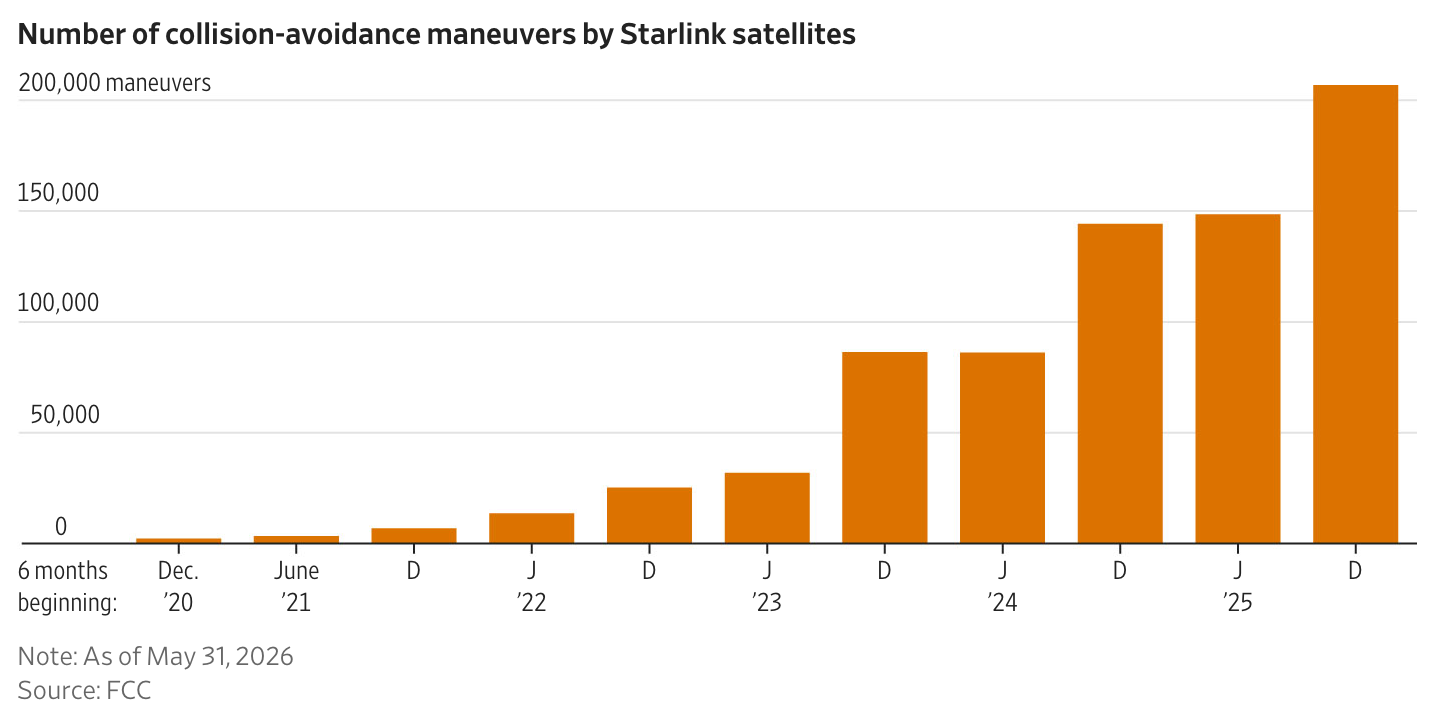
SpaceX and other operators use tracking systems and automated maneuvering to avoid collisions, but the number of avoidance maneuvers has risen sharply as traffic increases. Actual satellite collisions remain rare, yet they can generate thousands of new debris fragments. Smaller pieces that cannot be tracked are also dangerous because even paint-fleck-sized debris can damage spacecraft at orbital speeds.
Some experts argue that the sheer number of satellites is manageable if operators coordinate closely and spacecraft can maneuver safely. Others believe orbital density is already approaching safe limits. As SpaceX, Amazon, Chinese companies and governments rapidly expand their constellations, preventing accidents will increasingly depend on reliable tracking, coordination, responsible operators and effective collision-avoidance systems.
Health
11. The Cancer Vaccine Gold Rush Has Begun. So Has the Race for Picks and Shovels.
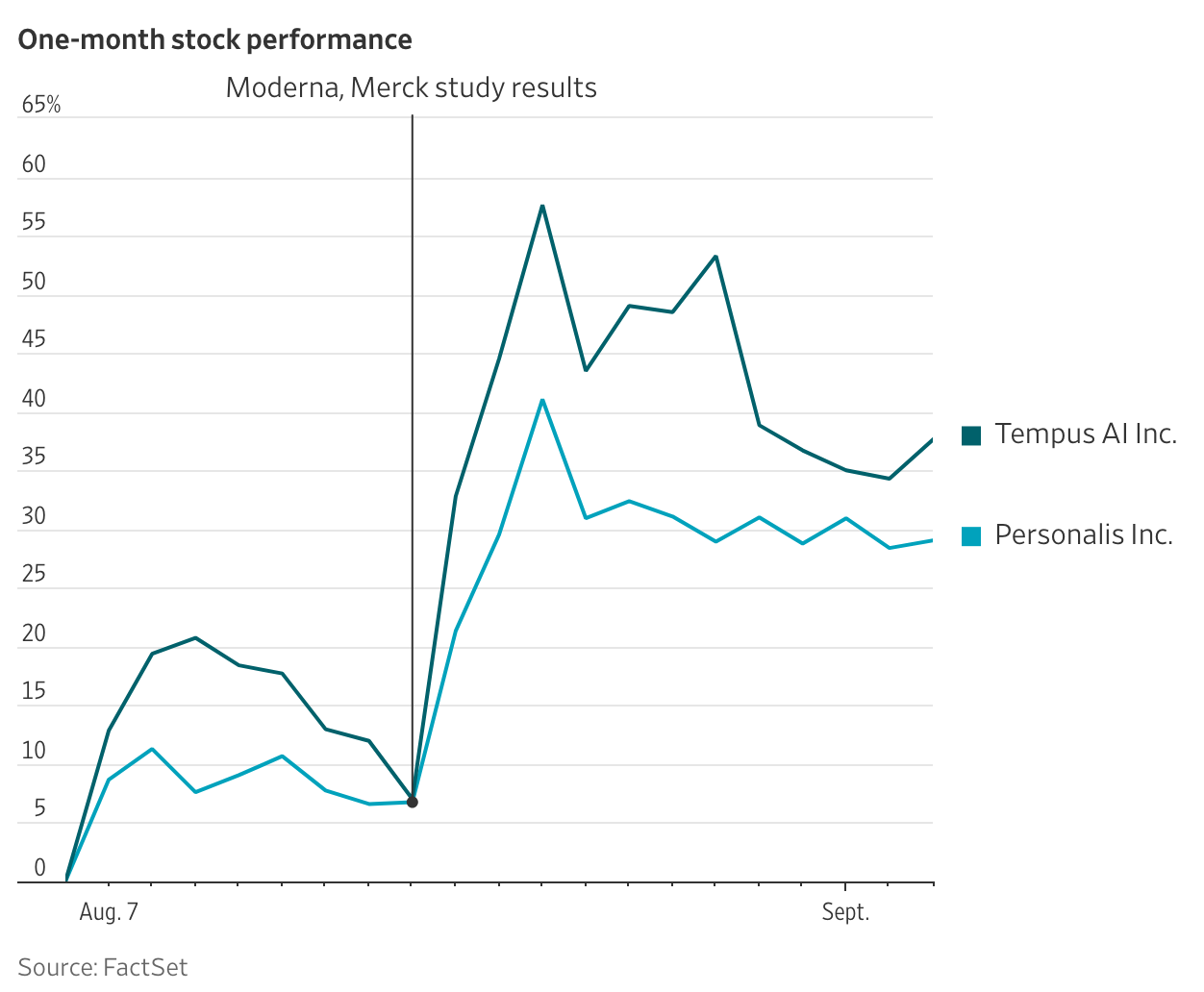
Moderna and Merck’s promising personalized mRNA cancer vaccine has sparked a surge of interest in tumor-sequencing companies because each patient’s tumor must be genetically analyzed before a customized vaccine can be produced. That puts diagnostic firms such as Tempus AI and Personalis in a potentially valuable position. Tempus agreed in July to acquire Personalis for about $1.5 billion, but Personalis shares later traded above the $16.25 offer price after strong vaccine results, suggesting investors believe a higher bid or competing offer could emerge.
For Tempus, the larger opportunity extends beyond the initial sequencing revenue. Once a patient’s tumor has been sequenced, the same genetic information can be used for minimal residual disease testing, which searches blood for traces of cancer following treatment. That could turn personalized cancer vaccines into a pipeline of patients who return for recurring monitoring. Analysts estimate melanoma sequencing alone could generate at least $50 million annually, potentially rising above $600 million if mRNA vaccines expand into cancers such as lung, bladder and kidney cancer. The monitoring market could ultimately be considerably larger.
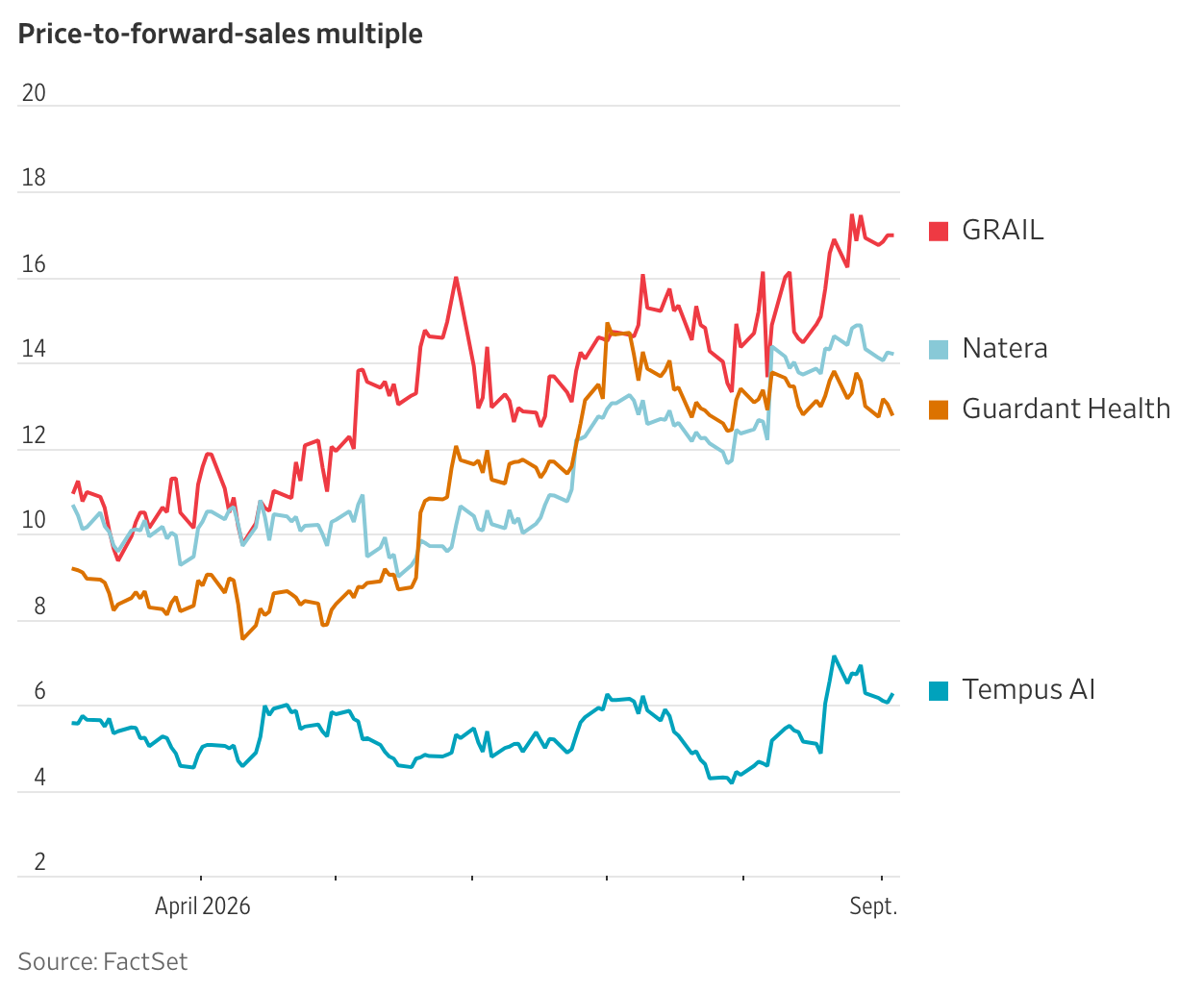
The acquisition could also help Tempus close the valuation gap with more established cancer-diagnostics companies such as Natera and Guardant Health. Tempus currently trades at a substantially lower sales multiple than some competitors, and Personalis would give it a stronger position in both precision medicine and cancer recurrence testing.
There is still considerable risk. BioNTech recently reported disappointing results from a colorectal cancer vaccine trial, personalized mRNA treatments are not yet proven across multiple cancers, and pharmaceutical companies could eventually perform sequencing themselves or divide the work among several labs. Tempus has been selected as the sequencing partner if the Moderna-Merck vaccine wins approval, making Personalis strategically valuable, but the immediate uncertainty is whether Tempus can complete the acquisition at its current price.
Education
12. Hundreds of Colleges Are Sending Acceptance Letters to Kids Who Didn’t Even Apply
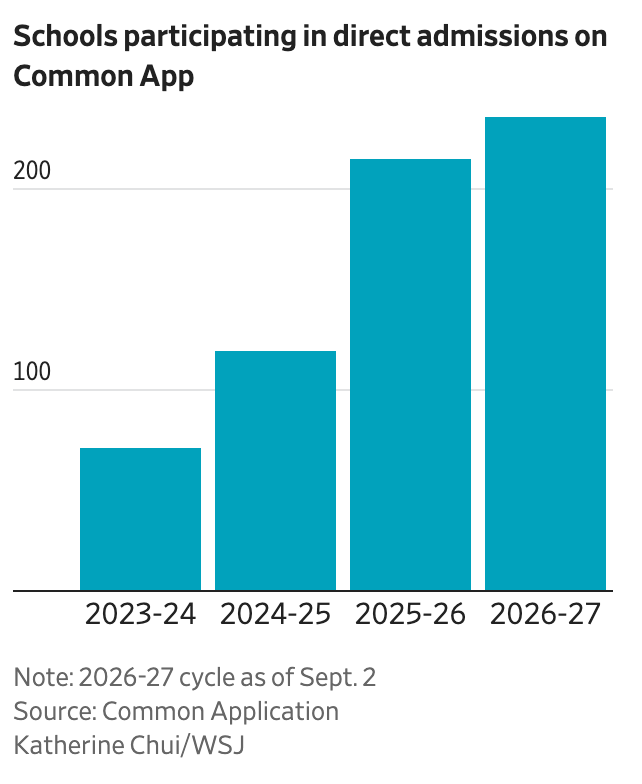
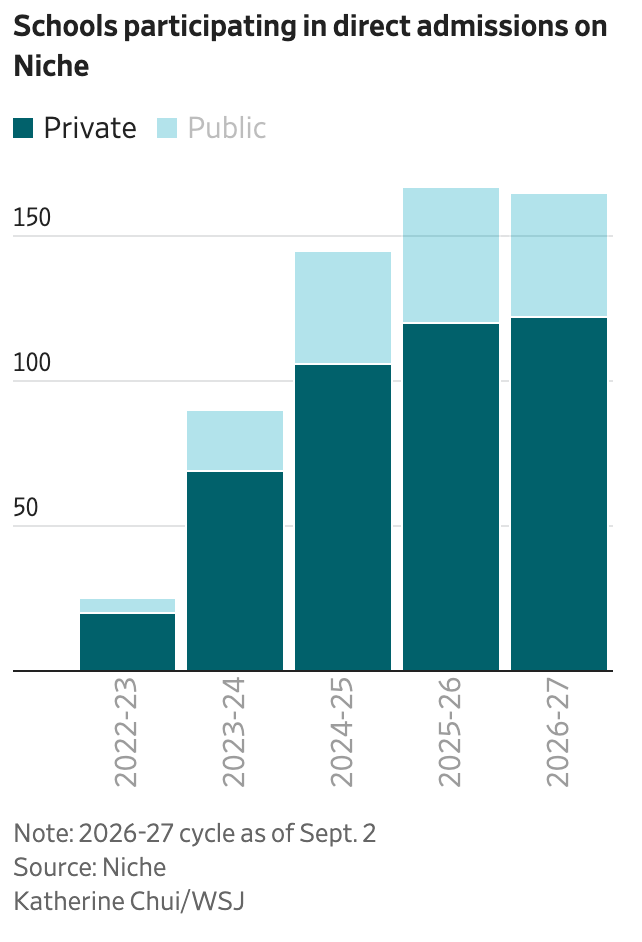
Hundreds of colleges are increasingly offering students admission without requiring a traditional application. Through “direct admissions,” schools use basic information such as high school transcripts to make offers, eliminating essays, extracurricular questions and standardized-test requirements. The approach has grown quickly, especially among less-selective private colleges facing enrollment pressure from a shrinking population of college-age students.
For students, direct admissions simplifies the process and can reduce some of the stress and uncertainty surrounding college applications. Students typically complete a short form and submit a transcript, then receive offers automatically from participating schools. Some platforms also include merit-aid offers up front, giving students a clearer sense of what attendance might cost.
For colleges, the main benefit is access to a much larger pool of potential students. Schools can reach teenagers who may never have considered them and try to convert those offers into enrollments. Jacksonville State University, for example, received about 2,000 direct-admit submissions and enrolled roughly 150 to 200 students, including many from parts of Alabama where the school had not traditionally recruited heavily.
The biggest concern is that admission does not necessarily mean affordability. Critics worry that students may receive numerous offers without understanding the full financial commitment. Some programs are responding by including pricing or scholarship information with the acceptance. Direct admissions also appears to be reaching larger shares of first-generation students and students of color, making it a potentially important tool for widening access while colleges compete more aggressively for enrollment.
For Fun
13. He Was a Washed-Up Pop Star. Now He’s Selling Out Stadiums Hosting Baby Raves.
Australian DJ Lenny Pearce has built a fast-growing career by turning nursery rhymes into electronic dance music for toddlers and their parents. After years of struggling to break through as a DJ, he remixed “Head, Shoulders, Knees and Toes” after having a child of his own. The track went viral on TikTok within a day, leading to label interest and eventually a series of family-focused concerts.
Pearce refined the concept around how young children actually respond to live music. He kept familiar melodies and vocals clear over heavy beats, limited shows to about an hour, and added balloon drops, characters and audience participation to keep toddlers engaged. The format also gives parents—especially EDM fans—a chance to enjoy a festival-like experience with their children.
Demand has grown quickly. His Red Rocks show sold out, and roughly 70,000 of 100,000 tickets for an upcoming U.S. and Canadian tour have already sold. Many parents see the concerts as being as much for them as for their children, even paying premium prices and traveling to multiple shows.
Pearce’s success came from combining his existing DJ skills with an audience nobody had seriously targeted before. The spectacle may resemble an EDM festival, but the shows are built around nap schedules, glow sticks, apple juice and exhausted toddlers—and Pearce ends his days back on a tour bus handling diapers, bottles and laundry.