NOTE: Just a quick rant: I’ve really come to dislike the term “significant other.” At first, I thought it was a benign nicety, but the truth is, it’s meaningless. Actually, no, it’s demeaning.
By adding “significant” we somehow think we’re adding importance to the word “other.” By definition, an “other” lacks categorization or distinction, so how are they significant? I’m reminded of the classic line from the movie Talladega Nights, following an insult, “But I said, ‘With all due respect!’” In essence, by saying “significant other” you’re saying, “Respectfully, you lack categorization in my life.” I would never introduce someone as a “significant other.” The same holds true for “plus-one.”
Look, I get it if two people have yet to have a DTR (define the relationship) conversation to determine if they’ve crossed line from friend to boyfriend or girlfriend, or are dating exclusively. Still, I say we should be very clear on the status of the relationship, options include: date, good friend, or close friend. If your “significant other” is offended by being referred to by one of those terms, then you know it’s time to have that DTR conversation.
Ok, rant over, now on to the news.
International
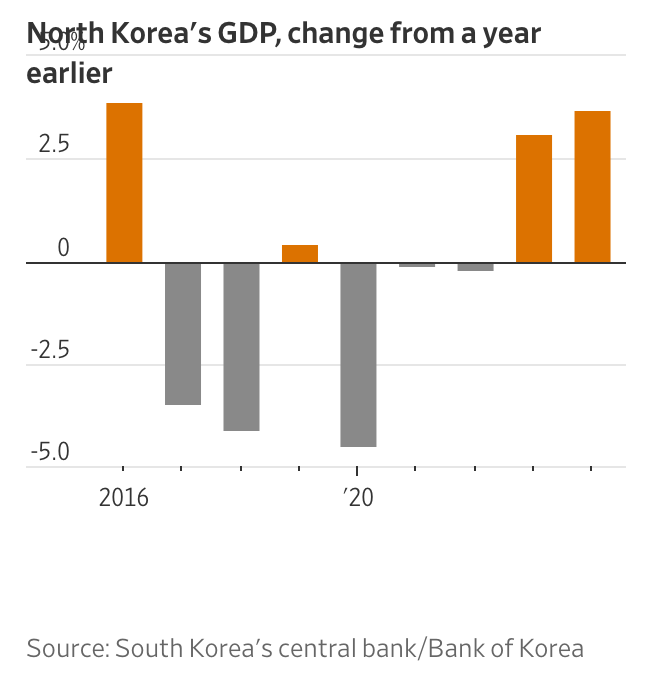
1. The World’s Most Surprising Economic Success Story Is…North Korea (WSJ)
North Korea’s economy appears to be experiencing its strongest growth in years, especially in Pyongyang, where visitors describe new taxis hailed by smartphone apps, QR-code payments, electric vehicles, imported cars, restaurants, pet stores, gaming cafes, and new housing developments. Much of this visible progress is concentrated in the capital and benefits the elite, while poverty, malnutrition, repression, and human rights abuses remain severe outside Pyongyang.
The turnaround is being fueled by North Korea’s deepening ties with Russia and China. Arms sales, troop deployments to support Russia’s war in Ukraine, Chinese trade, cyber theft, and sanctions evasion have brought in money, materials, energy, and technology. These gains have allowed Kim Jong Un to pursue major construction projects, expand state-controlled markets, and promote a more modern consumer economy, while also strengthening his military and nuclear position. The result is a North Korea that looks wealthier and more technologically advanced than before, but also more entrenched, less likely to bargain away its nuclear program, and still deeply unequal and authoritarian.

2. The Fight to Break China’s Rare-Earth Dominance Moves to a New Front in Brazil (WSJ)
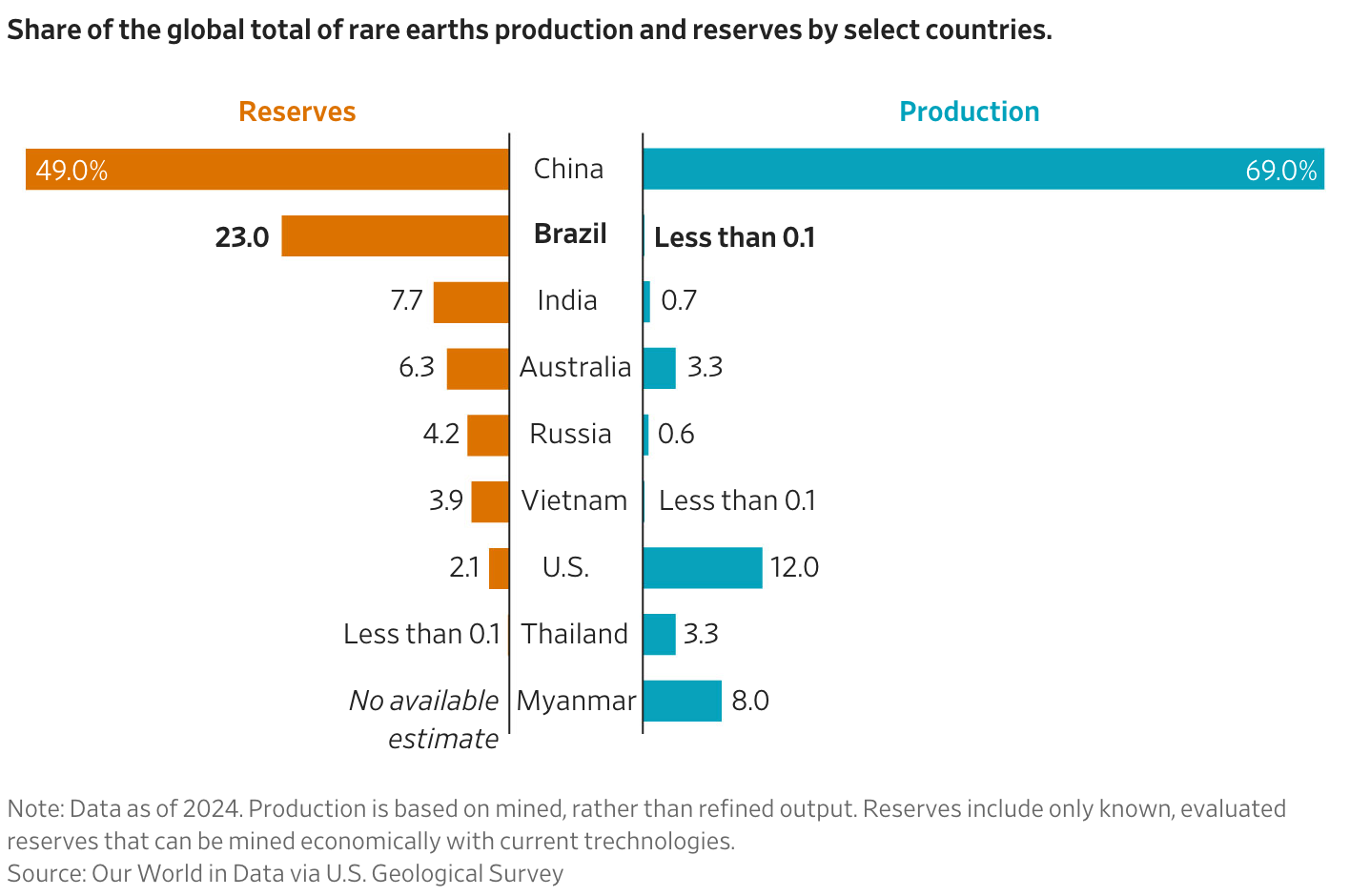
Brazil is emerging as a major focus in the global race to loosen China’s control over rare-earth supply chains. The country holds the world’s second-largest rare-earth reserves, but currently produces almost none of the global supply. Western miners and governments see Brazil’s clay-based deposits, cheap hydropower, lower labor costs, and proximity to U.S. markets as advantages that could help create an alternative source for minerals used in electric vehicles, wind turbines, electronics, and advanced weapons. Interest has surged since China imposed rare-earth export controls in 2025 and controls more than 90% of rare-earth processing and magnet production.
The harder challenge is building the higher-value processing, metals, recycling, and magnet-manufacturing capacity that China dominates. Brazil’s government wants foreign investment, but it does not want the country to become only a raw-material exporter or to be forced into a U.S.-led bloc against China. That neutrality creates both opportunity and uncertainty. Western companies such as Viridis, Meteoric, Aclara, and USA Rare Earth are moving quickly, but China is also investing in Brazilian mining and manufacturing. Brazil could become a rare-earth powerhouse, but whether it becomes a true Western supply-chain alternative depends on how far it develops domestic processing and whether it chooses to remain open to both Washington and Beijing.
3. India’s surprise baby bust is a warning to the world (Economist)
India is undergoing a dramatic demographic reversal. After decades of government messaging warning families against having too many children, the country is now facing a fertility slump, with its total fertility rate down to 1.9 children per woman, below the replacement level of about 2.1. Some Indian states now have fertility rates comparable to wealthy European countries, and the effects are already visible in falling births, shrinking school enrollment, and rising concern that India may grow old before it becomes rich.
Low fertility is no longer limited to wealthy countries; much of the middle-income world and even some poorer countries are now below replacement. The main drivers are lower child mortality, more education for girls, greater autonomy for women, and rising parental aspirations. As parents invest more in each child’s education, especially where public schools are weak, smaller families become both a social norm and an economic strategy. Television, smartphones, and exposure to urban middle-class lifestyles have helped spread those norms faster.
The consequences will be significant. India’s population will still grow for a while, but it may peak around 1.6 billion in the 2040s and then decline sharply. The same may happen across much of Asia, and global population may peak sooner than expected. While the causes of falling fertility are largely good, the transition will bring hard policy choices. Countries like India may face labor shortages, pension burdens, and rising old-age care costs before they have built enough wealth to manage them easily, making higher workforce participation, especially among women, and stronger public finances increasingly urgent.
4. Switzerland’s 10-Million Population Cap Is Worrying Executives (Bloomberg)
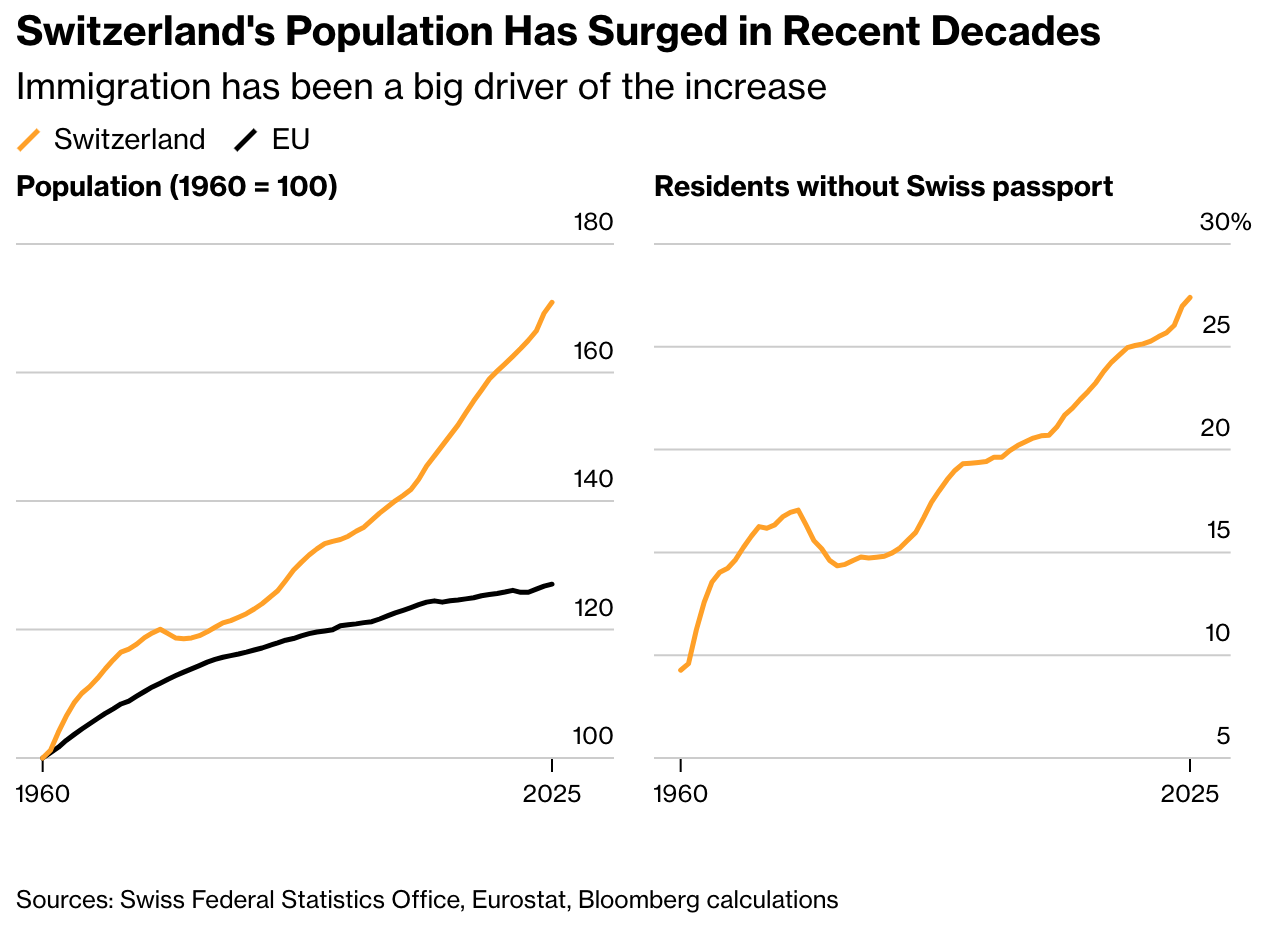
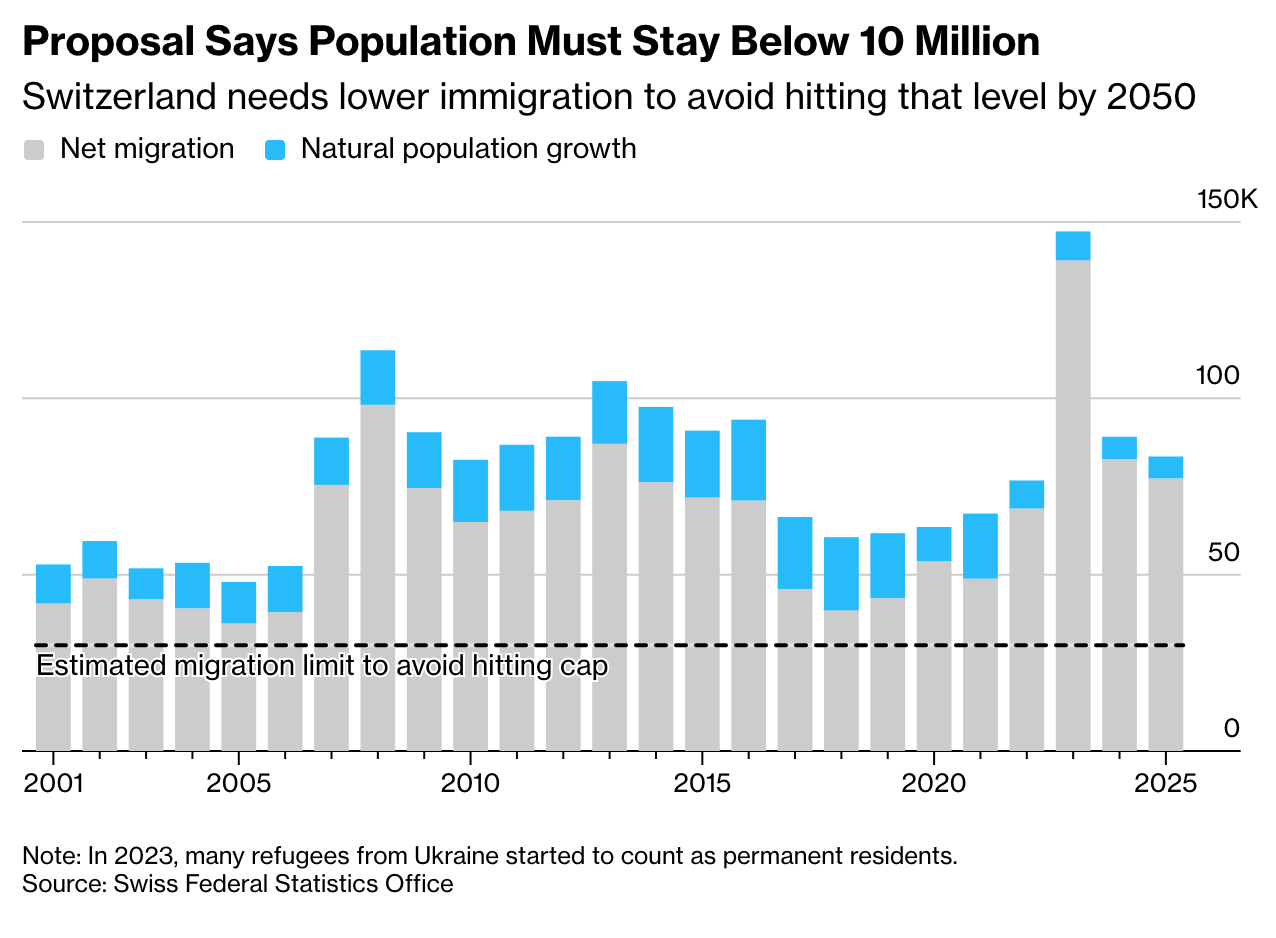
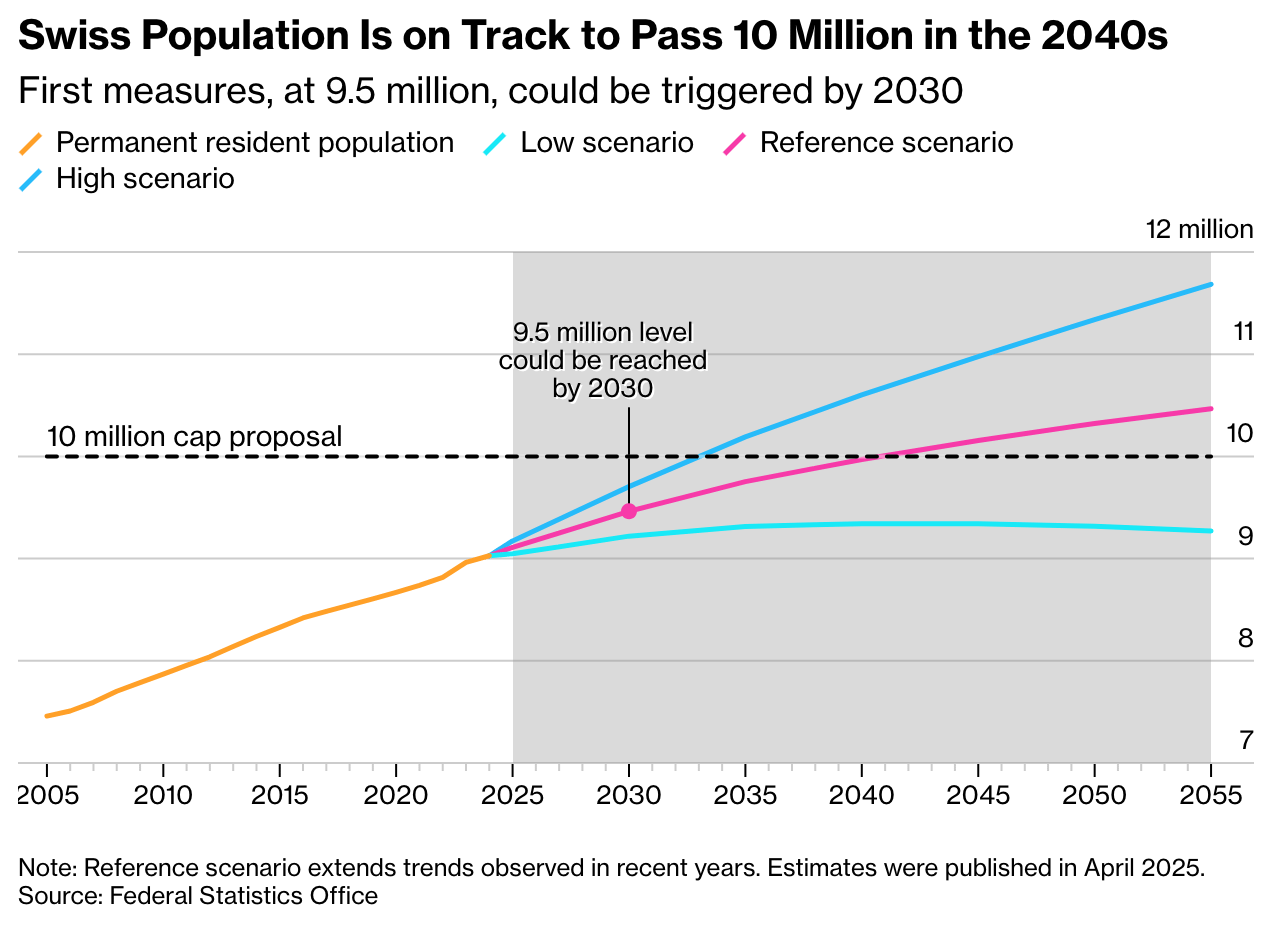
Switzerland is preparing to vote on a proposal that would cap the country’s population at 10 million. With the population already above 9.1 million, annual migration would likely need to fall by more than half to stay below the proposed ceiling by 2050.
Supporters, led by the right-wing Swiss People’s Party, argue that immigration is straining housing, transportation, and public space, and that the country needs tighter control over who enters. Opponents warn that the cap could shrink the labor pool, damage productivity, worsen shortages in sectors like healthcare, hospitality, IT, and construction, and jeopardize Switzerland’s economic relationship with the European Union, where free movement of people is tied to broader market access.
Artificial Intelligence
5. How Much of the Internet Is AI Slop? (Stat Significant)
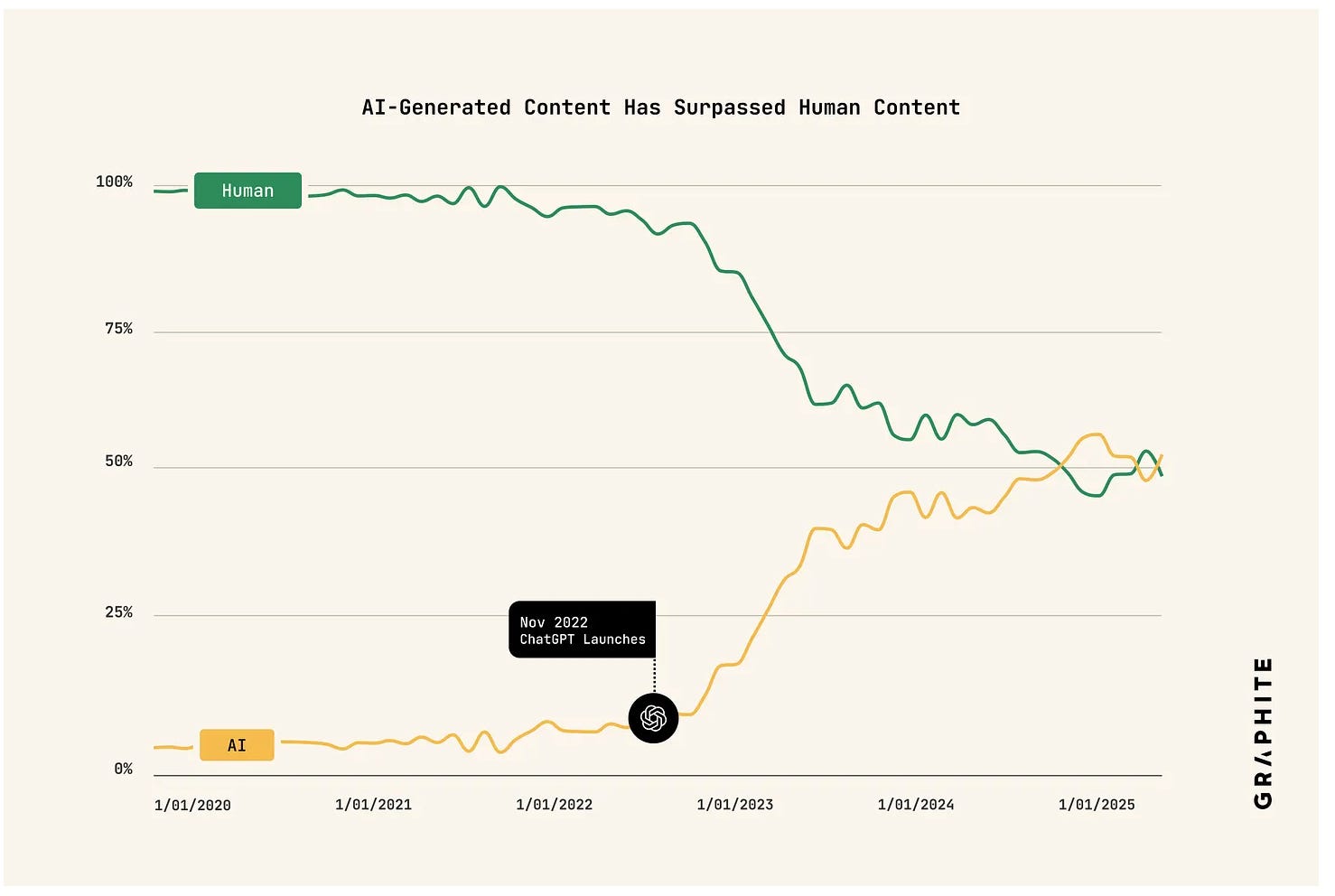
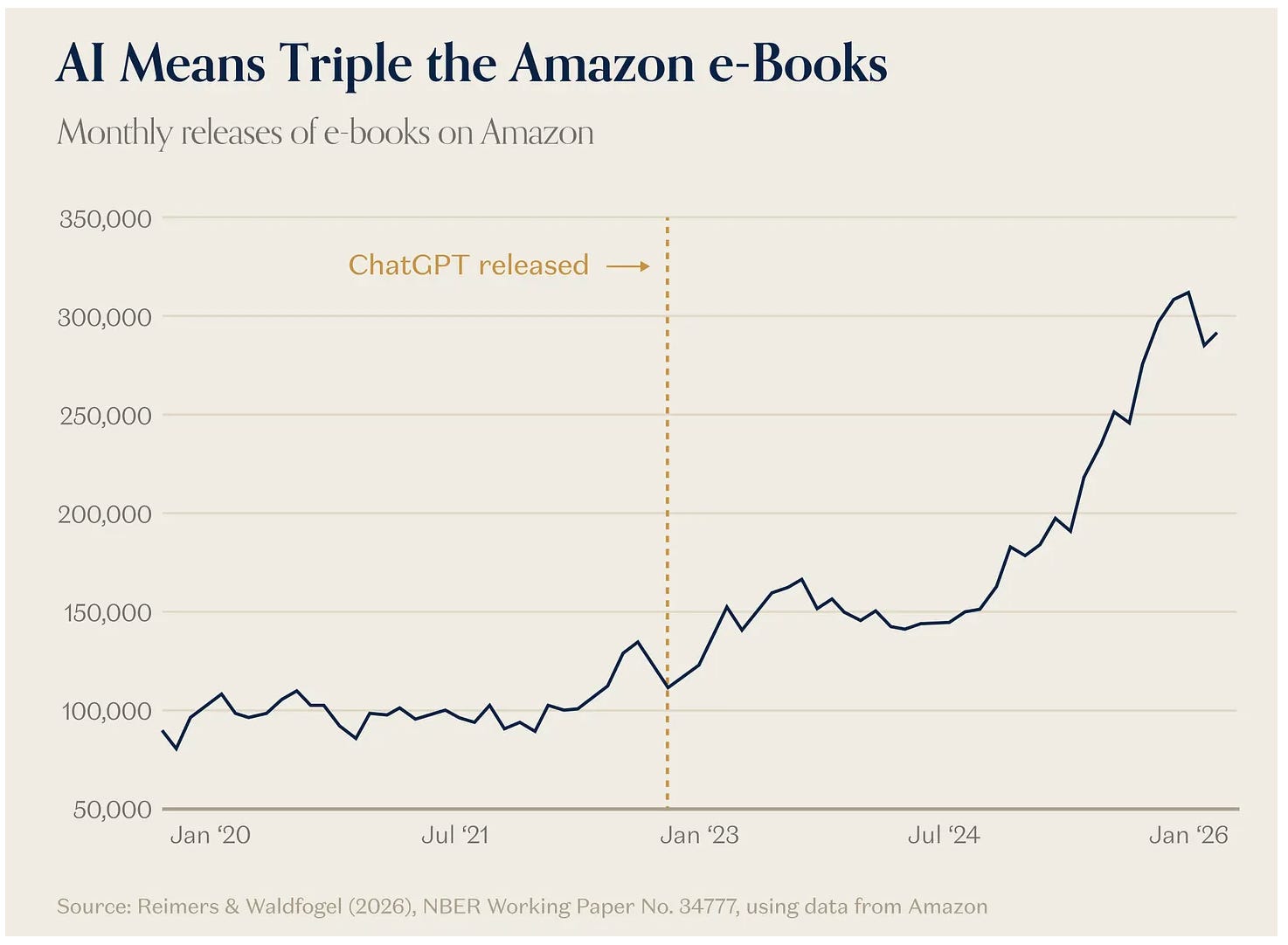
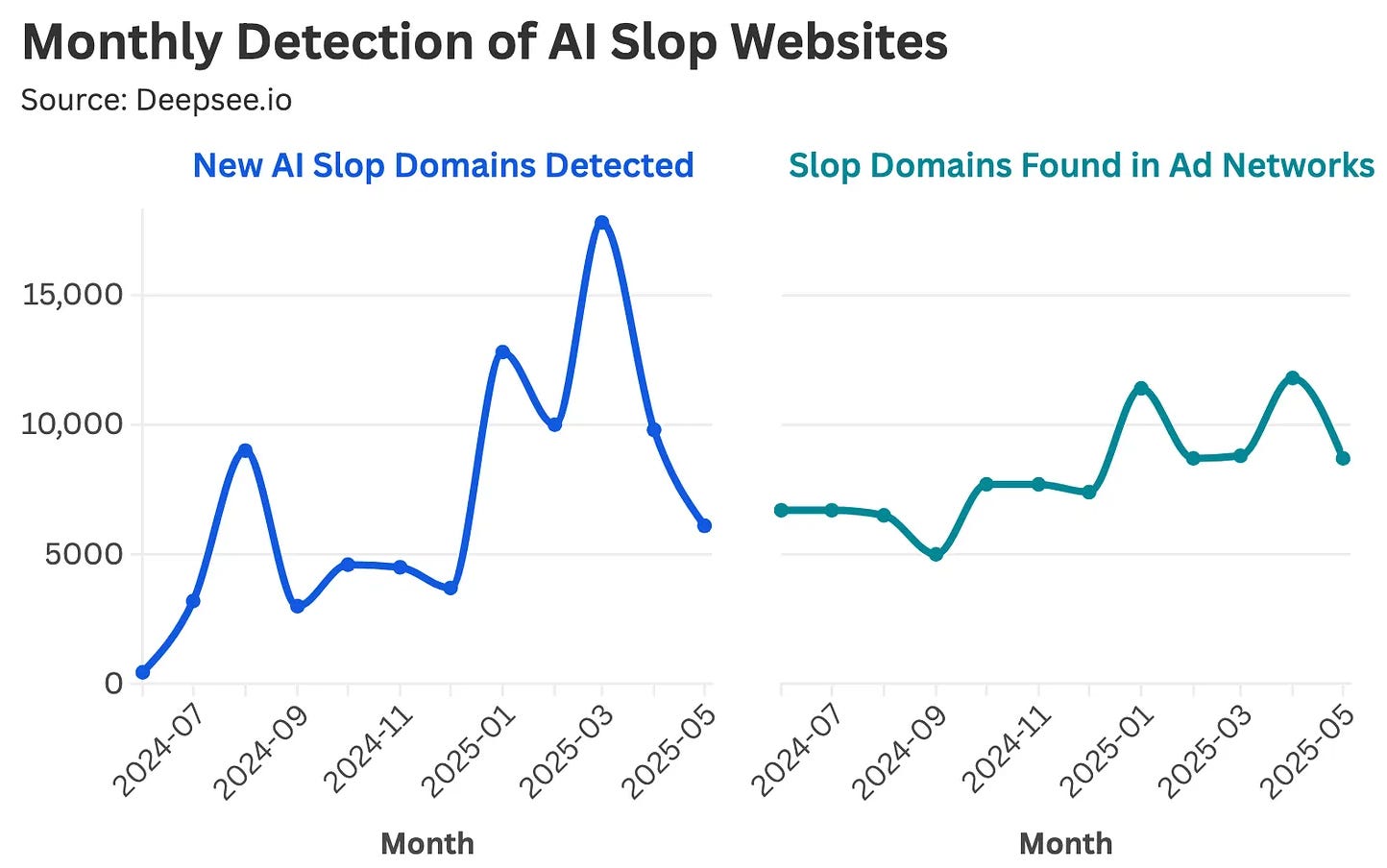
“Brain rot” dates back to Henry David Thoreau, who used it in Walden in 1854 to criticize society’s appetite for shallow entertainment. Today, the concern has returned in the form of AI slop, meaning low-quality, machine-generated text, images, and videos flooding digital platforms. Since ChatGPT’s release in 2022, AI-generated content has surged across websites, Amazon e-books, academia, and short-form video, with one study estimating that nearly half of newly published digital content may now be AI-generated.
Social media platforms reward cheap, attention-grabbing content, allowing AI slop to spread quickly and sometimes generate serious advertising revenue. Short-form video platforms appear especially vulnerable, with studies suggesting a large share of YouTube Shorts and similar content qualifies as low-quality “brain rot,” and a significant portion may be AI-created. But the same advertising system that helps fund this content may also create pressure to control it. Major brands do not want their ads appearing beside obviously synthetic, low-quality spam, so advertisers may push platforms to verify larger accounts and improve quality control. Platforms will probably never eliminate AI garbage entirely, but they will need to keep it below the point where users lose interest, advertisers lose confidence, and the business model starts to break.
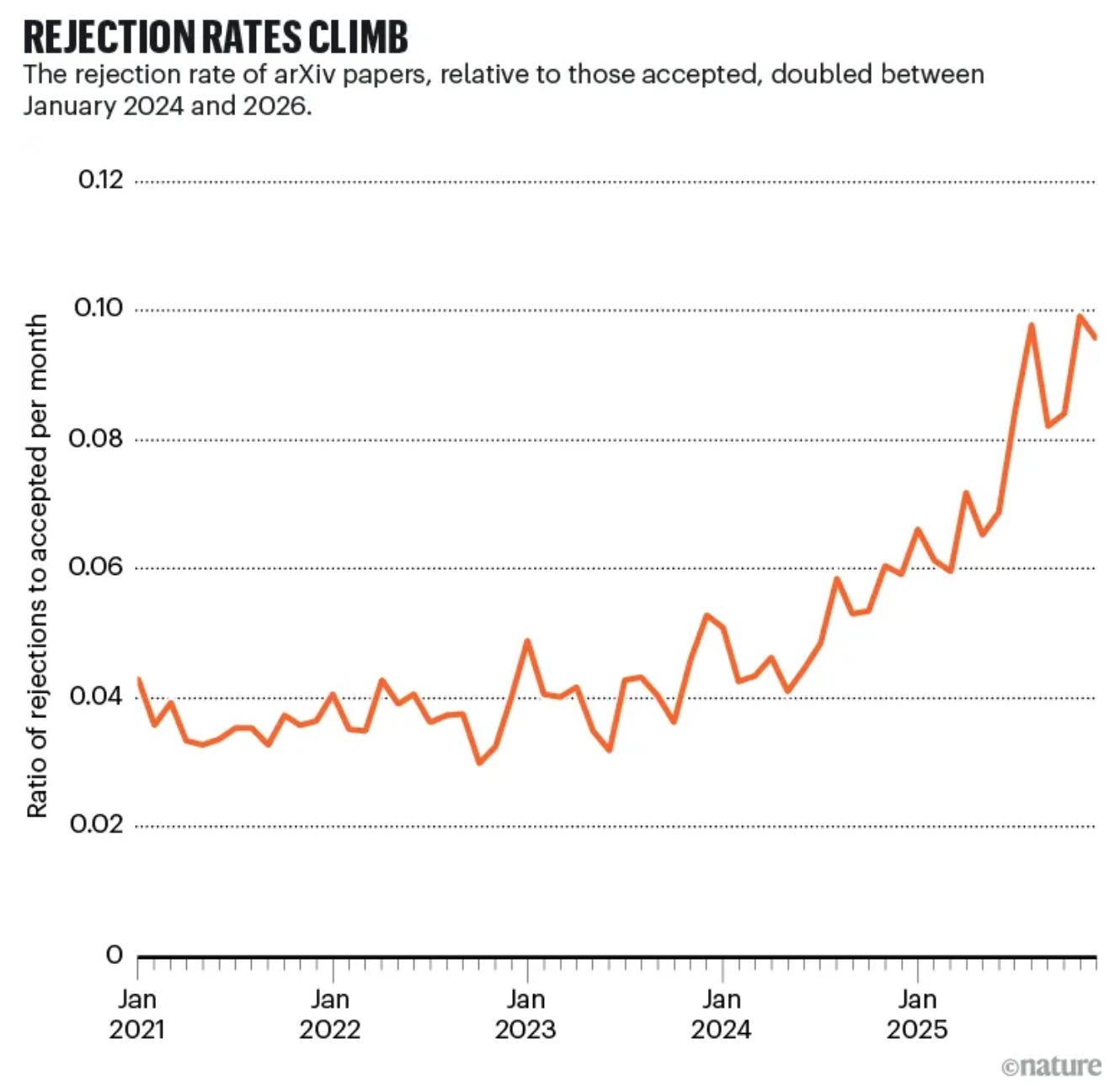
And then there’s this from the Financial Times:
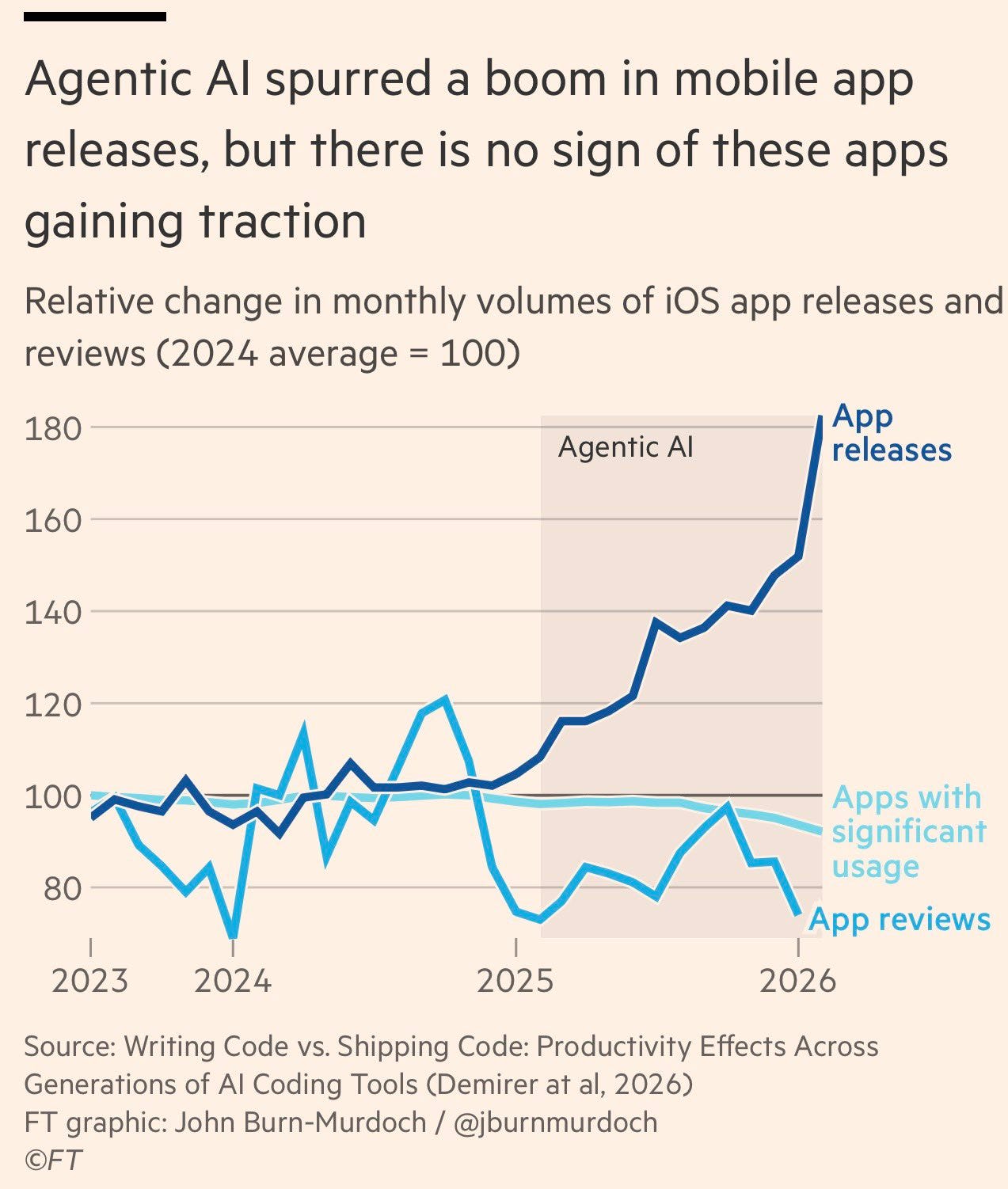
But, on the other hand, there’s also this (which can also be true):
6. Anthropic Urges Global Pause in AI Development, Flags ‘Self-Improvement’ Risk (WSJ)
Anthropic is warning that frontier AI systems may be advancing fast enough that labs should seriously consider a coordinated slowdown or temporary pause. The company says models could be moving toward “recursive self-improvement,” where AI systems improve themselves without human intervention, though it stresses that this has not happened yet and may not happen. Anthropic argues that society, policymakers, and alignment researchers may need more time to prepare before AI capabilities outpace oversight.
The proposal is controversial because Anthropic is both a major AI competitor and a company that has long emphasized safety. Supporters see its warnings as sincere concern about potentially transformative and dangerous technology. Critics argue the safety messaging could serve Anthropic’s business interests by encouraging regulation that slows rivals, especially open-source models, or by marketing its own systems as powerful enough to be risky. Some researchers warning that AGI or self-improving AI could arrive soon, while others argue today’s language-model-based systems are still far from human-level intelligence.
Anthropic says any slowdown would only work if it were global and verifiable, since companies or countries that continued development while others paused could gain a decisive lead. It compares the challenge to nuclear arms control, but notes that AI training runs are much easier to hide than missile silos. The company plans to convene policymakers, researchers, and other stakeholders to explore how a credible slowdown, pause, or verification system might work before AI development reaches a point where institutions are unprepared.
Economy
7. Corporate America has never been this profitable (Sherwood)
AI is helping push U.S. corporate profitability to record highs, especially among the biggest technology companies. In the first quarter, S&P 500 companies kept nearly 15 cents of profit for every dollar of revenue, the highest level FactSet has tracked since 2009 and far above the long-term historical average. The shift is being driven heavily by the Magnificent 7, which now make up more than a third of the S&P 500’s market value and posted earnings growth far stronger than the rest of the index.
The broader profit boom is rooted in strong AI demand, huge megacap tech earnings, aggressive cost-cutting, layoffs, and efficiency campaigns across Corporate America. Both operating and net margins are now at their highest levels in at least two decades, meaning that companies are earning more from their core businesses and keeping more after expenses. But the trend also creates risk: a large share of expected S&P 500 earnings growth now depends on AI infrastructure winners, thus the market’s outlook is increasingly tied to whether today’s AI spending turns into lasting profits.

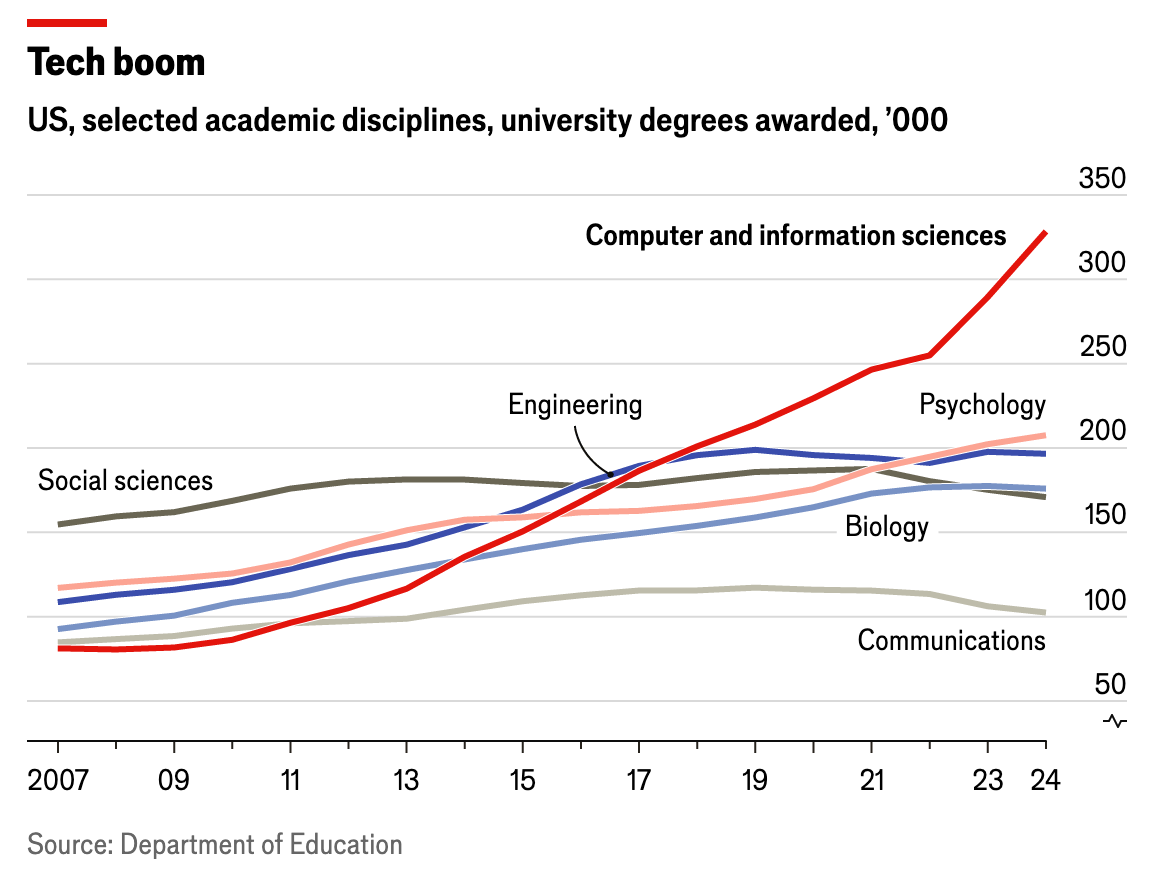
8. Do you really want that computer-science degree? (Economist)
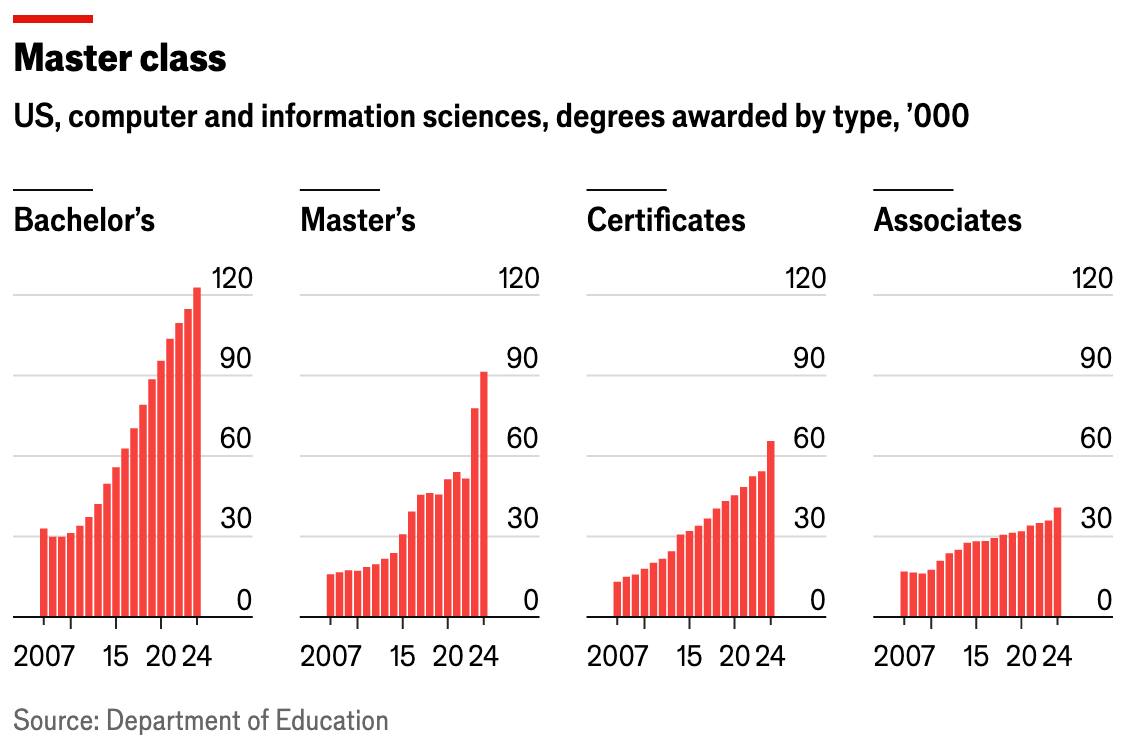
Computer science degrees are surging across the U.S., but much of the growth is coming from online-heavy, less selective institutions rather than traditional tech powerhouses. BYU-Idaho is a good example—despite being located in a small college town with little tech-industry presence, it awarded more than 2,000 computer and information-science degrees in 2024, far more than just two years earlier and ahead of elite schools such as MIT, Stanford, and Carnegie Mellon. Similar spikes have occurred at institutions like the University of North Texas, Wichita State, and short-term credential providers.
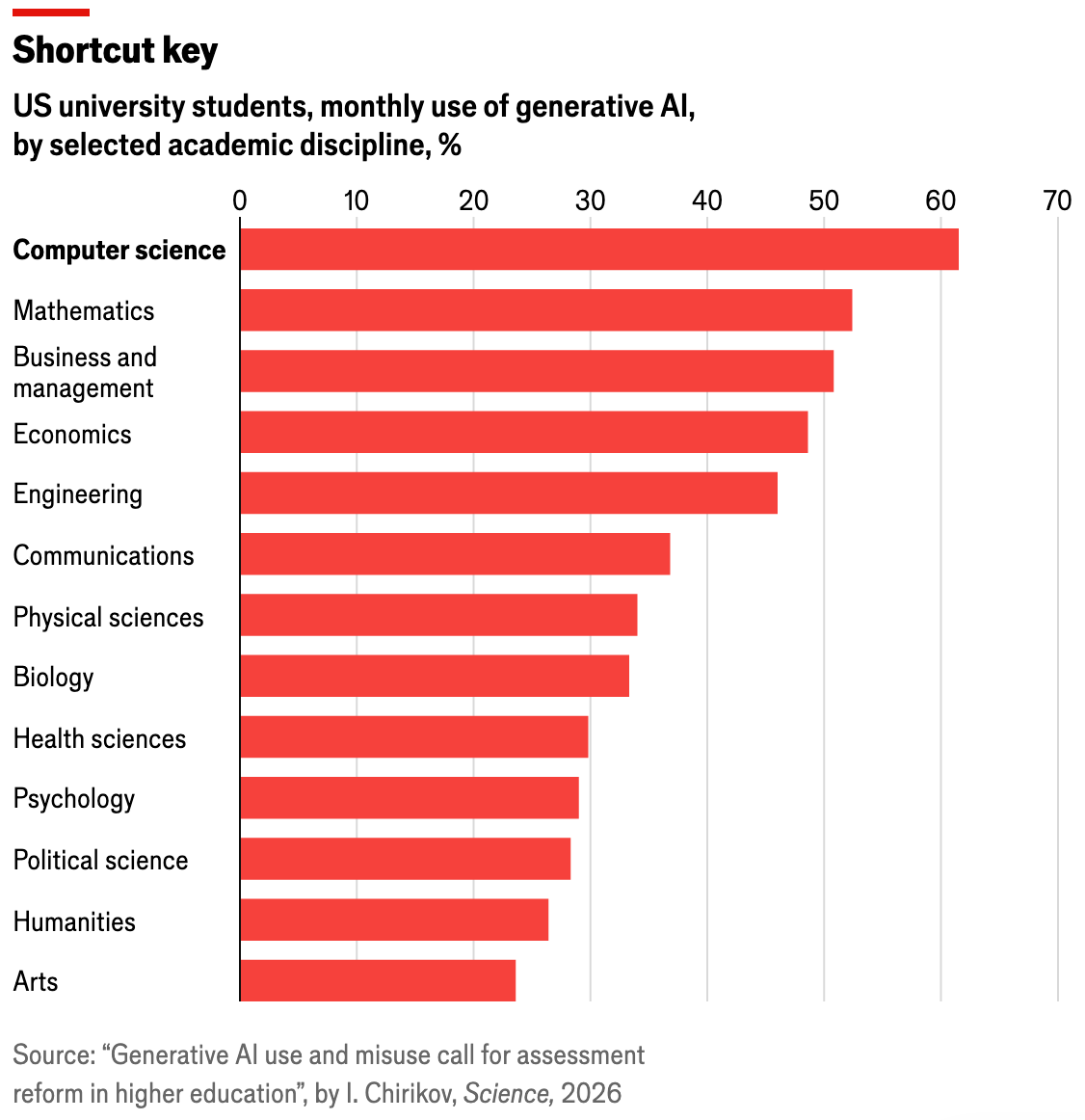
Several forces are driving the boom. Tech wages remain attractive, with new computer-science graduates earning high starting salaries, and universities have adapted their business models through online programs, short-term credentials, and competency-based degrees that let students move quickly through coursework for a flat term fee. AI may be accelerating the trend by making it easier for students, especially online students, to complete assignments rapidly or cheat, with computer-science students among the heaviest users of generative AI tools.
All of this is leading to a growing mismatch risk. AI may be helping produce more computer-science graduates at the same time it is reducing demand for entry-level software engineers. Aspiring tech workers could therefore find themselves using AI to earn credentials for jobs that AI is also beginning to threaten.
9. Tech Layoff Wave Has Already Hit 100,000 Jobs This Year (Statista)
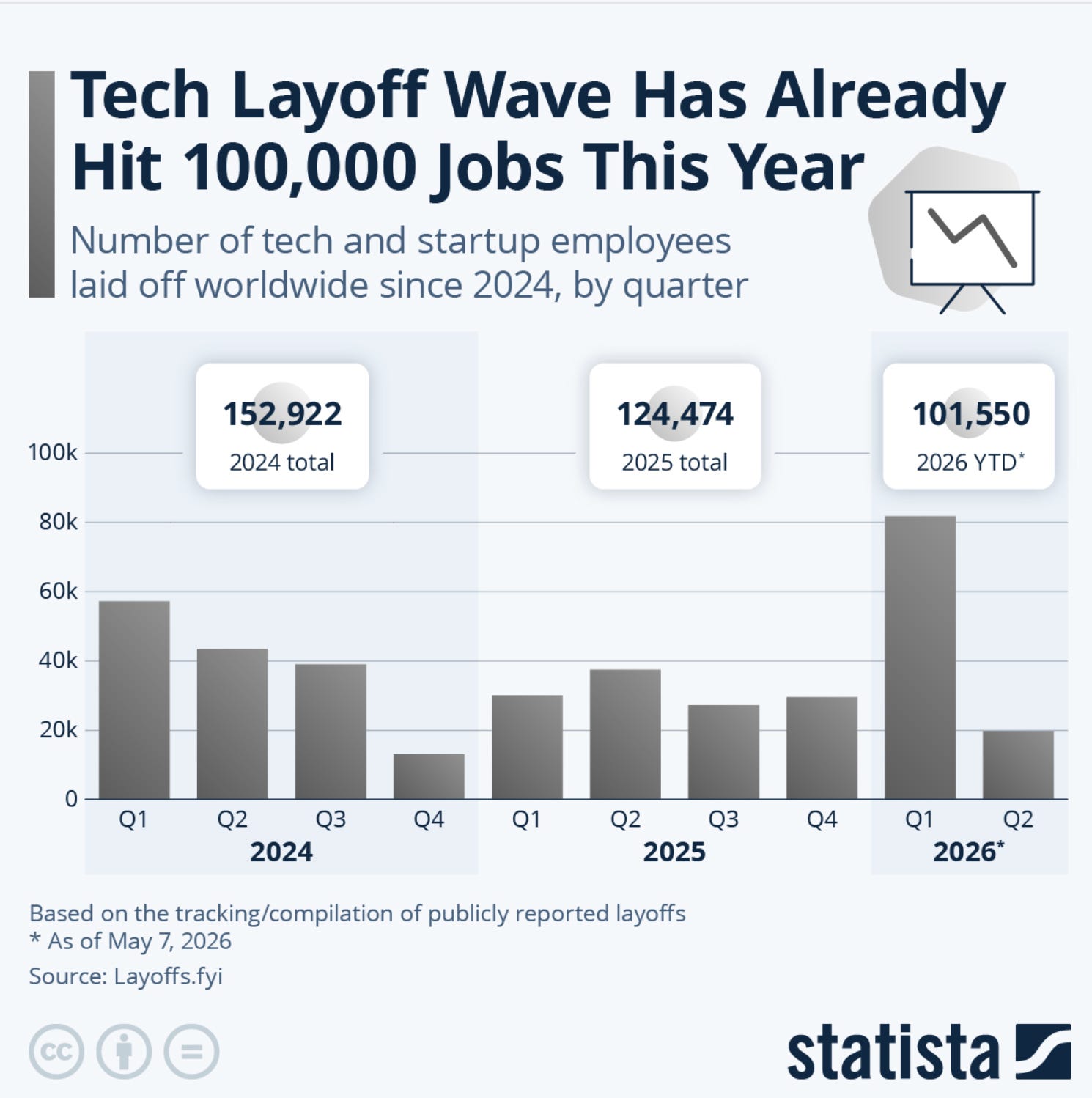
Tech layoffs are accelerating again after two years of cooling. More than 100,000 tech jobs had already been cut worldwide by early May 2026, including about 81,700 in the first quarter alone. That was the highest quarterly total since early 2023, followed by another roughly 20,000 cuts in the first six weeks of the second quarter. The shift marks a sharp reversal from 2025, when layoffs stayed much lower, and from 2024, when cuts steadily declined across the year.
The renewed wave is being driven by major companies, including Meta, PayPal, and Cloudflare, as the sector continues to emphasize efficiency, cost control, and heavy investment in artificial intelligence. Layoffs are still below the extreme peak of early 2023, when more than 160,000 jobs were cut in a single quarter, but the pace in 2026 suggests tech may be entering another major restructuring cycle. At the current trajectory, total cuts could approach the scale of the 2023 downturn, when more than 260,000 tech jobs were eliminated.
NOTE: I know I keep harping on this topic…but here’s a reminder:
10. America’s Social Security trust fund is disappearing (Economist)
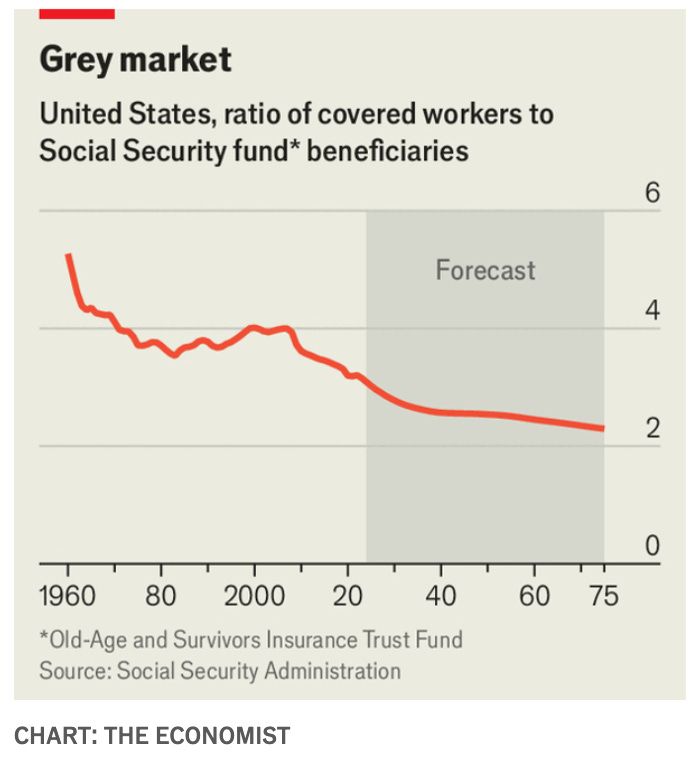
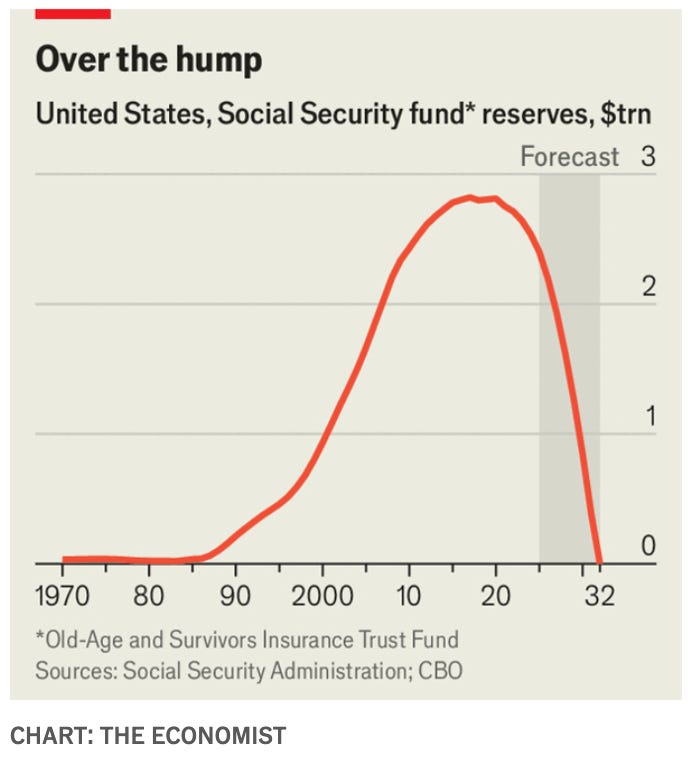
Social Security’s main trust fund is nearing a major fiscal deadline. When the program began in 1940, more than 150 workers paid into the system for every retiree receiving benefits. Today, that ratio has fallen to fewer than three workers per beneficiary because of lower birth rates and longer lifespans. The fund’s reserves peaked at $2.8 trillion in 2017 but have since declined by about $400 billion as benefit payments exceed contributions. If nothing changes, the fund is expected to run out around late 2032 or early 2033, triggering an automatic benefit cut of roughly 23%.
Analysts have proposed modest payroll-tax increases, bringing more state and local government workers into the system, raising retirement ages for higher earners, and taxing benefits more heavily for wealthier retirees. But the political environment makes reform difficult. Past fixes relied on either large congressional majorities or bipartisan compromise, while today’s Congress is highly polarized and voters strongly oppose cutting Social Security. Polling shows Americans are far more likely to want Social Security spending increased than reduced. While the trust fund is partly an accounting mechanism, its depletion would have real legal consequences because benefits would automatically fall unless Congress acts. The likeliest outcome, absent early reform, is another crisis-driven rescue funded through more borrowing rather than a durable long-term fix.
Health
NOTE: This one gets my “Article of the Week” star (which I just made up):
⭐ 11. Don’t Get Too Comfortable. Your Quality of Life Depends On It. (WSJ)
Modern life, especially as AI makes tasks easier and more frictionless, may be removing the very challenges people need to stay healthy, resilient, and alive in a meaningful sense. It’s not that people are stressed, but that they may become stagnant. Human well-being depends on “progression,” meaning manageable challenge that builds future capacity in the body, behavior, and mind.
Progression shows up in three areas: 1) Physically, exercise improves health most when it gradually builds endurance, strength, or skill. 2) Behaviorally, even small actions can break cycles of avoidance and restore momentum, especially for people struggling with depression or low motivation. 3) Mentally, broad and exploratory thinking can improve mood, creativity, and flexibility, while repetitive rumination is linked to anxiety, depression, and lower vitality.
What we’re really talking about here is the difference between pursuing pleasure or growth. Scrolling, sugar, alcohol, and passive entertainment may soothe discomfort temporarily, but they do not make people stronger or more capable. Progression often involves effort, uncertainty, and discomfort, but it leaves people better equipped than before. In a world increasingly optimized for ease, the healthier question is not whether something feels good immediately, but whether it moves us forward.
12. The Boom in Autism Therapy Is Medicaid’s Fastest-Growing Jackpot (WSJ)
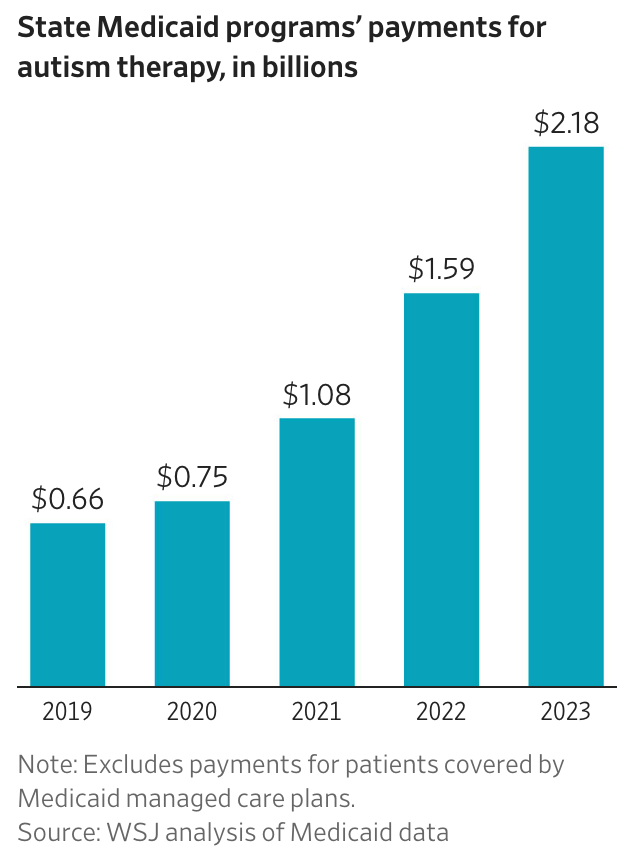
Medicaid-funded autism therapy has become one of the fastest-growing areas of U.S. healthcare spending, with state Medicaid payments for applied behavior analysis rising from $660 million in 2019 to $2.2 billion in 2023. The growth reflects rising autism diagnoses and demand for services, but it has also attracted entrepreneurs, investors, and private-equity-backed providers, sometimes faster than regulators could monitor billing practices. Federal auditors have found widespread documentation problems in several states, including cases where Medicaid paid for therapy while children were napping or watching videos.
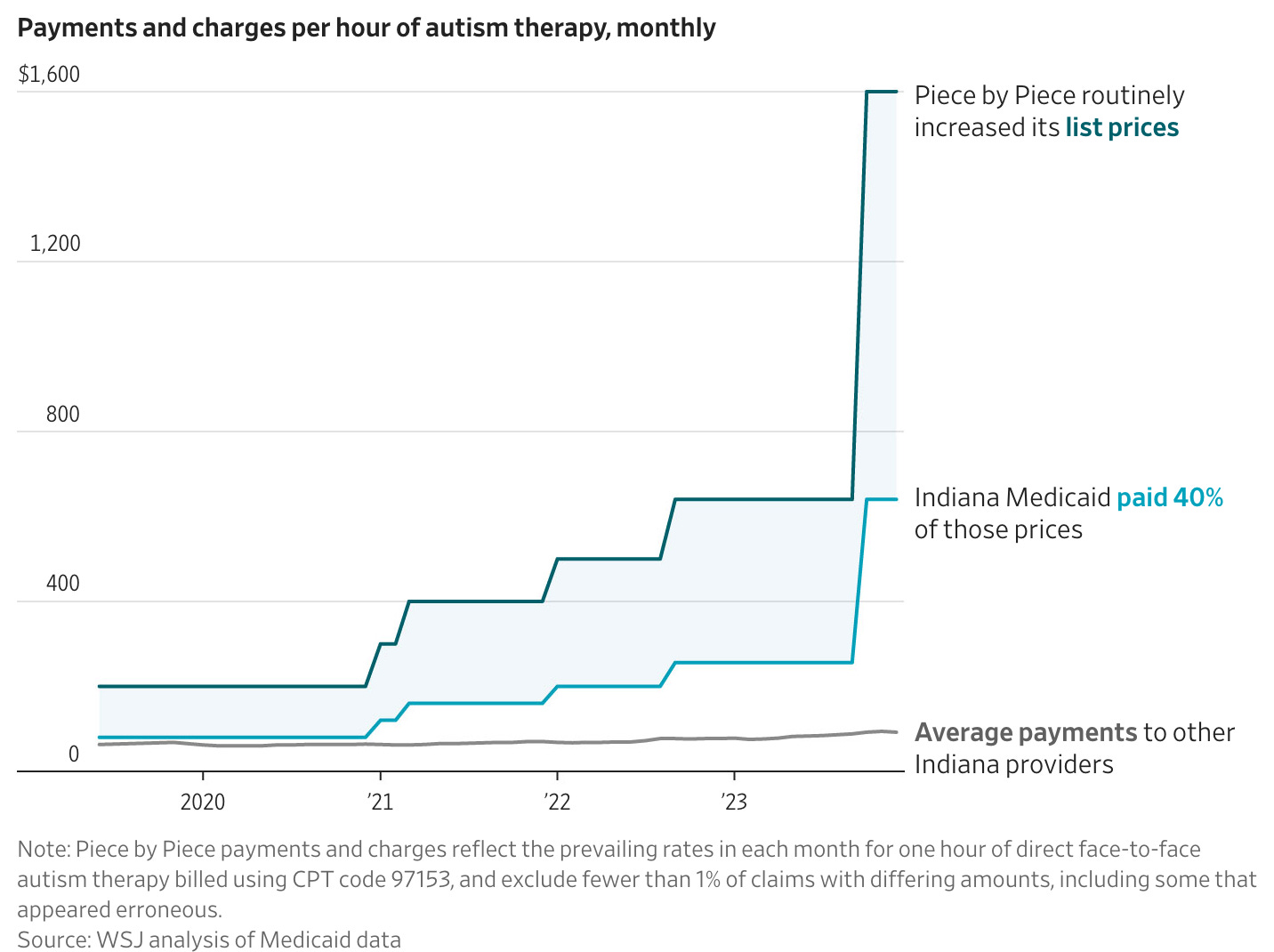
Indiana became a major example of the problem because it reimbursed autism-therapy providers at 40% of whatever they billed, rather than using fixed rates. That system allowed some providers to charge extremely high prices. Piece by Piece Autism Centers, for example, received $29 million from Indiana Medicaid in 2023 to treat just 84 children, about $340,000 per child, with some reimbursements reaching $640 an hour for routine therapy. The company’s owner said it followed state rules and that Indiana did not object to its prices, while state officials now say the old system lacked proper oversight.
Some providers may be billing unusually high numbers of therapy hours per child, even though experts say treatment should vary by individual need and full-time clinic therapy is rarely necessary. Minnesota, Colorado, Florida, and Indiana all had providers billing 30 or more hours per week on average for many children, while federal prosecutors have charged some Minnesota autism-therapy operators with fraud.
Entertainment
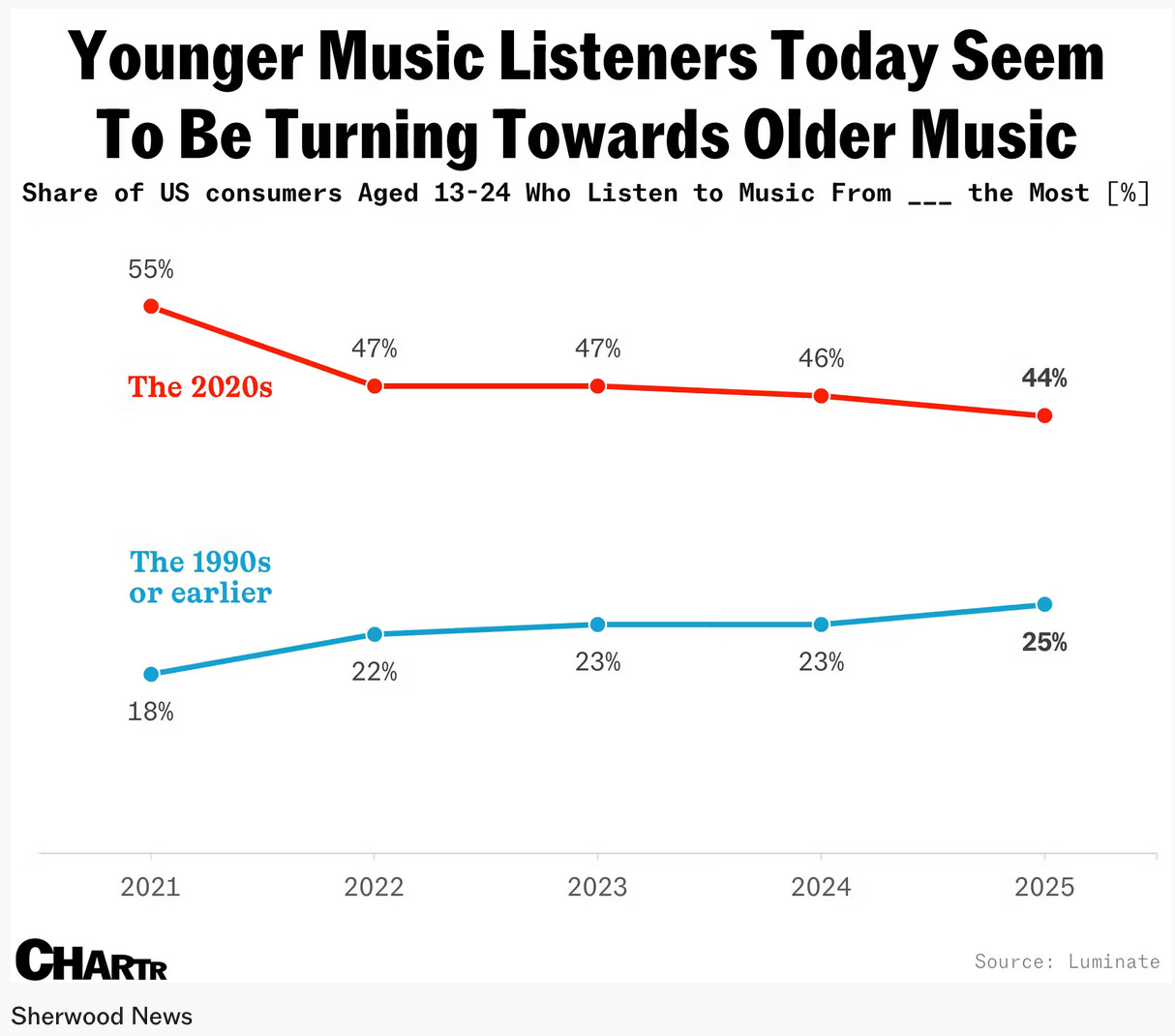
13. Kids these days are listening to more songs from the good old days (Sherwood)
Older music is having a major streaming revival, especially among younger listeners. While music from the 2020s still leads among listeners ages 13 to 24, its share has fallen since 2021, and more young people now say they listen most often to music from the 1990s or earlier. The 1990s, in particular, has become the fastest-growing decade for streams. Streaming and social media are driving the shift. Unlike earlier eras, when listeners were limited by radio, record stores, CDs, or vinyl, today’s platforms make more than a century of music instantly available. TikTok and other social platforms can turn old songs into viral sound bites, sending tracks by artists such as Radiohead, Coldplay, Fleetwood Mac, and Michael Jackson back into mainstream attention. Still, current music continues to dominate the biggest individual songs on Spotify, with most of the platform’s top-streamed tracks released after 2010. As AI-generated music expands and listeners search for something more familiar or authentic, older music may increasingly become a source of future hits.