

First, some fun:
1. World Cup tourists are fawning over ‘this redneck crash course’ — including a trip to Buc-ee’s (NYP)
A Texas man turned several World Cup visitors’ trip into a two-day crash course in Texas culture. Drew Haas invited two couples from Poland and France to his 30-acre South Central Texas ranch, where they went off-roading, learned to two-step, rode horses, and visited Buc-ee’s. Haas said he wanted to show them “my Texas,” giving them a version of America rooted in cowboy culture, muddy pickup rides, and roadside Americana.
The visitors embraced the experience, with one Polish tourist saying it felt like stepping into the kind of John Wayne westerns his father watched growing up. Although one guest was skeptical at first, she quickly warmed to the off-road adventure and ranch lifestyle. For Haas, the most meaningful part was watching strangers connect with the place he loves. The story frames the visit as a lighthearted cultural exchange, showing how hospitality, shared experiences, and a little Texas excess can turn tourists into fans of American life.

International
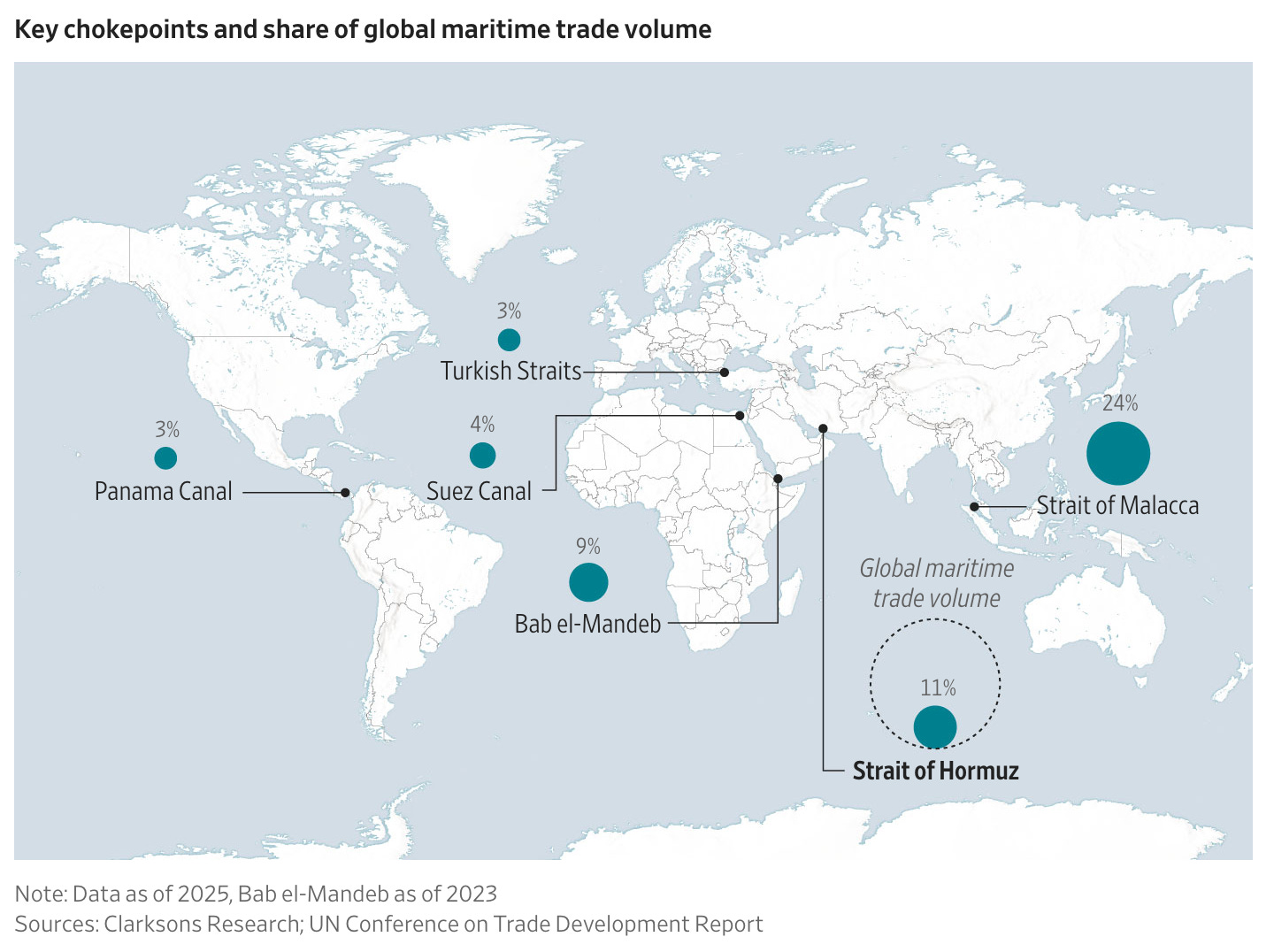
2. See the Global Chokepoints That Carry Much of the World’s Trade (WSJ)
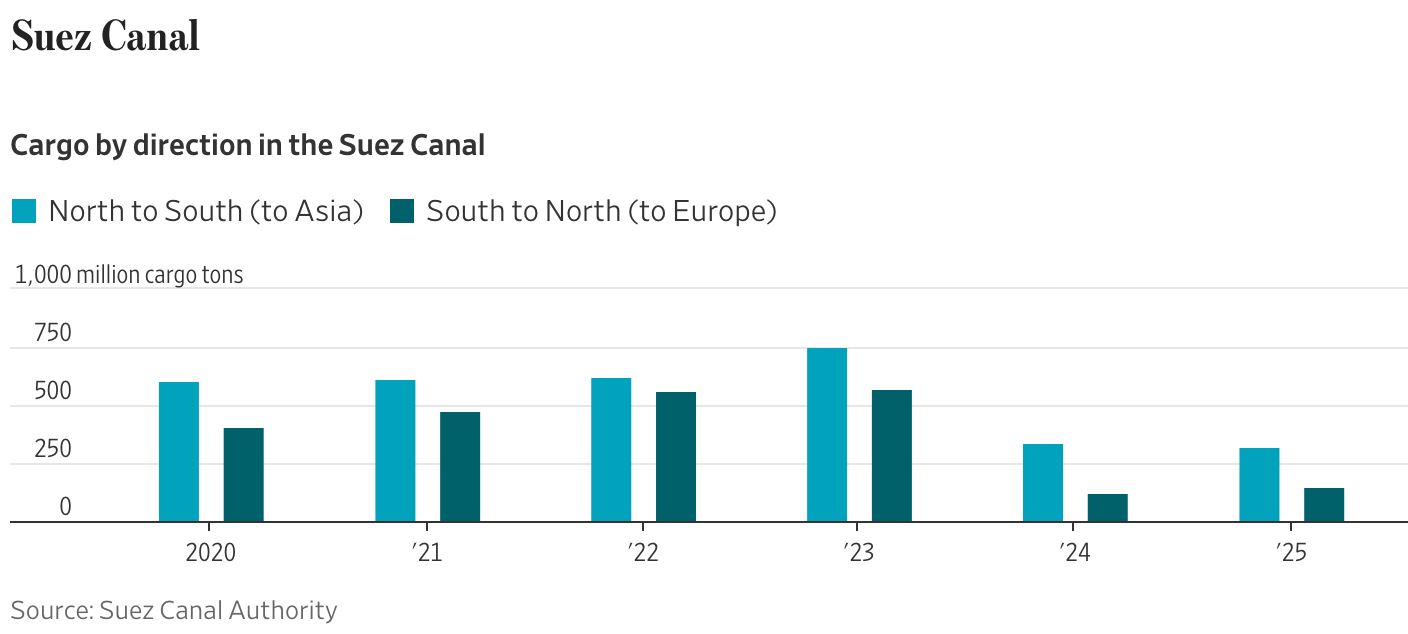
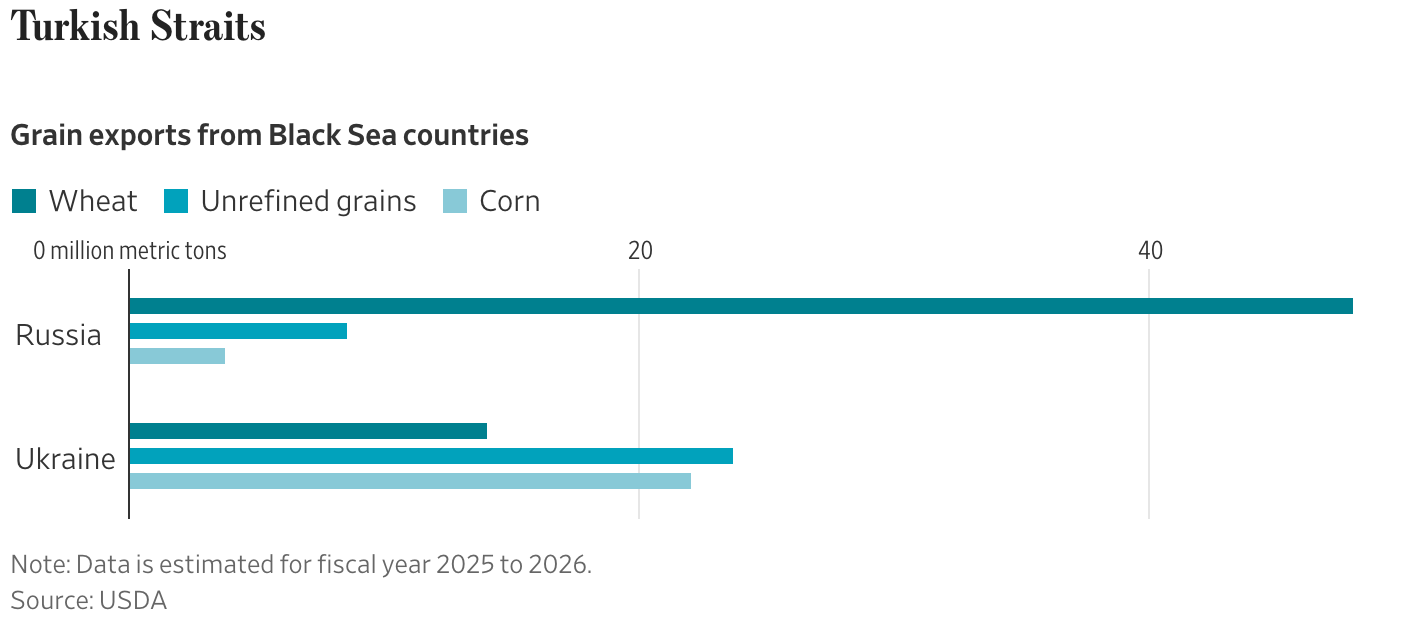
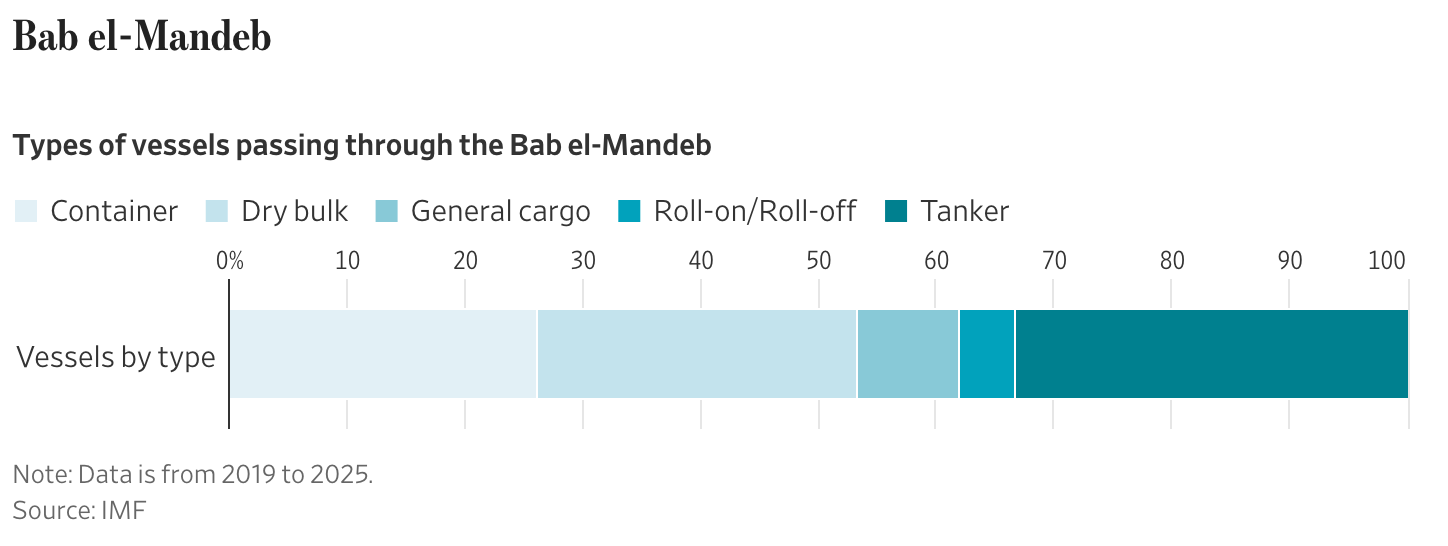
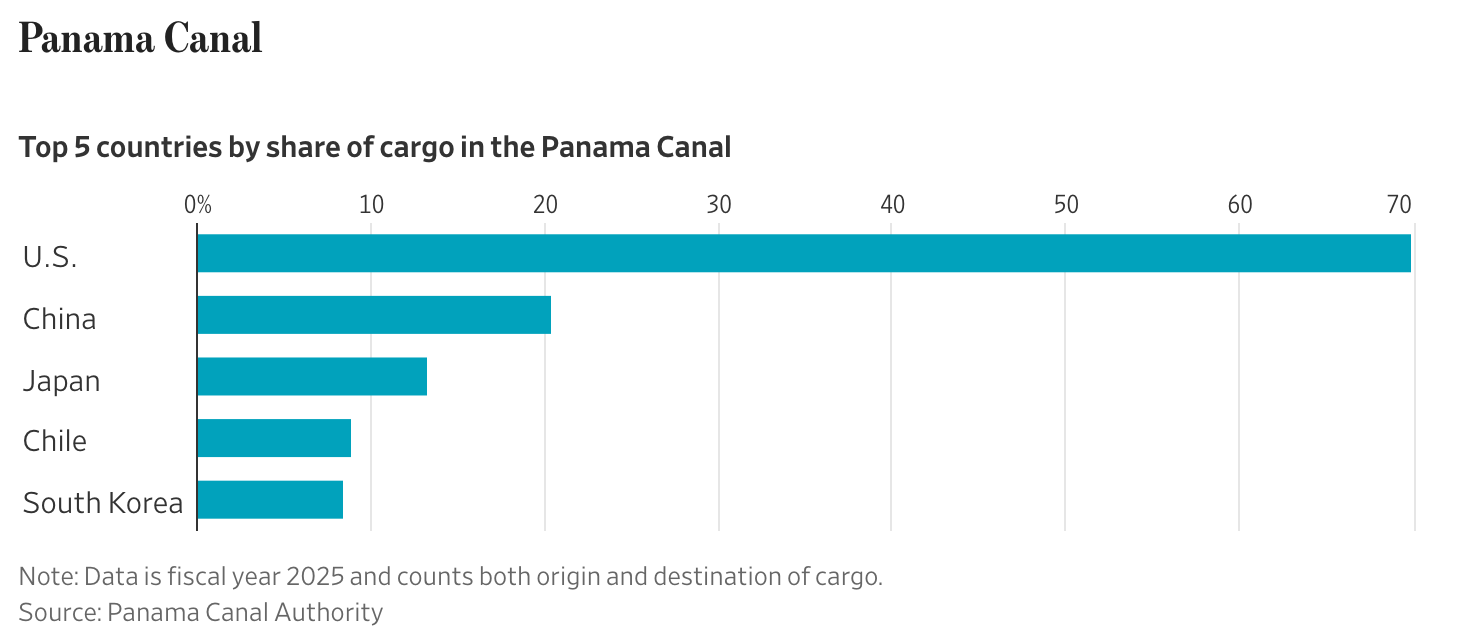
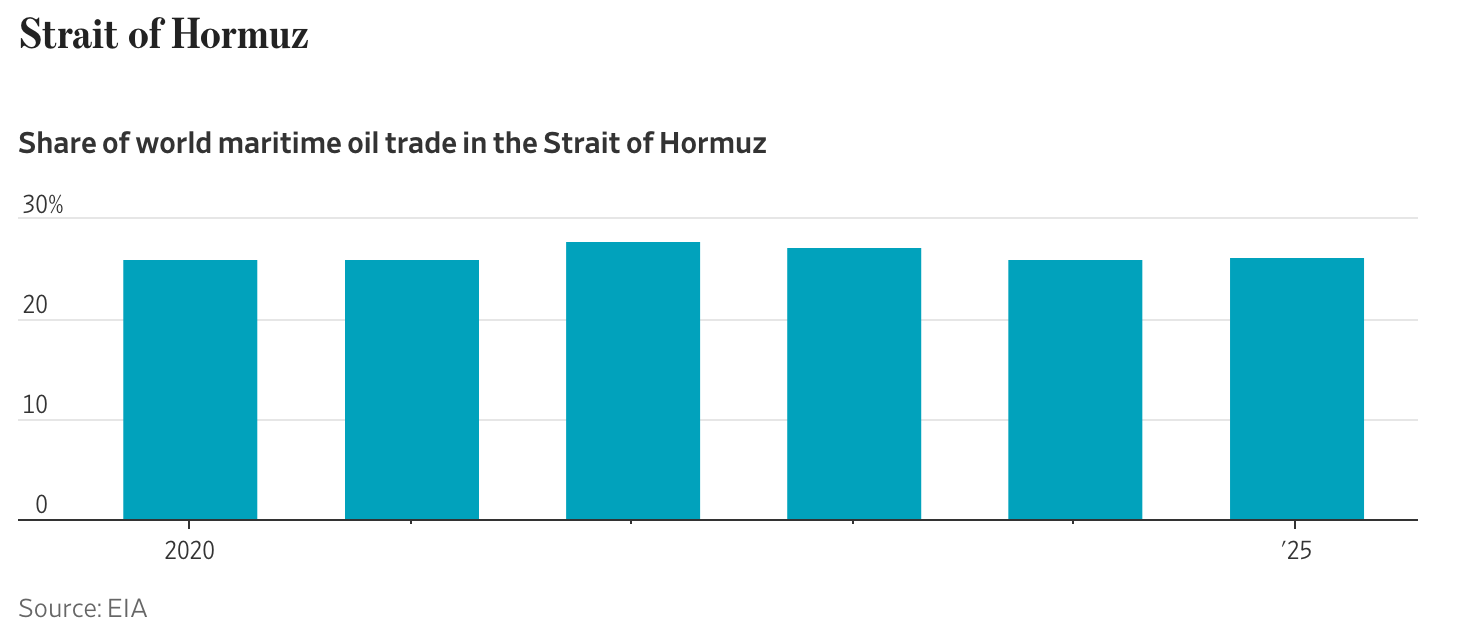
Some key points: The Strait of Hormuz carries about one-fifth of global oil shipments and a major share of liquefied natural gas, making it especially important for Asian economies such as Japan and South Korea. The Strait of Malacca is the fastest route for Middle Eastern energy to reach Asia and is especially important to China. The Panama Canal handles a large share of U.S. container traffic and has become entangled in U.S.-China tensions. The Suez Canal remains a major route for Asia-Europe trade and energy shipments, while the Turkish Straits are important for Russian and Kazakh oil and Ukrainian grain. The Bab el-Mandeb, between Yemen and Djibouti, is another key oil route and has been threatened by Iran-backed Houthi forces.
3. Xi’s Enforcers Are Hunting Down Officials Who Consult Mystics and Borrow Too Much (WSJ)
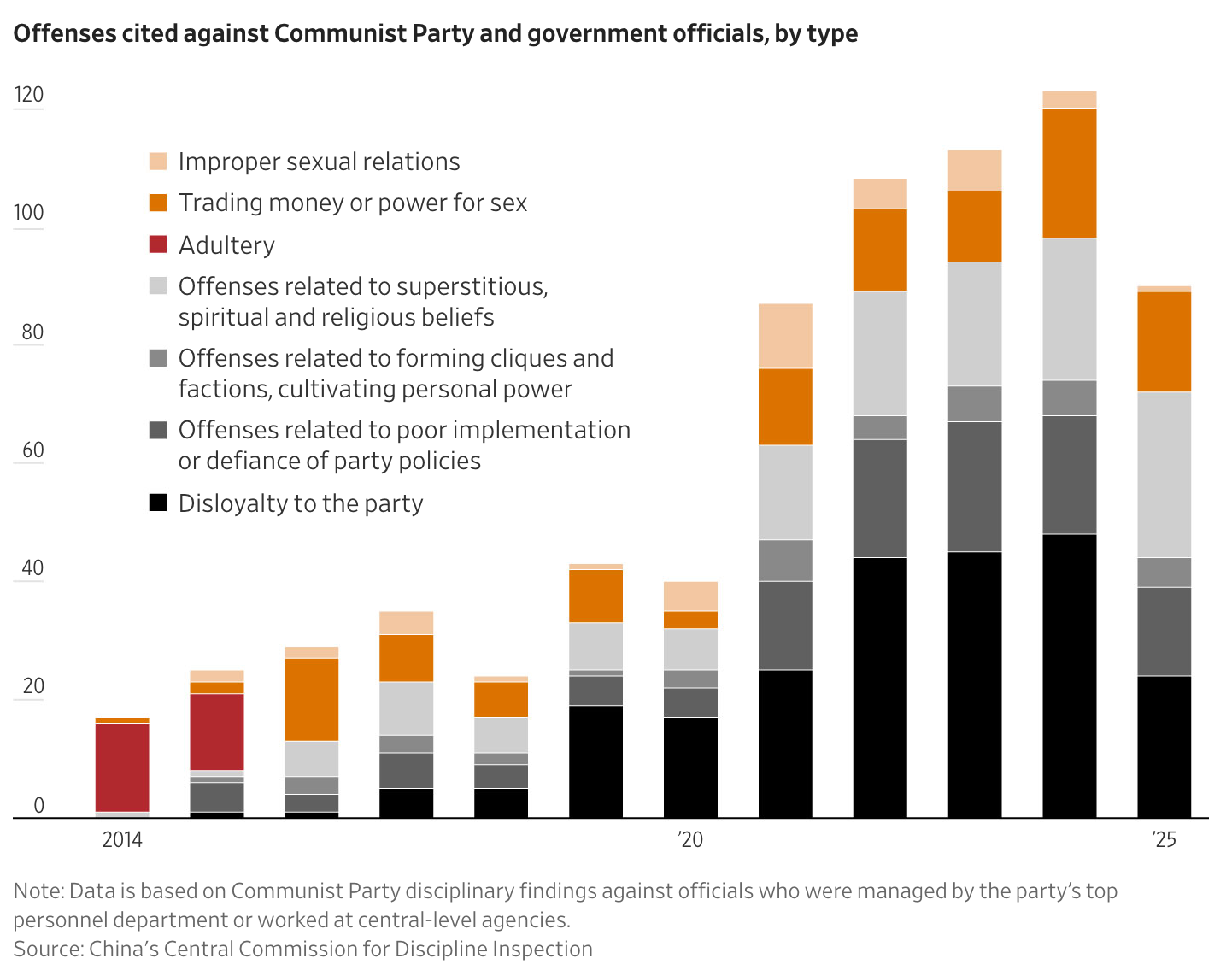
Xi Jinping’s anti-corruption campaign has expanded from targeting bribery and personal misconduct into a broader effort to enforce political loyalty across China’s Communist Party. Party enforcers punished nearly one million people in 2025, a record high, and disciplinary charges increasingly include vague political offenses such as disloyalty, defying Xi’s directives, forming factions, or failing to implement Beijing’s policies. The campaign is designed to keep officials constantly alert and aligned with Xi’s priorities.
The campaign now reaches into many areas of officials’ lives and work. Some have been punished for reckless debt-funded projects, poor implementation of economic or environmental goals, “superstitious” activities like consulting fortune tellers or feng shui masters, lavish lifestyles, golf, gambling, sexual misconduct, and allowing family members to profit from political connections. The result is a disciplinary system that mixes corruption enforcement with ideological policing and moral denunciation.
4. No, China did not manage to avoid a crash (Noahpinion)
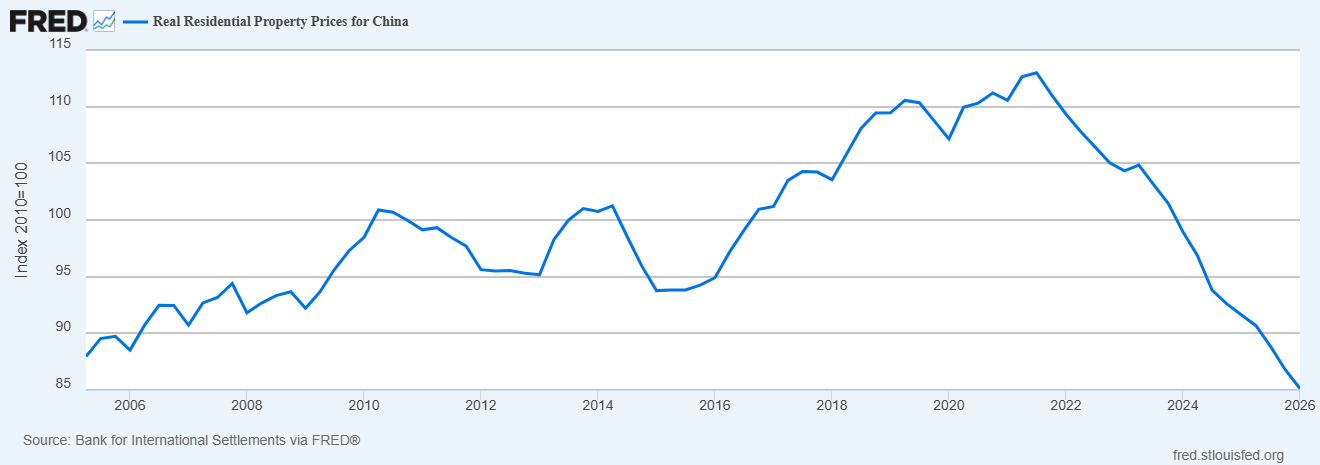
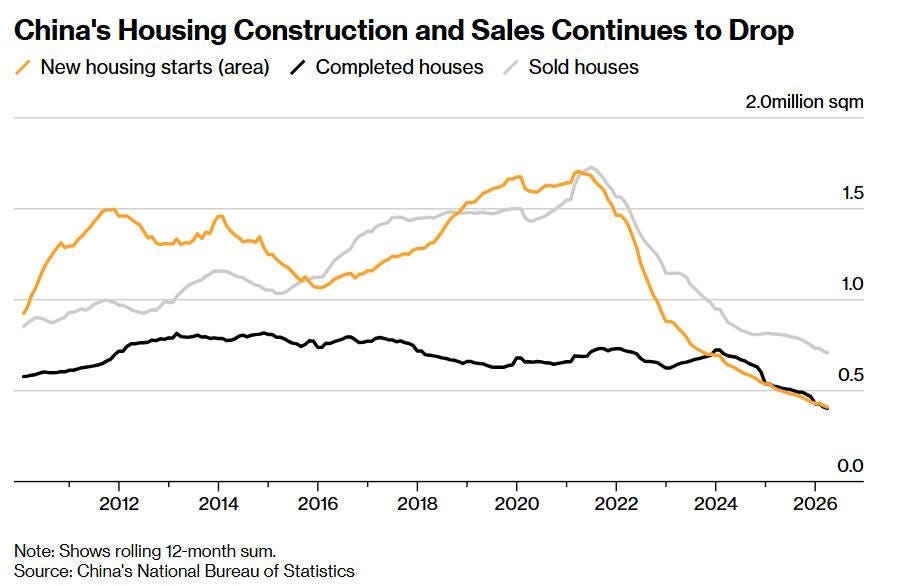
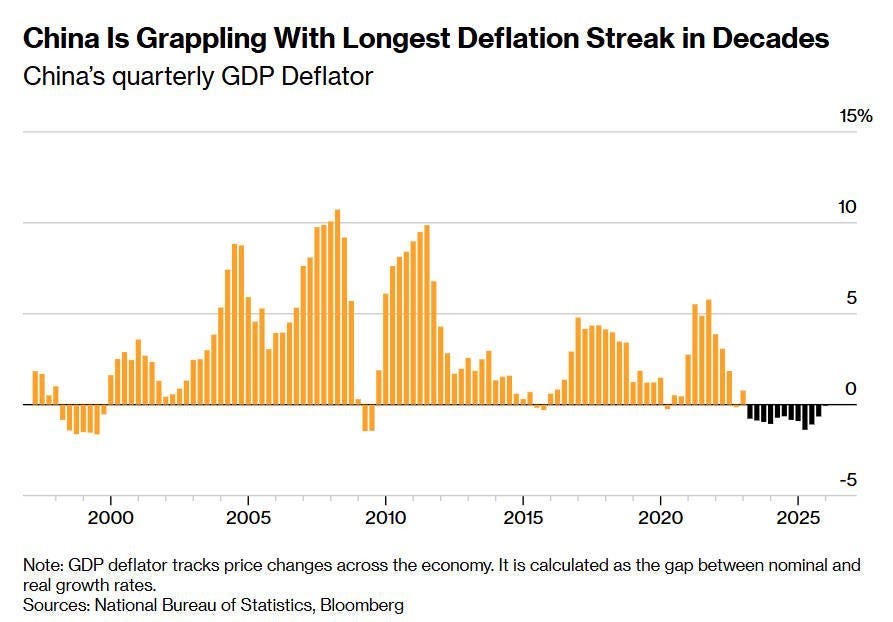
China’s economy looked almost recession-proof for years because the government could use its control over the banking system to push credit into whatever sector needed support. After 2008 and again after the 2015 market turmoil, that meant directing huge bank lending into infrastructure, construction, and especially real estate. This helped China avoid visible recessions, but it also fueled an enormous property boom that eventually turned into a long-running bust after Evergrande’s collapse in 2021.
After the property crash, Beijing used a similar strategy again, but this time it redirected lending toward manufacturing rather than real estate. That helped keep official GDP growth positive and supported the claim that China had successfully deflated a massive housing bubble without a major downturn. But the evidence is weaker than that. China’s labor market deteriorated, youth unemployment surged enough that officials changed the way they reported it, and alternative indicators suggested broader job-market weakness. Even official data showed China’s economy contracting in one quarter of 2022, while independent estimates from groups such as Rhodium and the Bank of Finland suggest growth was far weaker than Beijing reported.
Economy
5. The U.S. Added 1,200 New Millionaires a Day Last Year (WSJ)
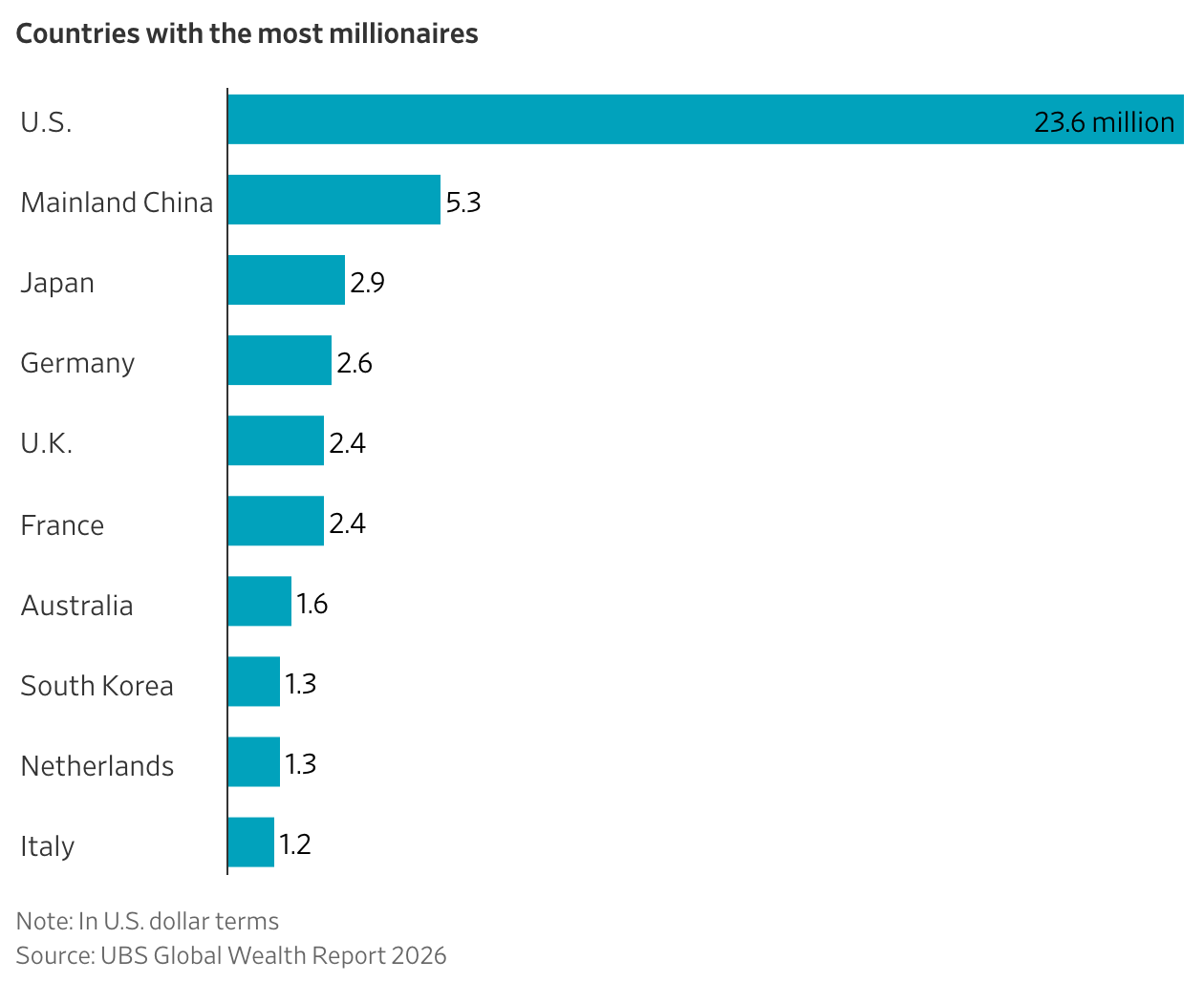
The U.S. continues to produce millionaires at a striking pace. In 2025, more than 440,000 Americans became millionaires, accounting for nearly half of all new millionaires worldwide. More than 23.6 million Americans are now worth at least $1 million, helped largely by strong financial markets. Because U.S. wealth is heavily tied to stocks and bonds, rising markets have had an outsized effect on upper-income households.
The gains, however, are highly uneven. Average wealth per U.S. adult rose nearly 10% from 2020 to 2025 after inflation, but median wealth fell by almost 20%. Those with large investment portfolios benefited from the stock-market boom, while households more dependent on wages have faced pressure from inflation and weak real wage growth. Globally, millionaire counts rose to record levels in every market UBS tracks, with particularly fast growth among people worth $50 million to $100 million.
6. They Looked Like They Were Getting Rich on Polymarket—but None of It Was Real (WSJ)
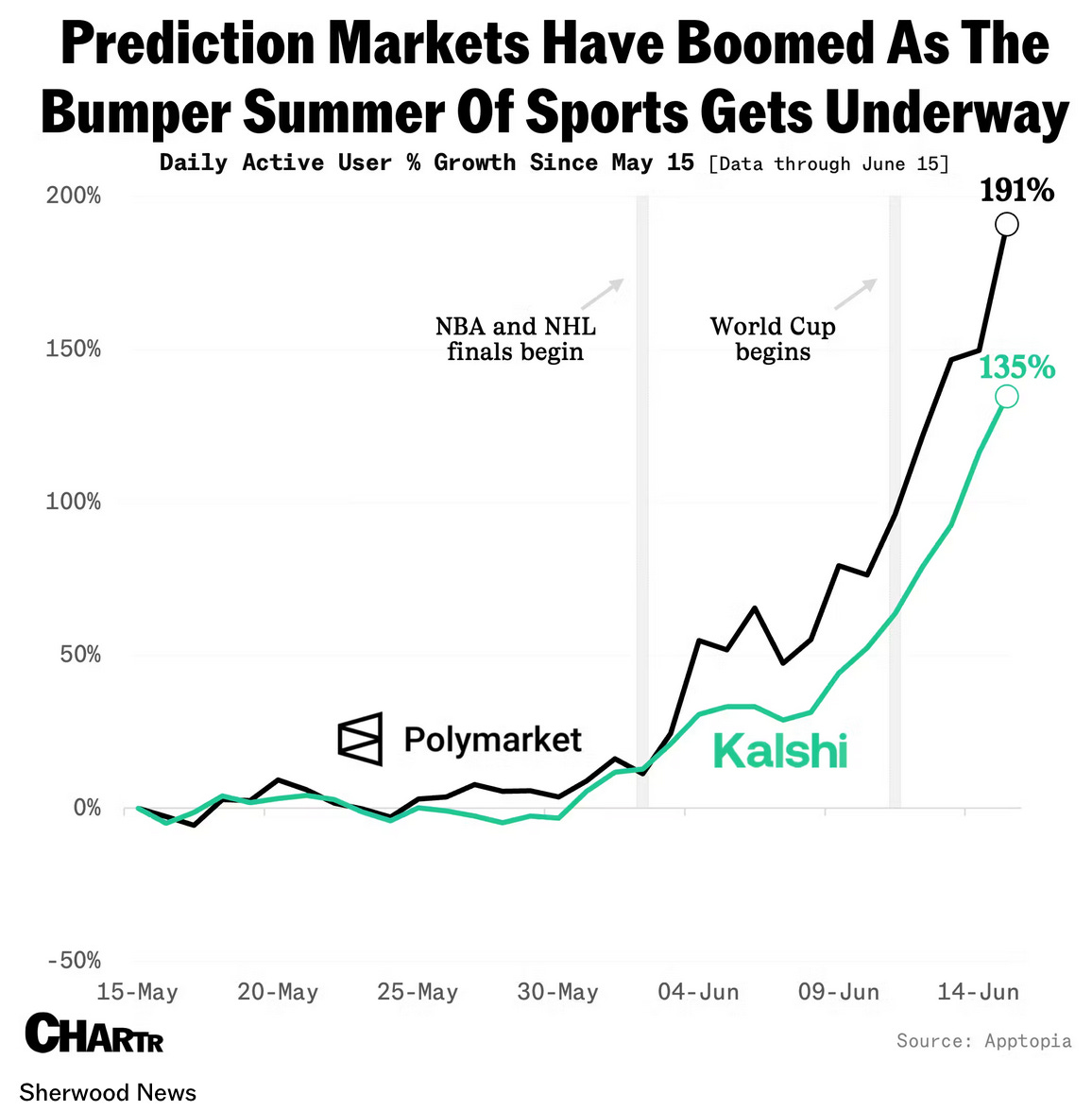
Polymarket has reportedly been paying mostly college-age social media creators to make videos showing what appear to be real bets and big wins, but many of those trades were fake. A Wall Street Journal review of more than 1,100 videos found that creators used simulated versions of Polymarket’s website to place phony trades totaling about $1.9 million, with some videos falsely showing creators winning large sums. The company allegedly instructed creators to hide that they were being paid, and some only added partner disclosures after the Journal began asking questions.
7. Toyota to Move Tacoma Production to Texas in $3.6 Billion U.S. Expansion Plan (WSJ)
Toyota will spend $3.6 billion to bring production of its best-selling Tacoma midsize pickup back to the U.S. by 2030. The company plans to add a second Tacoma assembly line at its San Antonio plant, creating about 2,000 jobs and increasing the plant’s annual output by roughly 150,000 trucks. The Tacoma was previously built in San Antonio from 2010 to 2021 before production moved fully to Mexico.
The move is partly a response to tariffs and tight production capacity. Toyota currently builds the Tacoma in Mexico, but production from its Baja California plant will shift to San Antonio, while its Guanajuato plant will keep operating. Building more vehicles in the U.S. should help Toyota reduce tariff exposure, especially after U.S. tariffs caused a major hit to its North American profits.
Toyota also needs more U.S. capacity because demand remains strong. Its San Antonio plant already builds the Tundra pickup and Sequoia SUV and is running near full capacity. Toyota’s U.S. sales rose slightly in the first half of 2026 even as the broader industry declined, making the company one of several automakers expanding U.S. production, especially for profitable trucks and SUVs.
Artificial Intelligence
8. The Data-Center Boom Is Sparking a Third Wave of Inflation (WSJ)
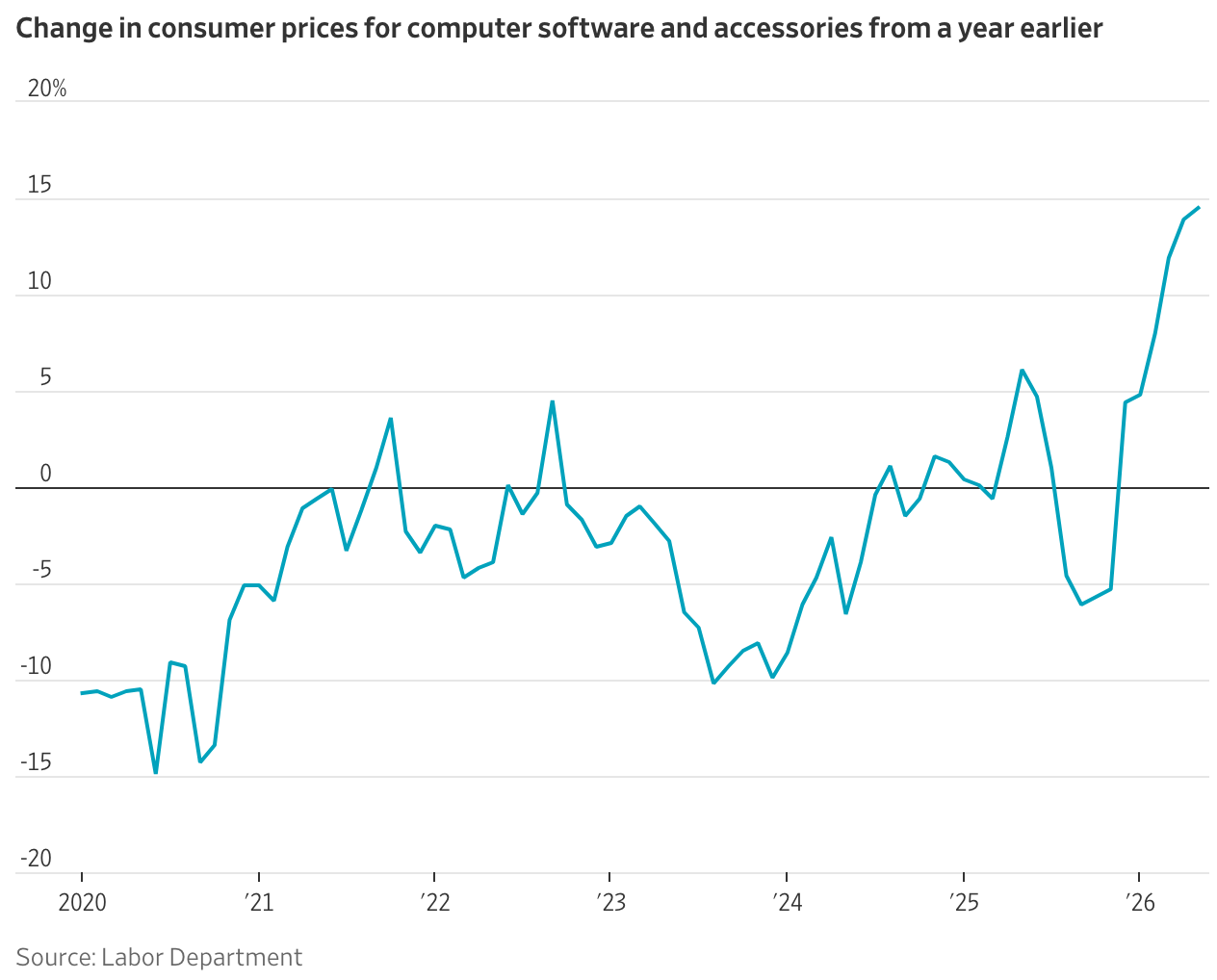
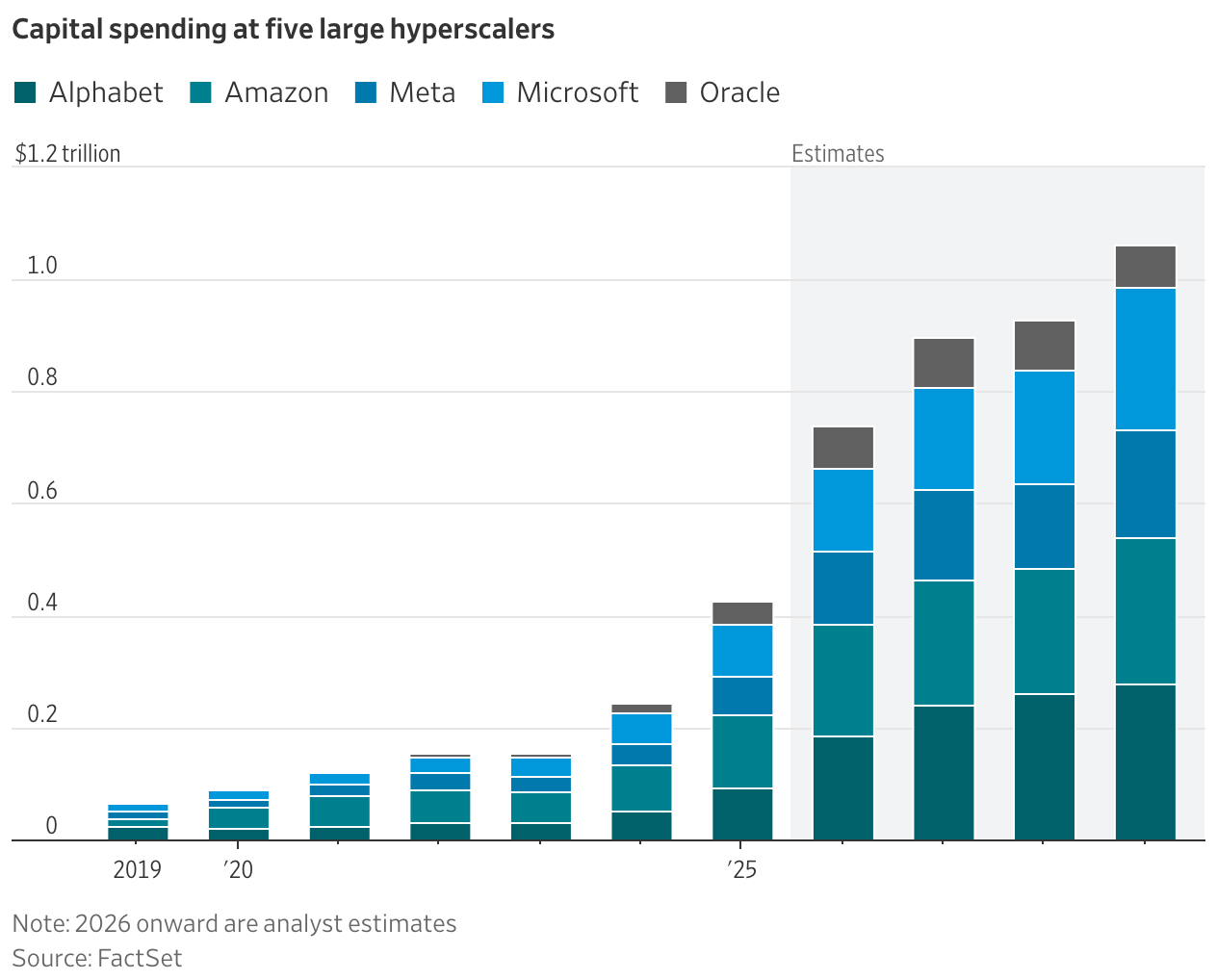
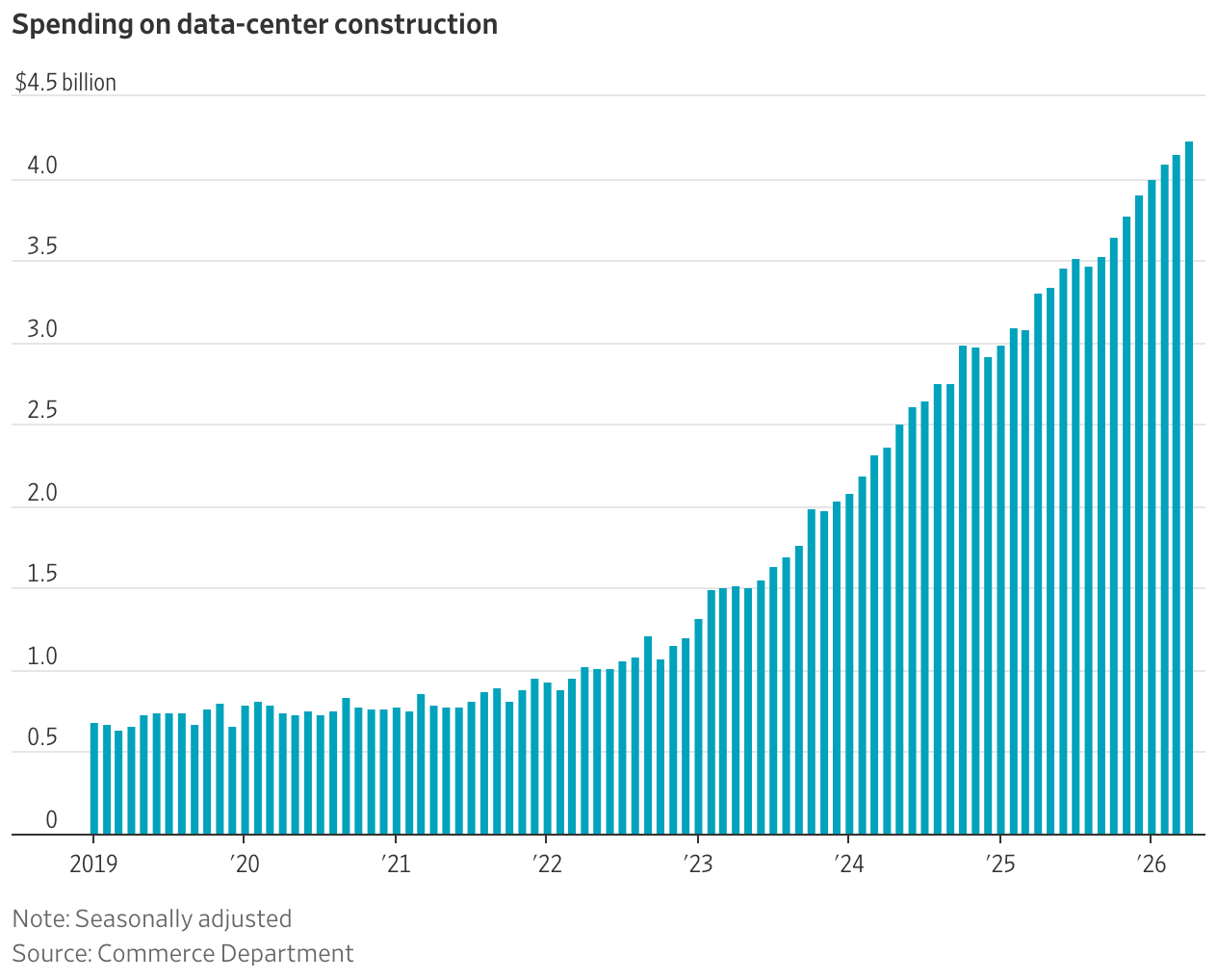
America’s AI build-out is becoming a new source of inflation. Even as trade-war effects fade and gasoline prices fall, massive spending by tech giants on data centers, chips, cooling systems, cables, backup generators and electricity is pushing up prices for goods and services tied to that infrastructure. Capital spending by major hyperscalers is expected to reach $741 billion this year, and one estimate puts total AI build-out spending through 2032 at about $8 trillion.
In the short term, AI demand is raising costs for electronics, memory chips, storage, electrical components, construction labor and electricity. Those inputs are not used only for AI, so higher prices can spill into consumer products such as smartphones, gaming consoles and cars, as well as broader business costs. Data centers are also expected to drive a large share of U.S. electricity-demand growth through 2030, which could keep utility prices rising.
Over the long run, AI could eventually reduce inflation if it boosts productivity enough to help businesses produce more efficiently. But economists say that benefit may take years to appear. For now, the AI boom looks like a sustained demand shock that could keep inflation elevated and make it harder for the Federal Reserve to return inflation to its 2% target.
9. AI Data Centers Use Far More Water Than Most Tech Giants Report (WSJ)
AI data centers are creating a growing water problem that is larger than many tech companies’ sustainability reports suggest. Companies such as Microsoft, Google and Amazon report the water used directly at their data centers, mostly for cooling, but often do not include the much larger amount of water used indirectly by power plants that generate the electricity those data centers consume. In the U.S., indirect water consumption for data centers has historically been about 12 times greater than direct water use, though it varies depending on whether the electricity comes from coal, nuclear, natural gas, wind or solar.
The issue is especially serious because AI infrastructure is expanding rapidly, often in water-stressed regions. Google’s reported water use rose 34% in 2025, and Meta’s indirect water use in 2024 was more than 20 times its direct use. Some companies are trying to address direct water use through water-restoration pledges, renewable-energy purchasing and more efficient cooling systems, but critics argue that renewable-energy credits do not necessarily solve local water shortages. Water consumed in one region cannot be offset meaningfully by water availability somewhere else.
Education
10. Students are doing worse than you think (Economist)
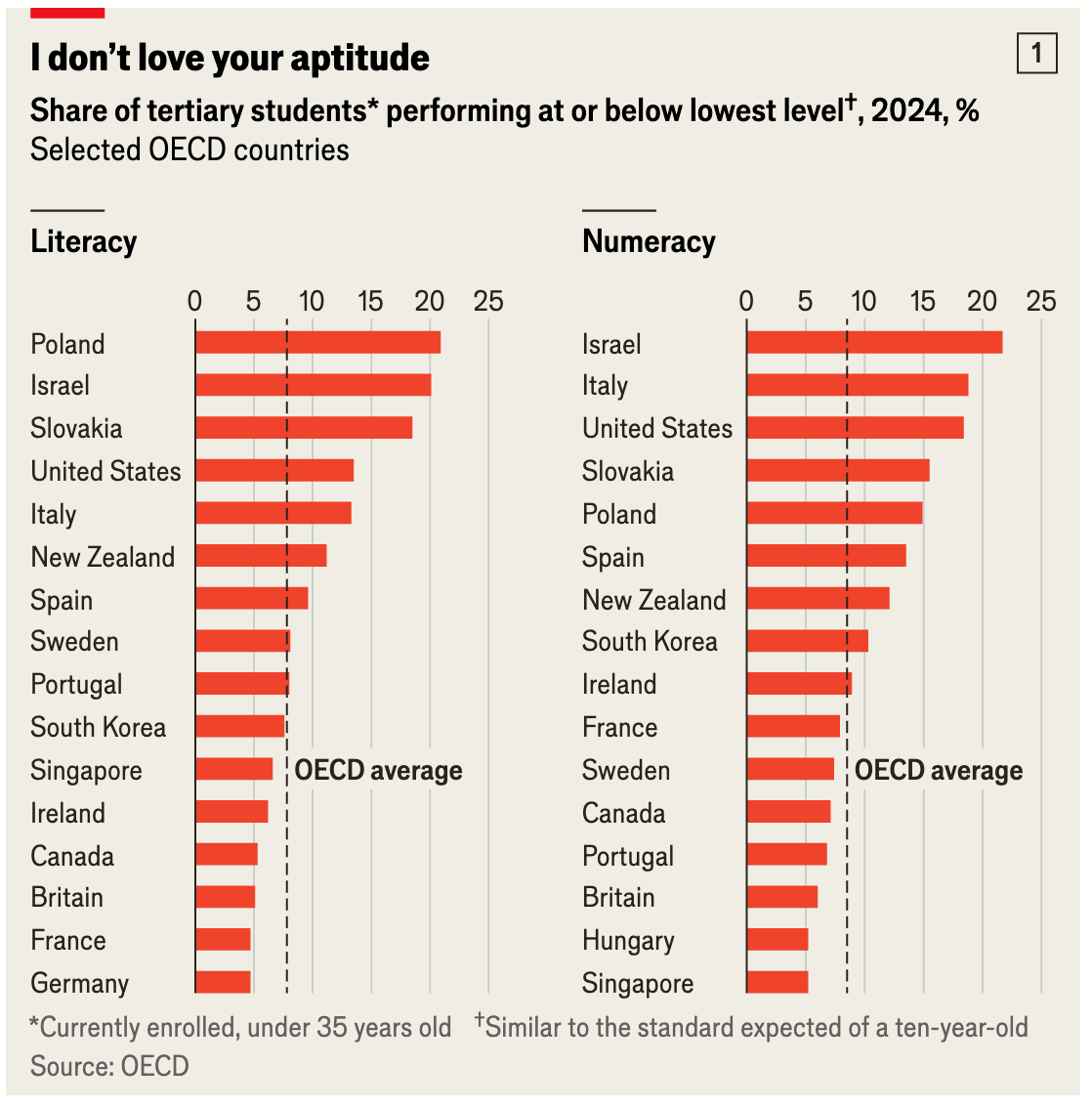
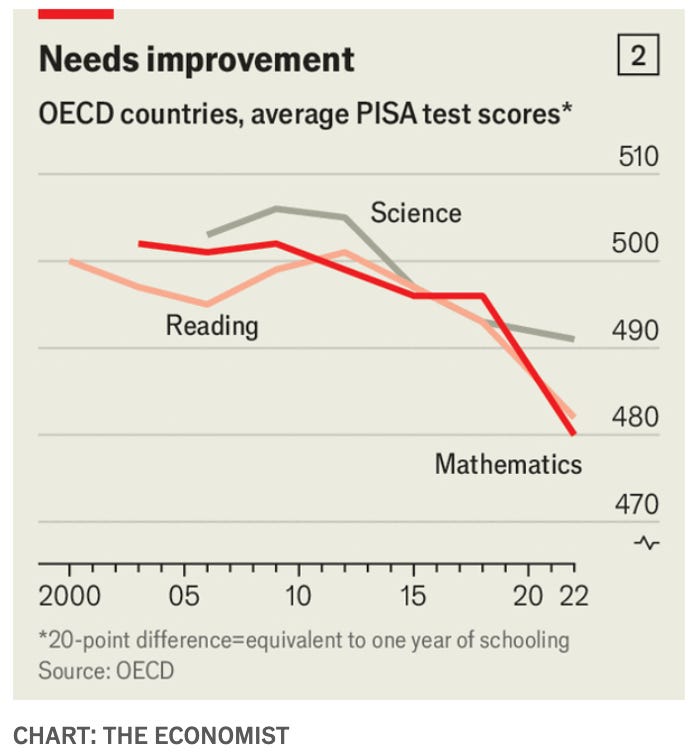
Universities are reporting that more students are arriving without the basic reading and math skills needed for college-level work. More than 1,800 University of California math and science lecturers warned that some first-year students are so underprepared that instructors are reteaching middle-school math. Similar concerns are appearing elsewhere, including Harvard, where faculty say students have less experience reading complex prose and less ability to sustain attention than students did a decade ago. International OECD data supports the concern: a growing share of tertiary students in rich countries perform at very low literacy and numeracy levels, with the U.S. looking especially weak.
Several forces appear to be contributing. Pandemic school disruptions worsened learning gaps, but test scores were already slipping in many countries before Covid. Screen use may also be crowding out reading and sustained attention, while schools may be weakening standards through grade inflation, softer curricula, and lower graduation requirements. Universities share some blame because many have relaxed admissions standards, especially after dropping SAT and ACT requirements. With essays easier to generate through AI and high-school grades increasingly inflated, admissions officers have fewer reliable signals of student readiness.
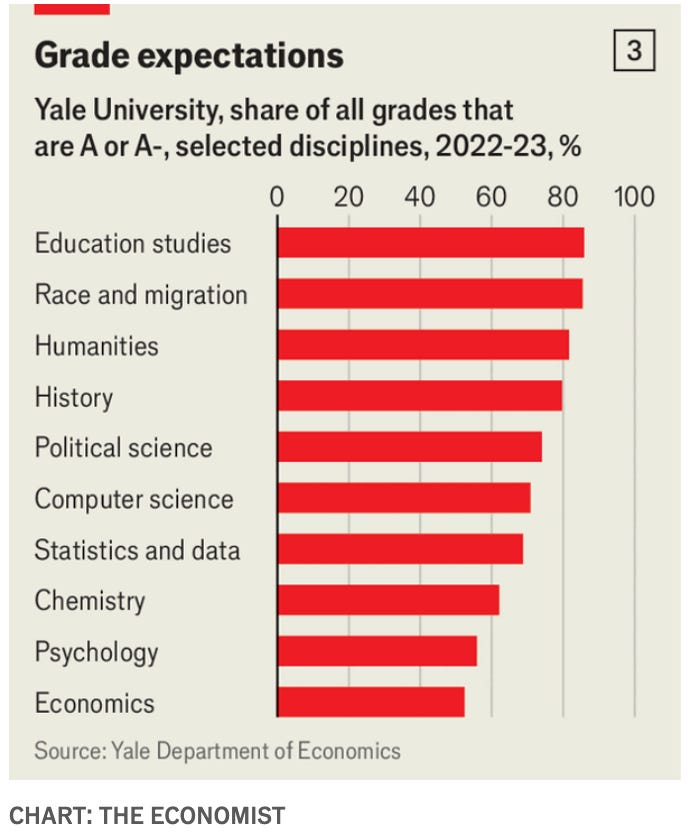
The problem may continue inside universities, where grade inflation and pressure to keep students satisfied make it harder to enforce rigor. AI adds another challenge by making cheating easier, especially in writing, coding, and other subjects where generative tools are useful. Some faculty are returning to proctored exams, but others are resigned to the idea that students may no longer need strong basic skills because AI can do much of the work.
11. The disability accommodation trap on college campuses (Boston Globe)
Disability accommodations have grown rapidly at elite colleges, especially for mental health and learning-related conditions. At Harvard, the share of undergraduates receiving accommodations rose from about 3% in 2014 to 21% in 2024, with similarly high rates at schools such as Brown, Amherst, and Stanford. These accommodations can include extra time on exams, private testing rooms, deadline extensions, tutoring, and housing preferences. The concern is that some students genuinely need support, but others may be benefiting from a system that makes diagnoses relatively easy to obtain and difficult for universities to challenge.
As mental health awareness has grown, ordinary struggles such as anxiety, grief, difficulty concentrating, and adolescent stress are increasingly treated as clinical disorders. The expansion of the DSM, rising rates of mental illness among young adults, and sharp increases in diagnoses such as autism have made the boundary between normal hardship and disability blurry. Because psychiatric diagnoses are often subjective, every expanded category can create a new pathway to academic accommodations.
Elite colleges are especially vulnerable because students and families often have the resources to seek private evaluations, the language to frame struggles clinically, and strong incentives to gain every possible academic advantage. Disability offices also face pressure to approve requests because denying accommodations can invite lawsuits or accusations of indifference. The result resembles grade inflation: once enough students receive extra advantages, others feel pressured to seek them too. Protecting disability rights remains essential, but overdiagnosis can dilute resources for students with genuine disabilities and teach young people to interpret normal difficulty as evidence that something is clinically wrong.
Entertainment
12. Yes! We have No Bananas.
NOTE: Back in the 1980s, I remember a commercial for Fig Netwons that had apes and a fun jingle that went, “we have no bananas todaayyyyyyy…” (because they didn’t have a banana flavored newton). You can watch it below.
Only this week did I learn that the banana song originated in the 1920s and was a viral hit. Here’s the most popular version:
And here’s the background on the song: