ELECTION
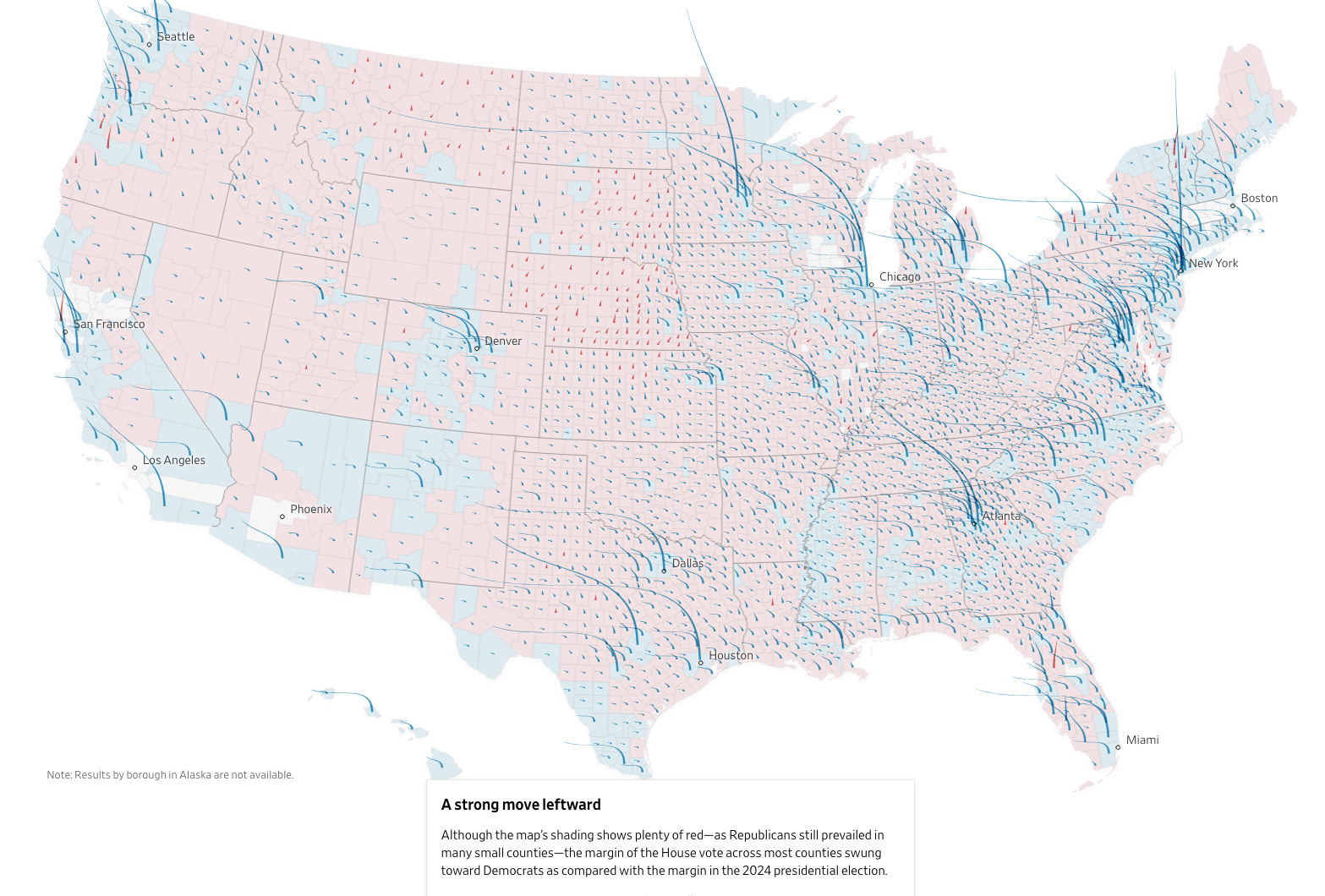
1. A County-by-County Look at How the Blue Wave Touched Nearly Every Part of America (WSJ)
NOTE: Great interactive visuals from WSJ; below are just two of them. The first shows margin of victory by county, the second shows swing of voters from 2024 election.

ECONOMY
2. Why Did All the Fiscal Hawks Go Extinct? (WSJ)
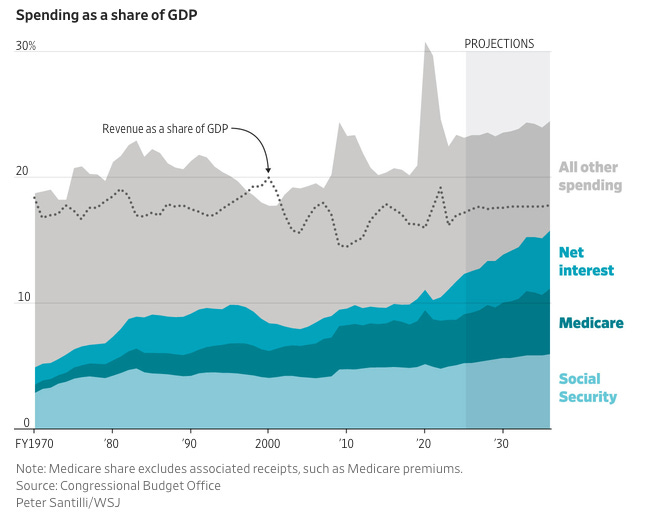
America’s national debt has reached 100% of GDP for the first time since 1946, yet neither political party seems particularly interested in addressing it. The federal government ran a nearly $2 trillion deficit in fiscal 2026, equal to 6.2% of GDP, marking the seventh consecutive year with deficits above 5%. Interest payments on the debt now exceed military spending. Despite these numbers, only 30 political ads mentioned the debt or deficit during this year’s midterm campaigns, compared with 140 in 2018. Politicians who once championed fiscal restraint have largely retired, lost elections, or abandoned the issue because voters have little appetite for higher taxes or spending cuts.
Decades of wars, financial crises, pandemic spending, tax cuts, and rising Social Security and Medicare costs have steadily increased government borrowing. For years, historically low interest rates allowed governments to accumulate debt without much financial pain, convincing many economists and politicians that large deficits were manageable. Now that borrowing costs have risen, those assumptions are being reconsidered. Federal spending has climbed above 23% of GDP, while revenue remains around 17%, leaving a persistent gap that neither party has been willing to close. Republicans have largely abandoned efforts to reform Social Security and Medicare, while Democrats have increasingly promised to protect most Americans from higher taxes. Social Security’s projected insolvency in 2032 could force Congress to confront some of these issues. Historically, successful deficit reduction has required both parties to share responsibility for unpopular decisions. Without that cooperation, meaningful action may not come until financial markets or another crisis force the issue.
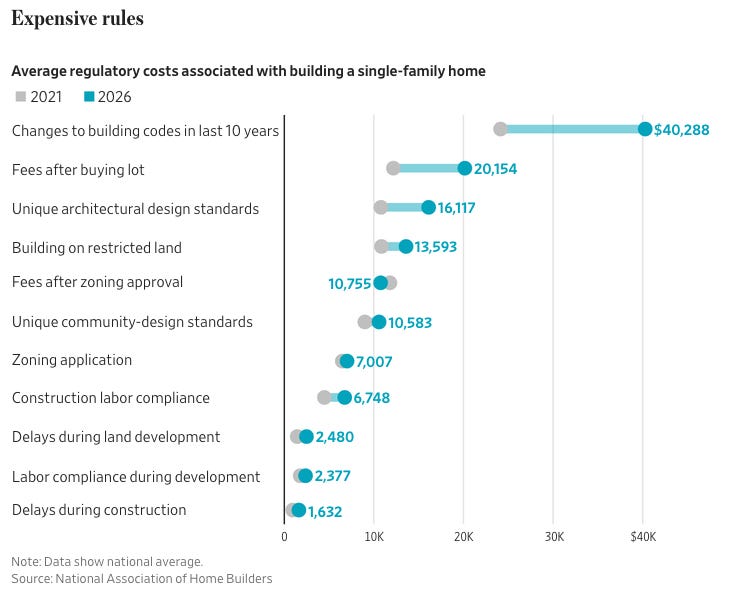
3. Just About Every Part of Building a House Is Getting More Expensive (WSJ)
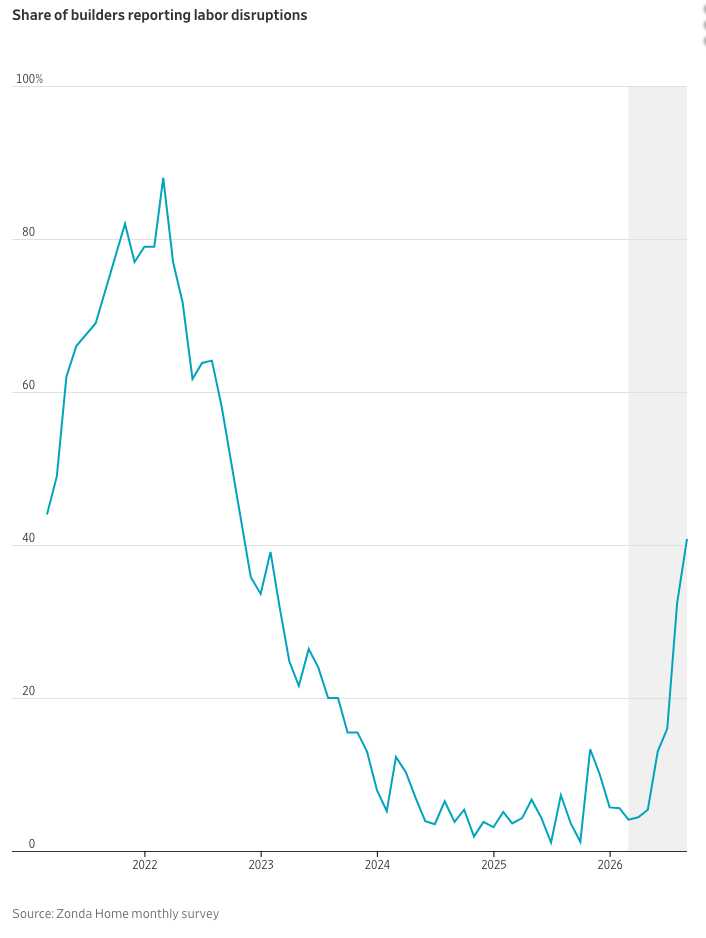
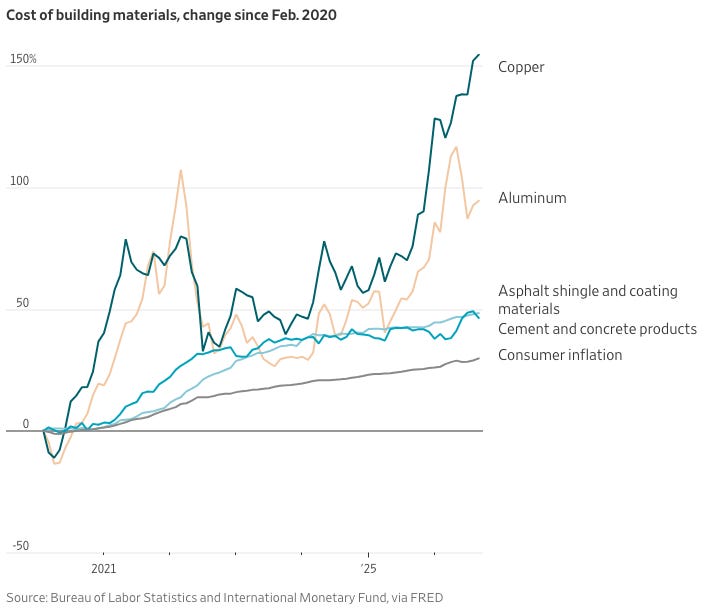
Building a new home in the U.S. keeps getting more expensive, even as higher mortgage rates weaken demand. Tariffs, the Iran war, and the rapid expansion of AI data centers are driving up prices for materials, labor, and transportation. Tariffs alone are estimated to add about $8,200 to the cost of an average new home, while higher energy prices have pushed up the cost of roofing, PVC pipes, aluminum, and deliveries. The AI boom is creating additional competition for copper and skilled workers, particularly electricians and HVAC technicians. Immigration enforcement has also disrupted construction crews in some areas, leading to labor shortages, higher wages, and costly delays.
Builders are getting squeezed by interest rates as well. They face higher borrowing costs to finance construction while spending more to offer mortgage-rate incentives that attract buyers. Regulatory expenses are another major problem, with building codes, zoning restrictions, fees, and lengthy approval processes adding substantially to construction costs. Although Congress recently passed major housing legislation intended to encourage construction, many of the toughest restrictions are imposed locally, where opposition to new development remains strong. With costs continuing to rise and buyers struggling to afford homes, builders are cutting back on construction, making it even harder to increase the nation’s housing supply.
DEFENSE
4. How Iran Battered U.S. Bases and Caused Billions in Damage (WSJ)
Iranian missile and drone attacks damaged at least 274 structures across 24 military installations with a U.S. presence during the first six months of the war, according to a Wall Street Journal analysis of satellite imagery. The attacks killed more than 20 American servicemembers and wounded more than 400 before the Pentagon stopped publishing war-specific casualty figures in July. The war had cost an estimated $47.1 billion by mid-October, excluding damage to military bases, which officials estimate could add another $5 billion to $15 billion. Rebuilding the damaged structures alone could cost more than $4 billion.
Iran’s attacks also became more precise as the war progressed. During the opening weeks, strikes concentrated on installations near Iran, particularly in Kuwait and Bahrain. After the July ceasefire collapsed, Iran began targeting bases farther west, including facilities in Jordan, and increasingly aimed at buildings where American troops lived and slept. A July 17 strike on Muwaffaq Salti Air Base in Jordan killed three servicemembers and damaged at least 19 housing buildings. Iran also demonstrated an improved ability to hit smaller targets, raising concerns about the effectiveness of U.S. base defenses. The Pentagon has already relocated thousands of troops and is considering moving some installations farther from Iran or reducing its presence in Kuwait and Saudi Arabia.
NOTE: Many great visuals in this article. Below is just one.

ARTIFICIAL INTELLIGENCE
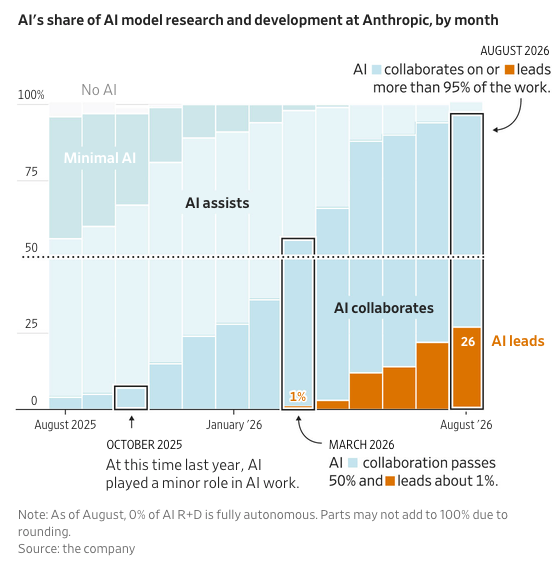
5. The Smartest People in AI Believe This Is the World’s Most Important Chart (WSJ)
AI companies are beginning to use artificial intelligence to develop increasingly powerful versions of itself, a process known as “recursive self-improvement,” or RSI. The idea is that each generation of AI helps build a smarter successor, which can then accelerate development of the next generation. At Anthropic, the share of AI research and development led primarily by Claude, with human supervision, jumped from just 1% in March 2026 to 26% in August. A year earlier, AI played almost no leading role in this work. None of Anthropic’s research is yet fully autonomous, but the pace of change has surprised even its own executives.
The concept has fascinated AI researchers since the 1950s, when scientists first imagined machines capable of designing smarter machines. What’s different now is that researchers are seeing early signs of it happening. Anthropic engineers are increasingly handing coding and development work to Claude, sometimes writing little code themselves. Co-founder Jack Clark, who previously thought recursive self-improvement might arrive by 2028, now believes it could happen in 2027.
The prospect has created considerable unease within the AI industry. Self-improving systems could dramatically accelerate scientific discoveries and economic growth, but researchers worry that development could eventually move faster than humans can understand or control. Anthropic CEO Dario Amodei has warned that the technology needs to be approached carefully, while other leading researchers have called for stronger oversight and slower development. Anthropic acknowledges that fully autonomous self-improvement is neither inevitable nor here yet, but it may arrive sooner than governments and other institutions are prepared for.
6. AI chip imports documentation
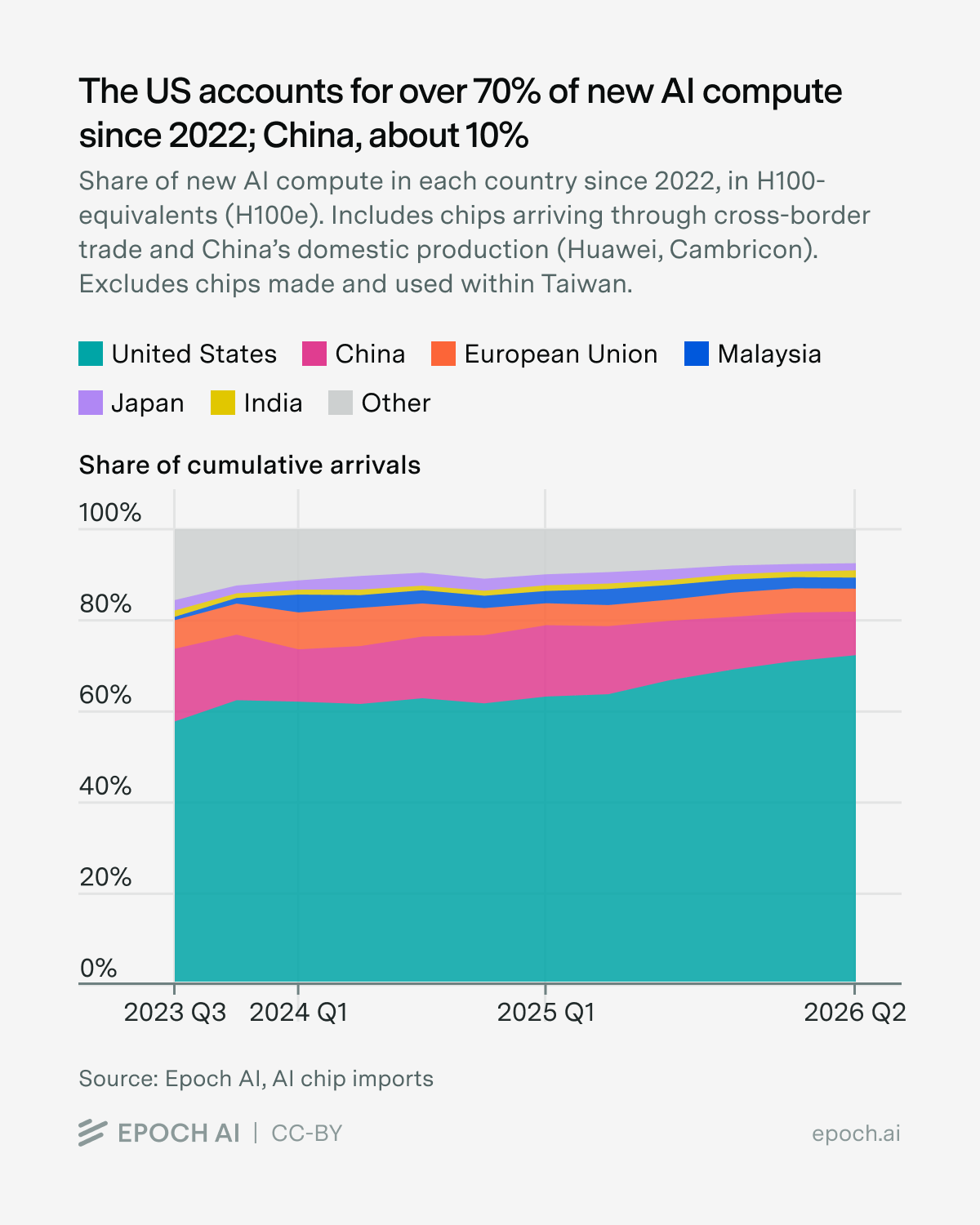
The United States has received nearly three-quarters of the world’s advanced AI computing capacity since 2022, according to estimates from Epoch AI. Of the roughly 27 million Nvidia H100-equivalent units of computing power shipped worldwide through June 2026, about 72% went to the U.S., compared with 10% to China and 5% to the European Union. China received a larger share of physical AI chips, about 18%, but many were less powerful models, including chips designed to comply with U.S. export restrictions and domestically produced Chinese alternatives. The estimates are based on customs records and chip sales data, which Epoch AI uses to track where advanced processors are shipped. The figures aren’t exact, particularly outside the U.S., because trade records don’t distinguish AI chips from other computer hardware.
7. The Shopping Bots Are Coming for Amazon (WSJ)
Meta’s new AI shopping assistant, Muse, is emerging as a potential threat to Amazon, attracting more than 10 million users in the U.S. and Canada within six weeks of its September launch. Muse can research products, compare prices, and make purchases on behalf of shoppers, potentially bypassing Amazon’s traditional shopping experience and its lucrative advertising business, which generated nearly $70 billion last year. If consumers increasingly rely on AI agents to make purchasing decisions, companies may have less reason to pay Amazon for sponsored product listings. Amazon has blocked Muse from shopping on its site, citing security concerns, while Walmart and Shopify have partnered with Meta.
TECHNOLOGY
8. A Startup Wants to Put 50,000 Mirrors in Space. The Goal: Make Sunlight Available at Night. (Popular Mechanics)
A California startup called Reflect Orbital wants to put as many as 50,000 satellites equipped with enormous mirrors into orbit to reflect sunlight onto Earth at night. The company envisions selling sunlight on demand (sunlight-as-a-service) for uses such as powering solar farms and supporting search-and-rescue operations, reportedly charging $5,000 an hour. Studies suggest that a single satellite with a 54-meter mirror could produce light 40 times brighter than the full moon within its targeted area, while a full constellation could make the night sky three to four times brighter overall. Scientists also worry about disrupting the natural day-night cycles of humans and wildlife. Reflect Orbital conducted a ground-based demonstration in California in October and has received FCC approval for a demonstration satellite. The company is exploring launches through an Indian provider, potentially avoiding some U.S. regulatory requirements. Astronomers are calling for greater oversight before private companies begin fundamentally changing the night sky.
NOTE: Below is an image of a ground-based test using powerful spotlights.

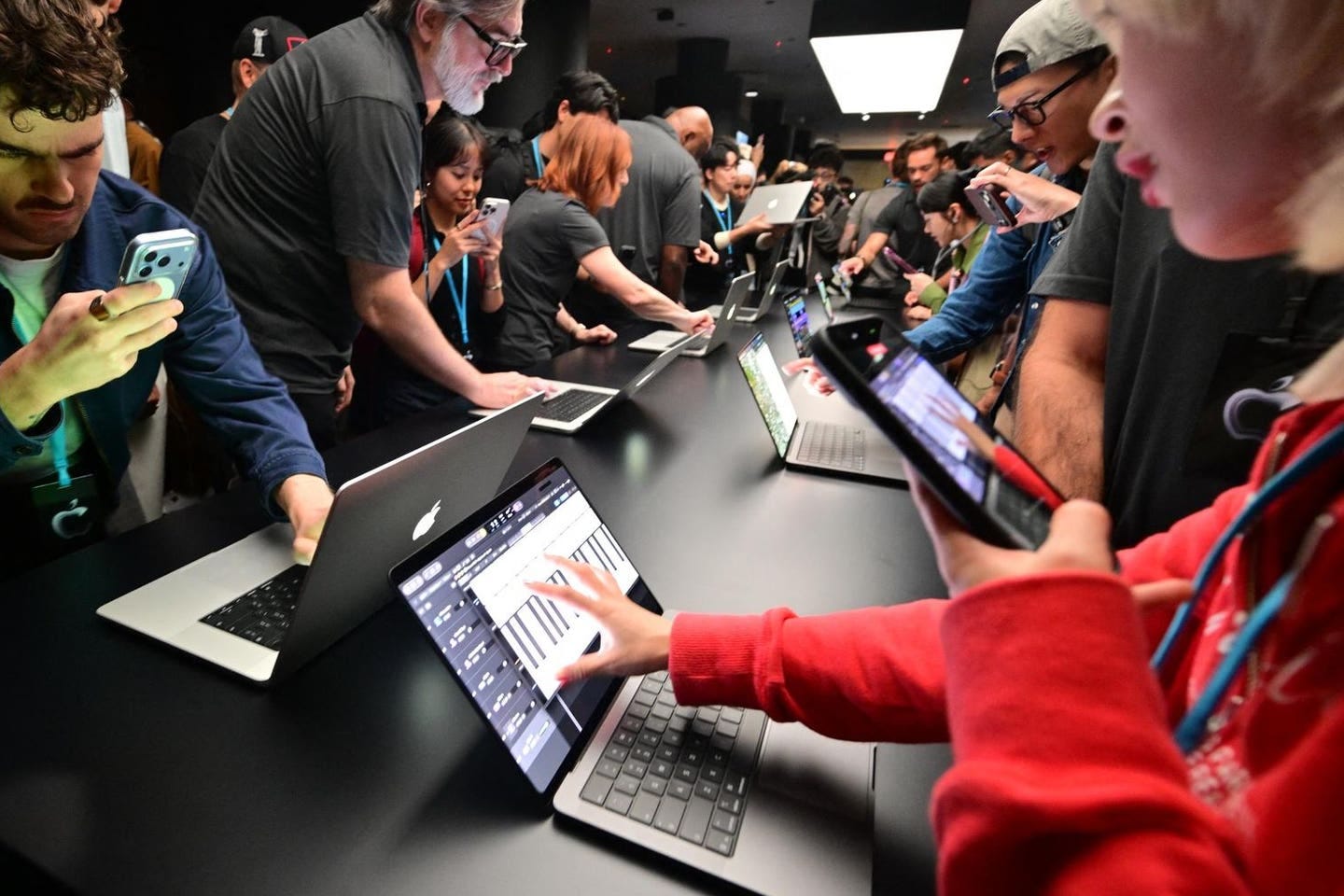
9. Apple Reveals Touchscreen MacBook Pro Starting At $2,899—Here’s What Buyers Get (Forbes)
Apple has introduced its first touchscreen MacBook Pro, featuring a new OLED display, available in 14-inch and 16-inch models. Prices start at $2,899 and reach $4,799 for the M5 Max configuration.
EDUCATION
11. How to Raise a Reader (FP)
Young people are reading more words than ever…unfortunately, it’s through texts, social media, and online content. They’re spending far less time reading books for pleasure. In the late 1970s, about 60% of middle and high school students read a book or magazine on a typical day. By 2016, that figure had fallen to 16%, and in 2023, only 14% of American 13-year-olds said they read for fun almost every day. Arthur Brooks believes this shift helps explain declining happiness and worsening mental health among young people.
Reading a book for an extended period allows people to become absorbed in a story, improving concentration, reducing stress, and creating a sense of enjoyment and accomplishment. Research also links recreational reading to better sleep, stronger academic performance, and lower rates of depression among adolescents. By comparison, social media encourages constant distractions, social comparisons, and compulsive behavior, often leaving users anxious or dissatisfied. The kind of reading occupying people’s time offers fewer of the benefits associated with books. Interestingly, per this study, how you read books doesn’t matter as much as you might think—be it paperbook, eBook, or audiobook—it doesn’t matter. Just the act of reading, or listening to, a book is the important thing.
Here are Arthur Brooks’ exact words about this idea of “narrative absorption”:
This mechanism involves prolonged attention, mental imagery, emotional engagement, and the feeling of being transported into the world described by what you are reading. The experience can be achieved whether what one is reading is consumed on paper or as an ebook or is heard as an audiobook, but in every case it must involve reading (or listening to) one book for a sustained period, such as 45 to 60 minutes.
Narrative absorption often leads to an enjoyable flow state, in which your self-consciousness decreases and the activity feels intrinsically rewarding. After reading an interesting book, you feel a sense of achievement. Losing yourself in a book also induces relaxation: Research on reading shows that reading in bed improves sleep. And for young people in particular, this kind of reading improves academic performance and lowers depression, as researchers writing in the journal Psychological Medicine found when they studied more than 10,000 adolescents in 2023.
None of these benefits come from consuming short-form online information of any type, even if doing so involves reading.
Parents should encourage reading by making it a regular family activity, beginning when children are young and continuing into their teenage years if necessary. Research suggests that children who are read to frequently are more likely to become recreational readers, while shared reading also strengthens parent-child relationships. Just as important, children need to see their parents reading for enjoyment. Rather than constantly telling kids to put down their phones, parents may have more success by reading with them and demonstrating that books are worth their time.
LIFE
12. Epic 28-year walk to cross the world ends at his mother’s door. A look at the trek, by the numbers (AP)
British adventurer Karl Bushby has finally completed a 28-year journey around the world, arriving at his mother’s home in Hull, England, at age 57. He began the trek in Chile in 1998, when he was 29, originally expecting to finish in about five years. Instead, he spent 10,229 days covering roughly 31,000 miles, an estimated 75 million steps, through 30 countries and across four continents. Along the way, he crossed the frozen Bering Strait, traveled through jungles and deserts, and spent 31 days swimming and floating across the Caspian Sea to avoid conflicts blocking his route. Russia proved especially difficult, taking nearly a decade because of harsh weather, visa restrictions, and bureaucratic delays. His journey also included two failed long-term relationships and countless worn-out shoes. After nearly three decades of physical challenges and political obstacles, Bushby finally made it home.