

DEFENSE
1. Our analysis of the leaked Russian death toll in Ukraine (Economist)
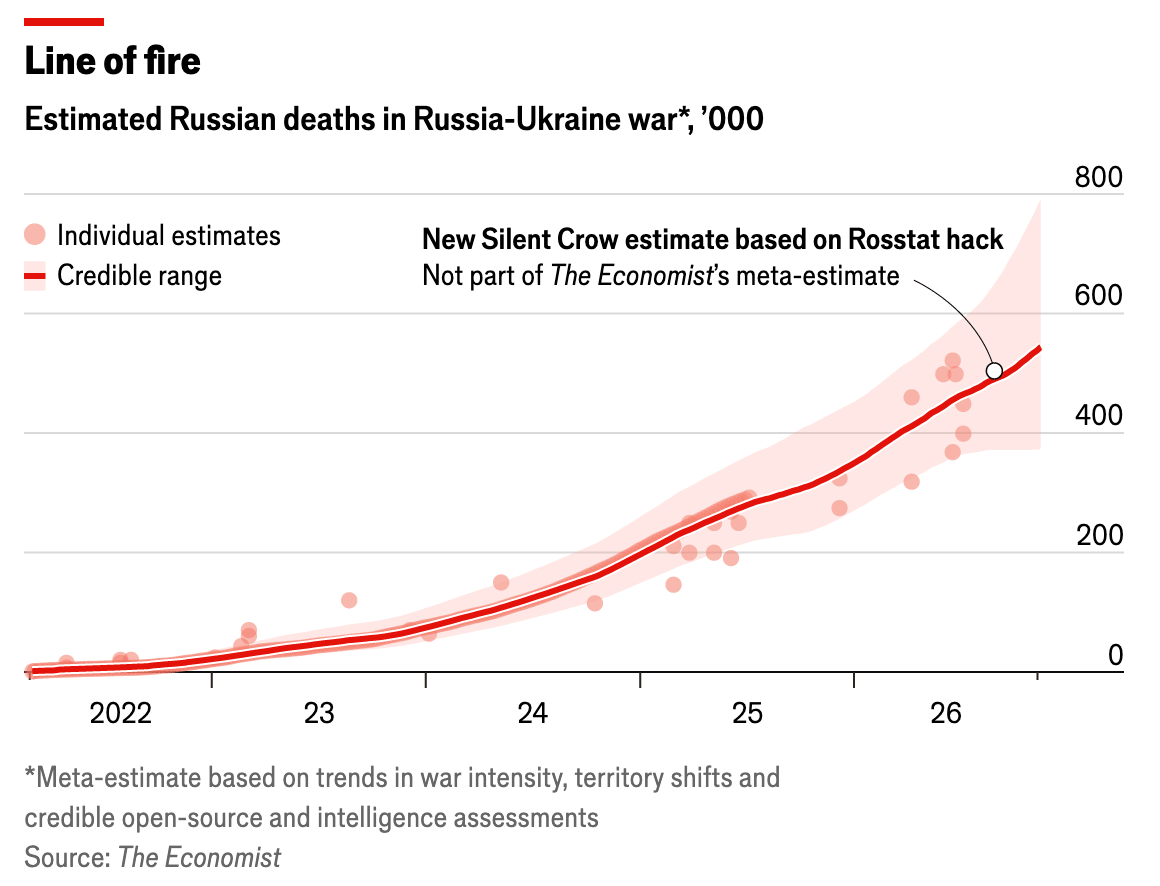
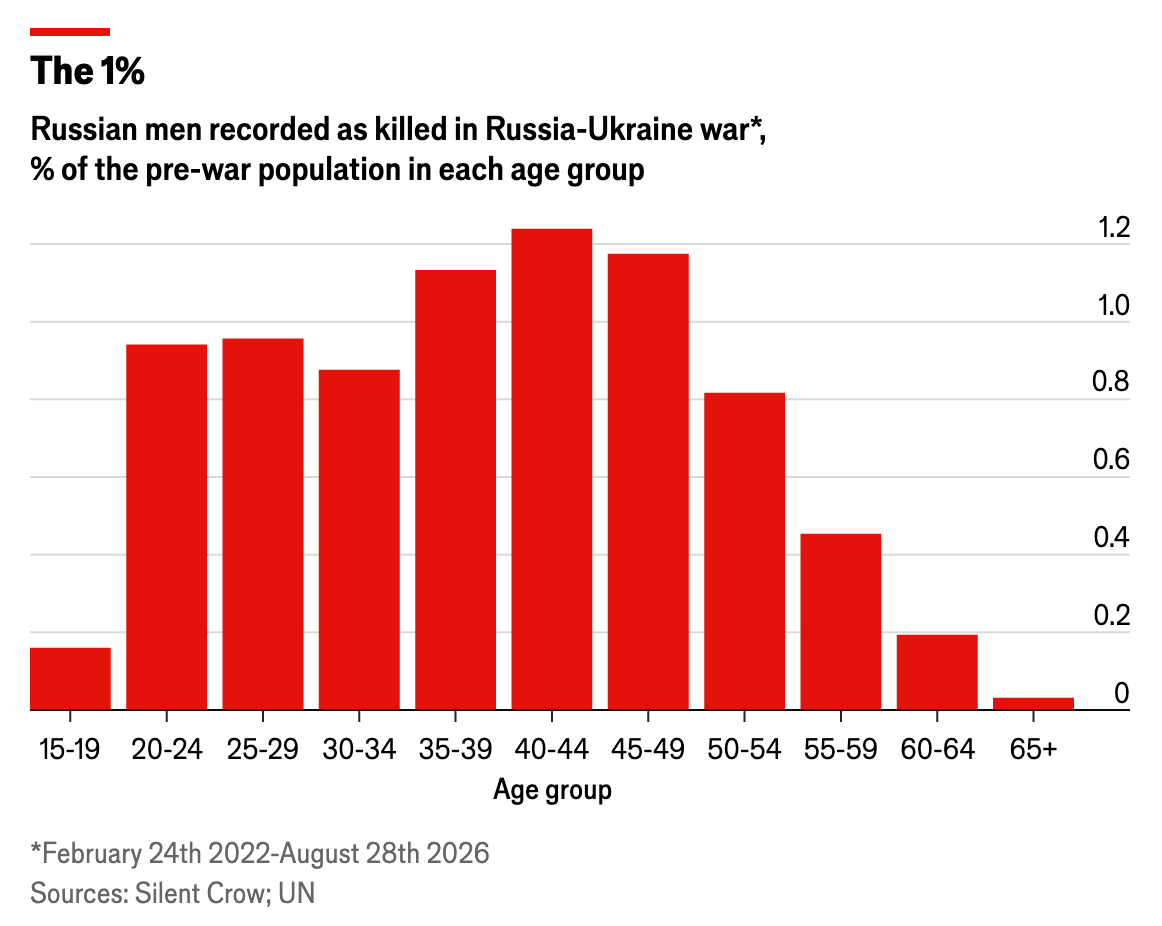
A newly leaked Russian government database suggests that more than 500,000 Russian soldiers have been killed in Ukraine since the war began. Two hacking groups, Silent Crow and Cyber Partisans BY, claim to have obtained records from Russia’s official statistics agency showing 450,100 war-related deaths. After accounting for delays in reporting, the hackers estimate that approximately 504,000 Russian troops had died by August 28, 2026, with as many as 230,000 deaths expected this year alone. The records have not been independently verified and contain gaps and duplicates, but the figures closely match estimates from Western intelligence agencies and independent researchers. If accurate, the losses represent nearly 1% of Russia’s prewar male population under age 60. Ukraine has also suffered enormous casualties, with approximately 116,000 confirmed military deaths and another 106,000 personnel missing, representing an even larger share of its smaller population. Russia has largely concealed its military losses, although independent journalists have identified more than 285,000 dead soldiers by name. Despite the mounting casualties, there is little indication that Vladimir Putin intends to change course.
2. Pentagon fails ninth straight audit despite progress in organizing finances (Military Times)
The Pentagon failed its annual financial audit for the ninth consecutive year, although it made some progress in fiscal 2026. For the first time, a majority of its reporting units passed, with 14 of 25 receiving clean audit opinions, up from 11 the previous year. Those units account for 56% of the department’s assets and 86% of its liabilities. Much of the Pentagon’s accounting trouble stems from its 149 separate financial management systems, many of which are outdated and some of which still rely on computer code written 50 years ago. The department is turning to cloud-based systems and AI tools from Palantir and xAI to improve financial tracking and automate audits. The improvements come as the administration seeks a record $1.5 trillion in defense spending. Congress originally gave the Pentagon until fiscal 2028 to pass a department-wide audit, and officials say they are working toward that deadline by consolidating 25 separate audits into eight.
ECONOMY
3. I Talked to Job Seekers in All 50 States. Here’s What It Takes to Get Hired Right Now. (WSJ)
America’s job market has become increasingly difficult for people looking for work, even as those who are already employed continue to receive raises and layoffs remain relatively low. The average job search now takes 27 weeks, the longest in more than a decade outside the pandemic. Interviews with more than 100 job seekers across the country reveal a frustrating process in which applicants submit hundreds of résumés, spend thousands of dollars on career coaches and job-search tools, and struggle to get noticed by increasingly automated recruiting systems. Even advanced degrees offer no guarantee of employment, particularly for recent graduates with limited work experience. Older workers face additional challenges from age discrimination, while AI is reducing opportunities for freelancers in fields such as writing and marketing.
Several approaches appear to improve the odds of finding work.
Prioritize networking over applications. Spend about 80% of your job-search time building relationships, attending events, and connecting with people in your industry. Use the remaining 20% for researching companies and applying.
Avoid mass-applying to jobs. Sending hundreds of generic applications rarely produces results. Focus on positions that fit your qualifications and tailor your applications accordingly.
Apply early. Applicants among the first 10% to submit their résumés are nearly twice as likely to receive an interview.
Stay in touch with professional contacts. Follow up regularly with former colleagues, recruiters, and acquaintances. Opportunities often emerge months after an initial conversation.
Be flexible about job opportunities. Consider positions outside your degree field or previous career. A job that meets your most important needs may also open doors to better opportunities later.
Be cautious about expensive job-search services. Career coaches, résumé services, and networking subscriptions can cost thousands of dollars without guaranteeing employment. Watch for scammers targeting unemployed professionals.
Don’t assume another degree will solve the problem. An MBA or other graduate credential may not improve your prospects without relevant work experience. Employers often value demonstrated experience over additional qualifications.
Don’t depend on freelance work to bridge the gap. AI is reducing demand for some traditional freelance services, particularly writing and marketing.
For older job seekers, rely more on personal connections. Networking, contacting hiring managers directly, attending industry events, and considering part-time opportunities may help overcome age-related barriers.
Maintain relationships and support networks. Long job searches can be emotionally exhausting. Stay connected with friends, former colleagues, and others who can offer encouragement, referrals, and opportunities.
NOTE: The below should be recommended reading for US politicians and economists…
4. What Greece Learned From Going Broke—and Others In Europe Still Haven’t (WSJ)
Greece has made a remarkable financial turnaround since its devastating debt crisis in 2010, when the country nearly went bankrupt and required three international bailouts. At the time, government overspending, widespread tax evasion, and unsustainable pension obligations had pushed the annual budget deficit above 15% of GDP. The resulting austerity measures were brutal. Salaries fell by more than 20%, the retirement age rose from 65 to 67, unemployment soared, and the economy contracted by roughly 25%. Today, Greece is growing faster than the EU average, running primary budget surpluses, reducing its debt burden, and borrowing money at lower interest rates than France, Britain, or the United States
Much of the improvement came from pension reforms, tighter spending controls, stronger tax enforcement, and restructuring government debt into long-term loans with relatively low fixed interest rates. But the crisis also fundamentally changed how Greeks think about government finances. Politicians from both major political camps are now more cautious about promising benefits they cannot afford, and voters are more aware of the consequences of excessive borrowing. Greece’s debt-management officials now evaluate financial sustainability decades into the future, rather than focusing primarily on the next budget or election.
The recovery has come at an enormous cost. Greece’s economy remains about 20% smaller than before the crisis, wages are low, and the country ranks as the EU’s second poorest when adjusted for purchasing power.
Still, its experience stands in sharp contrast to other European countries currently struggling with growing deficits, aging populations, and increasingly expensive pension systems. France and Britain, in particular, face rising borrowing costs and strong public resistance to spending cuts. Fiscal discipline can restore financial stability, but the longer governments delay difficult decisions, the more painful those decisions may eventually become.
5. Fed Minutes Show Almost All Officials Expect More Rate Hikes (Bloomberg)
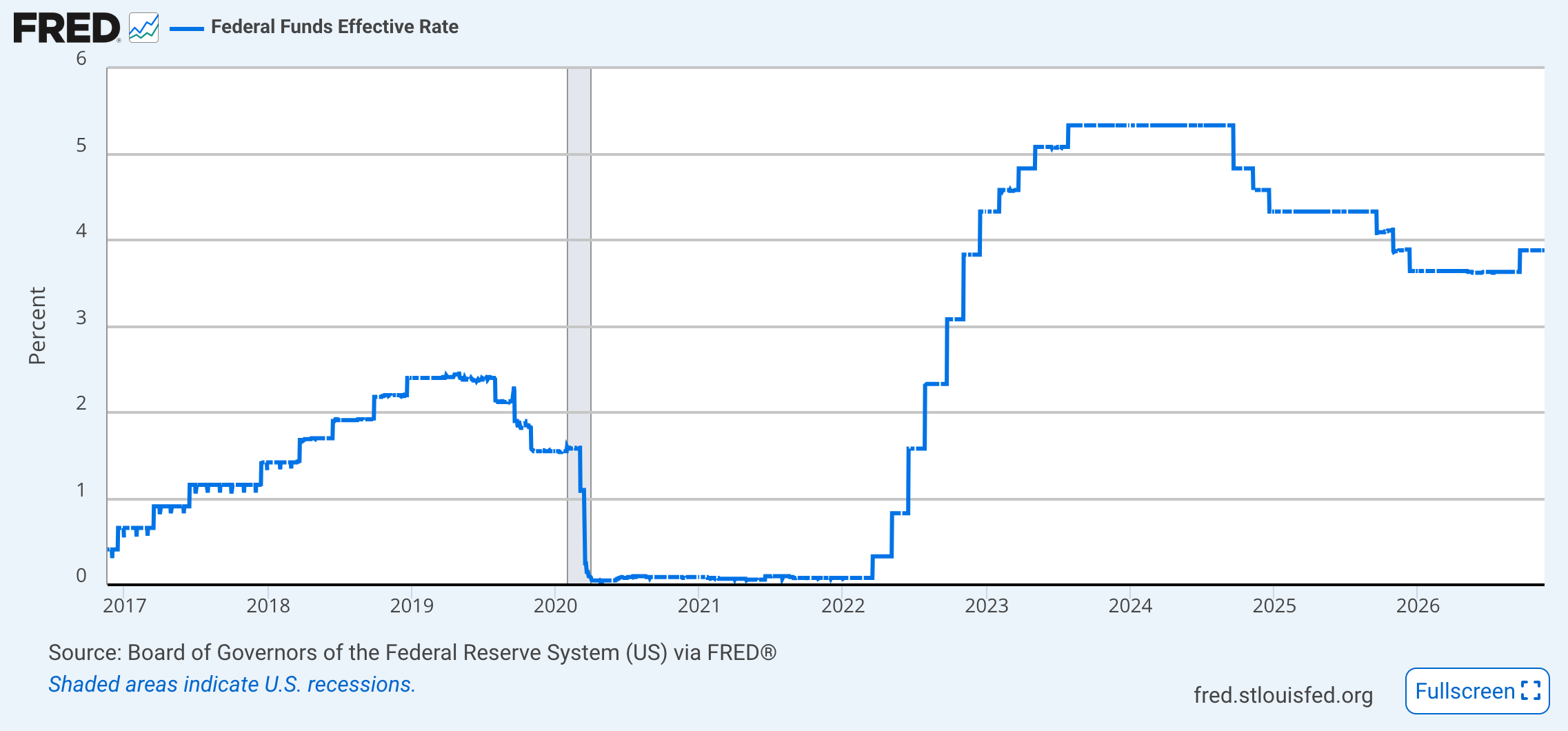
Federal Reserve officials are signaling that more interest-rate increases are coming as inflation remains stubbornly above the Fed’s 2% target. Minutes from the October meeting show that nearly all policymakers expect additional rate hikes in the coming months, although they disagree about how quickly to act. The Fed voted 10-2 to leave rates unchanged in October after raising them by a quarter percentage point in September. Some officials favor another quarter-point increase in December, while others, including Governor Christopher Waller, have suggested a larger half-point hike. Investors currently expect quarter-point increases in December, January, and April.
Recent inflation data have strengthened the case for higher rates, with consumer price increases spreading across more goods and services and wholesale inflation reaching its highest level since 2022. Still, some Fed officials worry about further weakening interest-rate-sensitive parts of the economy, particularly housing, where existing-home sales recently fell to a 16-year low. The debate now centers on how aggressively to raise rates without causing unnecessary economic damage.
EDUCATION
6. Spending in‑person time with friends is the biggest predictor of whether college students flourish (The Conversation)
Spending time with other people is the strongest predictor of college students’ well-being, according to a 2026 study of nearly 80,000 students in the United States and Canada. Researchers examined 51 factors, including sleep, exercise, substance use, financial stress, relationships, and how students spent their free time. Students who regularly socialized with friends, participated in campus organizations, and attended cultural events reported the greatest sense of well-being. Surprisingly, the second-strongest factor was time spent fulfilling responsibilities, including paid work and family obligations, suggesting that contributing to something meaningful also plays an important role.
These findings are particularly relevant as young people spend less time together in person. Between 2010 and 2022, the share of high school seniors who saw friends face-to-face almost daily fell from 44% to 32%. The findings suggest that colleges can better support students by creating opportunities for meaningful social interaction, helping them develop relationship skills, and encouraging involvement in campus and community life.
7. Comptroller Levine Releases New Report Showing Scale of NYC’s Declining Public School Population (NYC.gov)
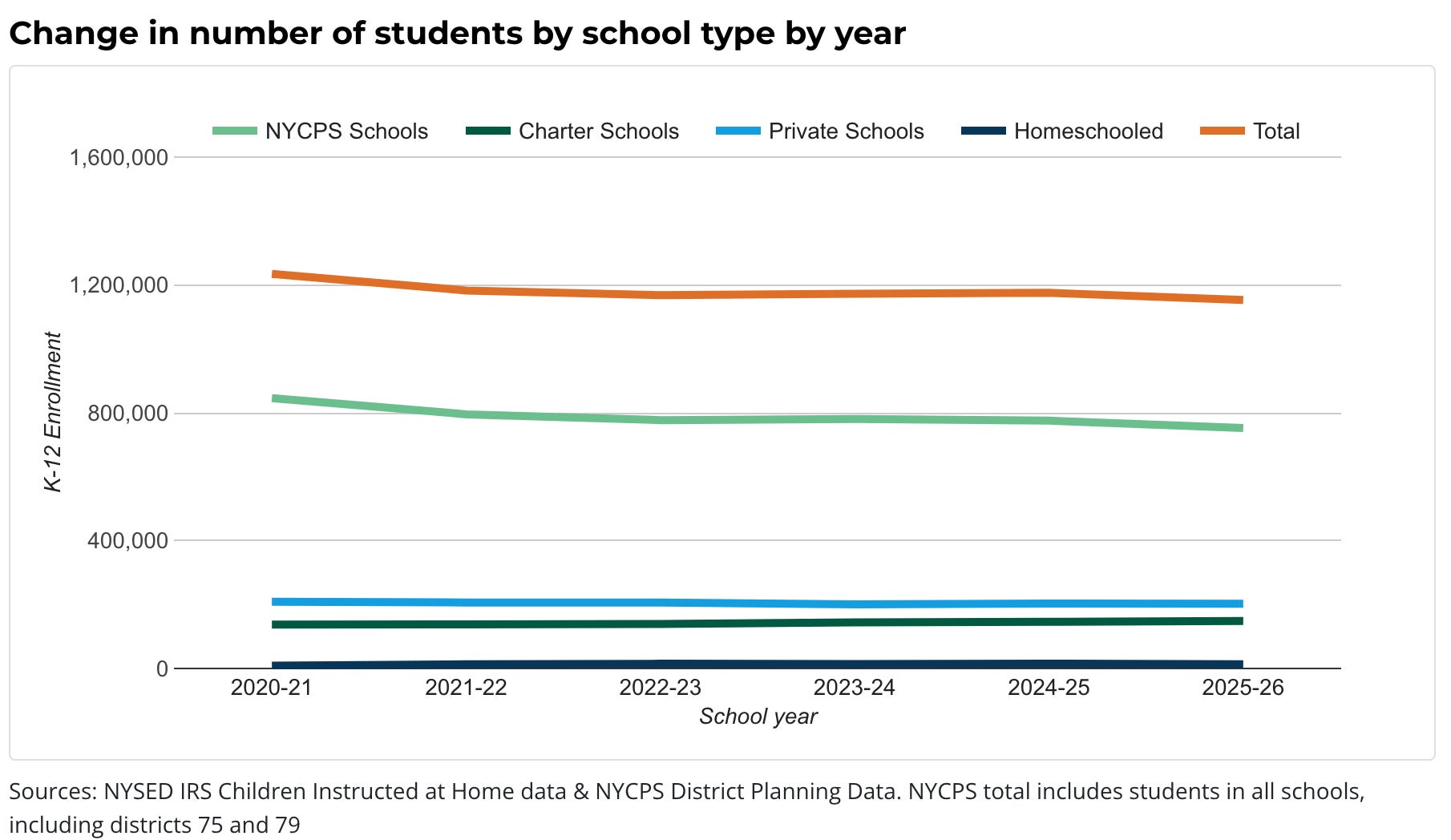
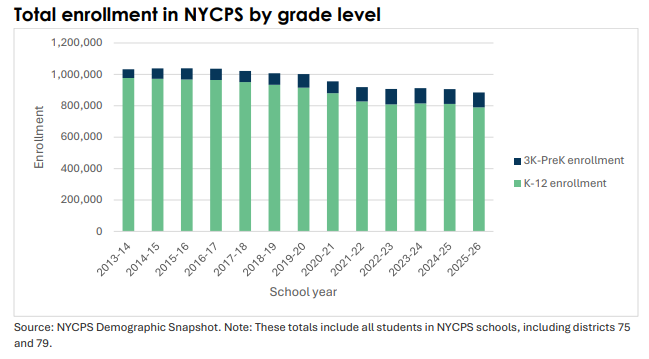
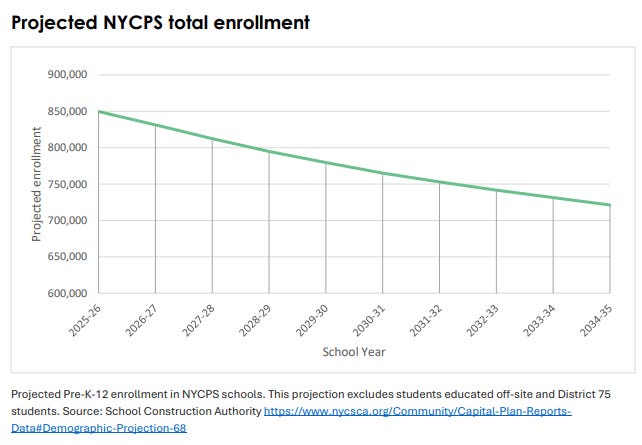
New York City’s public schools have lost 187,000 K-12 students since the 2013-14 school year, a 19% decline, according to a new report from the city comptroller. Enrollment fell by nearly 22,000 students in 2025-26 alone, the largest annual drop since the pandemic, and projections suggest another 128,000 students could be lost by 2034-35. The decline has affected every school district and cannot be explained simply by families switching to charter schools, private schools, or homeschooling. Instead, many families appear to be leaving New York City as their children grow older, with particularly sharp enrollment declines between fifth and sixth grades. The largest losses have occurred in Upper Manhattan, the Lower East Side, parts of the Bronx, and Central Brooklyn.
At the same time, the students remaining in public schools are increasingly those requiring additional support. About 73% live in poverty, while 14% are homeless or living in temporary housing. The number of students with disabilities and those learning English has also increased. Demographics are changing as well, with Black students declining from 26% of public school enrollment in 2013-14 to 19% today, reflecting a broader decline in the city’s Black population. The findings raise concerns about New York City’s affordability for families and the growing challenge of supporting a smaller student population with increasingly complex educational and social needs.
NOTE: You can read the report here.
RELIGION
8. The Future of World Religions: Population Growth Projections, 2020-2070 (PEW)
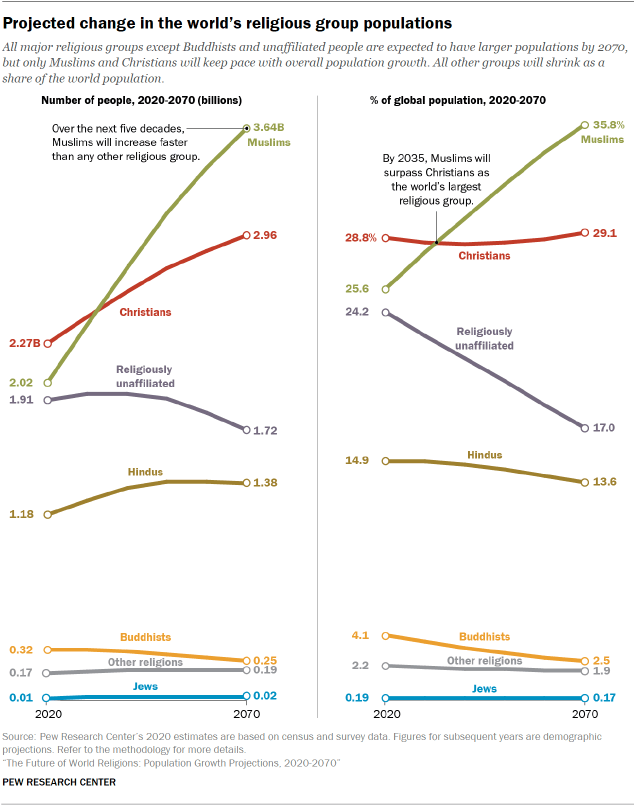
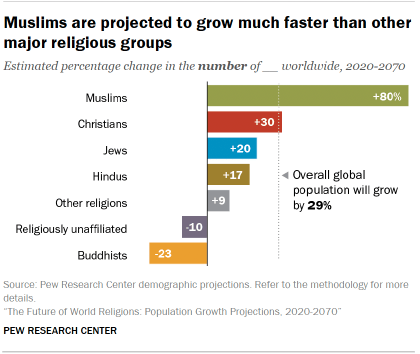
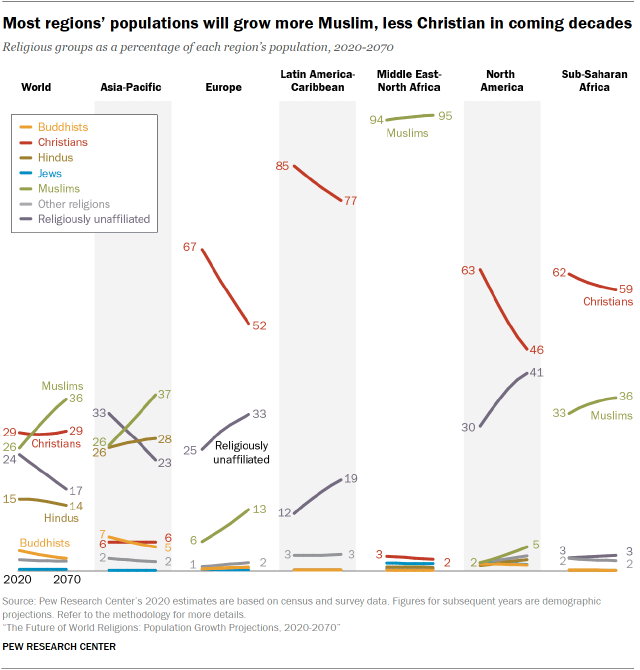
Islam is projected to overtake Christianity as the world’s largest religion by 2035, according to new projections from Pew Research Center. By 2070, the global Muslim population could exceed 3.6 billion, compared with just under 3 billion Christians. Muslims are expected to grow from 26% of the world’s population in 2020 to 36% in 2070, while Christianity’s share remains relatively steady at 29%. The main reason is demographics. Muslims have higher fertility rates, averaging 3.1 children per woman compared with 2.5 among Christians, and their median age is considerably younger. Much of the growth in both religions will occur in sub-Saharan Africa, where more than a quarter of the world’s population is expected to live by 2070.
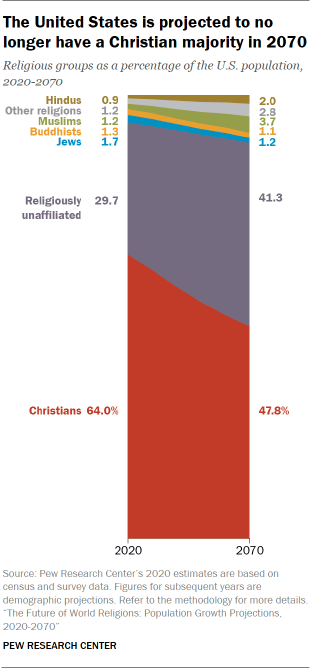
Christianity’s geographic center will continue shifting toward Africa, where more than half of the world’s Christians are expected to live by 2070. The Democratic Republic of the Congo is projected to surpass the United States as the country with the largest Christian population. Meanwhile, the U.S., Canada, and Germany are expected to lose their Christian majorities. In the United States, Christians will remain the largest religious group, but those with no religious affiliation are projected to reach approximately 41% of the population. Europe’s Muslim population is expected to increase from 6% to 13%, partly because of immigration, while its religiously unaffiliated population grows from roughly one-quarter to one-third.
Interestingly, the share of people worldwide who identify with no religion is projected to decline from 24% to 17%, even as religious disaffiliation increases in many countries. Much of this is explained by China’s shrinking population, which currently accounts for about two-thirds of the world’s religiously unaffiliated people. Buddhists are also expected to decline in both number and population share, while Hindus and Jews will increase in number but represent smaller shares of the global population. Pew emphasizes that these are projections based on current fertility, mortality, migration, and religious-switching patterns. Changes in those trends, particularly the pace at which people leave organized religion, could produce considerably different outcomes.
NOTE: Article contains many, many interesting charts. Here are just a few:
SPORTS
9. Parents Are Spending Fortunes to Turn 6-Year-Olds Into F1 Drivers (WSJ)
Formula One’s growing popularity in the United States has fueled a boom in competitive kart racing for children, with some families spending extraordinary amounts to give their kids a shot at becoming professional drivers. Private motorsports clubs are seeing record demand, including an 84% increase in children’s karting reservations at one New York facility since 2024. Membership at exclusive tracks can cost nearly $200,000, while families may spend anywhere from $12,000 to $300,000 a year on coaching, mechanics, equipment, travel, and racing fees. The full path through Formula 4, Formula 3, and Formula 2 to Formula One can cost as much as $8 million. Some families are even relocating to Europe, particularly Italy, to give their children access to the best competition and training.
Children as young as three are getting behind the wheel, and serious competitors can reach speeds of 60 to 70 miles per hour. Supporters say karting teaches discipline, maturity, physical conditioning, and problem-solving, while critics worry about the risks of serious injuries and the pressure placed on children to specialize so young. The enormous financial commitment also raises questions about whether racing is becoming a sport where family wealth matters as much as natural ability. For many parents, though, the sacrifices are worth it if their children genuinely love racing, even if the odds of eventually reaching Formula One are extraordinarily small.
NOTE: Sigh…the inflation of youth sports saddens me.

NOTE: I’m sure the kids are actually having a ton of fun racing karts, but there’s just something about the picture below that’s a little hostage-like. Perhaps it’s the fake-ish smiles and eyes darting off to the side (to parents, I assume).

10. See What the ‘Super El Niño’ Means for This Year’s Ski Season (WSJ)
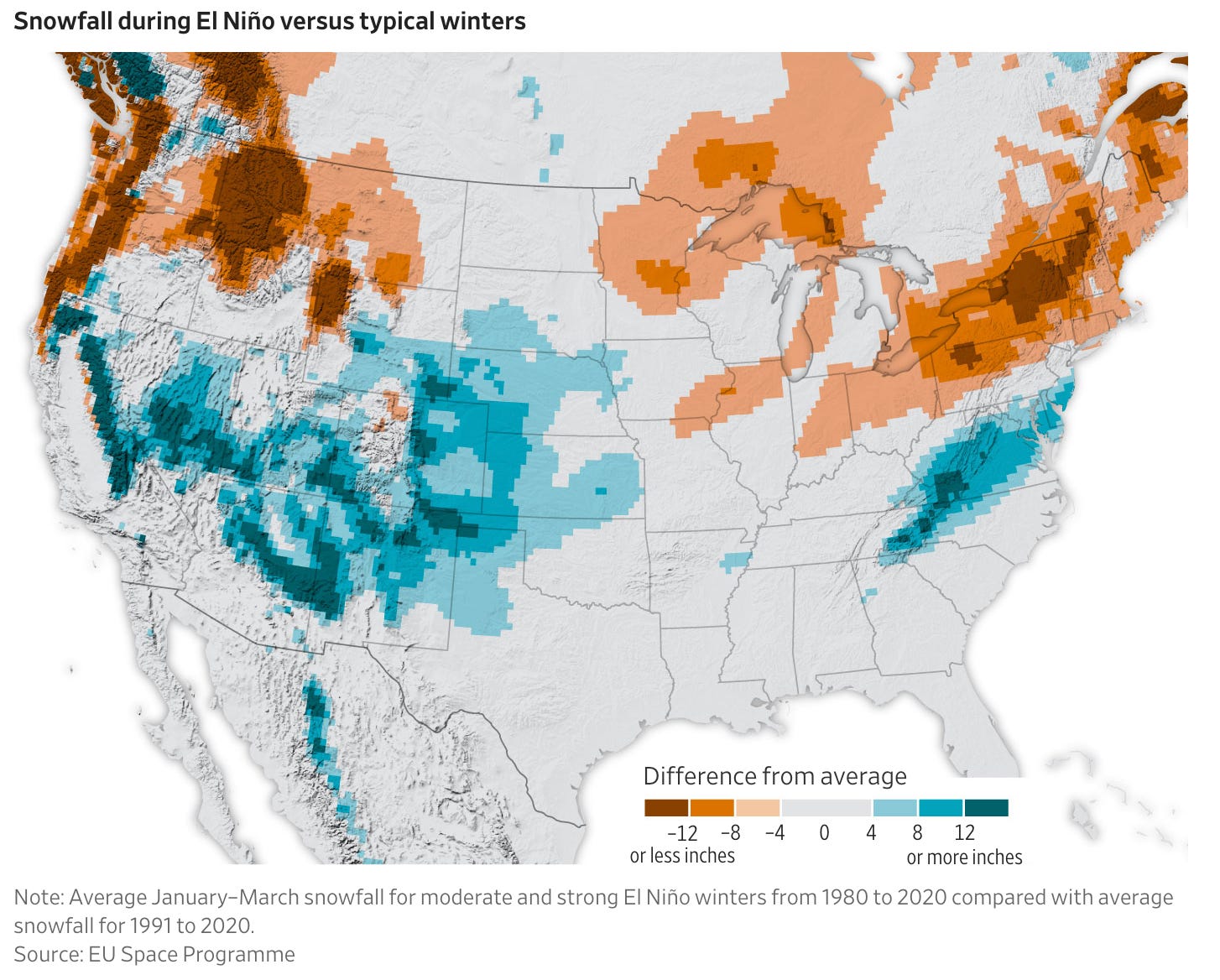
A potentially record-breaking “Super El Niño” is developing in the Pacific, bringing hopes of a much snowier ski season across parts of the American West. El Niño changes the jet streams that influence North American weather, typically bringing wetter conditions to the southern United States and warmer, drier weather farther north. Forecasters expect above-average snowfall in Utah, New Mexico, California’s Sierra Nevada, southern and eastern Colorado, and possibly southern Idaho. That would be welcome news for Rocky Mountain ski resorts, which received only about half their normal snowfall last winter.
However, a strong El Niño doesn’t guarantee a great ski season. The powerful events of 1982-83, 1997-98, and 2015-16 produced very different snowfall patterns, and warmer temperatures can turn precipitation into rain rather than snow, particularly at lower elevations. Scientists say this year’s unusually rapid ocean warming could produce one of the strongest El Niños on record, but exactly where the snow will fall remains uncertain. Ski resorts are nevertheless promoting the possibility of an exceptional winter, hoping to capitalize on pent-up demand following last season’s disappointing conditions.
ENTERTAINMENT
11. Why People Are Paying $4.99 for a Version of ‘The Odyssey’ Shot in West Virginia (WSJ)
Hollywood’s low-budget movie studio The Asylum has found a way to profit from major blockbusters by producing cheap lookalikes known as “mockbusters.” While Christopher Nolan spent $250 million filming “The Odyssey” over 91 days in six countries, The Asylum shot its own version in just six days in West Virginia for roughly $250,000. Released to streaming and rental services while Nolan’s film was still in theaters, the budget version is expected to earn nearly $1 million. The studio has used the same approach with films such as “Titanic II,” “Another Toy Story,” and “Doomsday Avengers,” attracting viewers looking for something similar to a heavily promoted Hollywood release, including some who mistakenly think they’re renting the real thing. Founded in 1997, The Asylum produces around 30 movies annually, keeping budgets below anticipated revenue and making extensive use of inexpensive locations, small crews, and increasingly AI-generated special effects. Its biggest success was the 2013 cult hit “Sharknado,” which spawned a franchise. Despite shrinking profit margins and frequent criticism of its films’ quality, the studio has survived for nearly three decades by making inexpensive movies that distributors already know they can sell.

12. Jacob Collier Improvises With Orchestra (Live in San Francisco)
NOTE: I missed this when it came out about a year ago. Incredibly impressive. Since you likely have some extra time this week, I recommend watching in its entirety (22 min).
Lastly, Happy Thanksgiving to you and your family.
AI USE DISCLOSURE
The article summaries in this newsletter are prepared with the assistance of artificial intelligence (AI). I personally select and read every article, use AI to help summarize the key points, and then review and edit the summaries to ensure they accurately reflect the original content.
The original articles are always more detailed and often include valuable charts, graphics, and context that the summaries cannot fully capture. I encourage you to read the actual articles in their entirety and support the writers who wrote them.
Any additional commentary or personal observations, identified by “NOTE,” are my own.