

Economy
1. U.S. Debt Tops 100% of GDP (WSJ)
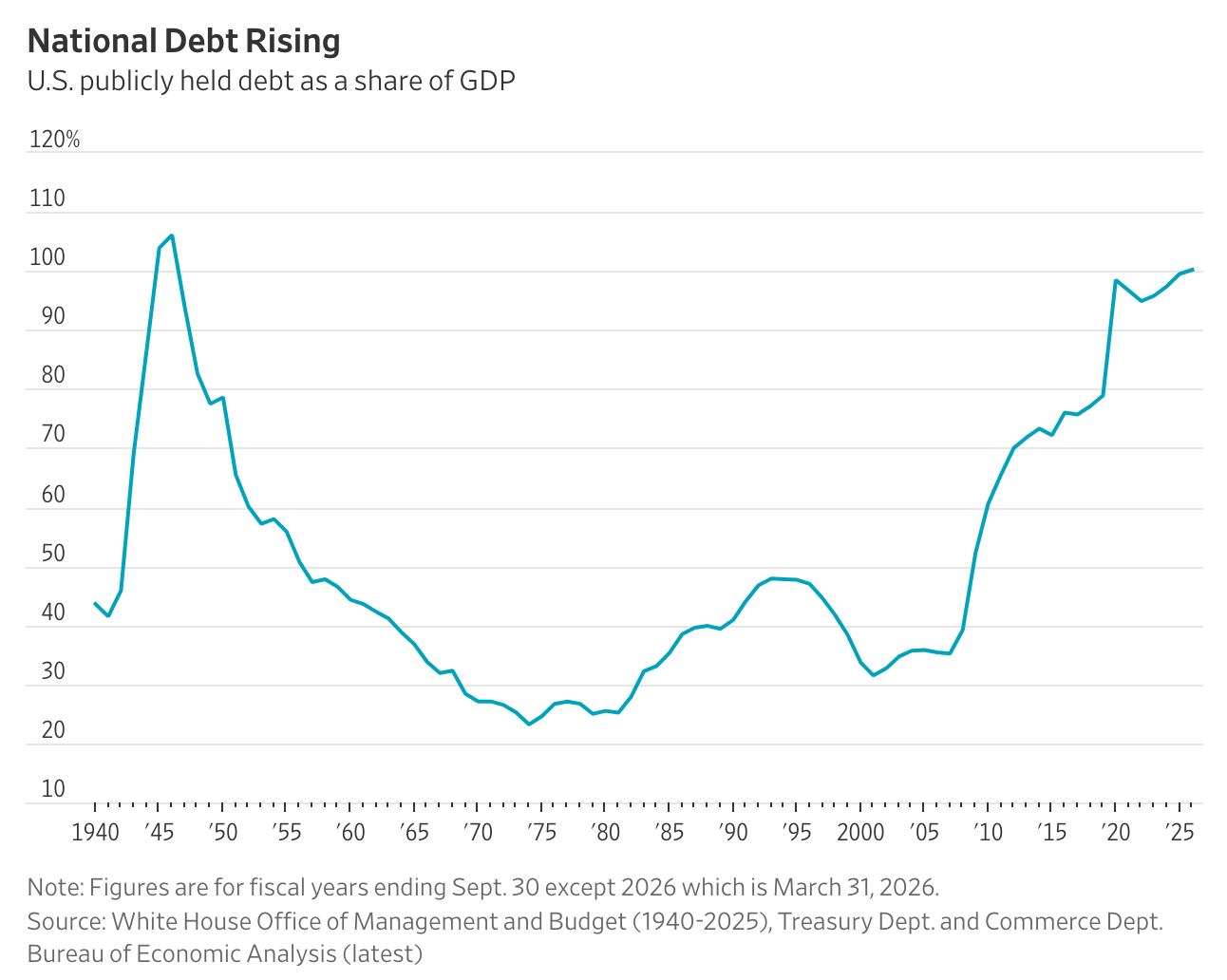
The United States has crossed a major fiscal milestone: publicly held national debt now exceeds 100% of GDP for the first sustained period since the aftermath of World War II. As of March 31, publicly held debt stood at roughly $31.3 trillion, slightly larger than the country’s annual economic output. The federal government is currently spending about $1.33 for every dollar it collects, with annual deficits nearing 6% of GDP and projected to remain elevated for years. While economists caution there is nothing magical about crossing the 100% threshold itself, the number symbolizes the long-term fiscal pressures building across the American economy.
As debt rises, interest payments consume a growing share of federal spending—now roughly one out of every seven federal dollars. Higher debt also makes the economy more sensitive to interest-rate increases, crowds out private investment, and can place upward pressure on borrowing costs across mortgages, auto loans, and credit markets. Economists warn that over time, excessive debt can reduce productivity growth and limit economic flexibility, even for a country like the United States that benefits from issuing the world’s reserve currency.
Unlike the temporary spike during the COVID-19 pandemic, today’s deficits are increasingly structural, driven by aging demographics, entitlement spending, repeated tax cuts, and political unwillingness to make major fiscal adjustments. Congressional Budget Office projections show debt potentially reaching 120% of GDP within a decade and 175% by the 2050s absent major policy changes. Stabilizing debt levels alone, not reducing them, would likely require trillions of dollars in tax increases, spending cuts, or much faster economic growth than currently projected. The broader anxiety among economists is the growing sense that the political system lacks the willingness to confront it seriously.
NOTE: Yes, as I’ve been saying, our political system must confront this issue sooner rather than later. It’s only continuing to get worse. We either face pain now, or much more pain later.
2. The Great $110 Trillion Wealth Transfer Won’t Happen Any Time Soon (WSJ)
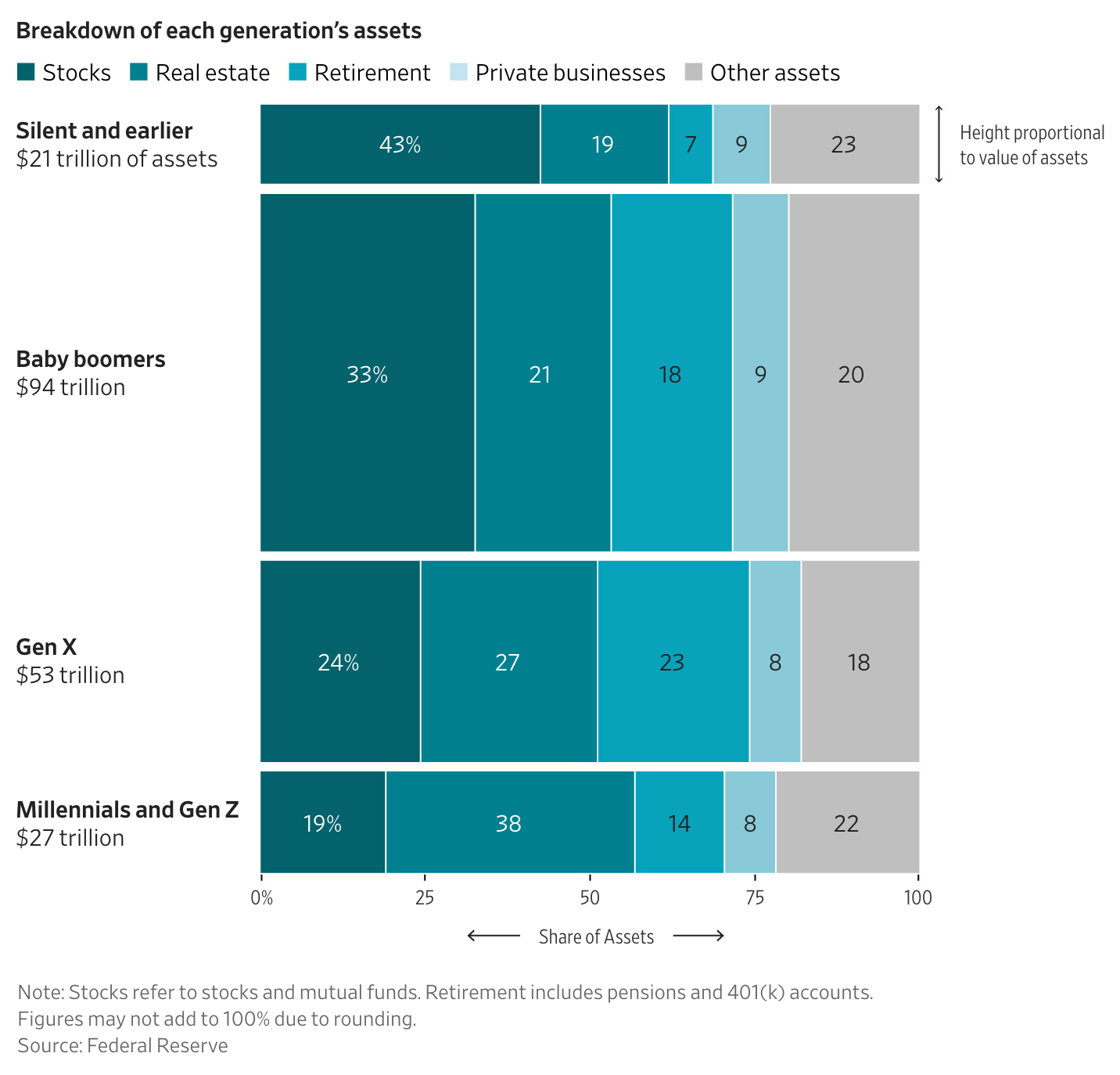
For years, the coming “great wealth transfer” has been portrayed as a massive handoff of baby boomer wealth to millennials and younger generations. The reality may look much slower and far less transformative. Older Americans now control roughly $110 trillion in wealth, with baby boomers alone holding nearly $90 trillion, but longer lifespans, rising healthcare spending, luxury retirement lifestyles, and wealth transfers between spouses are delaying when much of that money actually reaches younger heirs.
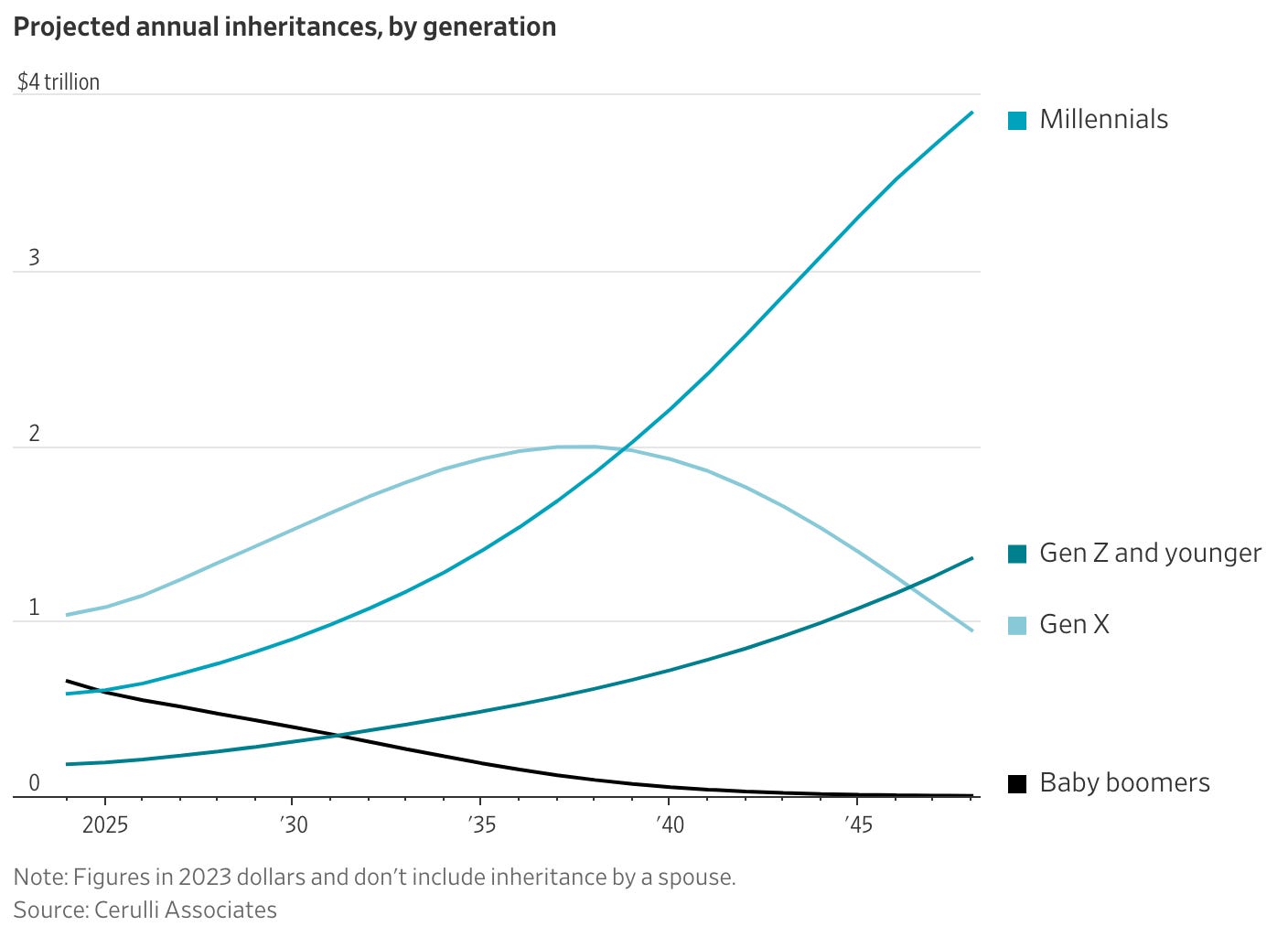
The result is that inheritances are arriving later in life. Americans who once commonly inherited wealth in their 50s are now more likely to receive inheritances in their mid-60s, meaning many heirs are already approaching retirement themselves before substantial transfers occur. While millennials are often portrayed as the primary beneficiaries of future inheritances, projections suggest Generation X will actually receive the largest share of inherited wealth over the next decade. Even then, the distribution will remain highly unequal, since many middle- and lower-income families have little or no wealth to pass down at all.
3. Can a country get too rich? (Economist)
NOTE: I hear a lot about Nordic countries and happiness (Norway is currently the 6th happiest country in the world). It appears, at least for Norway, that happiness comes at a cost.
Norway has become one of the wealthiest countries in the world thanks to decades of oil revenue and a massive sovereign wealth fund now worth roughly $2.2 trillion. The country enjoys extraordinarily high living standards, generous public services, and GDP per capita near the top globally. Yet growing debate inside Norway suggests that extreme wealth may also be creating complacency, inefficiency, and economic stagnation. A bestselling Norwegian book titled *The Country that Became Too Rich* argues that easy oil money has weakened incentives for both politicians and citizens to make difficult decisions or maintain long-term economic discipline.
As the sovereign wealth fund has ballooned, government spending increasingly relies on investment returns rather than taxation. That dynamic, critics argue, allows politicians to postpone reforms and simply spend more when problems emerge. Healthcare costs, infrastructure projects, and public renovations have become notoriously expensive, while economic cost-benefit analysis often takes a back seat to political convenience. Large portions of state revenue are also directed toward foreign aid and charitable causes at levels far exceeding many peer countries. Meanwhile, households have accumulated some of the highest debt levels in Europe, reflecting confidence that national wealth will cushion economic risks.
The effects are showing up in the labor market and broader economy. Youth unemployment is significantly higher than in neighboring Denmark, dropout rates are elevated, and many highly educated Norwegians end up working low-skill service jobs despite extensive free higher education. Productivity growth has stalled, real wages are beginning to decline, and the Norwegian krone has weakened. The broader concern is not whether Norway can continue funding its welfare state—it likely can for decades—but whether a society sustained primarily by accumulated wealth gradually loses the pressures and incentives that drive innovation, accountability, productivity, and personal ambition.
4. These Are the Hiring Hot Spots Where College Grads Are Landing Good Jobs (WSJ)
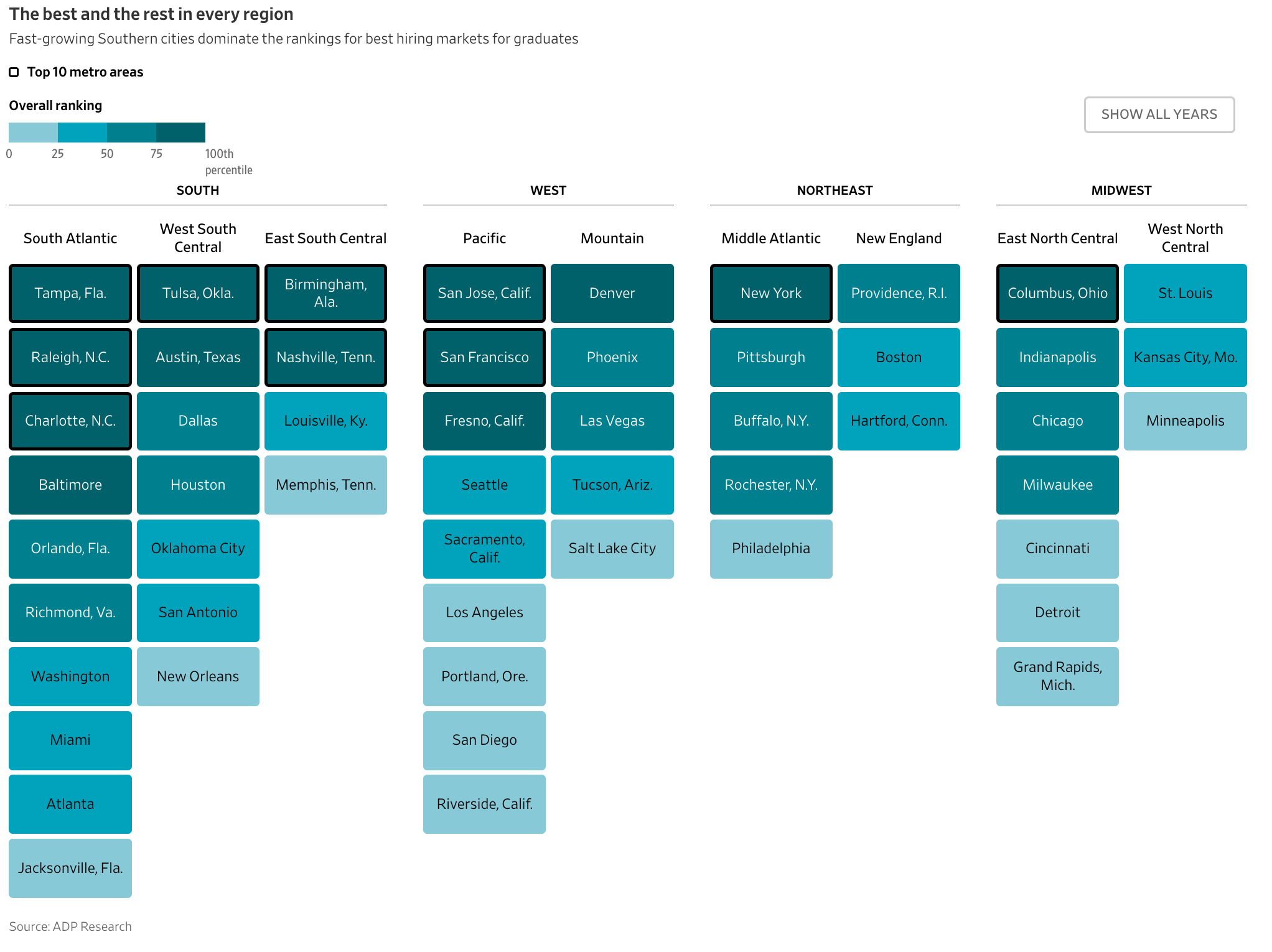
A growing number of cities across the American Sunbelt are emerging as some of the strongest job markets for recent college graduates, even as the broader entry-level labor market remains difficult and uneven. New research from ADP ranked metro areas based on hiring rates for college-level jobs, wages, and affordability, and found that Southern cities dominate many of the top spots. Birmingham ranked first, followed by Tampa, with other strong performers including Raleigh, Tulsa, Nashville, and Charlotte. Recovery in graduate hiring is happening selectively, favoring regions with strong growth industries and relatively manageable living costs. Many young graduates increasingly see Southern cities as places where they can access opportunity without the crushing housing costs associated with traditional coastal hubs.
The rankings also reveal how rapidly local labor markets are shifting. San Jose surged despite recent tech layoffs, helped by renewed AI-related hiring and exceptionally high salaries, while Columbus emerged as a Midwest standout thanks to expansion in advanced manufacturing, healthcare, finance, and defense-related industries like drone production. Meanwhile, former high-flyers such as Austin, Phoenix, and Boston slipped in the rankings.
Prediction Markets
5. Why Almost Everyone Loses—Except a Few Sharks—on Prediction Markets (WSJ)
NOTE: Last week, I shared a Bloomberg article on this topic, here’s a WSJ one for you. I think the topic bears repeating.
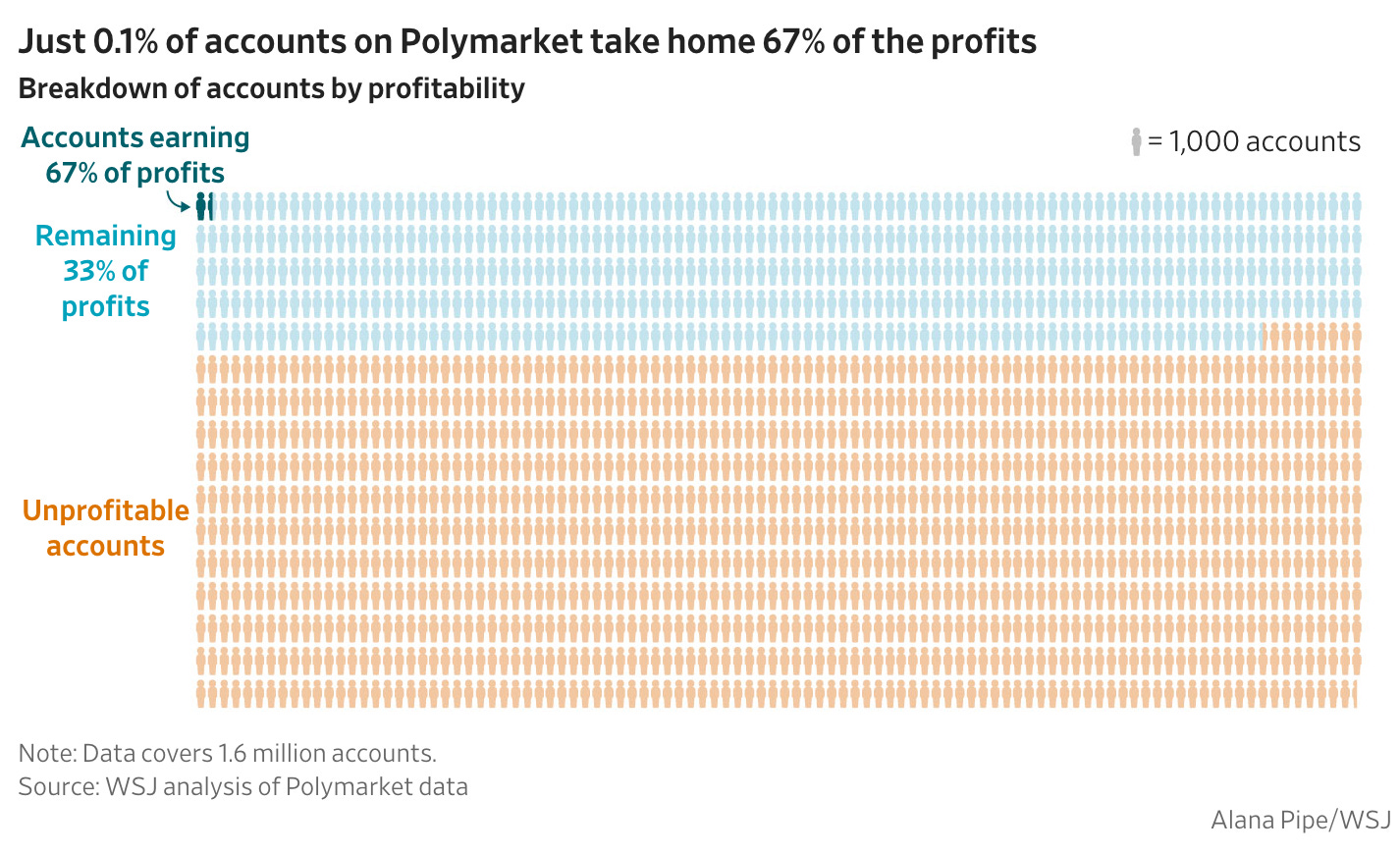
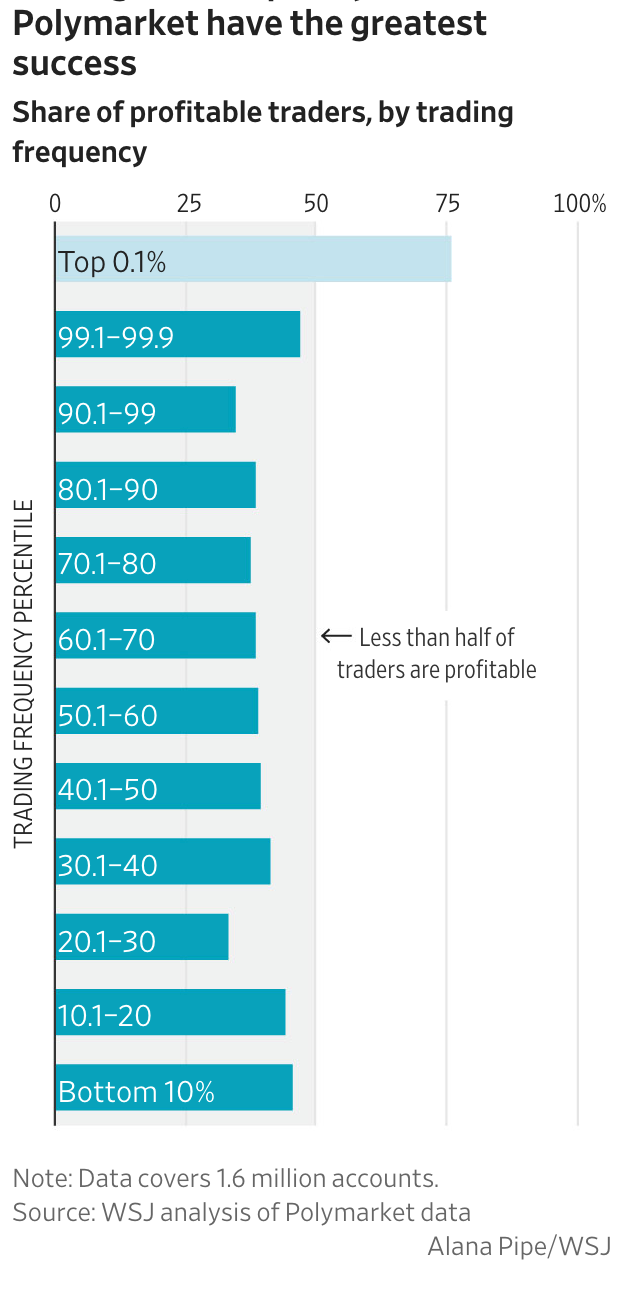
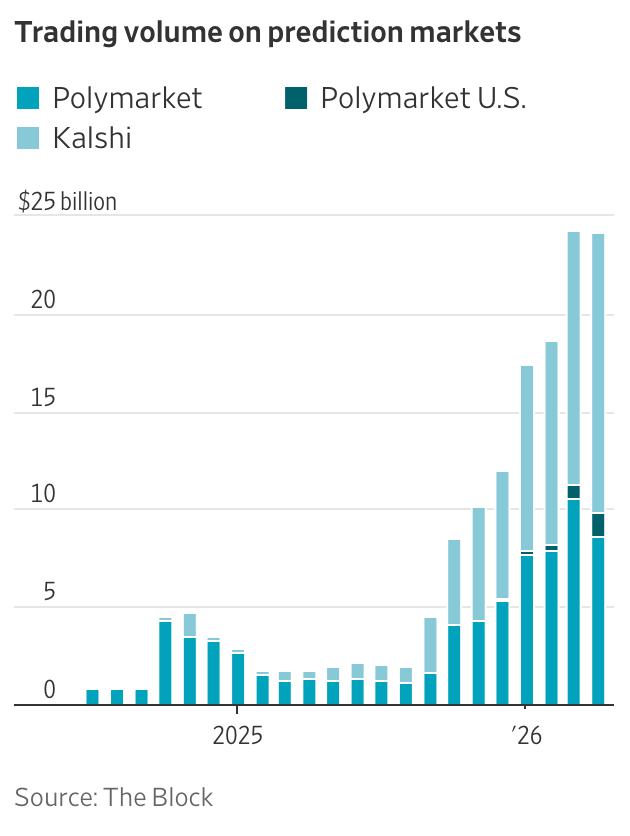
Prediction markets like Kalshi and Polymarket market themselves as democratized forecasting platforms where ordinary users can profit from predicting sports, politics, celebrity appearances, and economic events. In practice, however, the overwhelming majority of users lose money while a tiny group of sophisticated professional traders capture most of the gains. A Wall Street Journal analysis found that 67% of profits on Polymarket went to just 0.1% of accounts, while more than 70% of users lost money overall. On Kalshi, the company acknowledged that unprofitable users outnumber profitable ones by nearly three to one. Trading volume has exploded, rising from $1.8 billion to $24.2 billion year-over-year, attracting quantitative trading firms, algorithmic market makers, and high-frequency traders that use expensive live data feeds, AI systems, and automated trading infrastructure to exploit less sophisticated participants.
Prediction markets increasingly resemble a hybrid of gambling, day trading, and high-frequency finance. Professional firms staffed by statisticians, coders, and quantitative traders dominate many markets through speed, discipline, and superior data access. Some firms reportedly execute tens of thousands of trades daily and spend hundreds of thousands of dollars annually on infrastructure. Critics warn that these markets are vulnerable to insider trading and behavioral biases such as “long shot bias,” where inexperienced traders overestimate unlikely outcomes. Mention markets in particular were found to systematically overprice “yes” outcomes, producing returns worse than many casino slot machines. Supporters counter that uninformed traders improve market liquidity and forecasting accuracy, arguing that prediction markets function similarly to other regulated financial exchanges.
Technology
6. You Have No Idea How Much You Still Use BlackBerry (WSJ)
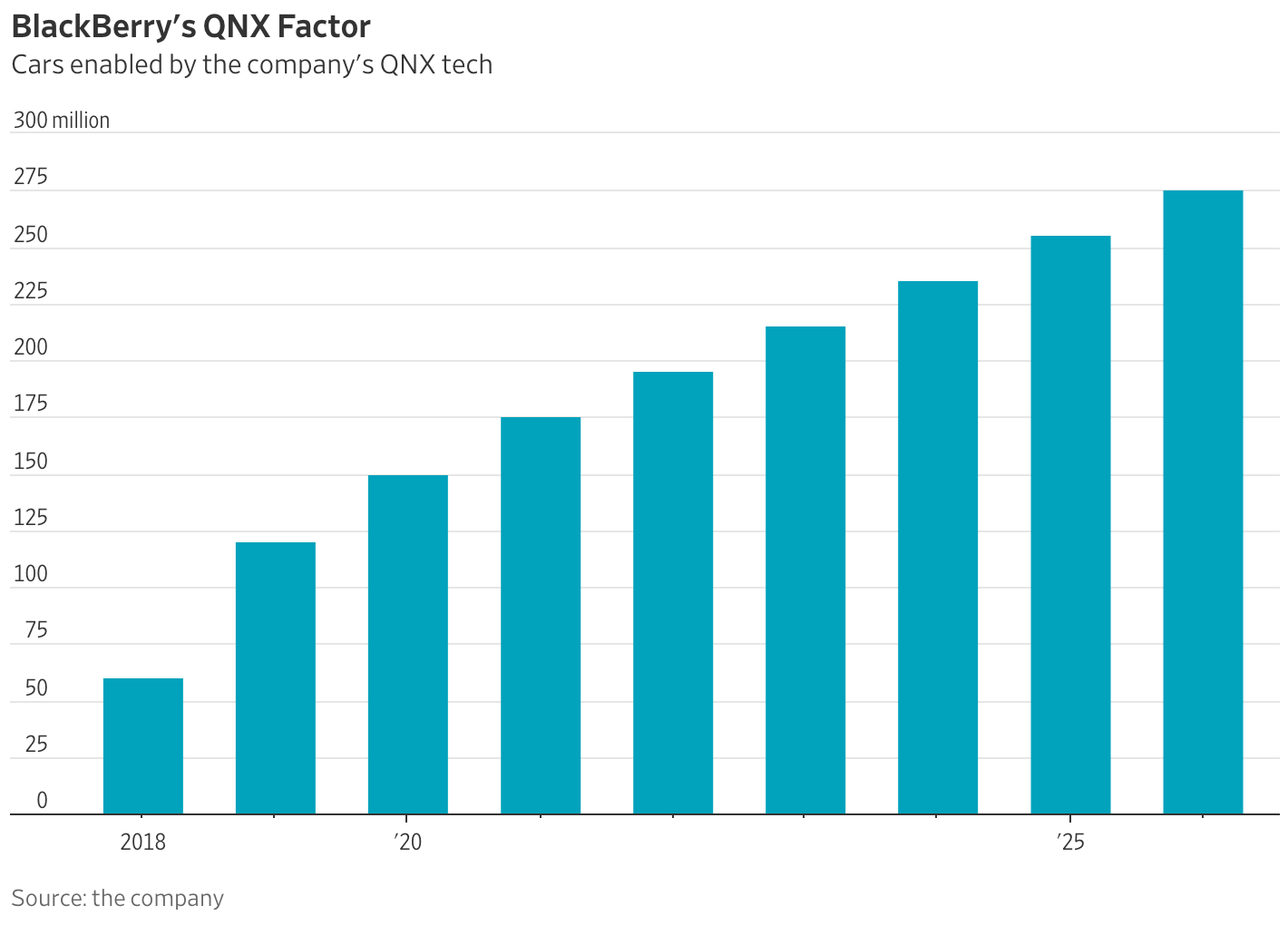
BlackBerry may have disappeared from the smartphone spotlight years ago, but the company quietly reinvented itself as a major player in the software infrastructure powering modern vehicles and critical industrial systems. Its subsidiary, QNX, now provides the operating system embedded in roughly 275 million cars worldwide, supporting essential safety and driver-assistance functions such as collision warnings, adaptive cruise control, blind-spot detection, and lane-keeping systems. The software is designed for extreme reliability, making it attractive not just to automakers but also to hospitals, factories, robotics companies, and medical-device manufacturers where system failure is unacceptable.
Originally acquired in 2010 to help modernize BlackBerry phones during the company’s decline against the Apple iPhone ecosystem, QNX quietly evolved while much of the company’s attention remained focused on its collapsing handset business. As tech giants like Google and Apple entered automotive infotainment, QNX pivoted away from competing for dashboard screens and instead focused on the deeper software layers controlling safety-critical vehicle functions. That strategic shift proved pivotal as cars increasingly became “computers on wheels.”
A company once considered obsolete is now profitable again, with QNX generating roughly half of BlackBerry’s revenue and helping deliver the company’s first stretch of consecutive profitable quarters in years. BlackBerry’s stock remains far below its historic peak, but executives increasingly frame the company not as a failed phone maker but as a hidden infrastructure provider embedded across modern transportation, automation, and healthcare systems. Most consumers never see the software or know it exists, but millions rely on it every day without realizing it.
Health
7. Don’t Get Too Comfortable. Your Quality of Life Depends On It. (WSJ)
NOTE: I agree with this article wholeheartedly.
Modern life increasingly eliminates friction. AI, convenience technology, endless entertainment, and instant gratification make it possible to avoid discomfort almost entirely. Yet the same frictions people try to escape, like effort, challenge, uncertainty, and adaptation, are often the very things that keep human beings healthy. A growing danger is not stress or burnout, but stagnation: lives optimized for comfort that slowly erode resilience, vitality, and long-term well-being.
The core idea is “progression,” not in the sense of relentless productivity or constant achievement, but in the biological and psychological benefits that come from forward movement and adaptation. Research increasingly shows that when people consistently engage in manageable challenges, the body and brain respond positively.
Physical progression through exercise and progressive overload improves cardiovascular health, cognition, mood, and stress regulation.
Behavioral progression—taking action even when motivation is low—helps disrupt depression and avoidance cycles.
Mental progression, especially exploratory thinking and openness to novelty, improves creativity, flexibility, and emotional resilience, while repetitive rumination and mental loops are strongly associated with anxiety and depression.
The difference between pleasure and progression is a big one. Many modern habits—doomscrolling, passive entertainment, sugar, alcohol—can temporarily improve mood without making people stronger, healthier, or more capable afterward. Progression often involves discomfort, uncertainty, or effort, but it leaves behind expanded capacity. That may help explain why reaching goals often produces only fleeting satisfaction, while sustained engagement in meaningful challenges predicts better health, greater resilience, and even lower mortality risk over time. In an age increasingly designed around efficiency and convenience, human beings are not optimized by ease, we are optimized by challenge and adaptation.
8. Young New Yorkers Have a New Hot Spot: Sunday Mass (WSJ)
For years, many churches worried about declining attendance and aging congregations. In parts of New York City, especially among young adults, the opposite is happening. At St. Joseph’s Church in Greenwich Village, Sunday evening Masses are overflowing with Gen Z worshipers packed into pews, aisles, balconies, and folding chairs. Much of the growth has been driven by informal young-adult communities like “Pizza to Pews,” a meetup started by two twenty-somethings that draws hundreds of young Catholics to dinner before walking together to Mass. Some attendees travel from outside the city simply to participate.
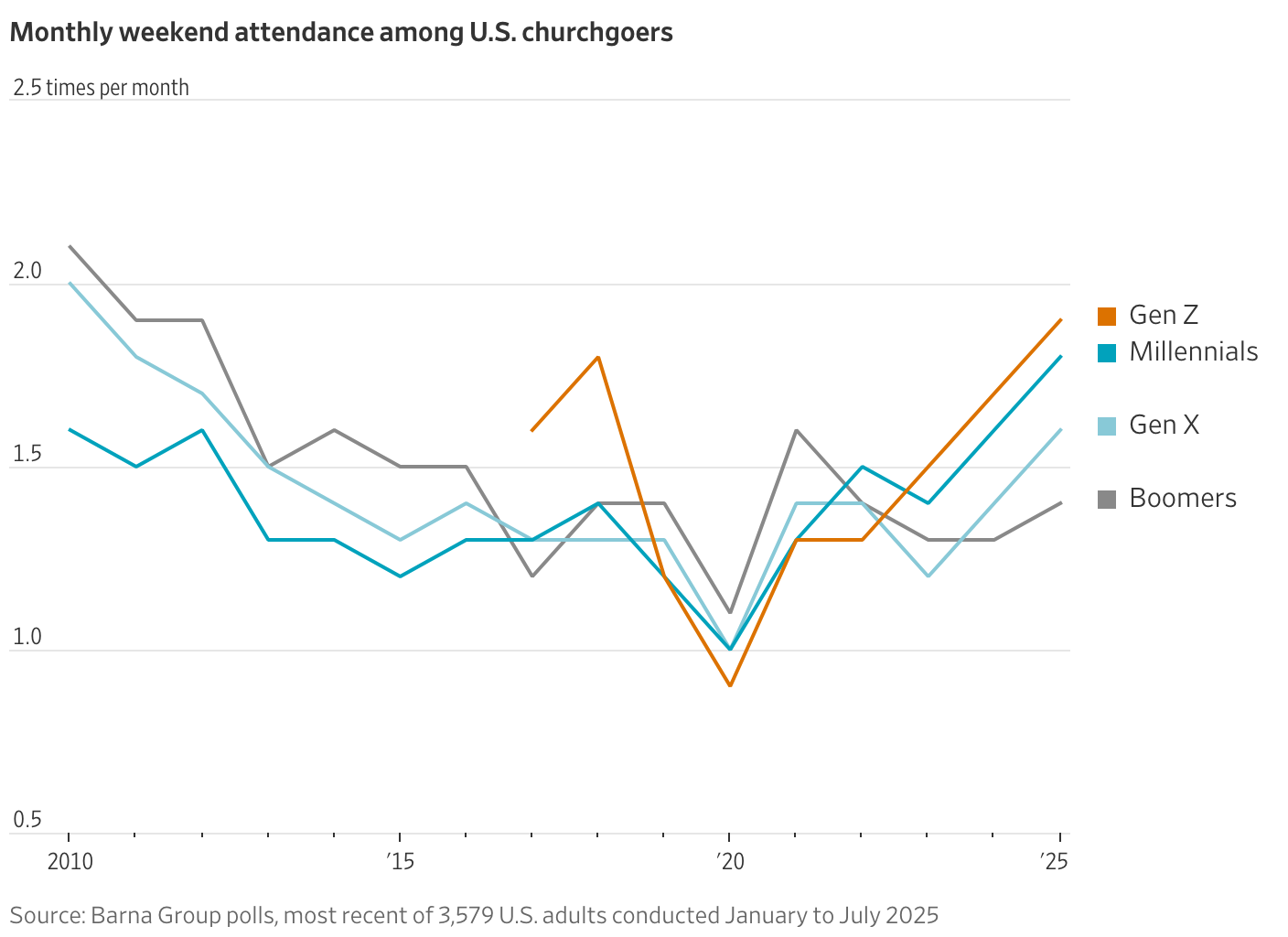
According to Barna Group data, Gen Z churchgoers now attend services more frequently than millennials, Gen X, or boomers, with attendance rates rising notably since 2020. Young adults describe several forces pulling them toward faith communities: loneliness after the pandemic, political and economic uncertainty, desire for stable values and in-person connection, and dissatisfaction with hyper-online social life. Practices once seen as old-fashioned are being rediscovered by people who often had little religious upbringing themselves.
Church participation has also become deeply social. Young worshipers linger after services to exchange numbers, organize dinners, or join prayer walks through Central Park. Some document their routines on TikTok, blending church attendance with lifestyle culture in ways that feel accessible rather than institutional. Dating has become another major dynamic, with religious matchmaking platforms and social scenes growing rapidly.
For Fun
9. Kentucky Derby 2026
NOTE: In case you missed it, Golden Tempo won the Kentucky Derby---coming from last place to first in an amazing surge. Amazing!
10. Radiohead but it’s all jazz musicians
A Toronto-based soul and R&B artist, Kubla, sings Radiohead’s Creep in the style of jazz.