Economy
1. Wealth-Tax Fever Is Spreading to Less-Wealthy States (WSJ)
Maine has enacted a new 2% surtax on income over $1 million, joining a broader trend among Democratic-led states seeking to raise revenue from top earners. The measure increases the top tax rate to 9.15% and is expected to generate about $150 million over two years, funding priorities like healthcare, education, housing, and property tax relief. Supporters argue the tax is necessary amid economic uncertainty and federal spending cuts, while pointing to growing numbers of millionaires in the state. Critics warn the policy could backfire by discouraging investment, pushing wealthy residents to relocate, and hurting small business owners whose income may temporarily exceed $1 million.
NOTE: This topic made wonder which taxpayers generally pay the most taxes at the federal level. This recent CATO Institute article does a good job of breaking it all down. Of note: “At the federal level, the top 10 percent of income earners pay more than 60 percent of all taxes and 72 percent of income taxes, shares that have been increasing over time.”
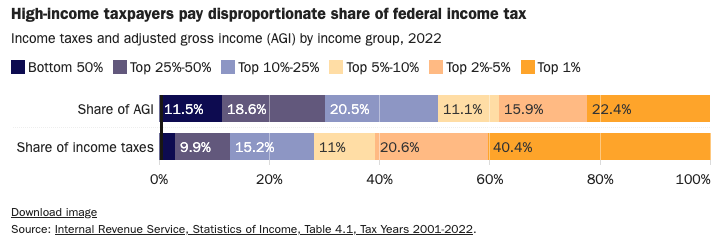
As a percent of income, our taxes are progressive—meaning the more you make, the higher you’re taxed:
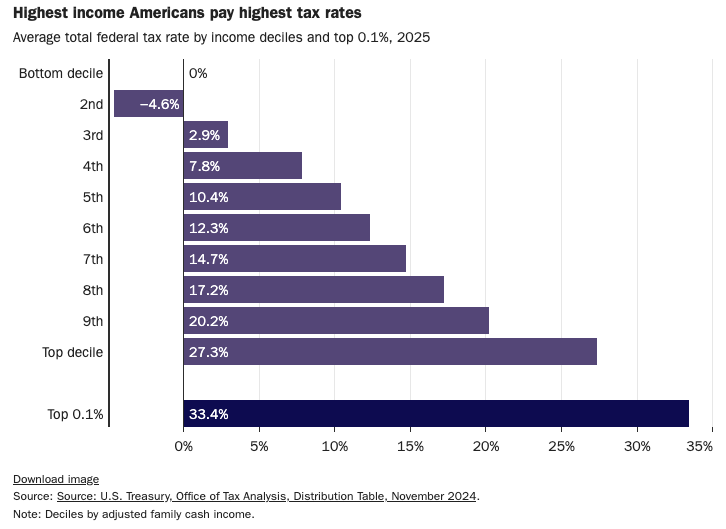
If we wanted to increase taxes—and I’m not saying that we should—perhaps the focus should be on corporate income tax instead of individual tax.
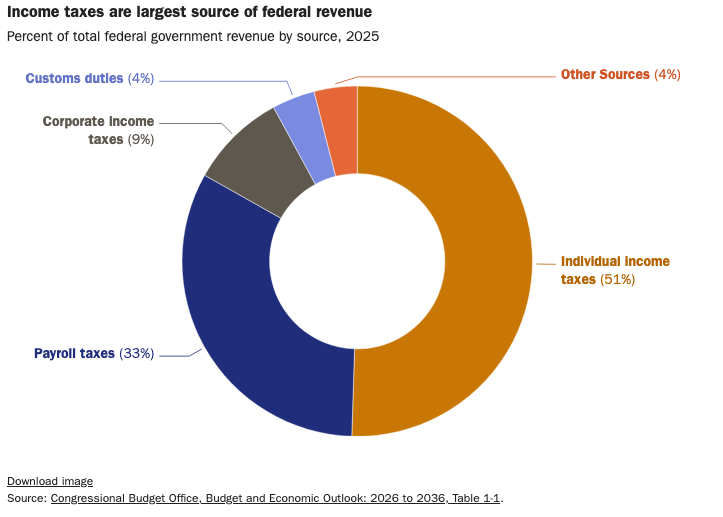
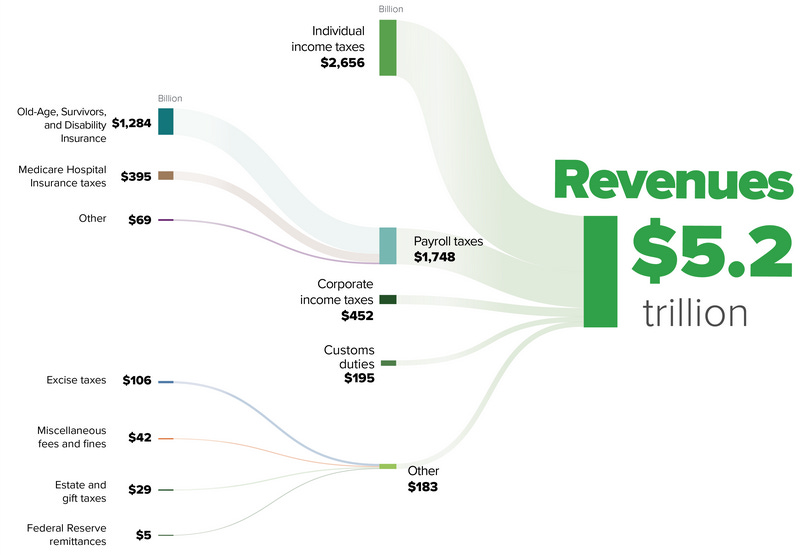
Here’s the above info in dollars versus percentages:
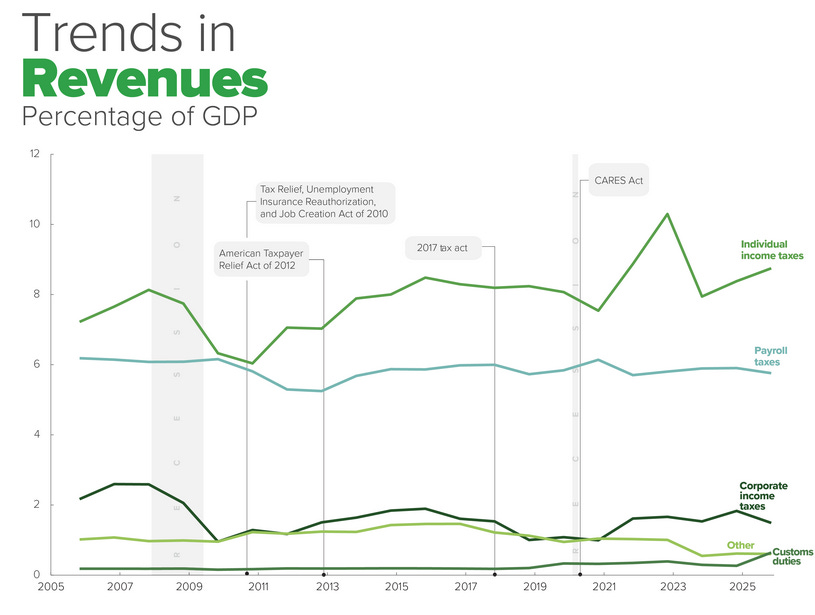
Here’s what that’s looked like over time:
Regardless, increasing taxes doesn’t solve the overall problem of overspending—something we’ve done every year since 2001.
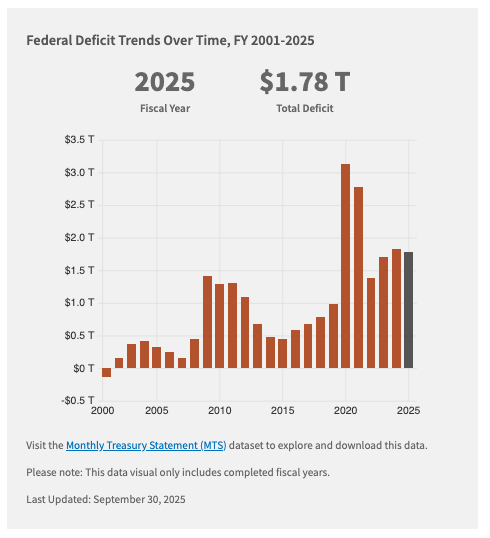
The cumulative effect of which has led to an ever increasing debt:
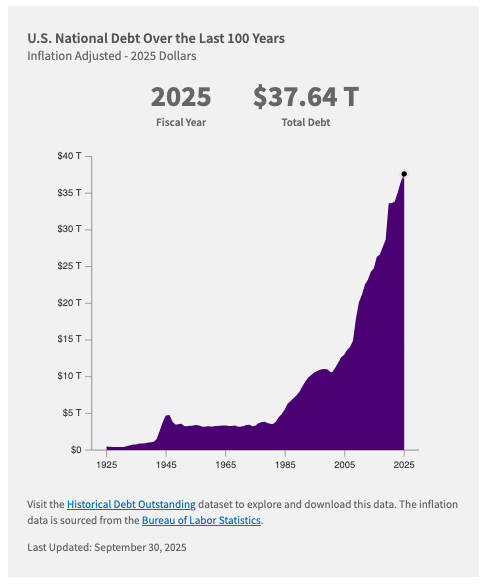
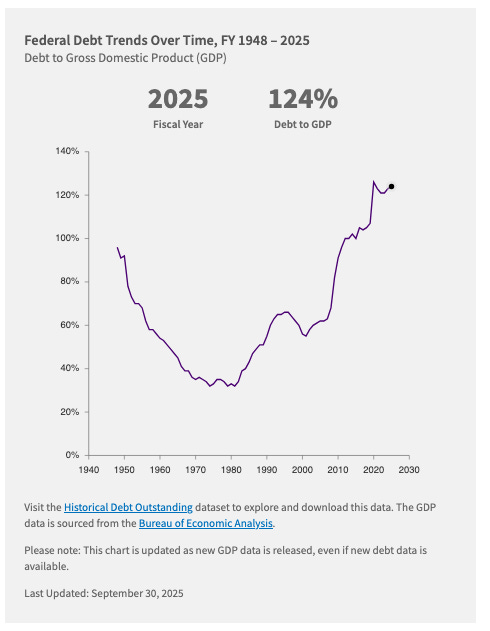
Leading to our debt payments to be more than our GDP:
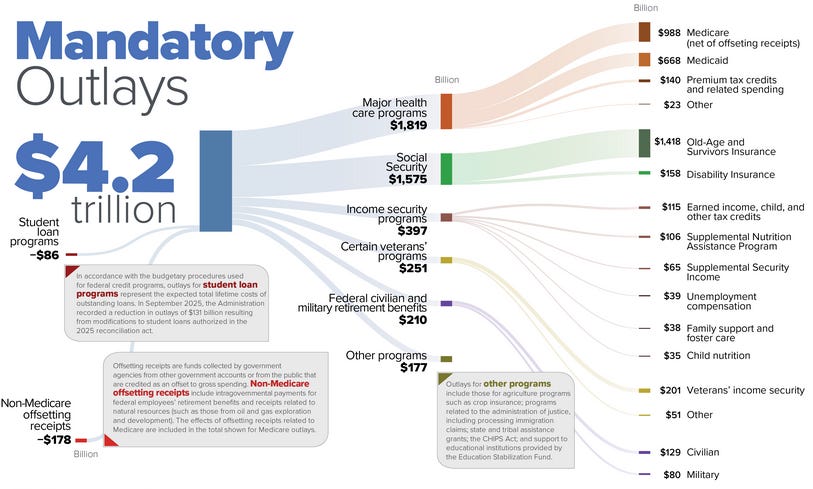
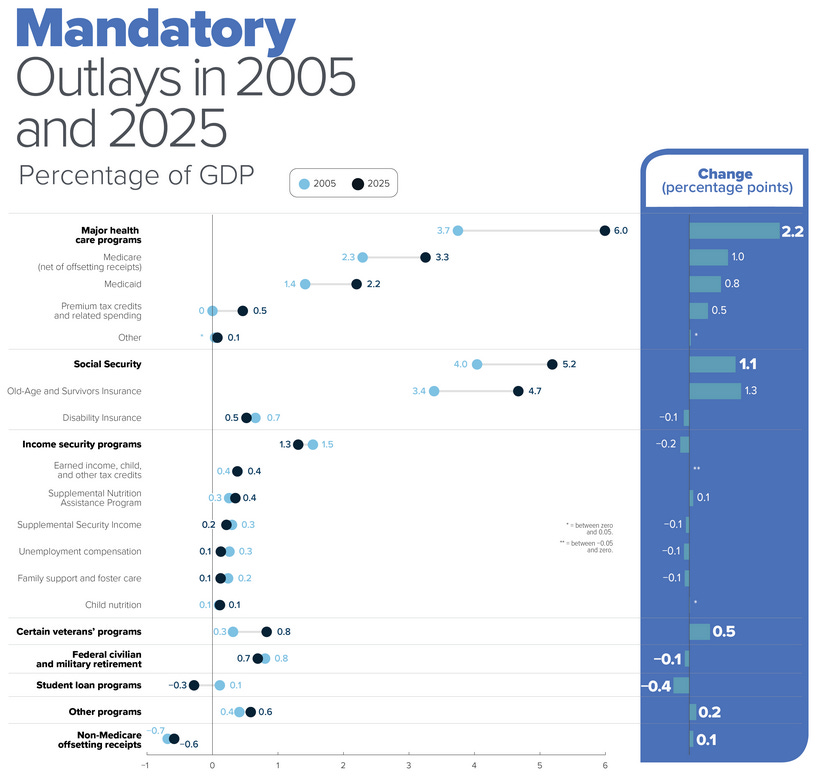
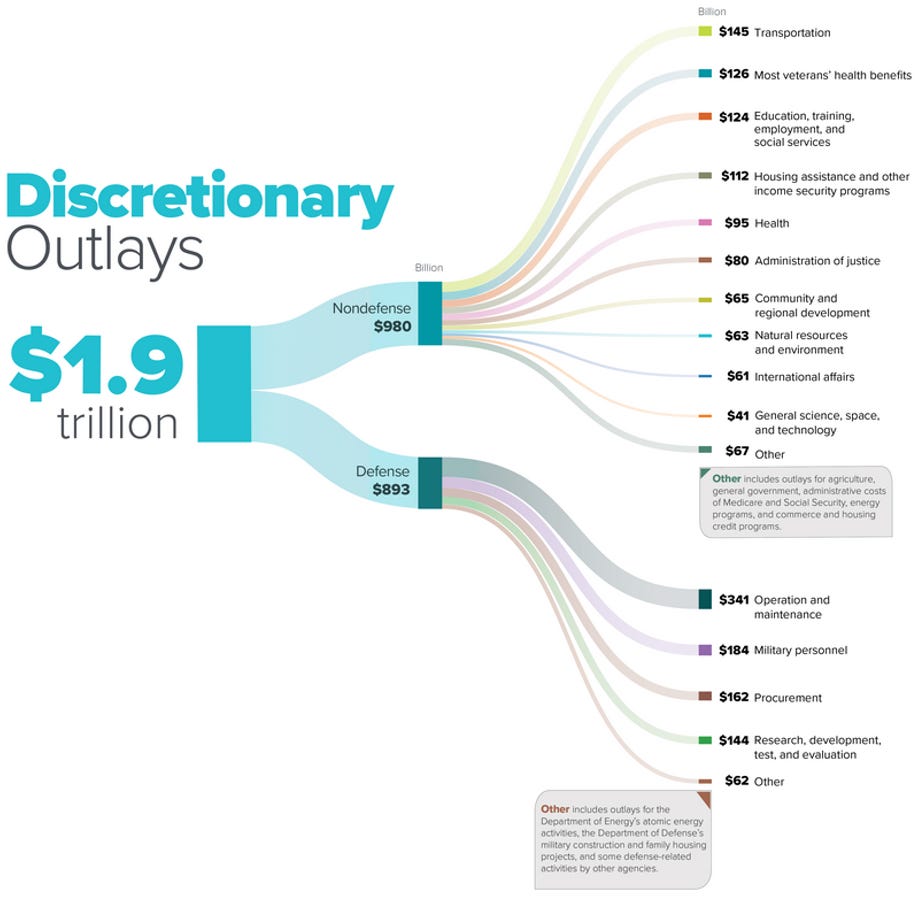
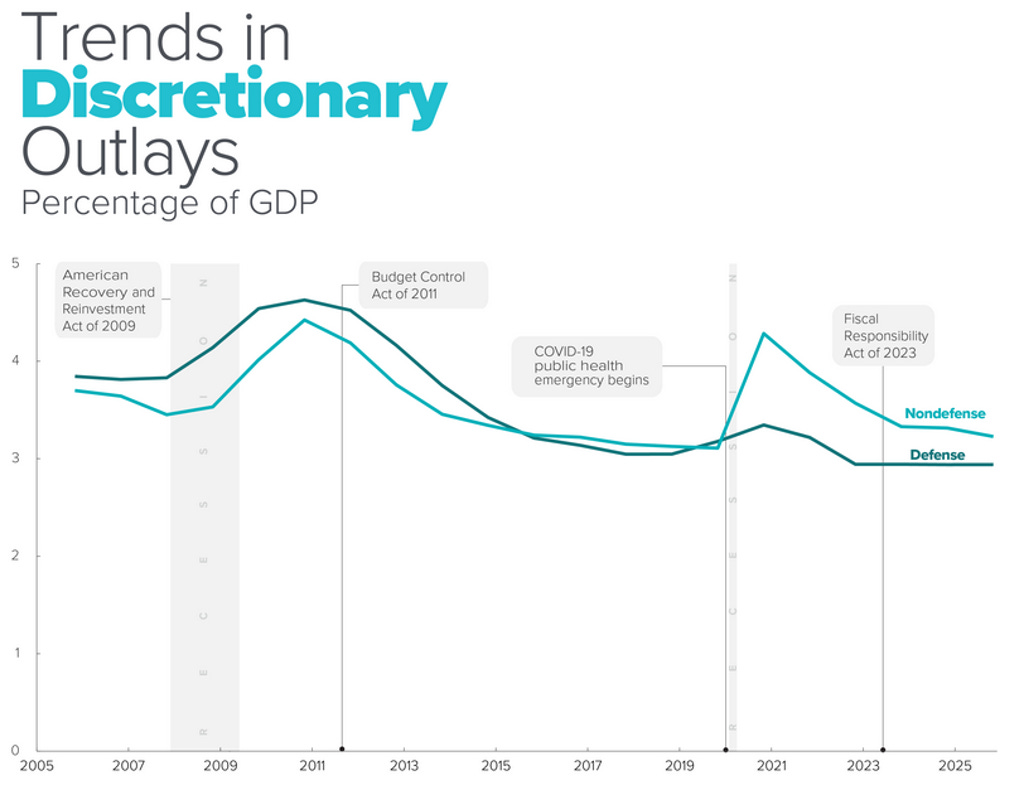
And in case you’re wondering, the Congressional Budget Office has some great infographics that show where our mandatory and discretionary spending is going and how it’s changed over time:
2. Around 14% of Enrollees in ACA Plans Failed to Make Payments, Data Shows (WSJ)
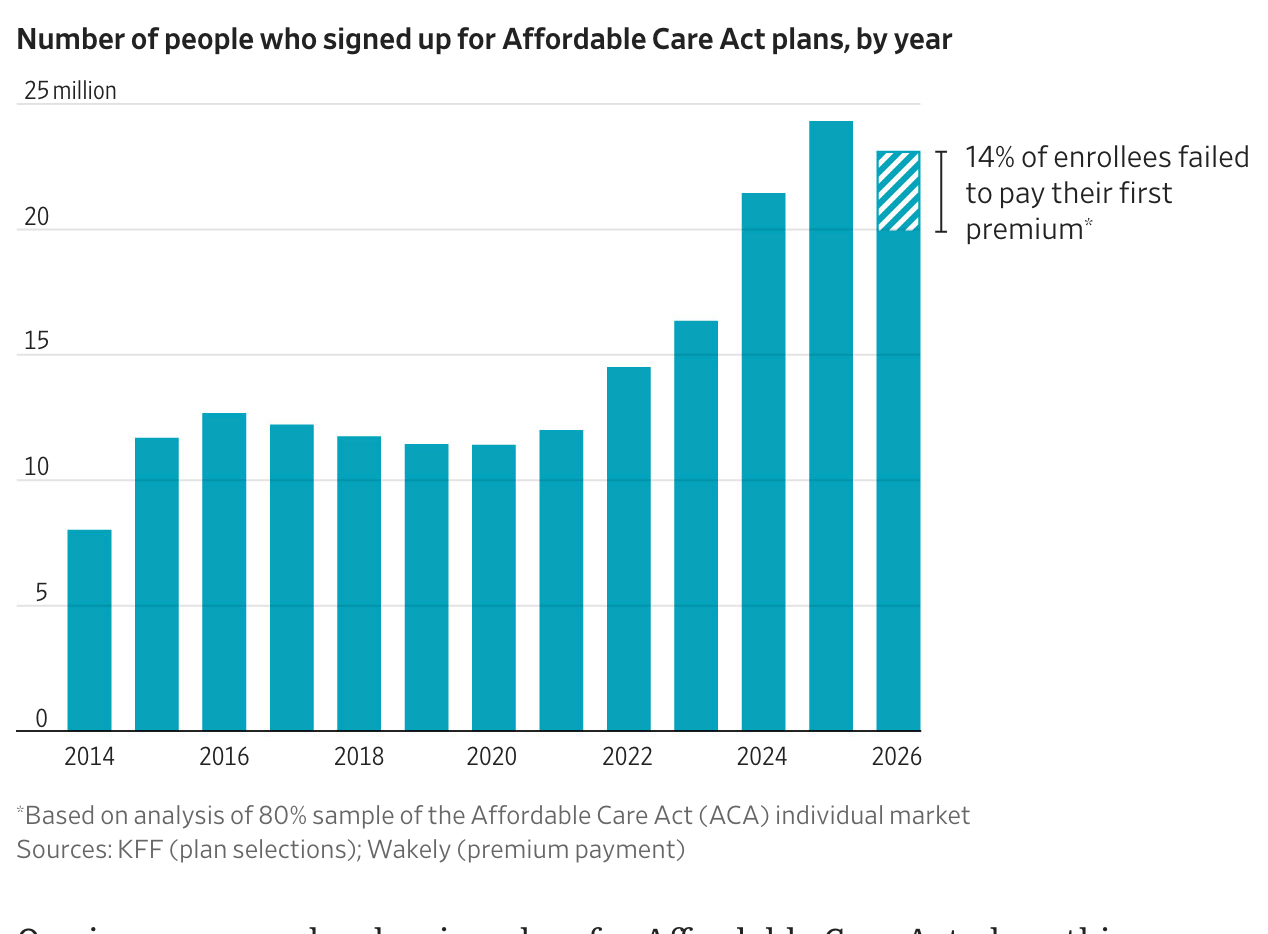
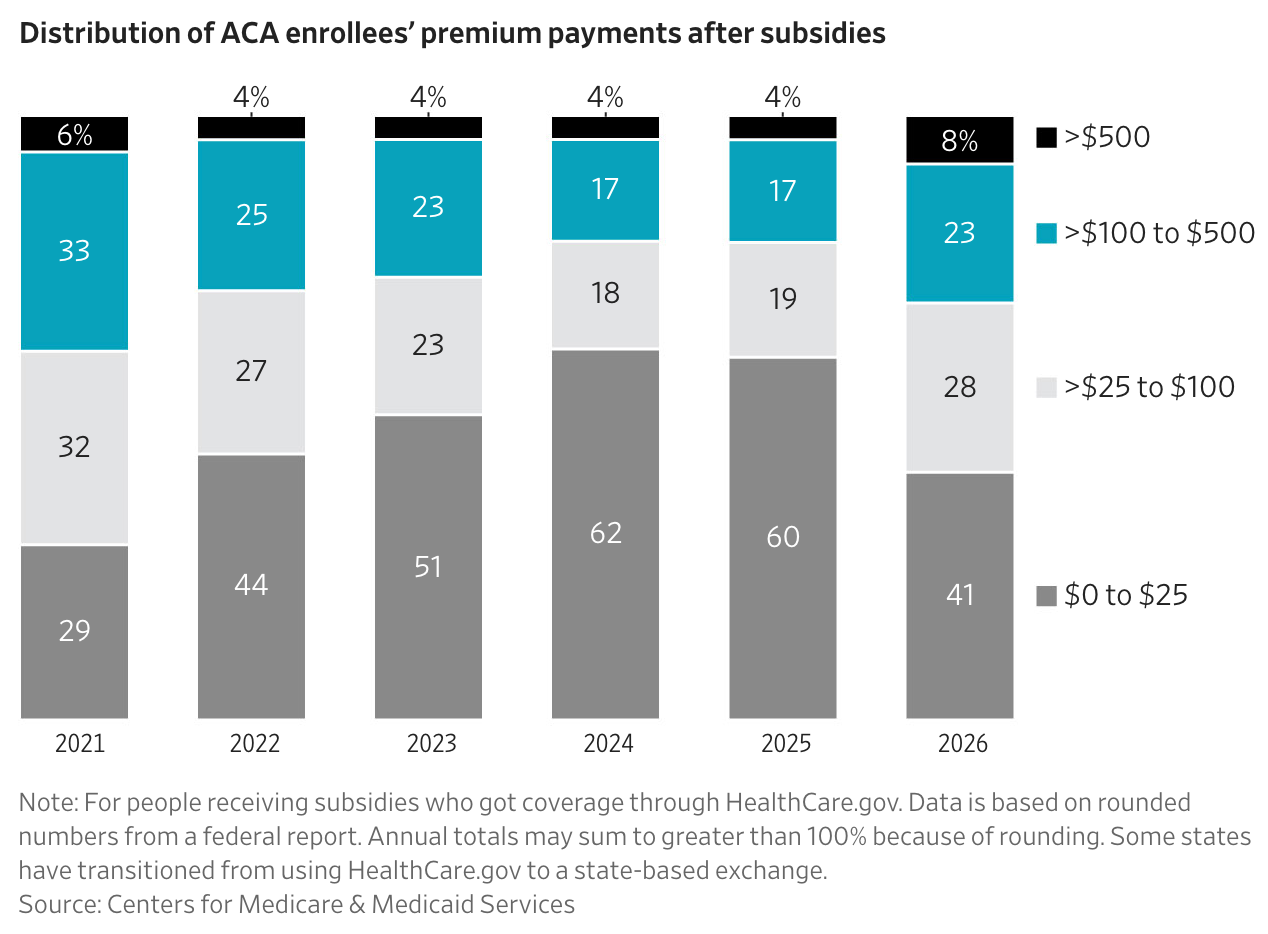
Rising premiums following the expiration of pandemic-era subsidies have led to a sharp drop in participation in plans under the Affordable Care Act. About 14% of enrollees this year failed to pay their first premium—far above the typical mid-single-digit drop-off—with some states seeing nonpayment rates of 25% or more. Overall enrollment has already declined from its peak, and projections suggest it could fall by as much as 17% to 26% as higher costs push people out of the market.
The increases have forced many individuals to abandon coverage or switch to cheaper, less comprehensive plans, leaving them financially vulnerable in the event of serious illness. As healthier individuals are more likely to drop out, the remaining insured population becomes costlier, driving insurers to raise premiums further—a cycle that risks destabilizing the market.
3. Why Gasoline Is So Much Cheaper in the U.S. Than Overseas (WSJ)
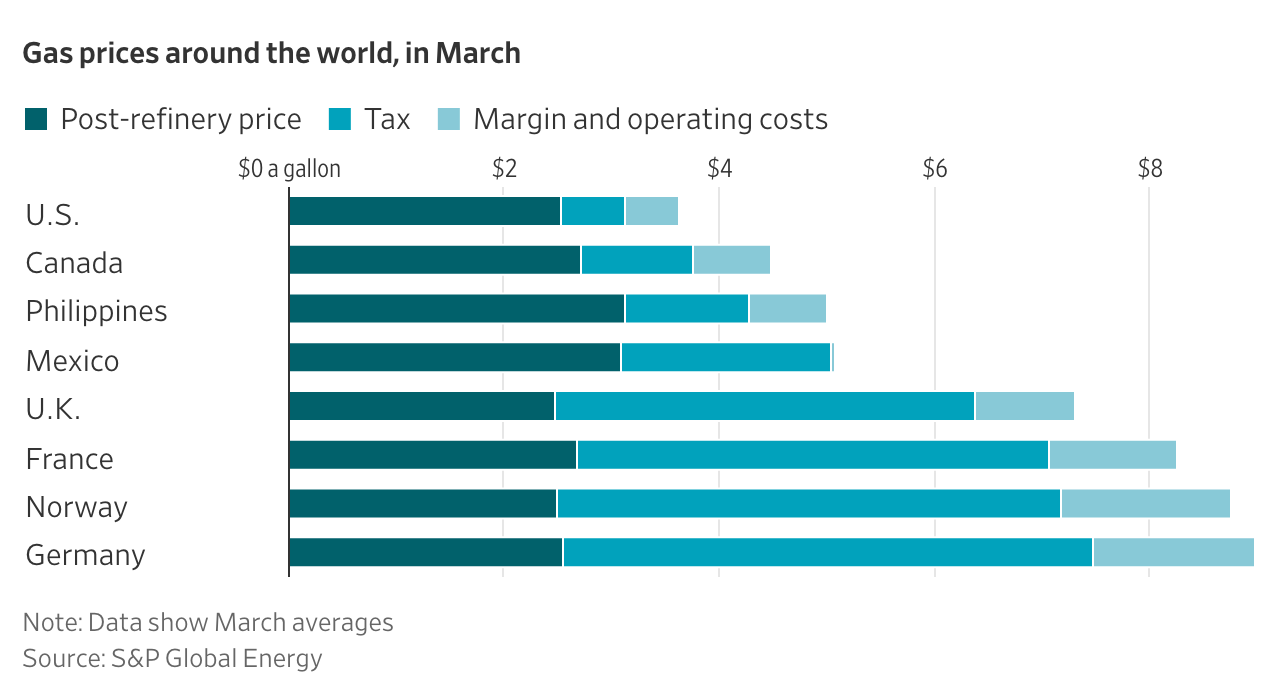
U.S. gas prices have climbed above $4 per gallon due to the war in Iran, reaching a four-year high, but they remain lower than in most developed countries. The U.S. is relatively insulated from global shocks because it is the world’s largest oil producer. The main reason for cheaper U.S. gasoline is lower taxation. Taxes make up only about 60 cents per gallon in the U.S., while in many European countries they account for 50–60% of the total price. As a result, countries like Germany see prices far higher, and even neighboring Mexico has significantly higher fuel costs. Beyond tax levels, policy differences also matter. The U.S. primarily uses fuel taxes to fund roads, while many other countries use them more broadly, including for public transit and environmental initiatives. Although some U.S. states have begun adding carbon-related costs, these measures remain more limited than in Europe, contributing to the persistent price gap.
So, what about California’s gas prices?:
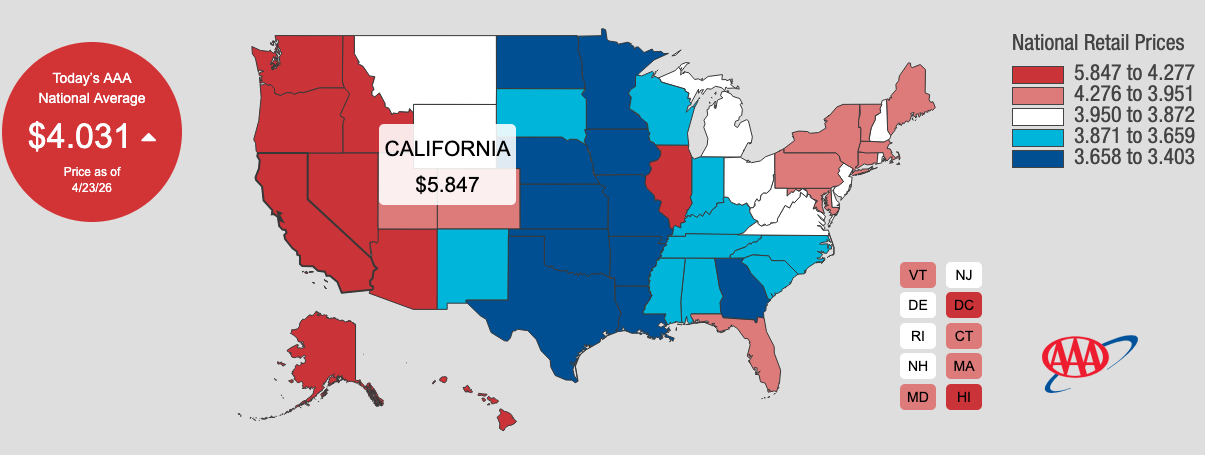
As this piece points out, California’s nation-leading gas prices (over $5 per gallon) are driven by a combination of state-specific factors, including high taxes, strict environmental regulations, costly refining requirements, and an isolated fuel market. Refinery closures have worsened the situation, eliminating nearly 20% of the state’s refining capacity and forcing California to rely more on overseas suppliers, particularly in Asia, to produce its specialized gasoline blend. This reliance introduces delays, higher costs, and greater vulnerability to global disruptions, increasing the likelihood of price spikes during supply shortages or geopolitical conflicts.
Education
4. Why Everyone Hates the Ivy League (WSJ)
In 2025, only 42% of Americans expressed “a great deal” or “quite a lot” of confidence in higher education, up slightly from recent years, but still down from 57% in 2015, according to Gallup. In response, last spring, Yale University President Maurie McInnis asked a group of faculty to examine why Americans were losing confidence in higher education—and to propose remedies to restore it.
The committee concluded that the declining public trust stems from concerns about political bias, unclear admissions standards, and rising costs. The committee argued institutions should refocus on their core mission—creating and disseminating knowledge—rather than broader societal goals, and take responsibility for contributing to this erosion of trust.
To address these issues, the group recommended making admissions more transparent and merit-based, potentially including minimum testing standards, while reducing preferences for legacy applicants, donors, and athletes. It also called for efforts to promote intellectual diversity on campus, such as reviewing curricula and hiring practices to ensure a wider range of perspectives, along with introducing civic education for students.
On affordability, the committee highlighted the growing disconnect between tuition costs and household income, urging expanded financial aid and higher income thresholds for free tuition eligibility. It also pointed to excessive graduate student debt in certain fields and recommends targeted support. Overall, rebuilding trust will require greater openness to criticism, clearer academic standards, and a renewed emphasis on universities’ foundational purpose.
You can find the report here.
Food & Drink
5. San Diego Now Has So Much Water That It’s Selling It (WSJ)
Arizona and Nevada are exploring an unconventional solution to the worsening crisis of the Colorado River: tapping desalinated ocean water from California. With the Colorado River, which serves 40 million people, declining due to overuse and climate pressures, water levels at key reservoirs like Lake Mead have dropped dramatically. In response, the states are negotiating agreements with the San Diego County Water Authority to effectively “trade” water access—funding desalinated supply in exchange for a portion of California’s Colorado River allocation. This could provide enough water for roughly 500,000 people while helping offset ongoing shortages.
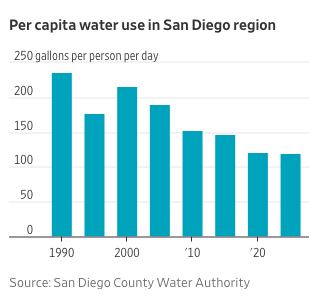
After severe drought in the early 1990s, the San Diego region diversified its supply through infrastructure, desalination, and conservation, cutting dependence on imports from 95% to 10%. Despite higher costs, reduced consumption and expanded supply have left San Diego with surplus water, now seen as both a buffer and a revenue opportunity.
6. US court strikes down 158-year home distilling ban (The Spirits Business)
A federal appeals court struck down a 158-year-old prohibition on distilling spirits at home, ruling that the government cannot justify a blanket ban simply to protect tax revenue. The United States Court of Appeals for the Fifth Circuit found that the restriction violated constitutional limits on Congress’s taxation powers, rejecting the argument that banning home distillation was necessary to prevent tax evasion. The court warned that such logic could justify banning many ordinary activities, from home businesses to remote work.
The case was brought by the Hobby Distillers Association and individual hobbyists who wanted to produce spirits for personal use, similar to the already-legal practice of home brewing beer or making wine. The ruling allows distillation at home regardless of location, overturning longstanding restrictions that applied to houses, garages, and adjacent property.
However, the decision does not fully legalize home distilling. Individuals must still obtain a federal permit from the Alcohol and Tobacco Tax and Trade Bureau, meaning the regulatory framework remains in place even as the location-based ban has been removed. The ruling is seen as a significant step toward broader legalization, but further legal and regulatory changes would be needed to put home distilling on equal footing with home brewing.
Life
7. If America’s So Rich, How’d It Get So Sad? (Derek Thompson)
In Thompson’s words:
American sadness this decade has been forged by the fact of, and the feeling of, a permanent unrelenting economic crisis, amplified by a uniquely negative news and media environment, and exacerbated by the rise of solitude and the declining centrality of trusted institutions. Inflation has made today’s life harder to afford, while the ambient awareness of other people’s triumphs on social media had made tomorrow’s success feel harder to achieve. The ongoing collapse of confidence in the establishment has made Americans feel unusually adrift and dissatisfied with institutions outside of their control, while the chosen self-isolation of modern life has demolished communal trust, as we increasingly experience other people’s minds through the toxic surreality of our screens rather than through the embodied reality of strangers who are, for the most part, just as nice as we are.
He offers this chart:
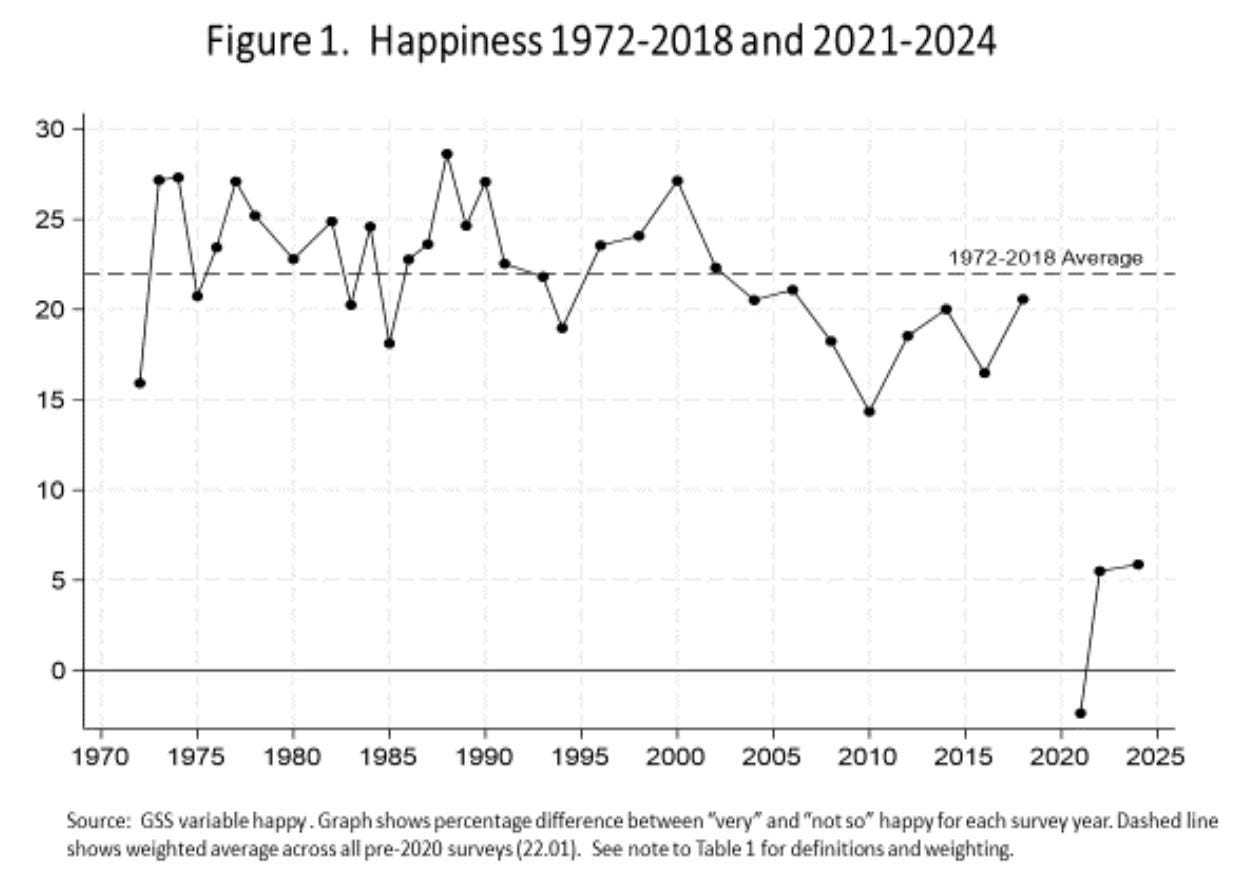
It’s an informed article definitely worth reading.
My advice: Put down the phone, stop watching 24-hour news, go outside, and go do things with people, in person. Get to know your neighbors, make friends with people who have different opinions than you, and assume the best in others.
8. Women in Their 20s May Not Be Having Babies, but by 45 Most Probably Will (NYT)
Fertility in the United States has been steadily declining since the Great Recession, reaching a new low, but the drop is less about people having fewer children and more about having them later…or so this article posits.
This is the chart shown in the article, which makes it appear that the increased number of births occurring by women 35 and older are offsetting the decline in births by women under age 35:
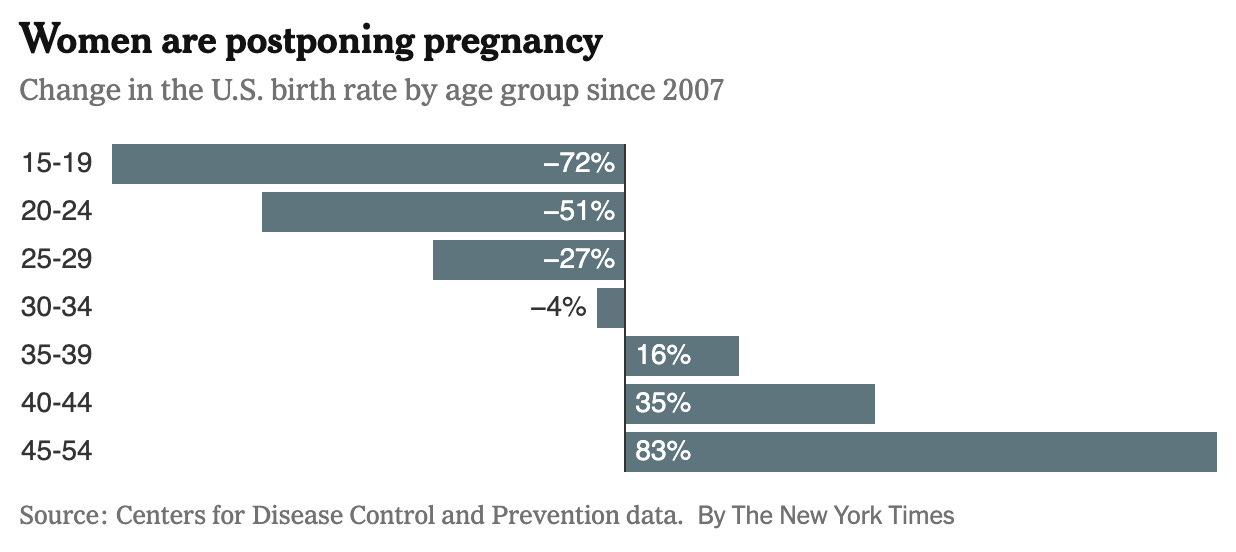
However, one reader of the article looked at the actual numbers (not percentages), and this is what he found:
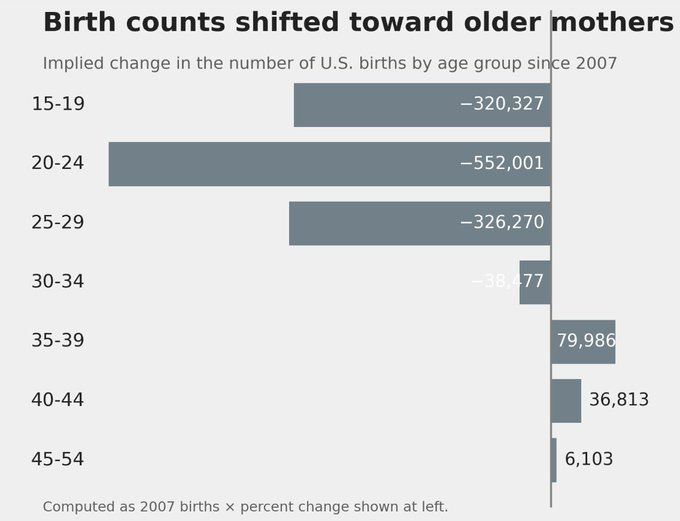
Thus, the increase in births by those 35 and older are not offsetting the declining number of births by those women under 35.
Artificial Intelligence
9. AI’s New Training Data: Your Old Work Slacks And Emails (Forbes)
As companies shut down, their internal digital records—emails, Slack messages, code repositories, and project logs—are emerging as valuable assets that can be sold to AI firms for training data. One example saw a defunct company earn hundreds of thousands of dollars by selling its “operational exhaust,” highlighting a growing market where real-world workplace data is prized for building more capable, task-oriented AI systems. This shift comes after AI labs largely exhausted publicly available internet data and now need detailed, authentic examples of how work actually gets done.
The surge in demand has sparked a “gold rush,” with startups facilitating these transactions and even creating marketplaces for companies to sell their data. At the same time, a new industry of “reinforcement learning gyms” is emerging, using this data to simulate workplace environments where AI agents can practice tasks like scheduling, communication, and problem-solving.
The trend raises significant privacy concerns. Even with anonymization efforts, experts warn that sensitive employee information could be exposed or inadvertently reproduced by AI systems. Critics argue that workers never expected their internal communications to be repurposed this way, and regulators are being urged to scrutinize the practice as the line between useful data and personal privacy becomes increasingly blurred.
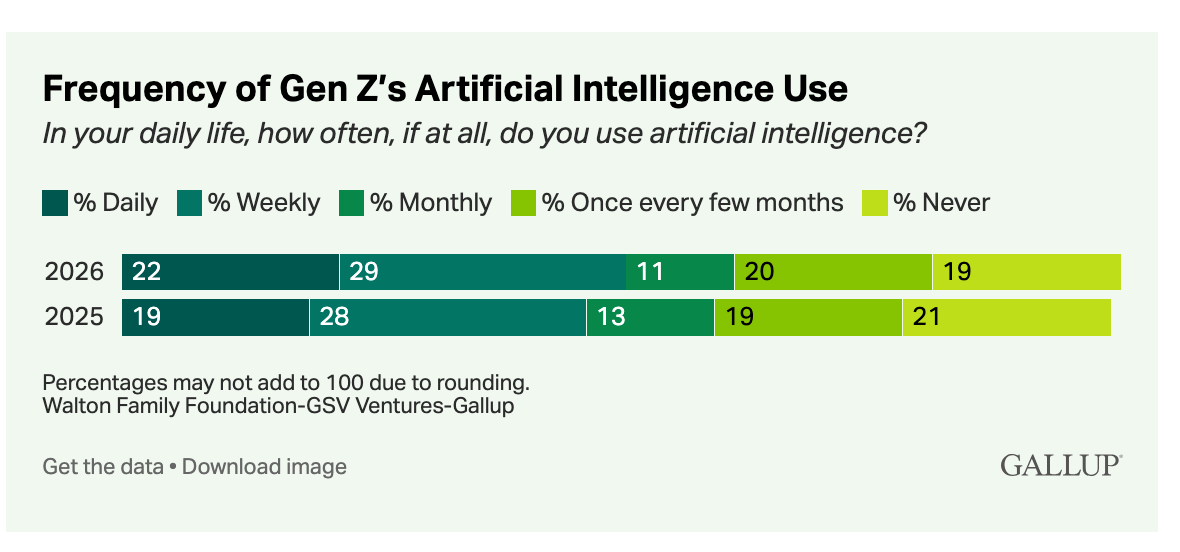
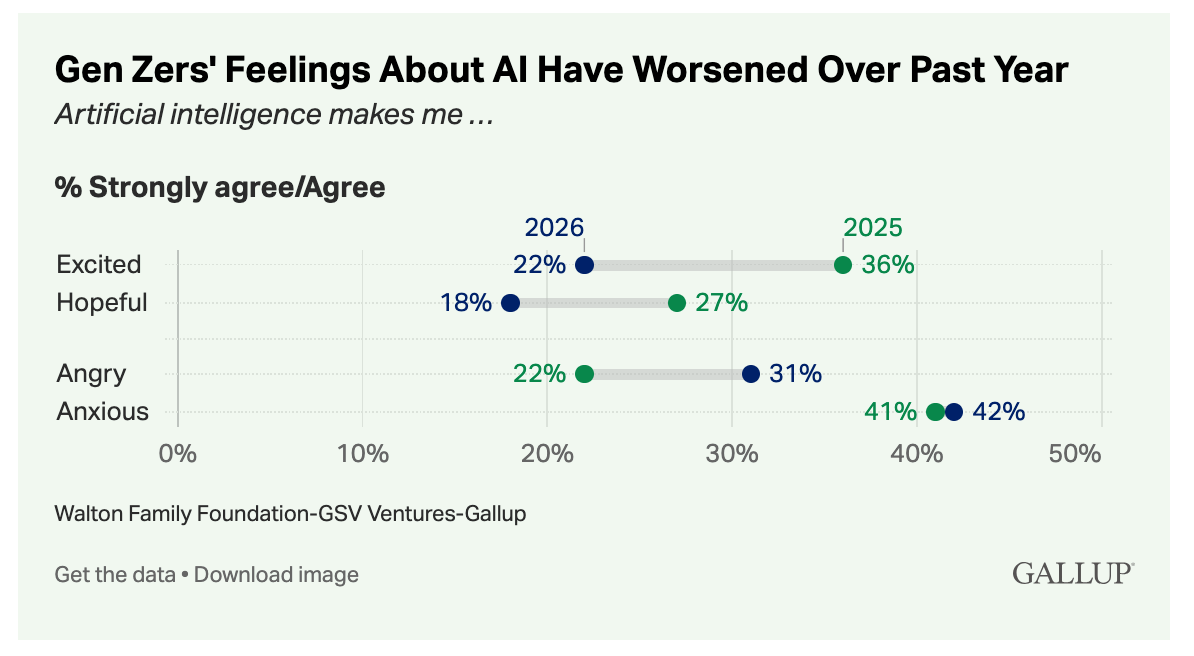
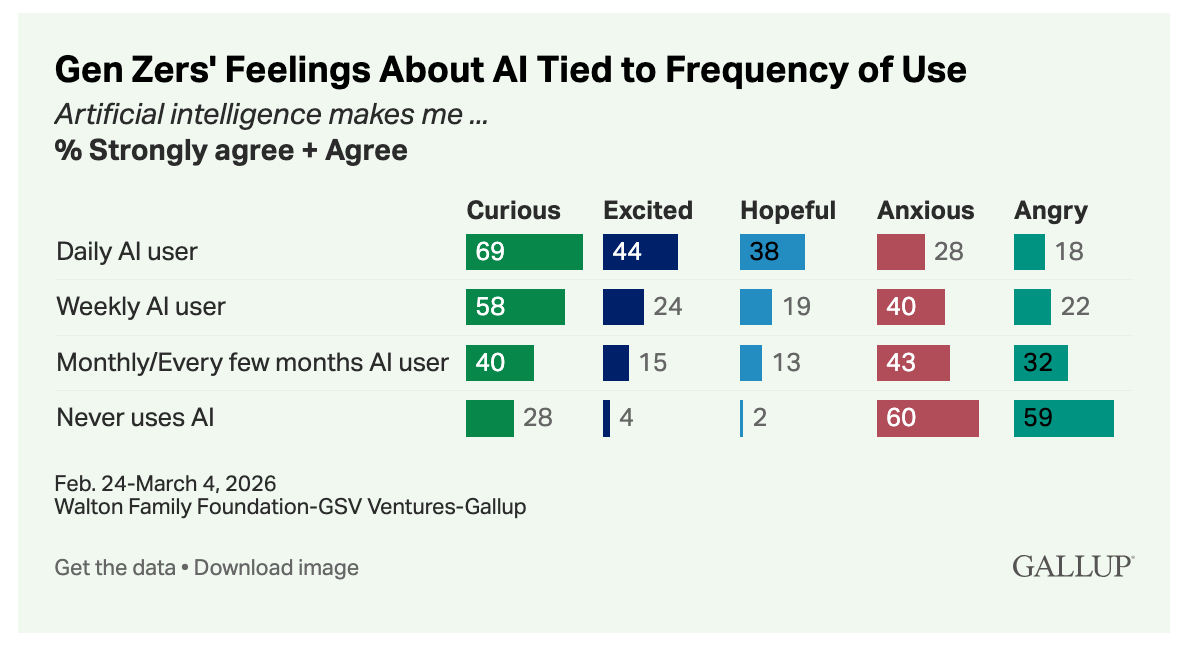
10. Gen Z’s AI Adoption Steady, but Skepticism Climbs (Gallup)
Gen Z’s use of generative AI remains widespread and steady, with about half using it at least weekly, but attitudes toward the technology have grown more negative. Over the past year, excitement and hopefulness have declined, while anger and anxiety have increased. While those who use AI more often tend to view it more positively, overall sentiment is shifting toward skepticism, especially regarding its impact on learning, creativity, and critical thinking.
Many in Gen Z worry that AI’s short-term convenience may come at the cost of long-term skill development. Large shares believe it could harm their ability to think deeply, generate ideas, and learn effectively, and most say it is likely to make future learning harder. In the workplace, young workers are particularly wary, with far more saying the risks of AI outweigh its benefits and expressing greater trust in human-produced work than AI-assisted output.
At the same time, Gen Z recognizes AI’s importance for the future. Many students expect they will need AI skills for education and careers and are increasingly confident they will be prepared, even as schools expand access and set clearer rules. The overall picture is a generation that uses AI regularly but is increasingly cautious about its broader consequences.
NOTE: Even more great charts in article than just these: